
Navigating minor legal disputes can be a common occurrence in various aspects of daily life, whether it’s an issue with a product, a service, or a contractual agreement. For residents and visitors alike, understanding how to address these disagreements efficiently is crucial. In California, the small claims court system offers an accessible and cost-effective avenue for individuals to resolve disputes without the need for an attorney. This guide outlines the essential steps and considerations for filing a small claims case, empowering you to seek justice for issues that impact your lifestyle.

Understanding Small Claims in California’s Lifestyle Context
Small claims court in California is designed for disputes involving relatively small amounts of money, providing a streamlined process that minimizes legal complexities and expenses. This court is often the go-to for resolving common grievances that arise from everyday life and consumer interactions.
What Qualifies as a Small Claim?
A small claims case typically involves disputes over money, property, or specific performance of contracts. Common scenarios that fall under this jurisdiction include:
- Landlord-tenant disputes: Often concerning security deposit returns, minor property damage, or unpaid rent for residential properties in cities like San Francisco or Los Angeles.
- Consumer issues: Such as defective products purchased from a retailer in Orange County, unsatisfactory services provided by a local business, or disputes over warranties.
- Property damage: Claims for damage to personal property, perhaps from a car accident where the amount is below the small claims limit, or damage caused by a neighbor.
- Breach of contract: When one party fails to uphold their end of an agreement, such as an unpaid personal loan or a dispute over services rendered, like a home renovation in San Jose.
- Travel and accommodation disputes: Issues with short-term rental agreements in popular destinations like Palm Springs or disputes with tour operators in Napa Valley.
Monetary Limits and Jurisdictional Reach
In California, the maximum amount you can sue for in small claims court depends on who is filing the claim. As of the latest regulations:
- An individual can sue for up to $12,500.
- Businesses and other entities (except sole proprietors) can sue for up to $6,250.
- However, if you are a guarantor of a consumer debt, you can sue for up to $6,250.
It’s important to note that you cannot split a claim into smaller cases to fit within the monetary limit. If your claim exceeds these amounts, you may need to either waive the excess or file in a higher court (limited civil court), which involves a more complex legal process, typically requiring an attorney. The case must also be filed in the proper superior court location, usually based on where the defendant lives or where the incident occurred.
The Role of Small Claims in Resolving Everyday Disputes
Small claims court provides an essential avenue for citizens to protect their rights and recover losses without significant financial burden. It empowers individuals to take control of situations where larger legal fees would deter action. For many Californians, it’s a practical and efficient way to handle common disagreements, ensuring fairness and accountability in their daily interactions and consumer experiences.
Preparing Your Small Claims Case
Effective preparation is key to a successful small claims case. While the process is simplified, having all your facts and evidence in order will significantly strengthen your position.
Gathering Evidence
The cornerstone of any legal claim is compelling evidence. For your small claims case, gather everything that supports your side of the story. This might include:
- Contracts and Agreements: Any written agreements, including receipts, invoices, lease agreements for an apartment in Santa Monica, or service contracts.
- Correspondence: Emails, text messages, letters, or faxes exchanged between you and the defendant concerning the dispute.
- Photographs and Videos: Visual evidence of damage, defective products, or conditions relevant to your claim. For instance, photos of a damaged rental car after a weekend trip to Lake Tahoe.
- Witness Statements: Written statements from individuals who witnessed the event or have relevant information.
- Financial Records: Bank statements, cancelled checks, or credit card statements that show payments made or received.
- Estimates and Repair Bills: If your claim involves damages, obtain estimates for repairs or actual repair bills.
Organize all your evidence chronologically and logically. Bring both original documents and copies to court.
Identifying the Defendant
You must accurately identify the party you are suing. This means knowing their full legal name and address.
- Individual: If you are suing an individual, you need their full legal name and current address.
- Business: If you are suing a business, you need the legal name of the business and its address. For corporations, you might need to identify their registered agent for service of process. You can often find this information through the California Secretary of State’s website. If you’re suing a sole proprietorship, you would typically sue the individual owner.
Incorrectly identifying or addressing the defendant can cause delays or even dismissal of your case.
Demand Letter: A Prerequisite Step
Before filing your case, it is generally a good practice, and sometimes a requirement by some courts, to send a demand letter to the defendant. This letter formally requests payment or action to resolve the dispute before legal action is taken.
- Clearly state your claim, the amount owed, and the reason.
- Attach copies of relevant evidence.
- Give a reasonable deadline for response (e.g., 10-14 days).
- Send the letter via certified mail with a return receipt requested, so you have proof of delivery.
A demand letter often resolves disputes without going to court and demonstrates to the judge that you attempted to resolve the issue amicably.
Navigating the California Court System
Once you have prepared your case, the next step involves formally initiating the legal process within the California superior court system.

Completing and Filing Your Claim
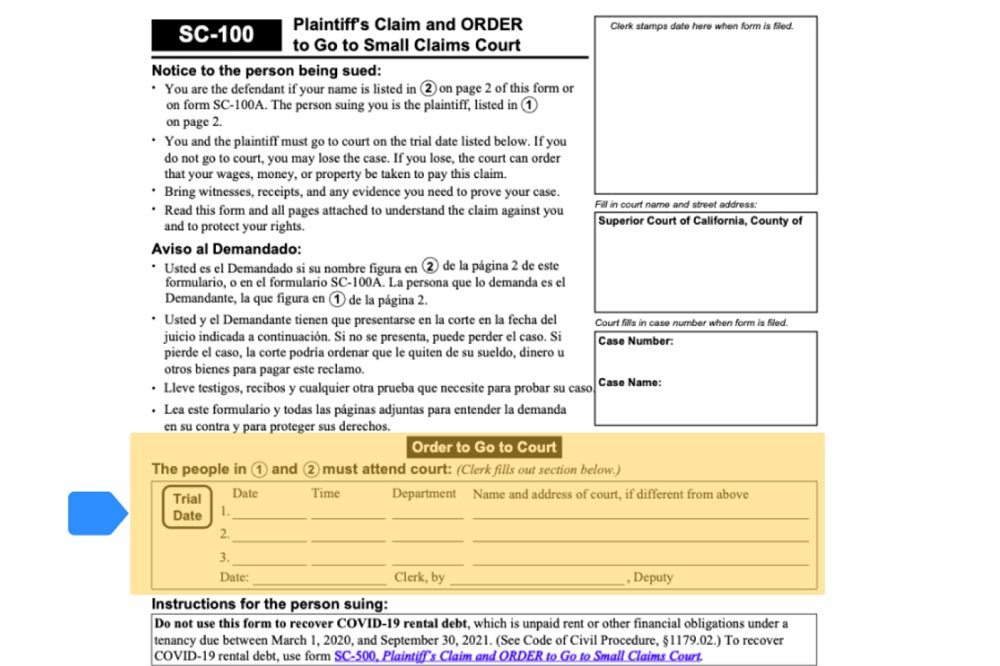
You will need to fill out a form called “Plaintiff’s Claim and Order to Go to Small Claims Court” (Form SC-100). This form requires you to:
- Identify yourself (the plaintiff) and the defendant.
- State the amount of money or property you are claiming.
- Briefly explain why the defendant owes you money or property, including the date of the incident.
- Indicate the court location where you want to file your claim. This is typically the superior court in the county where the defendant lives, where the business is located, or where the contract was entered into or broken.
Once completed, file the form with the clerk of the appropriate small claims court. You will be assigned a case number and a court date.
Serving the Defendant
After filing your claim, you must legally notify the defendant that they are being sued. This process is called “service of process.” Proper service is crucial; if it’s not done correctly, your case cannot proceed.
- Who can serve?: Anyone who is at least 18 years old and not a party to the case can serve the defendant. This could be a friend, a professional process server, or a sheriff/marshal.
- Methods of service:
- Personal Service: The server personally hands the court papers to the defendant.
- Substituted Service: If the defendant cannot be found after several attempts, the papers can be left with a competent adult at their home or workplace, and then mailed.
- Certified Mail: Some courts allow service by certified mail with a return receipt requested.
- Sheriff/Marshal Service: You can pay the sheriff or marshal to serve the papers.
The defendant must be served at least 15 days before the court date (or 20 days if the defendant lives out of the county). After service, the server must complete a “Proof of Service” form (Form SC-104), which you then file with the court.
Court Fees and Fee Waivers
Filing a small claims case involves certain fees, which vary based on the amount you are suing for and if you have filed previous cases within the past 12 months.
- Filing Fees: These are typically modest, ranging from about $30 to $75.
- Service Fees: If you use a process server or the sheriff, you will incur additional fees.
If you cannot afford these fees, you can apply for a fee waiver by filing a “Request to Waive Court Fees” (Form FW-001) and an “Order on Court Fee Waiver” (Form FW-003). If approved, you will not have to pay court costs.
The Small Claims Hearing and Beyond
The court hearing is your opportunity to present your case to the judge and explain why you believe you are entitled to a judgment.
Presenting Your Case
On your court date, arrive early and be prepared.
- Organization: Have your evidence organized and ready to present. Bring multiple copies of important documents.
- Clarity and Conciseness: Present your case clearly and briefly. Focus on the facts that support your claim. Avoid emotional language.
- Respectful Conduct: Address the judge respectfully and listen carefully to any questions or instructions.
- Witnesses: If you have witnesses, ensure they are present and prepared to testify.
The defendant will also have an opportunity to present their side of the story and any counterclaims they may have.
Potential Outcomes
After hearing both sides, the judge will make a decision, which might be:
- Judgment for the Plaintiff: If the judge rules in your favor, they will issue a “Judgment” (Form SC-130) specifying the amount the defendant owes you.
- Judgment for the Defendant: If the judge finds the defendant is not liable or you have not proven your case, the defendant wins.
- Settlement: Sometimes, parties may reach a settlement agreement before or during the hearing, which the judge can then formalize.
In some cases, the judge might make a decision immediately; in others, they may take the case “under submission” and mail their decision later.
Collecting Your Judgment
Winning your case is only half the battle; collecting the money is the other. The court does not collect the money for you. If the defendant does not pay voluntarily, you will need to take further steps.
- Abstract of Judgment: File an “Abstract of Judgment” (Form EJ-001) with the County Recorder’s office to place a lien on any real property the defendant owns.
- Wage Garnishment: You can request an “Earnings Withholding Order” (Form EJ-150) to have a portion of the defendant’s wages withheld by their employer.
- Bank Levy: You can also request a “Writ of Execution” (Form EJ-130) to have the sheriff seize funds from the defendant’s bank account.
These collection methods require additional court forms and fees. Some defendants may be “judgment proof,” meaning they have no assets or income that can be legally seized.
Appeals Process
In California small claims court, the plaintiff generally cannot appeal a judgment if they lose. However, the defendant has the right to appeal the judge’s decision. If the defendant appeals, the case will be heard again from the beginning (a “de novo” hearing) by a different judge in the superior court, which may involve a more formal setting.
Common Lifestyle Scenarios for Small Claims in California
Understanding the practical applications of small claims court can illuminate its relevance to everyday life in California.
Consumer Purchases and Services
Whether you bought a faulty appliance from a store in San Diego, paid for home renovation services in Sacramento that were left unfinished, or encountered issues with an online purchase delivered to your home, small claims court can provide recourse. It’s particularly useful when a merchant refuses a refund or replacement despite clear evidence of a defect or breach of service agreement.
Landlord-Tenant Disputes
A frequent source of small claims cases involves the return of security deposits. Many tenants in California’s competitive housing market, from Berkeley to Long Beach, face disputes over charges for “damages” that are actually normal wear and tear. Small claims court offers a platform to challenge unreasonable deductions and recover your deposit.
Travel-Related Issues
Even your leisure activities can sometimes lead to legal woes. Imagine booking a short-term rental for a vacation in Santa Barbara that turns out to be drastically different from its online description, or a tour operator in Yosemite National Park failing to deliver on promised services, ruining a family trip. If the vendor refuses a reasonable refund, small claims court can be the appropriate forum to recover your losses.
Neighborly Disputes
Disagreements with neighbors, such as minor property line disputes, noise disturbances impacting quality of life, or small claims for property damage caused by a neighbor’s negligence, are also common in small claims court. For example, if your neighbor’s tree causes minor damage to your fence in a suburban neighborhood of Ventura County and they refuse to pay for repairs, small claims can help resolve the issue.
By familiarizing yourself with the small claims process in California, you equip yourself with the knowledge to address a wide range of common lifestyle disputes effectively and professionally.
LifeOutOfTheBox is a participant in the Amazon Services LLC Associates Program, an affiliate advertising program designed to provide a means for sites to earn advertising fees by advertising and linking to Amazon.com. Amazon, the Amazon logo, AmazonSupply, and the AmazonSupply logo are trademarks of Amazon.com, Inc. or its affiliates. As an Amazon Associate we earn affiliate commissions from qualifying purchases.