
Crossing the United States from the golden shores of California to the historic landscapes of Pennsylvania represents one of the most significant transcontinental journeys one can undertake. This epic voyage spans thousands of miles, traverses multiple time zones, and showcases the incredible diversity of the American landscape. Understanding the precise distance and the implications for travel is crucial for anyone contemplating such an adventure, whether for leisure, relocation, or business.
The Geographic Divide: Understanding the Vastness
The sheer scale of the United States means that traveling from its westernmost contiguous state to one of its eastern pillars is no small feat. California borders the Pacific Ocean, while Pennsylvania lies inland from the Atlantic Ocean, effectively placing them at opposite ends of the continental landmass.

Straight-Line vs. Driving Distance
When considering the distance between California and Pennsylvania, it’s important to distinguish between “as the crow flies” (straight-line distance) and actual driving distance. The straight-line distance, which an airplane might approximate, is roughly 2,400 to 2,500 miles, depending on the specific starting and ending points within each state. For instance, the aerial distance from Los Angeles, California, to Philadelphia, Pennsylvania, is approximately 2,400 miles.
However, road travel is significantly longer due to the necessity of following established roadways, navigating around geographical features like the Rocky Mountains and various urban centers, and adhering to speed limits. A typical driving route from Southern California (e.g., Los Angeles) to Eastern Pennsylvania (e.g., Philadelphia) will cover approximately 2,700 to 3,000 miles. This journey would typically take a minimum of 40-45 hours of pure driving time, meaning a multi-day trip for any individual or group of drivers.
Key Cities as Reference Points
To offer a more concrete perspective on the vast distances involved, let’s look at some prominent cities in both states:
- From Los Angeles, California, to Philadelphia, Pennsylvania: This is one of the most common city-to-city comparisons. The driving distance is approximately 2,700-2,800 miles, which translates to about 40-42 hours of continuous driving. This route often utilizes major interstates such as Interstate 80 or a combination of Interstate 70 and Interstate 40 for a significant portion of the journey.
- From San Francisco, California, to Pittsburgh, Pennsylvania: Another major city pairing, this route is slightly further north. The driving distance is around 2,500-2,600 miles, equating to roughly 38-40 hours of driving. Interstate 80 is a primary artery for this cross-country trek, often dubbed the “Lincoln Highway” after its historic predecessor, US Route 30.
These distances underscore that crossing the country by road is a significant commitment, typically requiring four to six days of travel, depending on the pace, number of drivers, and stops.
Navigating the Miles: Travel Modalities and Timeframes
The choice of travel method dramatically impacts both the journey duration and the experience. Each mode of transportation offers distinct advantages and disadvantages for covering the immense distance between California and Pennsylvania.
Air Travel: The Fastest Route
For those prioritizing speed and efficiency, flying is unequivocally the best option. Direct flights from major California airports like Los Angeles International Airport (LAX) or San Francisco International Airport (SFO) to Pennsylvania hubs such as Philadelphia International Airport (PHL) or Pittsburgh International Airport (PIT) typically range from 5 to 6 hours in the air.
Factoring in pre-flight procedures (check-in, security), travel to and from airports, and potential layovers (if not a direct flight), the total travel time from door-to-door can range from 8 to 12 hours. While flying is the quickest way to cover the distance, it offers little opportunity to experience the diverse landscapes and cultures spanning the middle of the United States. It is, however, often the most cost-effective option when booked in advance, especially compared to the cumulative costs of a road trip (fuel, lodging, food).
Road Trip: An Epic Cross-Country Journey
Embarking on a road trip from California to Pennsylvania is an iconic American experience. While demanding, it provides unparalleled freedom and the chance to witness the country’s varied topography firsthand. As mentioned, the drive typically takes 40-45 hours of actual driving time. To make this manageable and enjoyable, most travelers plan for 4 to 6 days on the road, driving 8-10 hours daily.
Popular routes traverse different sections of the country:
- Northern Route: Often follows Interstate 80 through states like Nevada, Utah, Wyoming, Nebraska, Iowa, Illinois, Indiana, and Ohio before reaching Pennsylvania. This route offers views of the Great Plains and agricultural heartland.
- Central Route: Utilizing Interstate 70 or a combination of major interstates, it might pass through the Mojave Desert, Arizona, Colorado, Kansas, Missouri (home of the Gateway Arch in St. Louis), and then connect to eastern states.
- Southern Route: Often involving Interstate 40 through Arizona (near the Grand Canyon), New Mexico, Texas, Oklahoma, and points east.
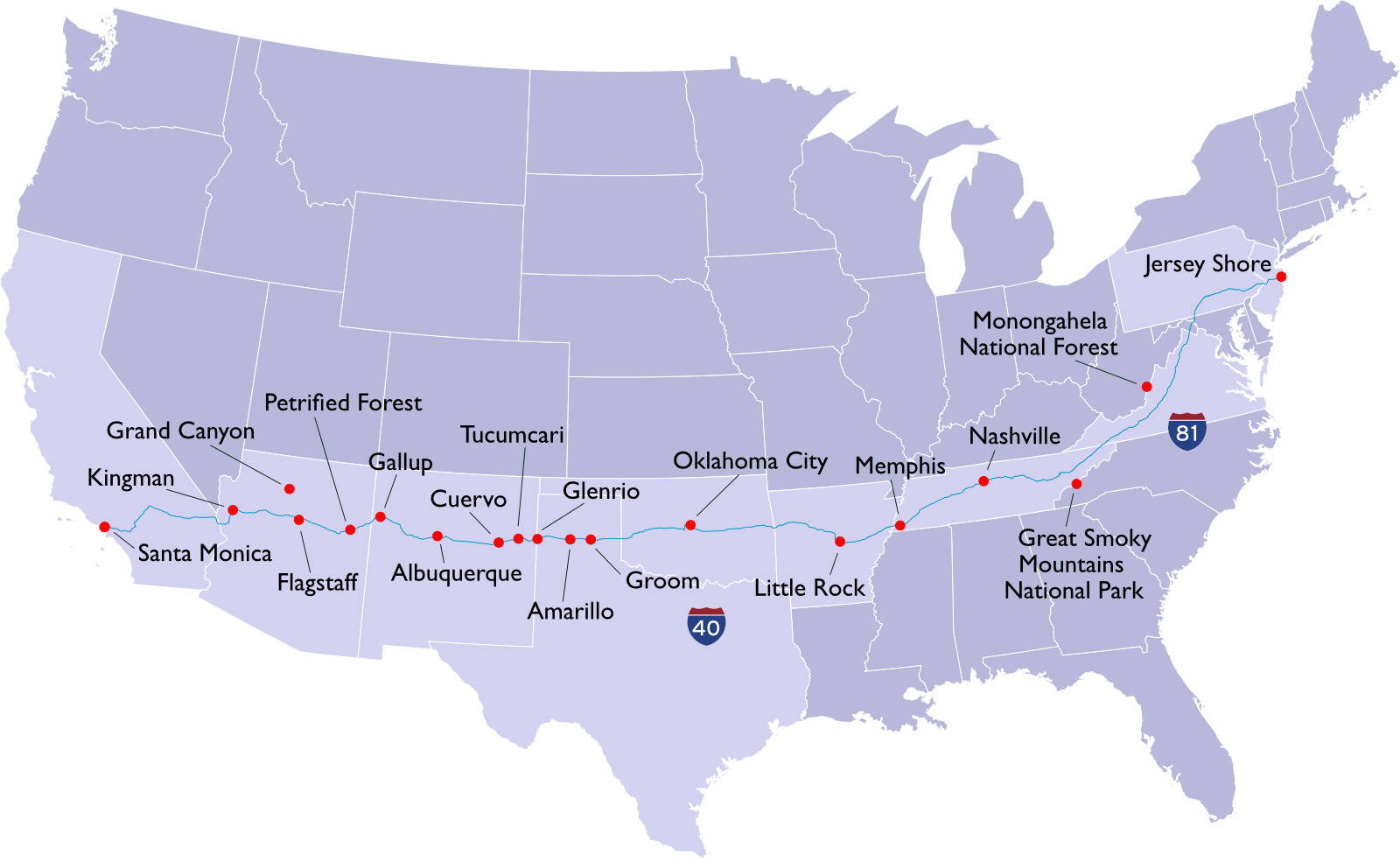
Each route presents unique attractions and challenges, from desert heat to mountain passes. The total cost of a road trip can vary wildly based on fuel prices, vehicle MPG, accommodation choices, and dining habits, but it generally allows for greater flexibility and personalized experiences.
Train and Bus: Scenic, Slower Alternatives
For travelers without a car or those seeking a more relaxed, environmentally conscious journey, train or bus travel are viable, albeit much slower, options.
- Train Travel: Amtrak offers routes that can take passengers from California to Pennsylvania. This typically involves transfers, often in hub cities like Chicago or Denver. The journey duration can range from 2.5 to 4 days, depending on the specific route, number of transfers, and layover times. While slower, train travel provides a comfortable way to see the country, often through scenic corridors not visible from highways, with amenities like dining cars and sleeper compartments available.
- Bus Travel: Companies like Greyhound offer extensive networks connecting virtually every major city. A cross-country bus trip from California to Pennsylvania would be the most economical option but also the longest and potentially most arduous. Expect the journey to take 3 to 5 days, with frequent stops, transfers, and less personal space than other modes. This option is best suited for budget-conscious travelers with ample time and patience.
Planning Your Transcontinental Journey: Essential Considerations
Regardless of the chosen travel method, a trip from California to Pennsylvania demands careful planning to ensure a smooth and enjoyable experience.
Cost Analysis: Budgeting for the Trip
Budgeting is a critical first step. For air travel, ticket prices fluctuate significantly based on booking time, season, and airline. Expect anywhere from $200 to $600+ for a one-way economy ticket. Road trips incur costs for fuel (significant over 3,000 miles), lodging (if not camping), food, and potential vehicle maintenance. A realistic budget for a 5-day road trip might range from $800 to $2,000+, depending on luxury levels. Train and bus fares are generally lower than flying last-minute but higher than the direct cost of driving if you already own a car.
Best Time to Travel
The time of year dramatically impacts the travel experience.
- Summer (June-August): Popular for road trips, offering long daylight hours and generally good weather across most of the country. However, temperatures in the desert Southwest can be extreme, and national parks (like Yellowstone National Park) will be crowded.
- Spring (April-May) and Fall (September-October): Often considered ideal. Milder temperatures, fewer crowds, and beautiful scenery (wildflowers in spring, fall foliage in the East, especially in the Appalachian Mountains of Pennsylvania). These shoulder seasons can also offer better deals on flights and accommodations.
- Winter (November-March): Presents challenges, particularly for road trips, due to potential snowstorms and icy conditions across the northern states and mountain passes. Flights may be subject to delays or cancellations. While possible, winter travel requires extra preparation and flexibility.
Packing and Preparation Tips
For air travel, adhere to airline baggage restrictions. For road trips, packing strategically is key:
- Vehicle Check: Ensure your vehicle is in top condition before departure (tires, oil, fluids, brakes).
- Emergency Kit: Jumper cables, first-aid kit, flashlight, roadside assistance contact, blankets, water, and non-perishable snacks are essential.
- Navigation: While GPS is common, a physical map or downloaded offline maps can be lifesavers in areas with spotty cell service.
- Comfort: Snacks, drinks, entertainment, comfortable clothing, and a good playlist are vital for long stretches.
- Documents: Always have your driver’s license, vehicle registration, insurance, and identification readily accessible.
Embracing the Journey: What to Expect En Route
The journey from California to Pennsylvania is more than just covering distance; it’s an immersive experience in American geography, culture, and history.
California’s Appeal: Starting Point or Destination
Whether starting from the vibrant cities of Los Angeles or San Francisco, or arriving in them, California sets a diverse tone. Its coastal beauty, deserts, mountains, and innovative spirit offer a compelling prelude or a welcoming embrace. Travelers often use their time here to enjoy iconic attractions before heading east or as a reward after a long journey.
Pennsylvania’s Charm: The Eastern Gateway
Upon reaching Pennsylvania, one transitions into a region steeped in American history and natural beauty. From the bustling metropolitan energy of Philadelphia, home to Independence Hall and the Liberty Bell, to the industrial heritage and cultural revival of Pittsburgh, and the rolling hills of the Appalachian Mountains, Pennsylvania offers a rich tapestry of experiences that starkly contrast with California’s vibe. The conclusion of the journey provides an opportunity to explore sites fundamental to the founding of the nation and enjoy the distinct charm of the East Coast.
The American Landscape in Between
The true marvel of this transcontinental trip lies in the panoramic views of the changing American landscape. From the arid beauty of the southwestern deserts to the majestic peaks of the Rocky Mountains, through the endless horizons of the Great Plains and the lush forests of the Midwest, the journey itself becomes a destination. It’s an opportunity to witness the country’s diverse ecosystems, small towns, and major cities that define the heartland of the United States. This vast stretch of land offers countless opportunities for discovery, transforming a simple question of distance into an invitation for an unforgettable odyssey.
LifeOutOfTheBox is a participant in the Amazon Services LLC Associates Program, an affiliate advertising program designed to provide a means for sites to earn advertising fees by advertising and linking to Amazon.com. Amazon, the Amazon logo, AmazonSupply, and the AmazonSupply logo are trademarks of Amazon.com, Inc. or its affiliates. As an Amazon Associate we earn affiliate commissions from qualifying purchases.