
The golden state of California is rich with history, a tapestry woven from indigenous cultures, Spanish colonization, and American expansion. Among its most enduring and recognizable landmarks are the California Missions, a chain of religious outposts that played a pivotal role in shaping the region’s past. For those curious about these historical treasures, the answer to “How many California Missions are there?” is precise: there are exactly 21 missions, stretching from San Diego in the south to Sonoma in the north. Each mission stands as a testament to a complex era, embodying distinct architectural styles, profound historical narratives, and a lasting cultural legacy.

The Enduring Legacy of the California Missions
Established by Franciscan friars under the direction of Father Junípero Serra and his successors, the 21 missions were founded between 1769 and 1823. Their primary purpose was multifaceted: to evangelize the indigenous populations, to consolidate Spain’s territorial claims against other European powers, and to establish agricultural and economic centers in Alta California. These missions formed the backbone of Spanish Colonial efforts, each strategically placed roughly a day’s journey apart by horseback along the El Camino Real, or “The Royal Road,” which linked them together.
The missions represent a controversial yet undeniably significant period in California’s history. While they brought European religion and agricultural techniques, they also fundamentally altered indigenous ways of life, often through forced labor and cultural suppression. Today, they are preserved as monumental landmarks, offering visitors a tangible connection to this foundational era and prompting reflection on their complex heritage.
A Journey Through Time: The 21 Missions
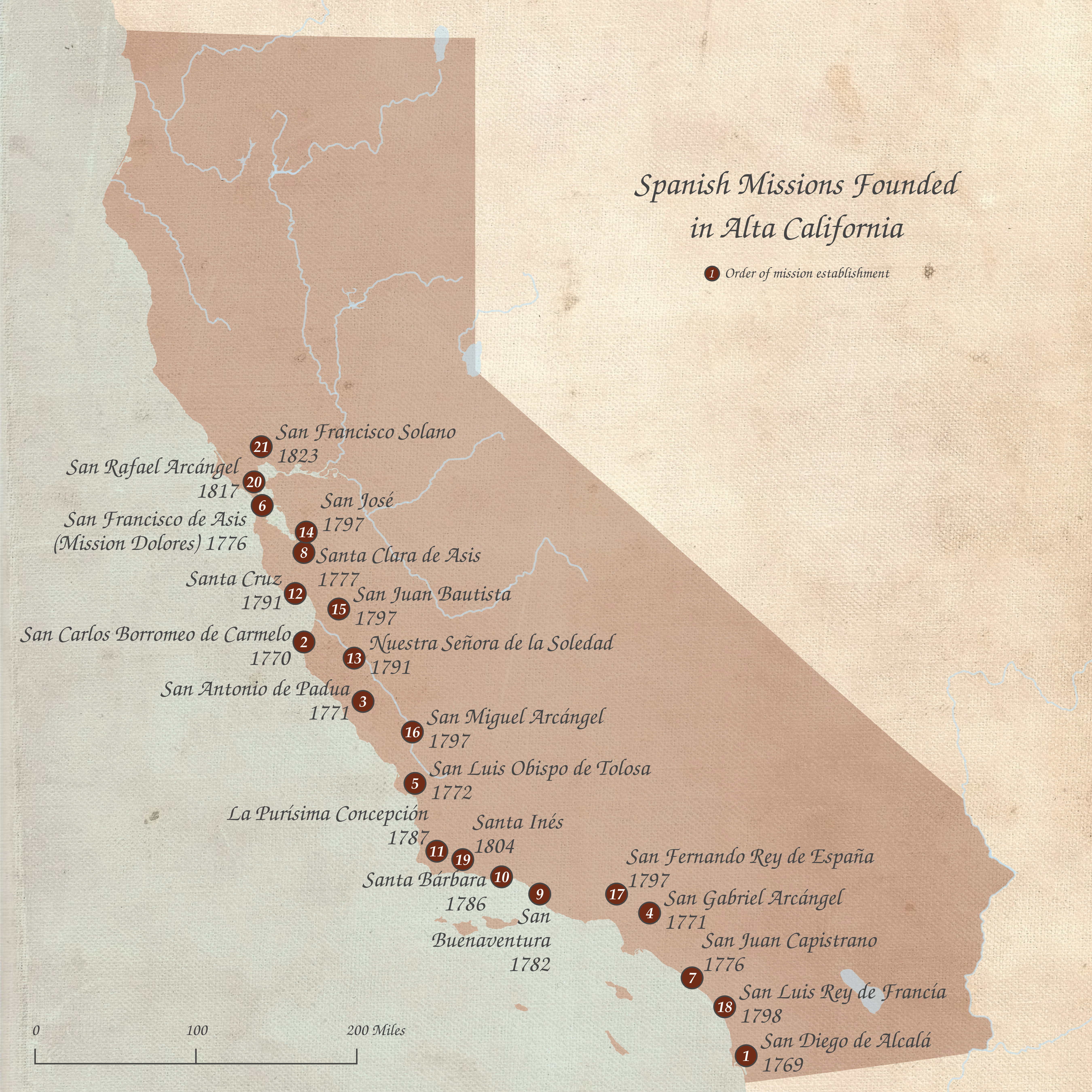
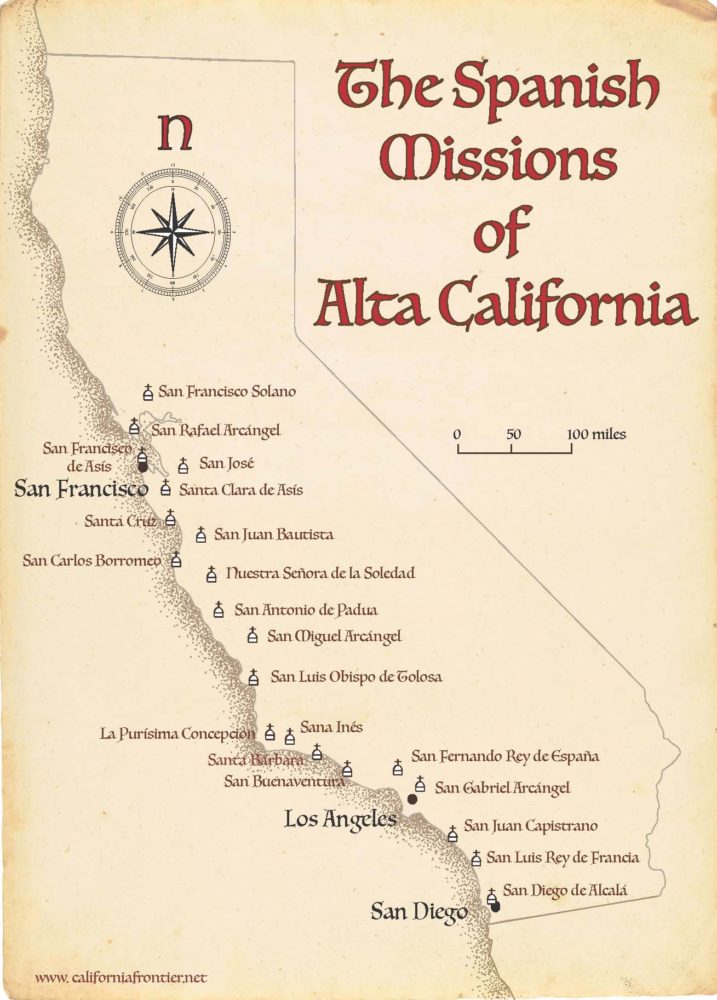
The 21 missions are strategically distributed along approximately 650 miles of the California coastline, each with its own story, challenges, and distinctive features.
Southern California Missions
- Mission San Diego de Alcalá (1769): The first of the missions, founded by Father Junípero Serra in San Diego. It holds the distinction of being the site of California’s first church.
- Mission San Juan Capistrano (1776): Known as the “Jewel of the Missions,” it is famous for its beautiful ruins of the Great Stone Church and the annual return of the swallows.
- Mission San Gabriel Arcángel (1771): Located near Los Angeles, this mission features striking Moorish-style architecture, with narrow windows and capped buttresses unlike any other.
- Mission San Buenaventura (1782): The last mission personally founded by Father Junípero Serra, situated in present-day Ventura. It boasts an impressive garden and a unique wooden cross.
- Mission Santa Bárbara (1786): Often called the “Queen of the Missions” for its graceful beauty, symmetry, and twin bell towers. It is the only mission that has been continuously occupied by Franciscans since its founding.
- Mission La Purísima Concepción (1787): A fully restored mission near Lompoc, offering an unparalleled glimpse into mission life with its extensive grounds and authentic recreations.
- Mission San Fernando Rey de España (1797): Located in the San Fernando Valley, this mission features a long, grand convento building, the largest adobe structure in California.
- Mission San Luis Rey de Francia (1798): Once the largest and most prosperous of all the missions, located near Oceanside. Its impressive church is the third and current structure on the site.
- Mission Santa Inés (1804): Nestled in the Santa Ynez Valley, this mission is known for its beautiful valley views and a well-preserved original baptismal font.
Central California Missions
- Mission San Carlos Borromeo de Carmelo (1770): Father Junípero Serra’s headquarters and burial place, located in Carmel-by-the-Sea. Its unique stone church and Moorish dome are iconic.
- Mission San Antonio de Padua (1771): Tucked away in the Santa Lucia Mountains, this secluded mission retains a strong sense of its original rural setting, largely untouched by urban development.
- Mission San Luis Obispo de Tolosa (1772): Located in the heart of San Luis Obispo, known for its distinctive belfry and as the first mission to introduce roof tiles to replace flammable thatch.
- Mission Santa Clara de Asís (1777): Now located on the campus of Santa Clara University, this mission has been rebuilt multiple times due to fires and earthquakes.
- Mission Santa Cruz (1791): While the original mission was largely destroyed, a beautiful half-scale replica stands in Santa Cruz, reminding visitors of its past.
- Mission Nuestra Señora de la Soledad (1791): A smaller, more remote mission, rebuilt and known for its simple beauty and the solitude it offers.
- Mission San José (1797): Located near Fremont, this mission has an impressive church and a significant museum showcasing the mission era.
- Mission San Juan Bautista (1797): Unique for being the only mission on a historic plaza and featuring the largest mission church, still active today. It famously lies directly on the San Andreas Fault.
- Mission San Miguel Arcángel (1797): Known for its remarkably preserved original frescoes inside the church, offering a vibrant glimpse into its artistic heritage.
Northern California Missions
- Mission San Francisco de Asís (1776): Also known as Mission Dolores, it is the oldest surviving structure in San Francisco and offers a poignant contrast to the modern city that surrounds it.
- Mission San Rafael Arcángel (1817): Originally founded as a hospital assistencia (sub-mission) for ailing indigenous converts from Mission Dolores, it gained full mission status and is one of the smaller missions.
- Mission San Francisco Solano (1823): The last and northernmost mission, located in Sonoma. It was the only mission founded under Mexican rule, completing the chain established by the Spanish.
Architectural Marvels and Historical Echoes
The architecture of the California Missions is a defining characteristic, offering a window into the building techniques and aesthetic preferences of the Spanish Colonial period. Characterized by thick adobe walls, red tile roofs, sturdy timbers, and often bell towers (campanarios) with distinct arched openings, each mission showcases a blend of Spanish and indigenous influences. The simple, massive structures were designed for durability and functionality, often built with local materials by indigenous laborers whose skills and ingenuity were essential to their construction.
While sharing common elements, each mission also developed its unique architectural nuances. Mission San Gabriel Arcángel’s fortress-like appearance contrasts with the delicate elegance of Mission Santa Bárbara. The intricate frescoes of Mission San Miguel Arcángel stand apart from the rustic charm of Mission San Antonio de Padua. These variations tell stories of local resources, changing architectural trends over time, and the individual creativity of the friars and artisans involved. Beyond their physical beauty, these structures serve as profound historical markers, silent witnesses to centuries of change in California.
Visiting the California Missions Today
Today, the 21 California Missions remain vibrant and accessible landmarks, inviting millions of visitors annually to explore their grounds, museums, and active churches. Many missions feature beautifully maintained gardens, courtyards, and exhibits that interpret the daily life of the mission inhabitants, from the friars to the indigenous people who resided there. They offer a tangible connection to California’s past, providing educational opportunities for students and history enthusiasts alike.
Preservation efforts are ongoing to maintain these historic structures, which have endured earthquakes, fires, and the passage of time. As a result, visitors can experience everything from fully restored compounds like Mission La Purísima Concepción to the poignant ruins of Mission San Juan Capistrano. Each site is a unique historical document, offering insights into early Californian life, religious history, and the complex interactions between cultures. Exploring these 21 missions provides not just a count, but a journey through the very foundation of modern California.
LifeOutOfTheBox is a participant in the Amazon Services LLC Associates Program, an affiliate advertising program designed to provide a means for sites to earn advertising fees by advertising and linking to Amazon.com. Amazon, the Amazon logo, AmazonSupply, and the AmazonSupply logo are trademarks of Amazon.com, Inc. or its affiliates. As an Amazon Associate we earn affiliate commissions from qualifying purchases.