
Navigating the nuances of employment definitions can be critical for individuals planning a flexible work arrangement or a particular lifestyle in California. For many, the concept of “part-time” work offers the perfect balance, allowing for the pursuit of personal passions, advanced education, family responsibilities, or even the exploration of a nomadic or semi-nomadic existence within the Golden State. However, unlike the clear-cut definition of full-time employment, what constitutes part-time in California is often more fluid, shaped by a combination of state labor laws, federal guidelines, and most significantly, individual employer policies. Understanding these intricacies is fundamental to managing expectations, planning finances, and optimizing one’s work-life integration in one of the most dynamic economies in the world.

The Legal Framework: Defining Part-Time Employment in the Golden State
The foundational question for many seeking flexibility is the legal definition of part-time work. Surprisingly, neither federal nor California state law provides a universally fixed number of hours that strictly defines part-time employment. This absence of a rigid legal benchmark places the onus largely on employers to establish their own policies, creating a landscape that requires careful attention from prospective employees.
No Single Legal Definition: Federal vs. State Nuances
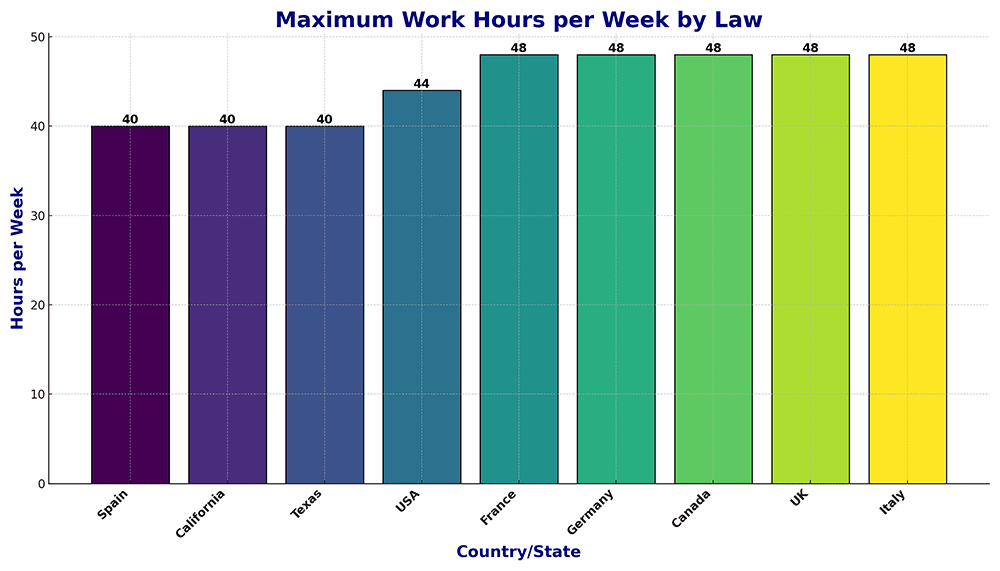
At the federal level, the Fair Labor Standards Act (FLSA) sets standards for minimum wage, overtime pay, recordkeeping, and child labor. While the FLSA broadly considers 40 hours per week as the threshold for calculating overtime pay for non-exempt employees, it does not provide an explicit definition for what constitutes “part-time” work. Essentially, any number of hours less than 40 could theoretically be considered part-time, depending on the employer.
California’s Labor Code similarly does not offer a specific legal definition for part-time. While California is known for its robust worker protections, including daily overtime rules and comprehensive paid leave policies, the legislature has chosen not to codify a precise hour count for part-time status. This means that while some aspects of employment are heavily regulated, the label of “part-time” itself remains flexible.
Employer Discretion and Common Practices
Given the lack of a statutory definition, the determination of what constitutes part-time employment is primarily left to the discretion of individual employers. Most companies define part-time as any schedule involving fewer than 40 hours per week. However, the more crucial threshold often revolves around eligibility for benefits. Many employers will categorize employees working less than 30 or 32 hours per week as part-time, specifically to differentiate them from full-time employees who typically qualify for a full suite of benefits such as health insurance, retirement plans, and comprehensive paid time off.
For instance, a common practice is for companies to set 30 hours per week as the benchmark for employees to be considered “full-time equivalent” for the purposes of the Affordable Care Act (ACA), which mandates that larger employers offer health insurance to full-time employees. Therefore, if you’re seeking a part-time position with benefits in California, understanding an employer’s specific hour threshold for benefit eligibility is often more important than the general “part-time” label. It’s always advisable to consult the employer’s official policy or employment contract to clarify these details.
Impact on Overtime and Scheduling
Regardless of full-time or part-time status, employees in California are generally entitled to overtime pay. Unlike federal law, which only mandates overtime after 40 hours in a workweek, California labor law requires overtime pay at 1.5 times the regular rate for all hours worked over 8 hours in a workday, over 40 hours in a workweek, and for the first 8 hours worked on the seventh consecutive day of work in a workweek. Double time is required for hours over 12 in a workday and for hours over 8 on the seventh consecutive day. This means a part-time employee working a 10-hour day would still earn two hours of overtime, even if their total weekly hours are well below 40.
Furthermore, some California cities, such as San Francisco and San Jose, have enacted “predictive scheduling” ordinances. These laws require employers in certain industries to provide workers with their schedules in advance and often compensate them for last-minute changes or “on-call” shifts. Such regulations provide additional stability for part-time employees, helping them to better plan their work-life balance and personal commitments.
Beyond the Paycheck: Benefits and Lifestyle Implications for Part-Time Workers
For many embracing a flexible California lifestyle, part-time work is not solely about the hourly wage but also about the broader implications for benefits, financial stability, and overall quality of life. The trade-offs and advantages need careful consideration.
Healthcare and Other Essential Benefits
The availability of employer-sponsored benefits is a significant factor in evaluating part-time roles. As mentioned, under the Affordable Care Act, applicable large employers (those with 50 or more full-time equivalent employees) must offer health insurance to employees who work an average of 30 or more hours per week. This threshold often dictates whether a part-time employee receives health benefits. For those working fewer hours, securing affordable health insurance independently through the state marketplace (Covered California) or a spouse’s plan becomes a necessity.
Beyond health insurance, other benefits like paid time off (PTO), paid holidays, and retirement plans (e.g., 401k matching) are often offered on a pro-rata basis or are contingent on meeting specific hourly thresholds. A notable exception in California is paid sick leave. The state’s paid sick leave law mandates that all employees, including part-time and temporary workers, accrue at least one hour of paid sick leave for every 30 hours worked. This is a crucial protection that provides a safety net regardless of full-time status.
Financial Planning and Budgeting for a Flexible Lifestyle
Living in California, especially in major metropolitan areas like Los Angeles, San Francisco, or San Diego, comes with a high cost of living. Relying solely on a part-time income requires meticulous financial planning and budgeting. Many individuals choose to supplement their part-time wages with side gigs, freelance work, or by holding multiple part-time positions.
The appeal of part-time work often lies in the trade-off: accepting a potentially lower income in exchange for greater flexibility and personal time. This necessitates a clear understanding of personal financial needs and a realistic assessment of whether part-time earnings can sustain the desired lifestyle. Strategies might include seeking remote part-time work to reduce commuting costs, living in more affordable regions of California, or carefully managing expenses to prioritize experiences over material possessions.
Work-Life Balance and Personal Pursuits
Perhaps the most compelling aspect of part-time employment for a specific lifestyle is the enhanced work-life balance it can provide. Reduced working hours open up significant opportunities for personal pursuits, such as dedicating time to creative projects, pursuing advanced education, volunteering, caring for family members, or simply enjoying more leisure time. For those seeking to integrate travel into their lives, part-time work can offer the flexibility to take extended trips without the commitment of a full-time role. This flexibility can be particularly attractive for digital nomads who seek to establish a base in California while maintaining the freedom to explore. It enables a lifestyle where work supports life’s broader goals rather than dominating them.
The Strategic Choice: Embracing Part-Time for a California Lifestyle
Choosing part-time work in California can be a deliberate strategic decision, carefully tailored to align with individual life goals and aspirations. It’s a choice that reflects a prioritization of flexibility, personal growth, or specific family needs over the traditional full-time career path.
Tailoring Work to Your Life Goals
Part-time employment serves as an invaluable tool for various life stages and aspirations. For instance, individuals nearing retirement may opt for part-time roles to ease into retirement while maintaining some income and professional engagement. Parents might choose part-time schedules to dedicate more time to raising children without fully exiting the workforce. Entrepreneurs often use part-time work to support themselves while developing a startup or a passion project, leveraging the reduced hours to invest in their new ventures. Students pursuing higher education can balance their studies with a part-time job, gaining valuable experience without sacrificing academic focus. This flexibility allows for a highly personalized career trajectory that adapts to evolving life circumstances.
Navigating the Job Market: Opportunities and Challenges
The California job market offers a diverse array of part-time opportunities across various sectors. Industries such as retail, hospitality, education, healthcare, and administrative services frequently hire part-time staff. The burgeoning gig economy, particularly prominent in California, also provides numerous part-time and flexible contracting roles. When seeking part-time work, it is essential to clearly communicate your availability, desired hours, and any specific constraints during the application and interview process. Understanding the distinction between an “employee” and an “independent contractor” is also crucial, especially in California following the implementation of AB 5 and subsequent legislation, which significantly impacts how gig workers are classified and protected. Ensuring you are correctly classified helps secure access to entitled labor protections.
Legal Protections for Part-Time Employees
Despite the differences in hours and benefits, part-time employees in California are largely afforded the same fundamental legal protections as their full-time counterparts. This includes minimum wage requirements, workplace safety standards, anti-discrimination laws, and the right to accrue paid sick leave. Employers cannot discriminate against employees based on their part-time status when it comes to these basic rights. It is vital for part-time workers to be aware of their rights, understand their employment contracts, and familiarize themselves with their employer’s handbook to ensure fair treatment and compliance with California labor laws.
Practical Considerations for Long-Term Stays and Digital Nomads in California
For those contemplating an extended stay or embracing a digital nomad lifestyle in California, understanding part-time employment goes beyond mere legal definitions; it becomes a cornerstone of practical living and integration.
Visa Implications for Non-Residents
Individuals who are not U.S. citizens or permanent residents must carefully consider visa requirements when planning to work part-time in California. The ability to work, whether full-time or part-time, is strictly governed by immigration laws. Most tourist visas (e.g., B-1/B-2) explicitly prohibit employment. Specific work visas (e.g., H-1B, L-1), student visas (e.g., F-1 with Optional Practical Training or CPT), or other specialized visas are typically required to legally work in the U.S. even on a part-time basis. It is imperative to consult with an immigration attorney or relevant government agencies to ensure compliance with federal immigration laws, as unauthorized work can lead to serious consequences.
Cost of Living vs. Part-Time Income
California’s allure is undeniable, but so is its reputation for high living costs. Major cities such as Los Angeles, San Francisco, and San Diego boast some of the highest rents and overall expenses in the nation. For those relying on part-time wages, a realistic assessment of finances is crucial. This might involve exploring more affordable areas within California, seeking shared accommodation, or leveraging remote part-time work opportunities that allow for earning a California wage while potentially residing in a lower-cost region, whether in-state or out-of-state. Detailed budgeting, including projections for housing, transportation, food, and healthcare, is non-negotiable for a sustainable part-time lifestyle in the state.

Building a Community and Routine
Part-time work can provide an ideal framework for digital nomads and long-term visitors to integrate into California life. The structured hours offer a routine, which can be invaluable for combating the transient nature of nomadic living and fostering a sense of belonging. With fewer work hours, there’s ample time to explore local culture, participate in community events, join clubs, or simply enjoy the state’s abundant natural beauty, from its iconic beaches to its majestic national parks. This balance between meaningful work and generous free time allows individuals to truly experience the California lifestyle, building connections and routines that enrich their stay far beyond a typical tourist experience.
LifeOutOfTheBox is a participant in the Amazon Services LLC Associates Program, an affiliate advertising program designed to provide a means for sites to earn advertising fees by advertising and linking to Amazon.com. Amazon, the Amazon logo, AmazonSupply, and the AmazonSupply logo are trademarks of Amazon.com, Inc. or its affiliates. As an Amazon Associate we earn affiliate commissions from qualifying purchases.