
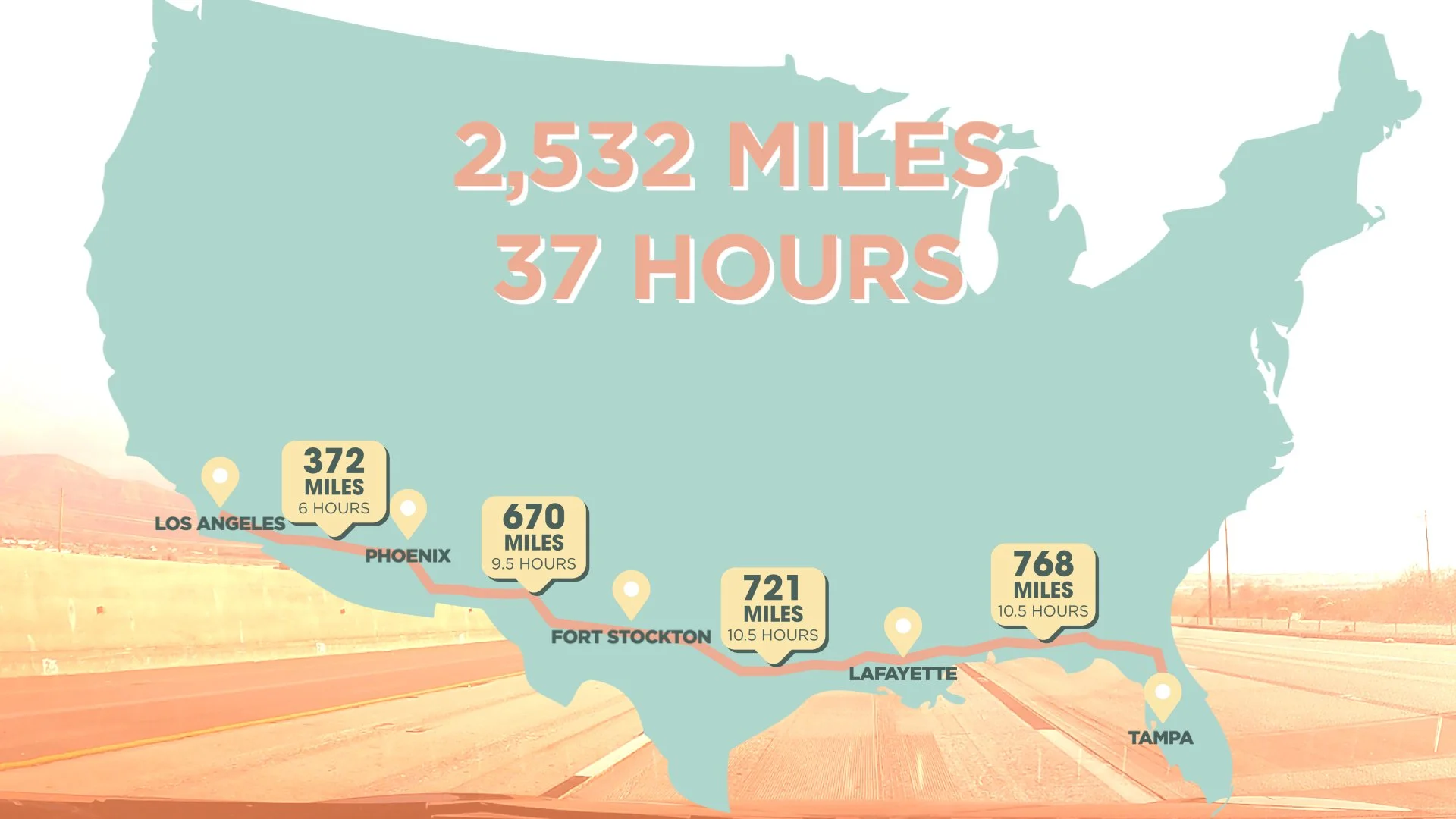
Embarking on a journey from the Sunshine State to the Golden State is a quintessential American cross-country adventure, spanning vast landscapes and diverse climates. The distance between Florida and California is not a single, fixed number; it largely depends on the specific starting point in Florida and the intended destination in California, as well as the chosen route. This transcontinental trek typically ranges from 2,300 to over 2,800 miles by road, translating into a significant commitment of time, resources, and planning. Understanding this immense distance is the first step in preparing for an unforgettable cross-country experience.
Understanding the Transcontinental Journey
The United States is a country of continental scale, and traveling from its southeastern tip to its western coast highlights this fact dramatically. Such a journey requires not just a sense of adventure but also meticulous preparation to ensure a smooth and enjoyable trip.
The Sheer Scale of the United States
Florida, known for its pristine beaches, vibrant cities like Miami, and theme park capitals such as Orlando, lies at the extreme southeast. California, famous for its iconic landmarks, bustling metropolises like Los Angeles and San Francisco, and diverse natural beauty, anchors the southwest. Between these two states lie eight to ten other states, depending on the route, each offering unique landscapes, cultural experiences, and logistical challenges. The average distance makes this one of the longest continuous drives one can undertake within the contiguous United States.
Factors Influencing Distance
Several factors contribute to the variability in mileage:
- Starting Point and Destination: A trip from Jacksonville, Florida to San Diego, California will differ in distance from a trip between Miami and San Francisco. Generally, southern Florida to southern California is the shortest path, while northern Florida to northern California can be significantly longer.
- Chosen Route: The interstate highway system offers multiple options, each with its own advantages and disadvantages. Some routes are more direct but may lack points of interest, while others take a more scenic path, adding miles but enriching the experience.
- Detours and Attractions: Travelers often incorporate detours to visit national parks, landmarks, or specific cities, naturally increasing the overall mileage. For instance, a side trip to the Grand Canyon National Park would add several hundred miles but is often considered an essential part of a cross-country journey.
Primary Driving Routes and Distances
For road trippers, the choice of route is crucial, impacting not only the total miles but also the scenery and potential stops along the way. Three main corridors typically emerge when traversing the country from southeast to southwest.
The Southern Tier Route (Approximately 2,300 – 2,500 miles)
This is arguably the most common and often the most direct route, predominantly utilizing Interstate 10 (I-10). Beginning in cities like Jacksonville or Tallahassee, this route spans the entire southern breadth of the United States.
- States Covered: Florida, Alabama, Mississippi, Louisiana, Texas, New Mexico, Arizona, and California.
- Key Cities Along the Way: New Orleans (Louisiana), Houston and San Antonio (Texas), El Paso (Texas), Tucson and Phoenix (Arizona).
- Pros: Generally flatter terrain, fewer mountain passes, and warmer weather for most of the year, making it a popular choice, especially in winter months.
- Cons: Can be very hot during summer in the desert states; long stretches of relatively monotonous scenery in parts of Texas and Arizona.
The Central Plains Route (Approximately 2,500 – 2,700 miles)
An alternative involves heading north through the central states before veering west. This route might connect to Interstate 40 (I-40) or Interstate 20 (I-20) then I-40.
- States Covered: Typically starts in Florida, then through Georgia, Alabama, Tennessee or Mississippi, Arkansas, Oklahoma, Texas, New Mexico, Arizona, and California.
- Key Cities Along the Way: Atlanta (Georgia), Memphis (Tennessee), Oklahoma City (Oklahoma), Albuquerque (New Mexico), Flagstaff (Arizona).
- Pros: Offers more varied scenery, including parts of historical Route 66, and access to attractions like the Petrified Forest National Park or the Grand Canyon National Park (with a slight detour).
- Cons: Can experience more varied weather, including snow in winter in the higher elevations of New Mexico and Arizona; potentially more mountainous driving.
The Northern Interstate Route (2,700 – 2,900+ miles)
While less common for a direct Florida to California journey due to its increased length, some travelers might opt for routes involving Interstate 70 or Interstate 80 further north.
- States Covered: Could pass through South Carolina, North Carolina, Tennessee, Missouri, Kansas, Colorado, Utah, Nevada, then California.
- Pros: Offers stunning mountain views through Colorado and Utah, and access to major metropolitan areas like Denver and Salt Lake City.
- Cons: Significantly longer, often involves challenging mountain driving conditions, especially in winter, and higher fuel consumption due to elevation changes.
Estimated Travel Time and Logistics
The mileage translates directly into significant travel time, making logistics a critical component of trip planning.

Driving Time Without Stops
For the shortest route (approx. 2,300 miles), continuous driving without any significant stops for rest, food, or fuel would theoretically take around 35-40 hours. However, this is neither practical nor safe. Driving fatigue is a serious hazard, and legal driving limits for commercial drivers are in place for good reason.
Practical Driving Schedules
A realistic driving schedule for a solo driver typically involves 8-10 hours of driving per day. This allows for comfort breaks, meals, and fuel stops.
- 4-Day Trip: This is a brisk pace, requiring 9-10 hours of driving each day. It minimizes stops and is focused purely on reaching the destination. Expect to cover around 575 miles daily.
- 5-Day Trip: A more manageable and common schedule, allowing for 7-8 hours of driving daily. This pace provides a bit more flexibility for brief scenic stops without significant detours. Daily mileage would be around 460 miles.
- 7+ Day Trip: This allows for a more leisurely pace, deeper exploration of areas along the route, and more relaxed overnight stays. This is ideal for those who view the journey as part of the vacation. Daily driving could be as low as 300-400 miles, freeing up afternoons for sightseeing.
Fuel, Food, and Lodging Considerations
Such a long journey necessitates careful budgeting for expenses beyond just mileage.
- Fuel: Fuel costs will be substantial. A vehicle averaging 25 miles per gallon would consume around 92-112 gallons of fuel for a 2,300-2,800 mile trip. At an average of $3.50/gallon, this is approximately $320-$390, but prices vary significantly by state and current market conditions. Use apps to find the best fuel prices along your route.
- Food: Plan for meals. Packing snacks and some meals can save money compared to eating out for every meal. Factor in dining experiences as part of your travel budget.
- Lodging: For a 4-5 day trip, you will need 3-4 nights of accommodation. Prices for hotels or motels vary widely based on location, time of year, and property type. Budget $80-$200+ per night. Booking in advance, especially in popular stopover cities, can secure better rates.
Alternative Modes of Transportation
While driving offers unparalleled flexibility, other modes of transport exist for crossing the country.
Flying: The Fastest Option
For those prioritizing speed, flying is undoubtedly the quickest way to travel from Florida to California. Direct flights between major cities like Miami International Airport or Orlando International Airport and Los Angeles International Airport or San Francisco International Airport typically take around 5 to 6 hours. Factoring in airport check-in, security, and travel to/from airports, the total door-to-door travel time is usually 8-10 hours. While often more expensive than driving, flying saves days of travel time.
Train Travel: A Scenic Alternative
Amtrak offers cross-country train services, providing a unique and often scenic way to experience the vastness of the United States. Routes like the “Sunset Limited” travel through the southern states, roughly paralleling Interstate 10. The journey from, for example, Orlando to Los Angeles can take anywhere from 60 to 70 hours (2.5 to 3 days), often requiring transfers. It’s a slower, more immersive experience, allowing passengers to relax and enjoy the changing landscapes without the stress of driving.
Bus Services: Budget-Friendly Cross-Country
Long-haul bus services like Greyhound offer the most budget-friendly option for crossing the country. A trip from Florida to California by bus can take 2.5 to 4 days, depending on transfers and layovers. While economical, the comfort levels are significantly lower than private car or train travel, and the stops are often brief.
Planning Your Cross-Country Adventure
Regardless of the mode of transport, a journey of this magnitude requires careful planning.
Essential Packing Tips
- Layered Clothing: You’ll experience diverse climates, from humid Florida to arid deserts and potentially cooler mountain passes.
- Emergency Kit: Jumper cables, first-aid kit, flashlight, basic tools, non-perishable food, and water are crucial.
- Navigation: While GPS is invaluable, a physical map or downloaded offline maps can be lifesavers in areas with poor cell service.
- Entertainment: Books, podcasts, music playlists, and games are essential for long stretches, especially for passengers.
Vehicle Preparation
For a road trip, ensure your vehicle is in optimal condition.
- Maintenance: Get an oil change, check tire pressure and tread, inspect brakes, fluids, and lights.
- Documentation: Have your license, registration, and insurance information readily accessible.
- Roadside Assistance: Consider a membership like AAA for peace of mind.
Budgeting for the Journey
Create a detailed budget that includes:
- Transportation: Fuel, airfare, train tickets, or bus fares.
- Accommodation: Nights spent in hotels, motels, or campgrounds.
- Food and Drink: From roadside diners to packed lunches.
- Attractions and Activities: Entrance fees to parks, museums, or entertainment.
- Contingency Fund: Always have extra funds for unexpected expenses, like vehicle repairs or unforeseen overnight stays.
The journey from Florida to California is more than just covering miles; it’s an exploration of the vastness and diversity of the United States. Whether you choose the open road, the speed of flight, or the scenic comfort of a train, understanding the distances and planning accordingly will ensure a memorable and well-executed travel experience.
LifeOutOfTheBox is a participant in the Amazon Services LLC Associates Program, an affiliate advertising program designed to provide a means for sites to earn advertising fees by advertising and linking to Amazon.com. Amazon, the Amazon logo, AmazonSupply, and the AmazonSupply logo are trademarks of Amazon.com, Inc. or its affiliates. As an Amazon Associate we earn affiliate commissions from qualifying purchases.