
The California Gold Rush, an epochal event in American history, stands as a testament to human ambition, resourcefulness, and the transformative power of a single discovery. It ignited a global migration, reshaping the landscape, economy, and demography of California forever. At its heart lies a simple yet profound question: exactly how much gold was unearthed from the rich veins and riverbeds of the Sierra Nevada foothills? While precise figures are elusive, historical accounts and economic analyses offer compelling estimates that reveal the immense scale of this golden era, making the California Gold Rush itself a monumental historical landmark.

The Genesis of a Golden Empire: Early Discoveries and Initial Yields
The story of the California Gold Rush famously began on January 24, 1848, when James W. Marshall, a carpenter working for pioneer John Sutter, stumbled upon shiny flakes in the tailrace of a sawmill he was building near Coloma on the American River. This unassuming find at what would become Sutter’s Mill set off a chain reaction that reverberated across continents. Initially, Sutter attempted to keep the discovery quiet, but news, fueled by figures like merchant Samuel Brannan, quickly spread.
The Rush of ’48 and ’49
The year 1848 saw localized but fervent gold extraction. Early prospectors, many already residents of California or soldiers who deserted their posts, engaged in rudimentary placer mining, primarily panning and cradling for gold nuggets and flakes in river gravels. The gold was relatively easy to find in the abundant surface deposits. It’s estimated that in 1848 alone, approximately $10 million worth of gold (in 1848 dollars) was extracted. While significant, this was merely a prelude to the torrent that would follow.
The true “rush” began in 1849, as word reached the eastern United States and then the wider world. The influx of “forty-niners” was staggering, swelling California’s population from a mere 14,000 non-native inhabitants in 1848 to over 100,000 by the end of 1849. With more hands working, albeit often inefficiently, the gold production soared. Historians estimate that in 1849, the total haul surpassed $40 million. These initial years were characterized by individual enterprise and a relatively low barrier to entry, allowing many to dream of quick fortunes.
The Peak of Production: A Golden Tide from 1850-1855
The early 1850s marked the zenith of gold extraction during the California Gold Rush. The easily accessible surface deposits began to diminish, pushing miners to develop more sophisticated and industrialized methods. This era saw the transition from individual efforts to more organized, capital-intensive operations.
From Panning to Hydraulic Might
By 1850, annual gold production surged, peaking dramatically in the subsequent years. While individual panning and sluicing continued, large-scale operations began to dominate.
- 1850: Gold production reached approximately $81 million.
- 1851: A slight dip, but still robust at $75 million.
- 1852: The peak year, with an astonishing $81 million extracted. This figure represents the highest annual yield of the entire rush.
- 1853: Production remained high at $60 million.
- 1854: Still substantial at $60 million.
- 1855: A gradual decline began, with production around $55 million.
These figures, reported in 19th-century dollars, represent an immense quantity of gold. To contextualize, $81 million in 1852 is roughly equivalent to several billion dollars today, considering inflation and the purchasing power of gold. Over these crucial years, new mining technologies emerged. Hydraulic mining, which involved powerful jets of water to dislodge gravel from hillsides, became prevalent. Though incredibly effective in extracting gold, it caused colossal environmental devastation, altering river systems and landscapes irrevocably. Concurrently, hard rock (quartz) mining began to gain traction, requiring significant capital investment to tunnel into mountains and extract gold from its primary veins.
Estimating the Total Haul: A Historical and Economic Landmark
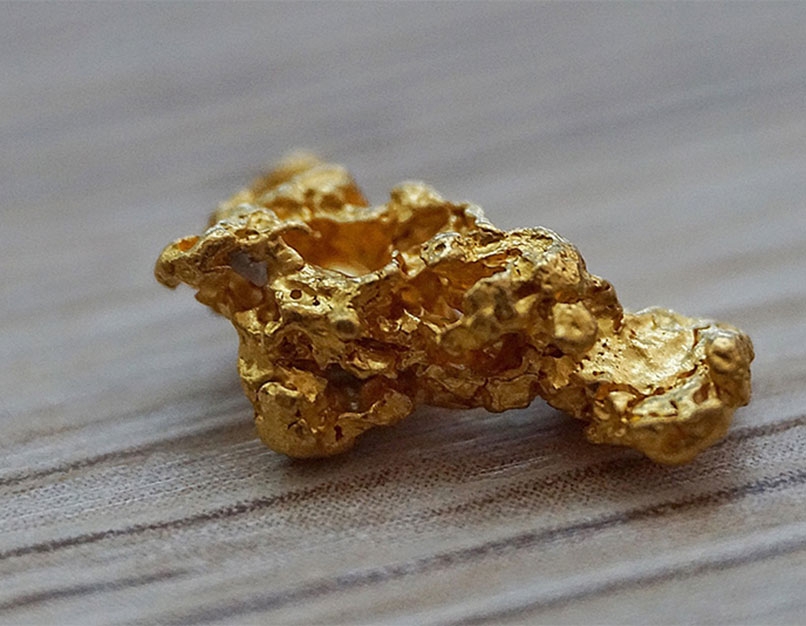
Calculating the exact amount of gold found during the California Gold Rush is inherently challenging. Data collection methods were rudimentary, much gold was traded illicitly or left the state without official record, and figures often varied between state, federal, and private estimates. However, historical economists and mining experts have compiled comprehensive approximations.
The Aggregate Figures
Most reliable estimates indicate that from 1848 to 1855, the height of the California Gold Rush, approximately $400 million to $500 million worth of gold (in 19th-century dollars) was extracted. If we consider the average price of gold during this period (around $18 to $20 per troy ounce), this translates to a staggering amount in weight:
- At $20 per troy ounce, $400 million equals 20 million troy ounces of gold.
- At $20 per troy ounce, $500 million equals 25 million troy ounces of gold.
To put this into a more relatable measure, 20 million troy ounces is roughly equivalent to 1.37 million pounds, or 622 metric tons of pure gold. This monumental quantity would fill several large semi-truck trailers, demonstrating the sheer volume of wealth pulled from the ground in less than a decade. While the peak “rush” largely subsided by the mid-1850s, gold mining continued in California for decades, yielding additional, albeit smaller, amounts. However, the initial eight-year period represents the vast majority of the “rush” era’s output.
Impact on the Global Economy
The influx of so much gold from California had a profound impact on the global economy. It significantly increased the world’s money supply, contributing to inflation and economic expansion in many countries. The gold financed the development of the American West and accelerated California’s statehood in 1850. Cities like San Francisco and Sacramento rapidly transformed from sleepy outposts into bustling metropolises, serving as vital hubs for miners, merchants, and all who sought to profit from the golden boom.
The Enduring Legacy: More Than Just Ounces
The amount of gold found during the California Gold Rush is a significant historical metric, but the rush’s true landmark status extends far beyond mere quantity. It represents a pivotal moment in American history, shaping the nation in countless ways.
Demographic and Societal Transformation
The promise of gold drew people from every corner of the globe – not just Americans, but immigrants from China, Mexico, Europe, Australia, and beyond. This unprecedented demographic shift made California one of the most diverse regions in the United States from its earliest days. These diverse populations brought with them unique cultures, skills, and perspectives, contributing to the rich tapestry of modern California. While the initial draw was gold, many prospectors, failing to strike it rich, turned to other endeavors, founding businesses, farms, and communities, laying the groundwork for the state’s future prosperity.

Infrastructure and Innovation
The need to transport goods, people, and gold spurred massive infrastructure development. Roads, ports, and eventually railroads connected the disparate parts of the state and linked California to the rest of the nation. The innovative spirit of the miners also led to advancements in mining technology, many of which had applications beyond gold extraction. The environmental consequences of the rush, particularly hydraulic mining, also highlighted the profound impact human activity could have on natural landscapes, laying groundwork for future environmental regulations.
Ultimately, the gold unearthed during the California Gold Rush was immense, fueling an economic boom and a population explosion. However, the true legacy of this historical landmark event lies not just in the millions of ounces of gold, but in the enduring spirit of enterprise, the diverse society it forged, and the indelible mark it left on the land and the nation. The story of the gold rush is a cornerstone of American identity, forever associated with the promise and perils of seeking fortune in the great American West.
LifeOutOfTheBox is a participant in the Amazon Services LLC Associates Program, an affiliate advertising program designed to provide a means for sites to earn advertising fees by advertising and linking to Amazon.com. Amazon, the Amazon logo, AmazonSupply, and the AmazonSupply logo are trademarks of Amazon.com, Inc. or its affiliates. As an Amazon Associate we earn affiliate commissions from qualifying purchases.