
The allure of a balisong, often known as a butterfly knife, is undeniable for many. With its intricate flipping maneuvers and a design rooted in both utility and artistry, it holds a certain fascination. For travelers and residents alike in the Sunshine State, a crucial question arises: are these captivating blades legal to possess and carry in Florida? The answer, like many legal matters, is nuanced and requires a deep dive into the state’s statutes and federal regulations.
Understanding Florida’s Knife Laws
Florida has specific legislation that governs the possession and carrying of knives. The primary statutes to consider are found in Chapter 870 of the Florida Statutes, which deals with unlawful carrying of weapons. While the term “butterfly knife” is not explicitly mentioned in the most commonly cited sections, the definitions and prohibitions within the law can encompass them.

Defining Prohibited Weapons
Florida law defines a “weapon” broadly to include any “dirk, stilleto, knife, or slit blade or device designed to cut or wound by the thrust or injection.” The key here lies in the interpretation of what constitutes a prohibited “knife.” While standard folding knives and fixed-blade knives are generally permitted, certain types of knives with specific characteristics can fall under legal restrictions.
A balisong’s unique mechanism – a two-piece handle that rotates around the tang of the blade – allows it to be opened and closed with a flick of the wrist. This characteristic, while central to its appeal, can also be interpreted as a feature that makes it more readily concealed or swiftly deployed, potentially aligning it with the intent of laws prohibiting certain types of weapons.
The “Switchblade” Distinction
A common point of confusion is the potential classification of a balisong as a “switchblade.” In many jurisdictions, switchblades are defined as knives that open automatically by the release of a spring or other device. While a balisong does not typically operate with a spring mechanism in the same way as an automatic knife (where a button or lever is pressed to deploy the blade), the action of opening it can be rapid and fluid.
It’s essential to understand that Florida Statutes § 790.001(13) defines a “switchblade knife” as “any knife that has a blade which opens automatically and is furthered by the use of forces of gravity, or by a flip of the wrist or manual pressure applied to the blade or handle.” This definition is critical. The phrase “furthered by the use of forces of gravity, or by a flip of the wrist” is where a balisong can become legally ambiguous. The skill involved in “flipping” a balisong to open it could, under a strict interpretation of this statute, categorize it as a switchblade knife.
Possession vs. Open Carry vs. Concealed Carry
The legality of a balisong in Florida also hinges on whether you are merely possessing it, openly carrying it, or attempting to conceal it.
Possession
Simply owning a balisong within your private residence or on your private property in Florida is generally not illegal, provided it is not being used in a threatening manner or in conjunction with any criminal activity. The legal complexities arise when the knife leaves the confines of your personal space.
Open Carry
The open carry of knives in Florida is subject to various restrictions. While Florida does not have a statewide ban on the open carry of knives that are not explicitly prohibited weapons, local ordinances can impose additional restrictions. Furthermore, the manner in which a knife is carried can be a factor. A balisong openly carried in a manner that could be perceived as intimidating or threatening could attract unwanted attention from law enforcement.
Concealed Carry
The concealed carry of any knife that could be classified as a prohibited weapon is where the most significant legal risks lie. Florida Statutes § 790.01 prohibits the concealed carrying of any “weapon” without a Florida concealed weapon license. If a balisong is deemed a switchblade or a prohibited knife under the broader definitions, then carrying it concealed would be a clear violation of the law, even with a concealed weapon license, as the license typically does not cover prohibited weapons.
Federal Law Considerations
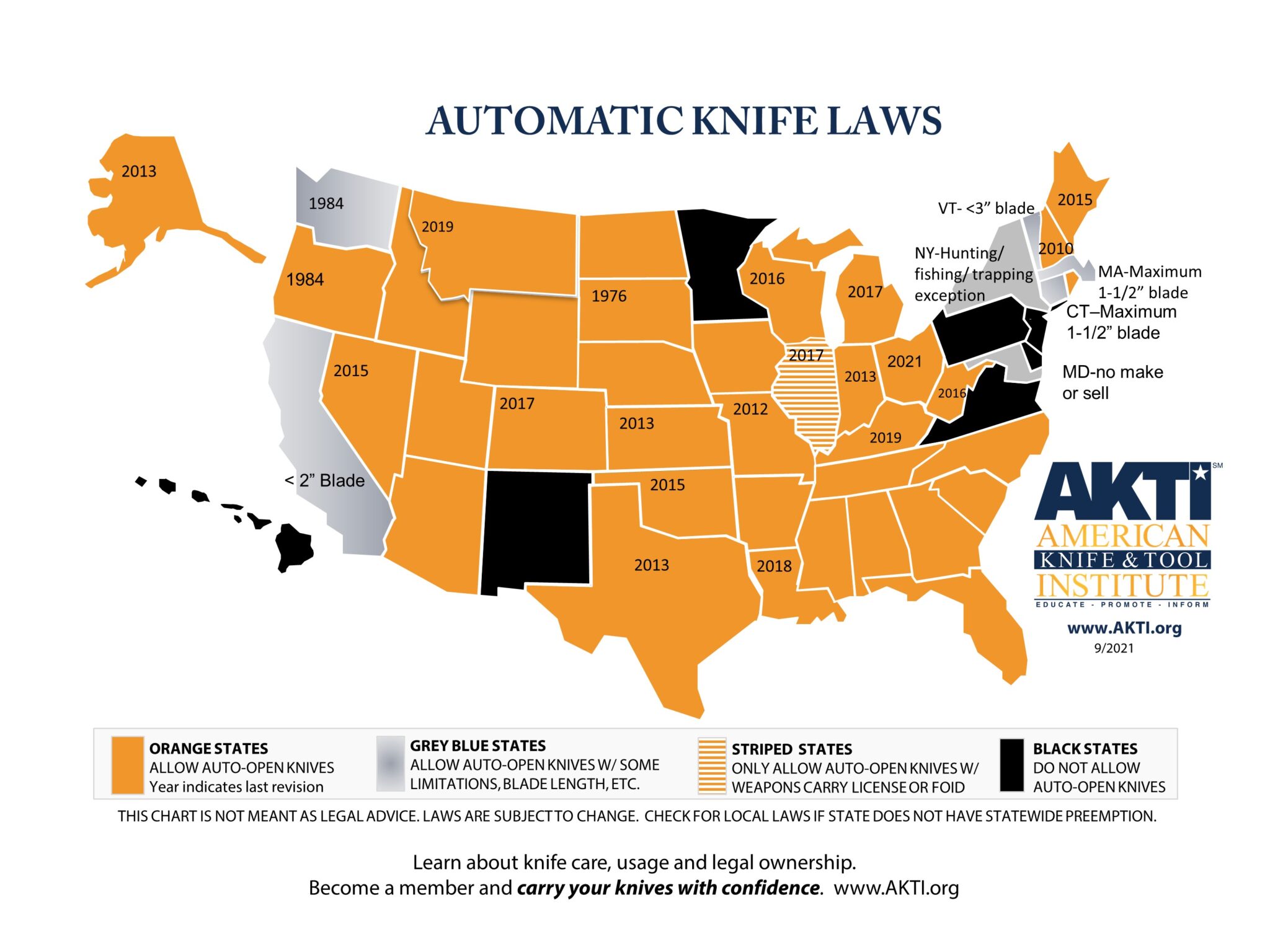
Beyond state statutes, federal law also plays a role, particularly concerning interstate commerce and possession on federal property. The Federal Switchblade Knife Act (15 U.S. Code § 1241-1245) prohibits the importation, manufacture, and interstate commerce of switchblade knives. While this act primarily targets automatic knives, its definitions and interpretations can sometimes influence state-level discussions on similar mechanisms.
However, for a traveler within Florida, the primary legal framework to consider will be the state’s statutes and any applicable local ordinances. Federal law primarily governs the movement of these items across state lines or their presence on federal lands, such as national parks or post offices.
Navigating the Legal Landscape: Best Practices and Recommendations
Given the potential for a balisong to be interpreted as a prohibited switchblade under Florida’s statute, exercising caution is paramount.
Consult Local Ordinances
While state law provides a general framework, cities and counties within Florida may have their own specific knife ordinances. It is advisable to research the laws of the specific locality you are visiting or residing in.
Seek Legal Counsel
For definitive answers and advice tailored to your specific circumstances, consulting with a qualified legal professional in Florida is the most prudent course of action. They can provide an up-to-date interpretation of the statutes and case law relevant to balisongs.
Understand the Intent of the Law
The spirit of knife laws in Florida is generally to prevent the carrying of weapons that can be quickly and easily deployed for offensive purposes or that pose an undue risk to public safety. The intricate design and flipping mechanism of a balisong, while appealing to enthusiasts, can unfortunately place it in a legal gray area that could be interpreted as falling within the intent of these prohibitions.
Traveling with Balisongs
If you are traveling to or from Florida, carrying a balisong can be particularly problematic. Not only do you need to comply with Florida’s laws, but you must also consider the laws of any state you transit through, as well as federal regulations for air travel. Most airlines prohibit knives of any kind in carry-on luggage, and checking them can also be restricted. It is generally safest to avoid traveling with a balisong altogether.
The Balisong Community and Legal Awareness
The balisong community, often referred to as “bladestock” enthusiasts, is passionate about the art and skill of balisong manipulation. Within this community, there is a constant dialogue regarding the legal status of these knives across different jurisdictions. Many experienced balisong practitioners are acutely aware of the legal nuances and often advocate for responsible ownership and a thorough understanding of local laws.
For those who practice balisong flipping as a hobby, it is crucial to do so in private settings where the act cannot be misconstrued as threatening or illegal. The distinction between a recreational tool and a weapon is often blurred in the eyes of the law, and this is especially true for items like balisongs.

Conclusion: A Matter of Interpretation and Caution
In conclusion, the question of whether balisongs are illegal in Florida does not have a simple “yes” or “no” answer. While Florida does not explicitly outlaw balisongs by name, their design and mechanism can easily fall under the state’s broad definition of a “switchblade knife” as outlined in Florida Statutes § 790.001(13). This ambiguity means that possession, and especially carrying, a balisong in Florida carries significant legal risks.
Travelers and residents who are interested in balisongs are strongly advised to err on the side of caution. Understanding the specific wording of the law, being aware of potential local ordinances, and, most importantly, seeking professional legal advice are essential steps before acquiring or carrying such a knife in the state. The beauty and complexity of a balisong are best enjoyed when all legal considerations are thoroughly understood and respected.
LifeOutOfTheBox is a participant in the Amazon Services LLC Associates Program, an affiliate advertising program designed to provide a means for sites to earn advertising fees by advertising and linking to Amazon.com. Amazon, the Amazon logo, AmazonSupply, and the AmazonSupply logo are trademarks of Amazon.com, Inc. or its affiliates. As an Amazon Associate we earn affiliate commissions from qualifying purchases.