
For travelers planning an adventure to the breathtaking landscapes of Colorado, understanding local laws is as crucial as packing the right gear. Among the many considerations, questions about carrying specific items, such as knives, frequently arise. Navigating the legalities surrounding butterfly knives, often referred to as balisongs, can be particularly nuanced, as regulations vary significantly from state to state and even city to city. Before embarking on your journey through the Rocky Mountains or exploring the vibrant urban centers, being informed about Colorado’s stance on these particular blades is essential for a smooth and lawful visit.
Navigating Colorado’s Blade Laws for Travelers
Traveling across state lines often means entering a new jurisdiction with its own distinct set of laws, especially concerning items like knives. What might be permissible in one state could lead to legal complications in another. For visitors to Colorado, the diverse range of outdoor activities, from hiking and camping to fishing and hunting, naturally prompts many to carry knives as practical tools. However, the legal definition and permissible carry methods for different types of knives, including the distinct butterfly knife, are critical distinctions that every traveler should understand. Ignoring these nuances can unintentionally transform a functional tool into a legal liability, potentially disrupting travel plans and leading to unforeseen penalties.
The Centennial State generally maintains a more permissive stance on knife possession compared to some other states, but this broad allowance comes with specific conditions and important exceptions. The key lies in understanding not just what knives are allowed, but how they can be carried and where. For the discerning traveler, this means moving beyond general assumptions and delving into the specifics of Colorado statute and relevant local ordinances.
The Specifics: Butterfly Knives (Balisongs) in Colorado Law
To address the core question, Colorado state law does not explicitly classify butterfly knives (balisongs) as illegal to possess outright. Unlike some states that ban them by name or design feature, Colorado’s statutes focus more on the intent of carrying a weapon and the manner in which it is carried, rather than the intrinsic legality of the knife itself. This distinction is paramount for travelers.
Defining a Butterfly Knife (Balisong)
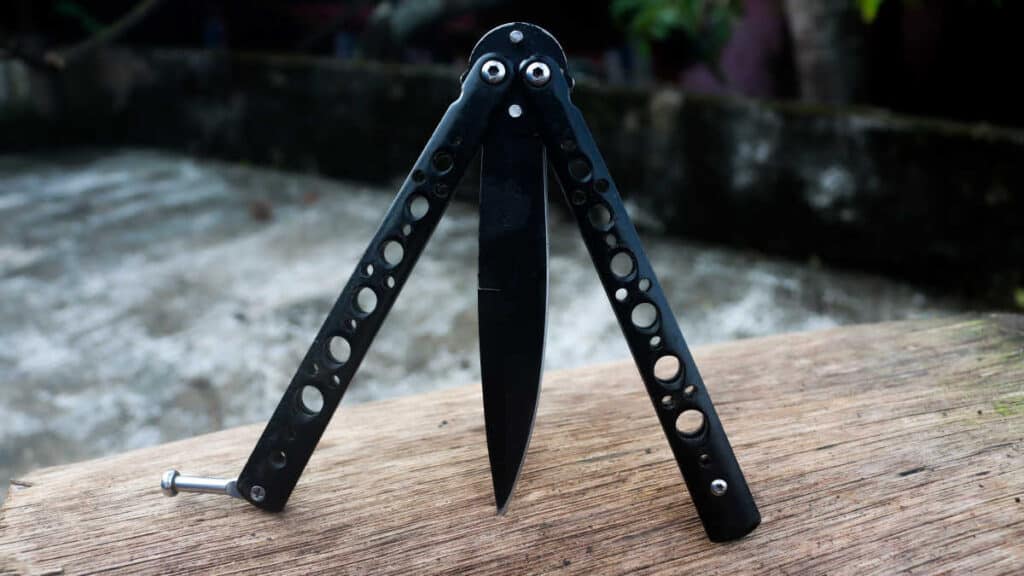
A butterfly knife, or balisong, is a folding pocket knife characterized by two handles counter-rotating around the tang such that, when closed, the blade is concealed within grooves in the handles. It is known for its distinctive opening and closing manipulations, often performed for utility or as a display of skill. For legal purposes, it is generally treated as a type of folding knife, distinct from fixed-blade knives or automatic knives (switchblades), which often face different regulatory scrutiny.
Colorado State Statutes on Knives
Colorado Revised Statutes (C.R.S.) Section 18-12-101 defines “knife” broadly but does not specifically enumerate a ban on butterfly knives. Instead, the law often centers on the concept of a “dangerous weapon.” A dangerous weapon can include a knife “when used or intended to be used in an offense.” This means that the legality of carrying a knife, including a butterfly knife, often hinges on the context and the carrier’s intent.
Open Carry: Generally, Colorado permits the open carry of most knives, including butterfly knives. If the knife is visible to the public, such as carried on a belt sheath, it is typically considered open carry. Travelers often find this a safer legal avenue than concealed carry, as it minimizes suspicion regarding intent.
Concealed Carry: This is where the legal landscape becomes more restrictive. Colorado law generally prohibits the concealed carry of a “dangerous weapon.” While a butterfly knife is not automatically classified as a dangerous weapon by statute, it can be if the person carrying it has the intent to use it unlawfully. Furthermore, there are specific limitations on the concealed carry of knives with blades exceeding 3.5 inches. C.R.S. 18-12-105(2)(d) states that “a knife which has a blade over three and one-half inches in length” is prohibited for concealed carry, except for ordinary pocket knives or hunting knives if the person has a legitimate reason to carry it. A butterfly knife may or may not be considered an “ordinary pocket knife” depending on interpretation and circumstance. To err on the side of caution, travelers should assume that concealed carry of a butterfly knife, especially one with a blade over 3.5 inches, could lead to legal issues.
Concealed Carry Considerations
The distinction between open and concealed carry is critical for any traveler. A knife is considered concealed if it is not readily discernible or is hidden from ordinary observation. This could mean carrying it in a pocket, backpack, or under clothing. For butterfly knives, given their design, they are most often carried concealed for convenience. However, this is precisely where the legal risks increase. Without clear intent for lawful use and adherence to blade length restrictions, a traveler found with a concealed butterfly knife could face misdemeanor charges. These charges, while not as severe as felony offenses, can still result in significant fines and potential jail time, not to mention the immense disruption to a planned vacation.
Local Ordinances: Beyond State Law in Colorado Destinations
While state law provides a foundational framework, many cities and counties within Colorado have enacted their own, often more restrictive, ordinances regarding knives. Travelers must be particularly diligent in researching the specific local laws for their intended destinations, as these can supersede or add layers of regulation to state statutes.
Navigating City-Specific Regulations
Major tourist hubs and populous areas like Denver, Boulder, and Colorado Springs are prime examples where local knife laws can be stricter. For instance, the City and County of Denver has historically had more stringent regulations concerning various types of knives, including blade length limitations for both open and concealed carry in some contexts. Similarly, Boulder has specific ordinances that restrict the possession or carry of certain weapons. These local laws are often designed to enhance public safety within densely populated areas or specific venues.
Before visiting attractions in downtown Denver, hiking trails near Boulder, or exploring the garden of the gods in Colorado Springs, it is highly advisable to consult the municipal codes for those areas. A simple online search for “[City Name] knife laws” can often yield critical information.
Restricted Locations
Beyond general carry laws, both state and local statutes often prohibit knives—of any type, including butterfly knives—in specific locations. These commonly include:
- Federal Buildings: Post offices, courthouses, and other federal government properties.
- State and Local Government Buildings: Capitols, city halls, municipal courts.
- Schools and Universities: K-12 schools, college campuses, and associated events.
- Airports: Inside the secure areas of airports, even if permissible in checked baggage.
- Public Transportation: Buses, trains, and light rail systems in some municipalities.
- Polling Places: During elections.
- Private Property: Businesses or venues that explicitly prohibit weapons, often indicated by signage.
Travelers should be acutely aware of these restricted zones, as carrying a knife, even a legally owned one, into such areas can result in serious legal consequences, regardless of intent.
Practical Advice for Travelers Carrying Knives in Colorado
For those who rely on knives as essential tools or carry them for legitimate recreational purposes, a proactive and cautious approach is the best defense against legal troubles while traveling in Colorado.
Before You Travel
The most effective step is preparation.
- Research Current Laws: Before packing, invest time in researching the most up-to-date Colorado state laws and any specific ordinances for your destination cities (Denver, Boulder, Colorado Springs, etc.). Laws can change, so rely on recent information.
- Consider Leaving Problematic Items at Home: If there’s any doubt about the legality or permissible carry of a butterfly knife, or any knife, for your trip, it’s often best to leave it behind. The convenience of carrying a particular knife rarely outweighs the potential legal and logistical headaches.
- Opt for Simpler Tools: For general utility, a common folding pocket knife with a blade under 3.5 inches is almost universally safer for concealed carry and less likely to attract legal scrutiny, especially if it doesn’t have features that could classify it as a “dangerous weapon.”
During Your Trip
Mindful behavior and understanding local customs can prevent misunderstandings.
- Open Carry for Certainty: If you must carry a knife that might be legally ambiguous for concealed carry (like a butterfly knife over 3.5 inches), consider open carry where permitted. This transparency can often prevent assumptions of unlawful intent.
- Avoid Misunderstandings: Should you encounter law enforcement, remain calm, polite, and cooperative. Clearly state the legitimate purpose for carrying your knife (e.g., for fishing, camping, or a specific trade). Avoid any actions that could be construed as threatening or aggressive.
- Transporting Knives in Vehicles: When traveling by car, it’s generally safest to store any knives in a secure, non-accessible location, such as a locked glove compartment, console, or the trunk. This demonstrates that the knife is being transported, not immediately carried for use.
Consequences of Non-Compliance
Violating knife laws in Colorado can lead to serious repercussions. Depending on the specific violation and local jurisdiction, penalties can range from misdemeanor charges with substantial fines and community service to more severe felony charges, potentially involving significant jail time. Beyond legal consequences, an arrest or citation can severely disrupt your travel plans, create a criminal record, and cause considerable stress and expense.
Other Knife Types and Considerations for Colorado Travelers
While the focus here is on butterfly knives, it’s beneficial for travelers to have a general awareness of how Colorado treats other common knife types.
Automatic Knives (Switchblades)
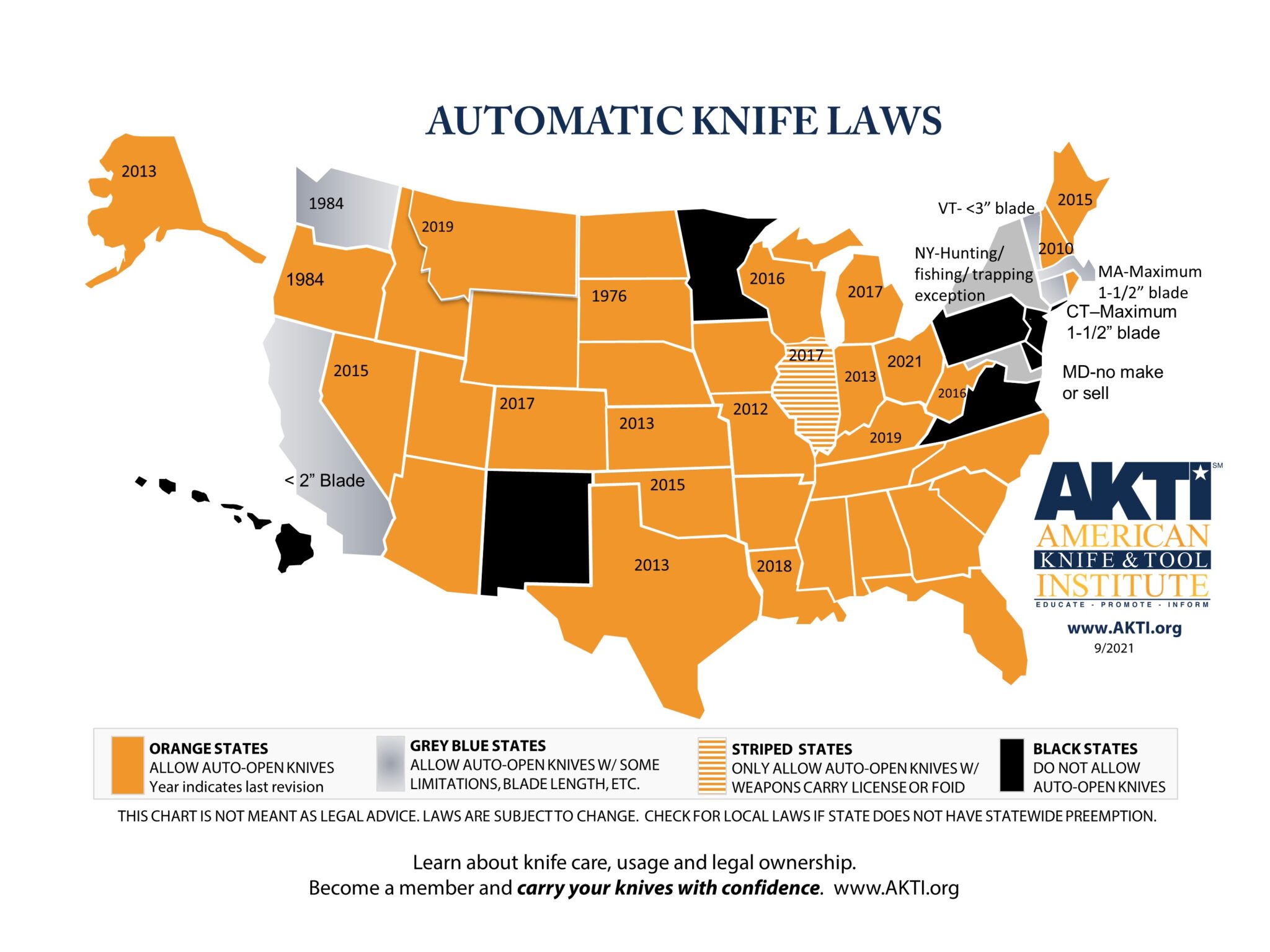
Colorado’s laws regarding automatic knives, often called switchblades, have evolved. Historically, they were widely restricted. However, recent changes in state law have generally decriminalized the possession of automatic knives for adults, aligning Colorado with a more permissive approach than federal law (which restricts interstate commerce). Still, like other knives, their concealed carry might be restricted by blade length or if carried with unlawful intent. Local ordinances might also impose further restrictions.
Daggers, Dirks, and Stilettos
These knives, often designed primarily for stabbing, are not inherently illegal to possess in Colorado. However, their nature makes them more likely to be classified as “dangerous weapons” if carried concealed or if there’s any indication of intent to use them unlawfully. Their design can raise more questions about primary purpose compared to a typical utility folding knife.

Knives as Tools vs. Weapons
Ultimately, Colorado law often distinguishes between a knife carried as a legitimate tool and a knife carried as a weapon. While a butterfly knife can certainly be used as a tool, its design and popular perception can sometimes lean towards the “weapon” classification in the eyes of law enforcement, particularly if carried concealed or used in a manner that raises alarm. Demonstrating a clear, lawful purpose for carrying any knife is often the best defense against potential legal issues.
In conclusion, butterfly knives are not inherently illegal to possess in Colorado. However, their legal status for travelers becomes complex with regard to concealed carry, blade length restrictions, and specific local ordinances in cities like Denver or Boulder. For a worry-free travel experience, thorough research and a cautious approach to carrying any knife are always recommended.
LifeOutOfTheBox is a participant in the Amazon Services LLC Associates Program, an affiliate advertising program designed to provide a means for sites to earn advertising fees by advertising and linking to Amazon.com. Amazon, the Amazon logo, AmazonSupply, and the AmazonSupply logo are trademarks of Amazon.com, Inc. or its affiliates. As an Amazon Associate we earn affiliate commissions from qualifying purchases.