
Florida, the Sunshine State, beckons with its sun-drenched beaches, vibrant theme parks, and a laid-back lifestyle that often conjures images of leisurely cruising. As visitors and residents alike explore its diverse landscapes, from the bustling streets of Miami to the charming avenues of historic towns, a question frequently arises: can you legally operate a golf cart on public roads? The answer, much like Florida’s weather, can be a mixed bag, with specific regulations governing where and how these versatile vehicles can be used. Understanding these rules is crucial for a smooth and enjoyable experience, whether you’re navigating a resort, a planned community, or a coastal town.

The appeal of golf carts extends far beyond the manicured greens of a golf course. Their compact size, ease of operation, and often electric power make them an attractive option for short-distance travel. In many Floridian communities, particularly those designed with a focus on recreation and walkability, golf carts have become an integral part of the transportation landscape. However, not all golf carts are created equal in the eyes of the law, and their street legality is determined by a combination of state statutes and local ordinances. This article will delve into the nuances of golf cart operation in Florida, clarifying what makes them street legal and what you need to know before you hit the pavement.
Navigating Florida’s Regulations: State Laws and Local Ordinances
Florida’s approach to golf cart regulation is a layered one, with state laws providing a foundational framework that local governments can then build upon. At the state level, the definition of a “golf cart” is generally tied to its design and intended use. Florida Statute 320.01(25) defines a golf cart as a motor vehicle designed and manufactured for operation on a golf course for sporting purposes. Crucially, these vehicles are typically not designed for highway use, lacking many of the safety features found on standard automobiles.
However, Florida law also acknowledges the growing prevalence of golf carts in non-traditional settings. This is where the distinction between “golf carts” and “low-speed vehicles” (LSVs) becomes significant. LSVs, as defined by Florida Statute 316.003(44), are motor vehicles that are capable of achieving speeds between 20 and 25 miles per hour. They are also required to meet specific federal safety standards, including the presence of a Vehicle Identification Number (VIN), headlights, taillights, stop lights, turn signals, reflectors, parking brake, rearview mirror, and seat belts. For an LSV to be street legal, it must be titled and registered with the Florida Department of Highway Safety and Motor Vehicles.
Golf carts, on the other hand, typically have a maximum speed of around 15-20 miles per hour and may not meet the same stringent safety requirements as LSVs. Because of this, operating a standard golf cart on public roads is generally restricted. State law permits the operation of golf carts on public roads only under specific circumstances and in designated areas. This typically involves crossing public roads and operating on designated paths or streets where local ordinances explicitly allow it.
The key takeaway is that while golf carts might be abundant in vacation hotspots and retirement communities, their widespread use on public roads is heavily influenced by local governments. Cities and counties across Florida have the authority to enact ordinances that permit or restrict the operation of golf carts, and to set specific rules regarding their use. These ordinances often address factors such as speed limits, required safety equipment, and the types of roads on which golf carts are allowed.
When and Where Can You Legally Drive a Golf Cart?
The ability to legally operate a golf cart on public roads in Florida is not a blanket permission. Instead, it’s governed by a set of conditional allowances. Generally, golf carts are permitted on public roads with a posted speed limit of 35 miles per hour or less, and only if authorized by a local ordinance. This means that a golf cart cannot simply be driven on any road that happens to have a speed limit under 35 mph. The specific jurisdiction must have a law in place that explicitly permits their operation.
One of the most common scenarios where golf carts are allowed is within specific communities or districts. Many planned communities, retirement villages, and resort areas in Florida have embraced golf carts as a primary mode of transport for short distances. In these areas, local ordinances are often tailored to accommodate golf cart use, creating dedicated paths or designating certain streets as permissible for golf cart operation. For instance, areas like The Villages are famously known for their extensive network of golf cart paths and roads where these vehicles are the preferred mode of transportation.
Beyond these designated communities, golf carts may be permitted to cross public roads. Florida Statute 316.212 allows golf carts to cross state roads or county roads if there is a posted speed limit of 35 mph or less, provided that the crossing is made at an intersection that is controlled by a traffic control device (such as a traffic light or stop sign) and the golf cart comes to a complete stop before crossing. The driver must yield the right-of-way to all other vehicular traffic.
Furthermore, some cities and towns have established “golf cart zones” or designated specific streets where golf carts are permitted. These ordinances often come with their own set of rules, which can include requirements for mirrors, reflectors, and even specific lighting. It is imperative for anyone planning to operate a golf cart on public roads to research and understand the specific ordinances of the city or county they are in. Ignorance of these local laws can lead to citations and fines.
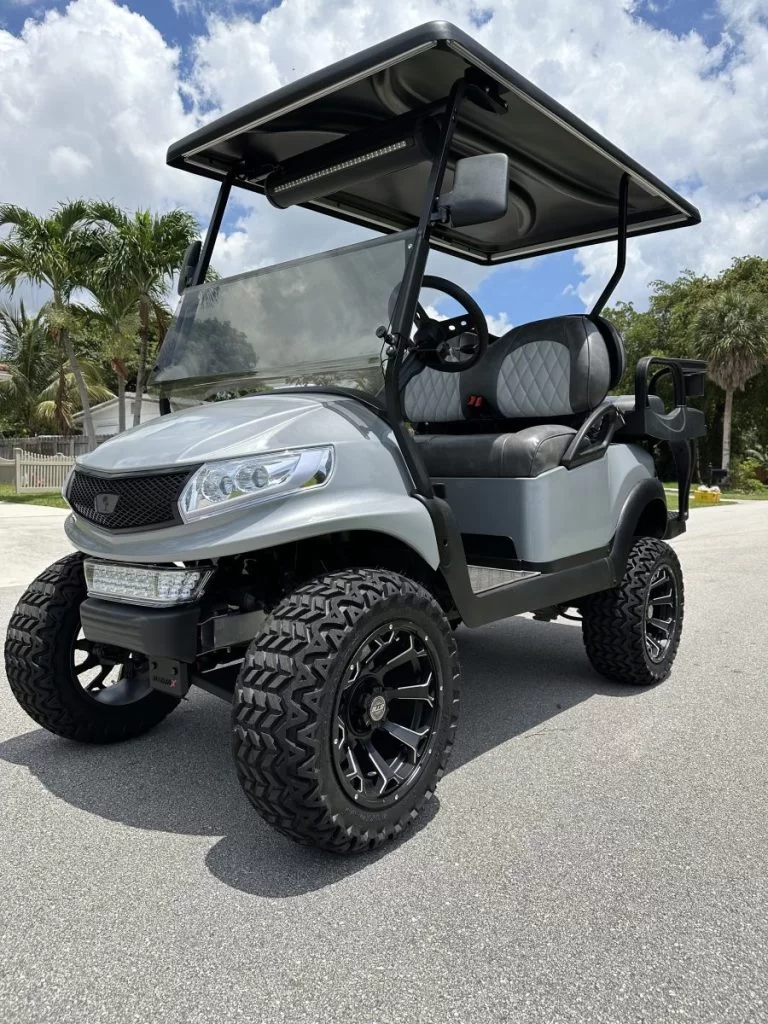
Distinguishing Golf Carts from Low-Speed Vehicles (LSVs)
The confusion surrounding golf cart legality often stems from the distinction between a standard golf cart and a Low-Speed Vehicle (LSV). While they might appear similar and serve a similar purpose for short-distance travel, their legal classifications and operational requirements differ significantly. Understanding this distinction is paramount for ensuring compliance with Florida law.
As previously mentioned, a golf cart is primarily designed for operation on a golf course. In Florida, a standard golf cart, if not modified, typically has a top speed of 20 miles per hour or less and may not be equipped with the safety features required for road use. Due to these limitations, standard golf carts are generally not street legal for operation on public roads, except under the very specific circumstances outlined by state and local laws (such as crossing designated roads or operating in authorized zones).
On the other hand, a Low-Speed Vehicle (LSV), also sometimes referred to as a Neighborhood Electric Vehicle (NEV), is a category of vehicle that is designed and manufactured to meet certain federal safety standards, even though it operates at lower speeds than a typical automobile. In Florida, LSVs must be capable of speeds between 20 and 25 miles per hour. For an LSV to be considered street legal and to operate on public roads, it must be titled and registered with the state, just like any other motor vehicle.
The key differentiator lies in the safety equipment. LSVs are required by federal law to have safety features such as headlights, taillights, brake lights, turn signals, a windshield, seat belts, and mirrors. They are also assigned a Vehicle Identification Number (VIN). Golf carts, in their standard configuration, often lack many of these essential safety features.
The implications of this distinction are significant. If you intend to regularly operate a vehicle on public roads for transportation beyond designated golf cart paths or community roads, and it falls within the 20-25 mph speed range, it is likely that you need an LSV that is properly registered and insured. Attempting to operate a standard golf cart on roads where only LSVs are permitted, or vice versa, can lead to legal trouble. Therefore, it’s crucial to determine whether the vehicle you are using is classified as a golf cart or an LSV and to ensure it meets all the legal requirements for its intended use.

Essential Safety and Operational Considerations
Regardless of whether you are operating a golf cart or an LSV, safety and responsible operation are paramount in Florida. The state’s generally pleasant weather and numerous recreational areas make it a prime destination for these vehicles, but they are still motor vehicles and demand the same level of caution as any other car on the road.
For any golf cart operation on public roads, even in authorized areas, drivers must be aware of their surroundings and the limitations of their vehicle. This includes understanding the maximum speed of the golf cart and ensuring it does not exceed posted speed limits. While many golf carts have a top speed that is already below the general speed limit on many roads, this is not always the case, especially for modified carts. Always adhere to the posted speed limit for the road you are on.
Visibility is another critical safety factor. Many golf carts, especially older models, may not come equipped with adequate lighting for use on public roads, particularly at dusk or in low-light conditions. It is advisable to ensure your golf cart has working headlights, taillights, and brake lights. Reflectors are also essential for increasing visibility to other drivers. If your golf cart does not have these, consider adding them or using reflective tape.
Operating a golf cart requires a valid driver’s license in Florida. This is a non-negotiable requirement for operating any motor vehicle on public roads, including golf carts and LSVs. Drivers should also be sober and attentive, avoiding any distractions that could impair their ability to operate the vehicle safely.
Furthermore, always be mindful of pedestrian traffic, cyclists, and other vehicles. Golf carts are smaller and can be harder for larger vehicles to see. It is advisable to stay to the right side of the road where permissible and to signal your intentions clearly when turning or changing lanes. Never operate a golf cart in a manner that could endanger yourself or others.
In communities where golf carts are common, such as the resort areas around Orlando or the coastal towns of Siesta Key, designated paths are often provided to separate golf cart traffic from vehicular traffic. Utilizing these paths whenever available is the safest option. When operating on roads, always be courteous and follow the traffic rules.
Finally, insurance is an important consideration, even for golf carts. While not always legally mandated for standard golf carts operated under specific local ordinances, having some form of liability insurance can protect you in case of an accident. For LSVs, insurance is typically required as part of the registration process. Always check with your local authorities and insurance provider for specific requirements and recommendations. By prioritizing safety and adhering to all applicable laws and ordinances, you can enjoy the convenience and fun of golf cart travel in Florida responsibly.
LifeOutOfTheBox is a participant in the Amazon Services LLC Associates Program, an affiliate advertising program designed to provide a means for sites to earn advertising fees by advertising and linking to Amazon.com. Amazon, the Amazon logo, AmazonSupply, and the AmazonSupply logo are trademarks of Amazon.com, Inc. or its affiliates. As an Amazon Associate we earn affiliate commissions from qualifying purchases.