
Navigating the legal landscape of personal items while traveling, particularly to destinations like Texas, can be a complex undertaking. Travelers often find themselves curious about the legality of various objects, from sporting equipment to common tools, and how they fit within the state’s regulations. This is especially true when considering items that may have dual purposes or are subject to specific interpretations of the law. The question of whether gravity knives are legal in Texas falls squarely into this category, prompting a need for clarity for residents and visitors alike.
The legal status of any weapon, including knives, in Texas is governed by a patchwork of state statutes and, in some instances, local ordinances. Understanding these laws is crucial for avoiding unintended legal complications. For a traveler, being aware of what is permissible can significantly impact their trip, ensuring peace of mind and adherence to local customs and legal frameworks. This exploration delves into the specifics of gravity knives within the context of Texas law, aiming to provide a comprehensive overview for those seeking this information.

Understanding Knife Laws in Texas
The legal definition and classification of knives have been a subject of ongoing discussion and legislative refinement across the United States, and Texas is no exception. The state’s approach to knife legality is generally characterized by a focus on intent and specific types of blade mechanisms, rather than an outright ban on all knives. For a traveler, this nuance is vital. It means that simply possessing a knife doesn’t automatically equate to a violation, but the type of knife and how it is carried can be determining factors.
Texas Penal Code and Knife Classifications
In Texas, the primary legal framework governing knives is found within the Texas Penal Code. This code outlines prohibited weapons and generally permits the carrying of most knives, with certain exceptions. The key to understanding knife legality often hinges on specific definitions and how different types of knives are categorized.
The Texas Penal Code, specifically Section 31.01, defines a “knife” broadly as a “dagger, knife, or other bladed hand-weapon.” However, the restrictions usually apply to knives that can be classified as “illegal knives.” An “illegal knife” is defined in Section 1.07 as a “knife with a blade longer than five and one-half (5 1/2) inches; a sword; a spear; or a razor with a double-edged blade.” This definition, while comprehensive in its exclusions, doesn’t explicitly mention “gravity knife” as a distinct category of illegal knife. This absence of explicit mention is where much of the ambiguity arises.
“Unusual” Knife Mechanisms and Intent
Beyond blade length, Texas law also takes into account the manner in which a knife can be opened or deployed. While not always explicitly codified as a ban on specific opening mechanisms, the law often looks at whether a knife is designed or intended for use as a weapon. This is where the concept of “intent” becomes particularly important. If a knife is carried with the intent to use it unlawfully, that can lead to charges regardless of its specific type.
For common, non-prohibited knives, the focus is often on whether they are concealed and whether their possession is lawful. Open carry of most knives in Texas is generally permissible, provided they are not otherwise illegal. Concealed carry of a knife is also often allowed, with the caveat that it must not be an “illegal knife” as defined by statute. The challenge with certain types of knives, like gravity knives, is their potential to be perceived as weapons due to their rapid deployment, even if not explicitly banned by mechanism.
What is a Gravity Knife?
To understand the legality of gravity knives in Texas, it is crucial to first define what a gravity knife is. This type of knife is characterized by its specific deployment mechanism, which relies on gravity or centrifugal force rather than a manual flick of the wrist or a spring-assist. This unique characteristic is often what places it under scrutiny.
Deployment Mechanism Explained
A gravity knife typically features a blade that is released from the handle by disengaging a locking mechanism, allowing the blade to extend due to its own weight when the knife is held in a particular orientation. Alternatively, it can be a telescoping blade that extends when a release is activated and the knife is then pointed downwards. This is distinct from an automatic knife, which uses a spring to propel the blade out. The “gravity” aspect refers to the reliance on external forces, like gravity, to facilitate the blade’s opening.
The perceived advantage of a gravity knife is its potential for rapid deployment. This characteristic, while useful in certain practical applications, also raises concerns about its potential for misuse as a weapon. This is a key point of consideration for lawmakers and law enforcement when determining the legality of such items. The speed and ease with which a gravity knife can be made ready for use are factors that often contribute to debates surrounding their regulation.
Distinction from Other Automatic Knives
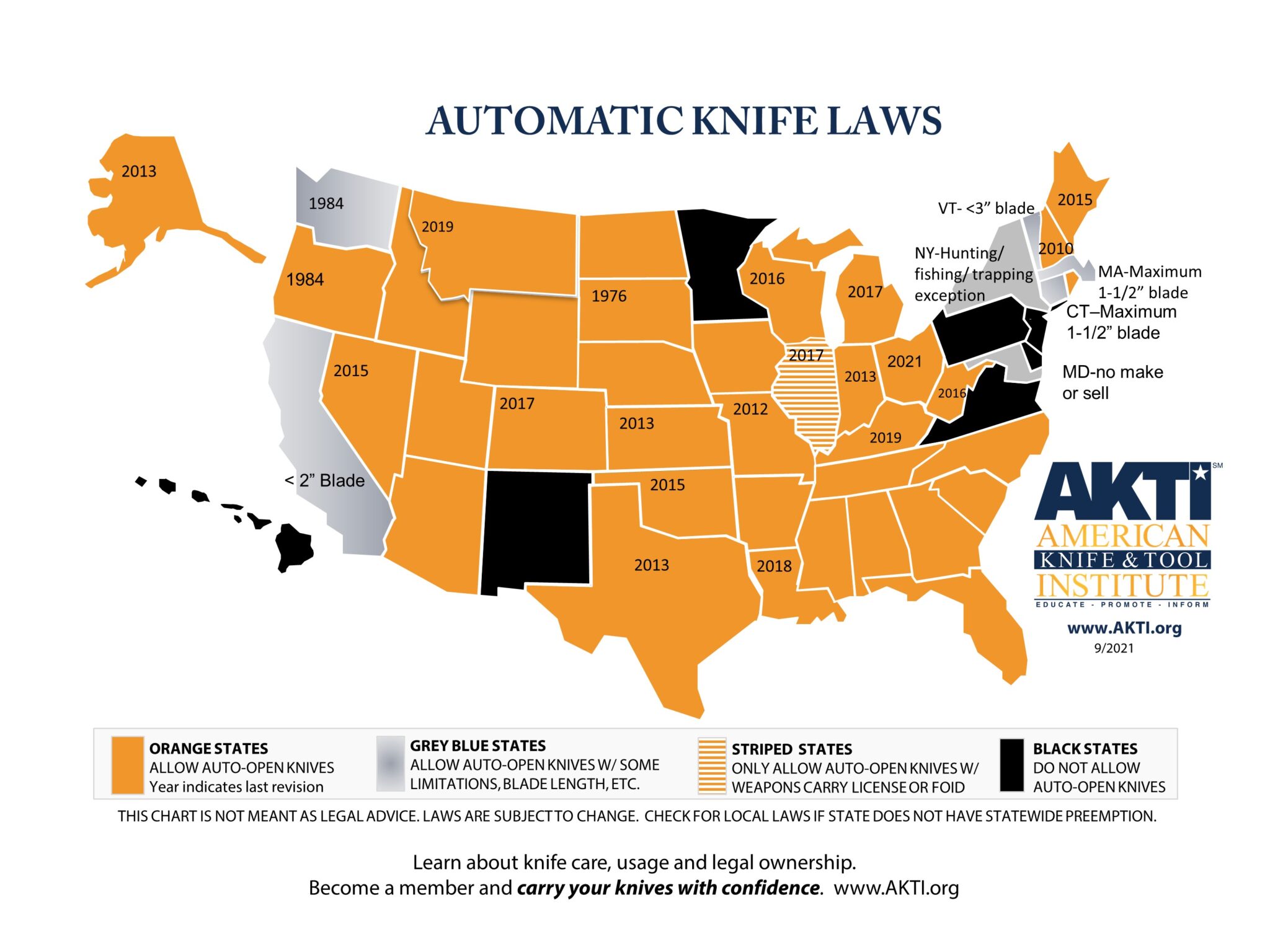
It is important to distinguish a gravity knife from other types of knives with automatic or assisted opening mechanisms, such as switchblades or out-the-front (OTF) knives. While all these knives can be deployed quickly, their internal mechanics differ. The legal treatment of these various knife types can also vary significantly from state to state, and even within a state, interpretations can differ. In Texas, the absence of explicit classification for gravity knives means their legality is often inferred from broader definitions of prohibited weapons.
The lack of a specific prohibition against gravity knives in the Texas Penal Code does not automatically render them legal for all purposes. Instead, their legality is often assessed based on whether they fall under the general prohibitions against “illegal knives” or if their design and intent can be construed as primarily weapon-oriented in a manner that violates other statutes. This nuanced approach requires careful consideration of the knife’s specific design and how it might be interpreted within the existing legal framework.

Legal Status of Gravity Knives in Texas
The question of whether gravity knives are legal in Texas is not as straightforward as a simple yes or no. Due to the specific wording of Texas law, which focuses on blade length and certain types of weapons rather than explicitly banning gravity knives by mechanism, their legality can be subject to interpretation. This ambiguity necessitates a closer look at how these knives might fit into existing legal definitions.
Absence of Explicit Prohibition
As previously mentioned, Texas Penal Code does not explicitly list “gravity knife” as an illegal weapon. The definitions for “illegal knife” primarily focus on blade length (over 5 1/2 inches), swords, spears, and double-edged razors. A gravity knife, by its nature, does not inherently fit these specific descriptions unless its blade exceeds the length limit. This absence of explicit prohibition is a significant factor.
However, the interpretation of existing laws can be dynamic. Law enforcement and courts may look at the functionality and intent behind the design of a gravity knife. If a particular gravity knife, regardless of its blade length, is deemed by authorities to be designed primarily as a weapon and capable of rapid, concealed deployment, it could potentially fall under broader interpretations of prohibited weapons or be considered an unlawful carrying of a weapon if concealed.
Judicial Interpretations and Precedents
While there might not be a specific statute banning gravity knives in Texas, judicial interpretations and past court rulings can play a significant role in defining their legality. Legal challenges can arise if an individual is charged with unlawfully carrying a weapon while in possession of a gravity knife. The outcome of such cases can set precedents that influence how these knives are treated in the future.
Historically, the legal status of gravity knives has been a point of contention in various jurisdictions. Some states have specific laws against them, while others have had to rely on broader interpretations of their weapon laws. For Texas, if a court were to rule that a gravity knife, by its design, is inherently a weapon intended for facile use in a manner that poses a public safety risk, its possession could be deemed illegal, especially if concealed. The absence of a clear “yes” or “no” means that possession can be a gray area, potentially leading to legal encounters if not carried with awareness of potential interpretations.
Considerations for Travelers
For individuals traveling to or within Texas, understanding this potential ambiguity is crucial. While open carrying a knife that is not an “illegal knife” by definition is generally permissible, carrying a gravity knife, especially concealed, could invite scrutiny. If a traveler is unsure about the specific design of their knife and its potential interpretation under Texas law, it is advisable to err on the side of caution.
This might mean leaving such knives at home or ensuring they are carried in compliance with all open carry statutes, clearly visible, and not concealed. Researching the most current interpretations of Texas knife laws and consulting with legal experts specializing in firearm and weapon laws in Texas would be the most prudent course of action for anyone with specific concerns. The goal for any traveler is to enjoy their visit without encountering any legal impediments, and understanding local regulations, even for seemingly minor items, is a key component of responsible travel.
Carrying Knives Legally in Texas: Practical Advice
For those who wish to carry knives while visiting or residing in Texas, understanding the practical aspects of legal possession and carrying is essential. Given the nuances of Texas knife laws, particularly concerning less common types like gravity knives, a proactive approach to compliance can prevent misunderstandings and legal issues.
Open Carry vs. Concealed Carry
In Texas, the laws governing open carry and concealed carry differ for knives. Generally, open carrying most knives is permissible, provided they are not classified as illegal knives. This means that a knife with a blade longer than 5 1/2 inches, a sword, or a spear cannot be carried openly or concealed. The question of gravity knives, as discussed, falls into a more ambiguous zone, but open carry would generally be considered less risky than concealed carry if the knife itself is not explicitly an illegal type.
Concealed carry of knives is more restricted. While many knives can be carried concealed, an “illegal knife” as defined by the Texas Penal Code cannot be. Furthermore, even if a knife is not explicitly defined as illegal, carrying it concealed with the intent to use it unlawfully can lead to charges of unlawful carrying of a weapon. Travelers should be aware that in some specific locations, such as schools or government buildings, restrictions on carrying knives may be more stringent, regardless of their type or how they are carried.
Best Practices for Travelers
For travelers, the most reliable approach is to ensure that any knife carried is clearly not an “illegal knife” as defined by Texas law. This typically means avoiding knives with blades exceeding 5 1/2 inches, swords, or spears. If carrying a gravity knife, understanding its potential legal interpretation is paramount. Given the ambiguity, it might be prudent for travelers to avoid carrying gravity knives altogether to prevent any potential legal entanglements during their stay in Texas.
If a traveler chooses to carry a knife, it is advisable to do so openly, where legally permitted. Keeping the knife visible and ensuring it is not used in a threatening manner are key to maintaining compliance. Familiarizing oneself with specific local ordinances in cities like Austin, Dallas, Houston, or San Antonio can also be beneficial, as some localities may have additional regulations. Always adhering to the principle of responsible possession and use will significantly reduce the risk of encountering legal difficulties while enjoying the diverse experiences Texas has to offer.
LifeOutOfTheBox is a participant in the Amazon Services LLC Associates Program, an affiliate advertising program designed to provide a means for sites to earn advertising fees by advertising and linking to Amazon.com. Amazon, the Amazon logo, AmazonSupply, and the AmazonSupply logo are trademarks of Amazon.com, Inc. or its affiliates. As an Amazon Associate we earn affiliate commissions from qualifying purchases.