
California, a land of unparalleled beauty, from the sun-drenched beaches of San Diego to the majestic peaks of the Sierra Nevada Mountains, offers an incredible tapestry of experiences for every type of traveler. Whether you’re planning a thrilling adventure through Yosemite National Park, a luxurious urban escape to Los Angeles, or a cultural immersion in San Francisco, understanding local laws is paramount for a seamless and stress-free journey. As discerning travelers seeking out the best destinations, attractions, and lifestyle experiences, it’s easy to overlook specific legal nuances, especially concerning items that might seem innocuous in one locale but are highly regulated in another. One such item, often misunderstood and subject to varying legal interpretations, is the switchblade knife.
For many, a knife might be seen as a practical tool for outdoor adventures, a collector’s item, or even a self-defense implement. However, in California, the laws surrounding automatic knives, commonly known as switchblades, are quite specific and strictly enforced. This guide aims to demystify these regulations, providing essential information for anyone planning to visit, live in, or travel through the Golden State. We’ll delve into what constitutes a switchblade, the federal and state laws governing their legality, and practical advice for travelers to ensure their trip remains focused on enjoyment and discovery, rather than legal complications. Understanding these details is not just about avoiding penalties; it’s about respecting the local culture and legal framework of a destination, an integral part of responsible tourism.
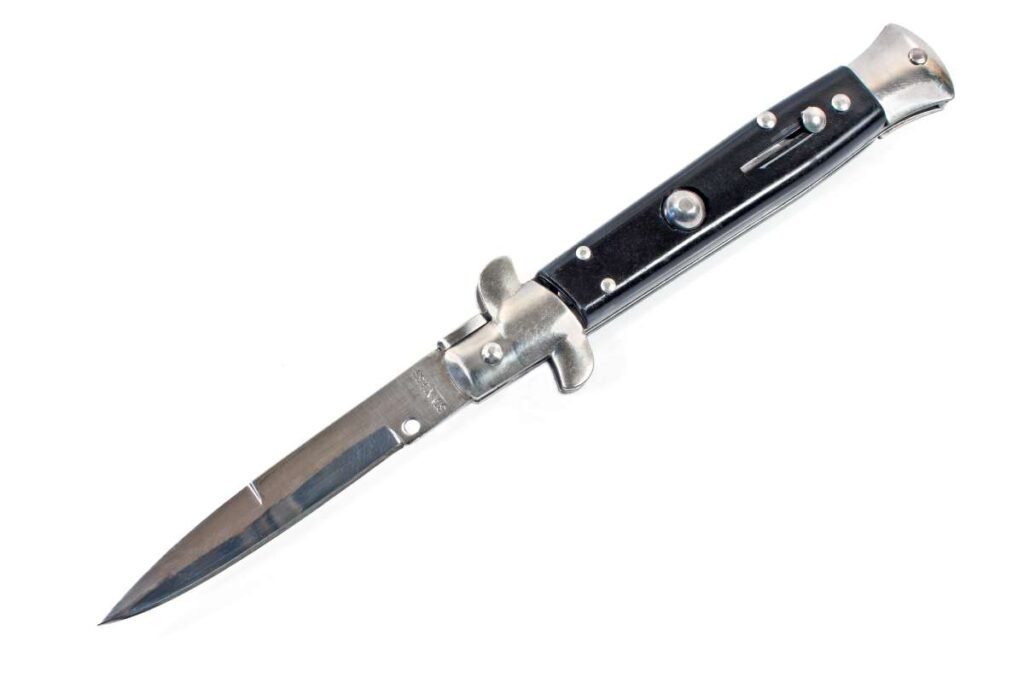
Understanding Automatic Knives: What Qualifies as a Switchblade?
Before diving into the legal specifics, it’s crucial to understand precisely what type of knife falls under the “switchblade” category. The term itself often conjures images from movies or popular culture, but the legal definition is far more precise. For a traveler, distinguishing between various types of knives is vital, as not all folding knives are treated equally under the law.
Defining the “Switchblade” Under California Law
In California, an “automatic knife,” or switchblade, is defined primarily by its mechanism of operation. According to California Penal Code 21510, a switchblade knife is any knife having a blade that is “released from the handle or sheath by the force of a spring or other mechanical device or an outward or downward thrust.” This definition explicitly includes knives that open automatically through a button, lever, or gravity, where the blade deploys without manual manipulation of the blade itself once the mechanism is engaged.
It’s important to differentiate switchblades from other types of knives commonly encountered by travelers or outdoor enthusiasts:
- Manual Folding Knives: These knives require the user to manually open the blade, typically using a thumb stud, nail nick, or by grasping the blade directly. They do not have an automatic spring-assisted opening mechanism.
- Spring-Assisted Knives (Assisted Openers): These are a common point of confusion. While they use a spring to aid in opening, they still require some initial manual force to begin the blade’s deployment. The blade does not automatically spring out with a button press. California law generally differentiates these from true automatic knives, but their legality can still be subject to interpretation or local ordinances, especially regarding open vs. concealed carry.
- Fixed-Blade Knives: These knives have a blade that is permanently fixed to the handle and does not fold. Think of kitchen knives, hunting knives, or tactical knives. Their legality hinges more on overall length, intent, and whether they are concealed.
- Balison Knives (Butterfly Knives): While these knives are also subject to strict regulations in California, they operate by rotating two handles around the tang of the blade, not an automatic spring mechanism.

The critical factor for a switchblade in California is the automatic deployment feature. If a knife’s blade springs out with the press of a button or similar mechanism, it’s likely considered a switchblade. Furthermore, California law introduces a crucial blade length restriction for these automatic knives: it is illegal to carry, possess, or sell any automatic knife with a blade longer than 2 inches. This small length limit means that even miniature automatic knives, often mistaken for harmless curiosities, can fall afoul of the law if their blade exceeds this threshold. This specific detail is often where travelers unfamiliar with local statutes inadvertently run into trouble.
The Legal Landscape: Federal and California Statutes
Understanding knife laws requires a dual perspective, as both federal and state laws can apply. While federal law primarily governs interstate commerce, state laws dictate possession and carry within their borders. For anyone visiting California, the state’s statutes will be the most immediately relevant.
Federal Regulations: The Switchblade Knife Act of 1958
At the federal level, the primary legislation concerning switchblades is the Switchblade Knife Act of 1958. This act primarily regulates the interstate commerce of switchblade knives. It generally prohibits the manufacture, sale, or transportation of switchblade knives in interstate commerce within the United States. The intent behind this act was to curb the perceived rise in gang violence and criminal activity associated with these knives in the mid-20th century.
However, the federal act does include specific exemptions. For instance, switchblades can be transported by common carriers for sale to, or possession by, the military, law enforcement agencies, or for use in professional cutting activities. This means that while importing or shipping switchblades across state lines is largely restricted, the federal law doesn’t directly prohibit possession within a state if that state allows it. This is where state laws, like those in California, take precedence for residents and travelers alike. As a tourist, you generally won’t be dealing with interstate commerce issues unless you’re attempting to purchase or import a switchblade from another state or country into California.
California’s Specific Stance: Penal Code Sections
California has some of the strictest knife laws in the United States, particularly regarding automatic knives. The key piece of legislation to be aware of is California Penal Code 21510. This code explicitly states:
“Every person who does any of the following with a switchblade knife having a blade two inches or more in length is guilty of a misdemeanor:
(a) Possesses the knife in the passenger’s or driver’s area of any motor vehicle in a public place or on any public street or highway.
(b) Carries the knife upon his or her person.
(c) Sells, offers for sale, exposes for sale, loans, transfers, or gives the knife to any other person.”
This is the cornerstone of California’s switchblade prohibition and highlights several critical points for travelers:
- Blade Length: As previously mentioned, the 2-inch rule is paramount. Any switchblade with a blade two inches or more in length is illegal to possess, carry, or sell. This is a very short blade, meaning most functional automatic knives will exceed this limit.
- Scope of Prohibition: The law covers possession in vehicles, carrying on one’s person (both open and concealed), and all forms of transfer (sale, loan, gift). This means if you have an illegal switchblade in your car while driving through California, or if it’s found in your backpack while exploring a city, you are in violation.
- Consequence: Violation is classified as a misdemeanor. While not a felony, a misdemeanor conviction can still result in significant fines, potential jail time, and a criminal record, which can have long-lasting implications, especially for international travelers or those with professional licenses.

It’s crucial to understand that there is no “grandfather clause” or special allowance for collectors or those who legally acquired the knife elsewhere. If you bring a switchblade exceeding 2 inches into California, you are subject to California law. While general folding knives (non-automatic) with blades under a certain length (typically under 4 inches for concealed carry) are generally legal to possess and openly carry, the automatic nature of a switchblade immediately puts it under severe restriction. This nuanced difference is vital for anyone traveling to or through destinations like Los Angeles, San Francisco, or even smaller towns, as enforcement can occur anywhere.
Practical Implications for Travelers and Tourists in the Golden State
For those planning to explore the diverse landscapes and vibrant cities of California, from its iconic landmarks to its hidden gems, understanding these knife laws is not just about legal compliance but also about ensuring a smooth and enjoyable trip. The rules impact everything from what you pack to what you might consider buying as a souvenir.
Carrying and Concealment: What’s Permitted?
When traveling, the question of carrying a knife often arises, whether for self-defense, utility, or simply as part of everyday carry. In California, the answer for switchblades is generally straightforward: do not carry one with a blade 2 inches or longer.
- Public Places and Transportation: This prohibition applies universally. Whether you’re exploring the historic streets of Old Town Sacramento, lounging on the sand at Venice Beach, hiking in a state park, or navigating through major transportation hubs like Los Angeles International Airport (LAX) or San Francisco International Airport (SFO), carrying an illegal switchblade can lead to immediate legal trouble. While airports have additional TSA regulations that prohibit all knives in carry-on luggage, the state law extends to the entire airport property, including public areas outside security checkpoints.
- Vehicles: The law explicitly mentions possession in the passenger or driver’s area of any motor vehicle. This is critical for road trippers or those renting cars. Even if the switchblade is stored in a glove compartment or under a seat, it could be considered “in the driver’s or passenger’s area.”
- Accommodation: While hotels or accommodations don’t typically have specific “knife policies” unless they relate to illegal activities, possessing an illegal switchblade in your hotel room in Beverly Hills or a cozy Lake Tahoe cabin still constitutes illegal possession under state law.
- Outdoor Activities: For those who enjoy the great outdoors, whether camping in Joshua Tree National Park or fishing along the Pacific Ocean coastline, a utility knife is often essential. However, it’s crucial to ensure it’s a legal folding knife or fixed blade, not an automatic knife exceeding the 2-inch limit. Many adventurers prefer robust fixed-blade knives for camp tasks or spring-assisted folders that do not fall under the automatic knife definition.
When in doubt, it is always safest to err on the side of caution. For general utility, a standard folding knife (non-automatic, blade under 4 inches for concealed carry, or openly carried) is usually sufficient and legal.
Purchasing and Souvenirs: Avoiding Legal Pitfalls
The allure of unique souvenirs or collector’s items can be strong, especially when exploring the diverse markets and shops across California. However, this is another area where travelers must exercise caution.
- Retailers in California: Reputable knife retailers in California will generally not sell switchblades that violate state law (i.e., those with blades 2 inches or more). However, smaller, less scrupulous vendors, or those at flea markets or specialty shows, might. It is the buyer’s responsibility to know the law. Purchasing an illegal switchblade, even as a “souvenir,” puts you in immediate violation of Penal Code 21510.
- Online Purchases: The internet makes it easy to purchase items from anywhere. However, having an illegal switchblade shipped to a California address, even if purchased legally from a state like Nevada or Arizona where laws might be more lenient, is illegal. The act of possessing it upon arrival in California is the violation.
- Shipping Across State Lines: If you legally own a switchblade (over 2 inches) in another state and are moving to or just visiting California, you cannot legally bring it with you, even if shipped. It must remain in the state where it is legal.
- Cross-Border Travel: For international visitors, particularly those coming from Mexico or Canada, understanding both U.S. federal and California state laws is crucial. Customs and Border Protection will enforce federal laws, and then state laws will apply once you are within California.
Navigating Different California Destinations
While California is a vast and varied state, the core switchblade law (PC 21510) is a statewide statute. This means the 2-inch blade length limit for automatic knives applies uniformly across all cities and counties, from the bustling streets of Hollywood to the tranquil vineyards of Napa Valley.
Unlike some other states where local ordinances might create significant variations in knife laws, California’s Penal Code regarding switchblades is a clear state-level prohibition. Therefore, whether you are staying in a luxury resort in Beverly Hills, exploring the Golden Gate Bridge in San Francisco, or experiencing the magic of Disneyland Resort in Anaheim, the law regarding switchblades remains consistent. This simplifies things for travelers, as they don’t need to check specific city codes for this particular type of knife. However, it also means there are no “safe zones” within the state where a prohibited switchblade would suddenly become legal.
Beyond Switchblades: General Knife Law Advice for California Visitors
While this article focuses on switchblades, responsible travel and an understanding of local culture extend to all types of knives. California has other knife regulations that visitors should be aware of to ensure their trip remains trouble-free. This general advice complements the specific information about automatic knives and underscores the broader lifestyle of informed travel.
Other Restricted Knives and Practices
Beyond switchblades, California also regulates other types of knives and carrying methods:
- Daggers and Dirks: These are knives or bladed instruments that are capable of ready use as a stabbing weapon. California Penal Code 21310 makes it a felony to carry a dagger or dirk concealed upon one’s person. However, openly carrying a fixed-blade dagger or dirk is generally permissible, provided it’s not done with intent to assault. The key here is concealment.
- Fixed-Blade Knives: While generally legal to own, fixed-blade knives (like hunting knives or survival knives) cannot be carried concealed. If you are carrying a fixed-blade knife, it must be openly displayed. This means it should be visible on your belt, backpack, or in a sheath that is clearly accessible and not hidden.
- Knives in Specific Locations: There are blanket prohibitions on carrying any knife (including otherwise legal ones) in certain sensitive locations, such as K-12 public or private schools, colleges, universities, and federal or state government buildings. These are common restrictions in many jurisdictions, but it’s always good to reiterate, especially for visitors who might not be familiar with local customs and security protocols.
- Intent: Even with legal knives, if it can be proven that a knife is carried with the intent to assault, it can lead to charges. This is a general legal principle, but it’s relevant for travelers to remember that the purpose for carrying a knife can be scrutinized.
Essential Tips for Responsible Travel
To ensure your California adventure is memorable for all the right reasons, keep these tips in mind regarding knife laws and responsible travel:
- “When in Doubt, Leave it Out”: This is perhaps the best advice for any potentially regulated item. If you’re unsure about the legality of a knife, especially an automatic one, it’s safest not to bring it or carry it in California. For general utility, a common manual folding knife (under 4 inches) is almost always a safe and legal bet.
- Focus on Practicality, Not Potentially Illegal Features: For outdoor activities, a sturdy fixed-blade knife or a reliable manual folder will serve almost any purpose legally. There’s no practical reason for a traveler to risk legal repercussions for the automatic deployment feature of a switchblade.
- Research Before You Go: For any destination, not just California, take a few moments to research local laws, especially concerning items you typically carry. Many travel guides and government websites provide this information. This is a fundamental aspect of planning any trip, whether it’s for luxury travel, budget exploration, or a family vacation.
- Seek Legal Advice if Necessary: This article provides general information and should not be considered legal advice. If you have specific concerns about a particular knife or your unique situation, consult with a qualified legal professional in California.
- Respect Local Laws and Culture: Part of enjoying a destination’s local culture and lifestyle is respecting its laws. Being an informed traveler prevents misunderstandings and ensures a positive interaction with the community and its authorities.
In conclusion, while California offers an incredible array of travel experiences, from world-class hotels and iconic landmarks to diverse tourism activities, understanding its specific legal landscape is crucial. Regarding switchblades, the message is clear: automatic knives with a blade of 2 inches or more are illegal to possess, carry, or sell. By adhering to these regulations, travelers can fully immerse themselves in the beauty and excitement of the Golden State without unnecessary complications, ensuring their journey is filled with pleasant memories and adventure. Happy travels!
LifeOutOfTheBox is a participant in the Amazon Services LLC Associates Program, an affiliate advertising program designed to provide a means for sites to earn advertising fees by advertising and linking to Amazon.com. Amazon, the Amazon logo, AmazonSupply, and the AmazonSupply logo are trademarks of Amazon.com, Inc. or its affiliates. As an Amazon Associate we earn affiliate commissions from qualifying purchases.