
The presence of apex predators in any ecosystem is a subject of both fascination and concern, and for New York State, the question of whether cougars (also known as mountain lions or panthers) inhabit its borders has been a recurring topic of discussion. While official confirmations have been scarce, a growing body of anecdotal evidence, photographic proof, and scientific investigation suggests that these elusive felines may indeed be reclaiming parts of their historical range, adding an intriguing layer to the state’s diverse natural landscape.
The Elusive Predator: Understanding the Cougar
The cougar (Puma concolor) is one of North America’s most widespread mammals, historically ranging from the Yukon in Canada to the southern Andes of South America. In the eastern United States, however, their populations were decimated by hunting and habitat loss during the 19th and early 20th centuries. The eastern cougar was officially declared extinct in 2011 by the U.S. Fish and Wildlife Service.
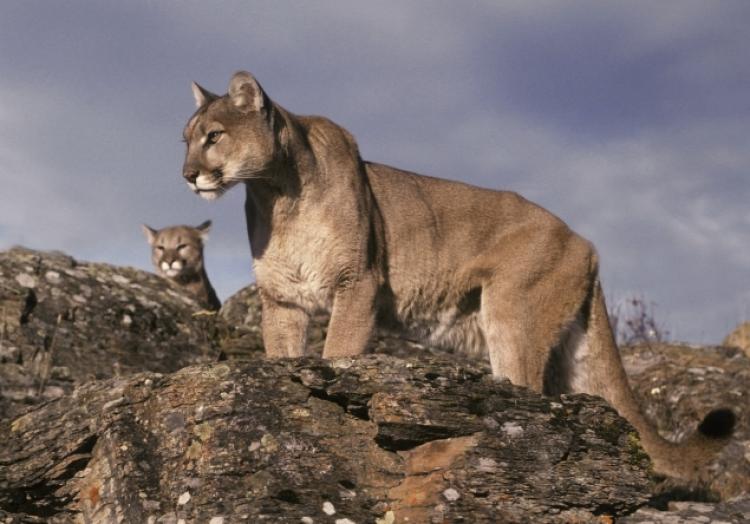
Despite this official declaration, sightings and evidence of cougars in the eastern United States have persisted, particularly in recent decades. These animals are masters of stealth, possessing exceptional camouflage and an ability to travel vast distances. Their diet primarily consists of deer, but they will also prey on smaller mammals, birds, and even fish.
Biological Characteristics and Behavior
Cougars are solitary and highly territorial animals. Adult males typically maintain larger territories than females, and their ranges can overlap with those of several females. They are crepuscular, meaning they are most active during dawn and dusk, further contributing to their elusive nature. Their keen senses of sight and hearing, combined with their powerful build and agility, make them formidable hunters.
Their reproductive cycle is also a factor in their population dynamics. Females typically give birth to litters of two to six cubs after a gestation period of about 90 days. The young stay with their mother for 18 to 24 months before dispersing to establish their own territories. This dispersal phase is crucial for recolonizing new areas.
Habitat Preferences
Cougars are adaptable and can thrive in a variety of habitats, including forests, mountains, deserts, and even some shrublands. In New York State, the Adirondack Mountains, the Catskill Mountains, and the extensive forested areas of western New York offer suitable habitats with ample prey populations and sufficient cover for these large cats. The presence of large tracts of undeveloped land is critical for their survival and expansion.
Evidence and Sightings in New York State
The debate surrounding cougar presence in New York State is largely fueled by a collection of compelling, though often unconfirmed, sightings and physical evidence. While the New York State Department of Environmental Conservation (NYSDEC) has historically been cautious in its pronouncements, there has been a noticeable shift in acknowledgment as more data emerges.
Anecdotal Sightings and Unverified Reports
For years, residents across New York State have reported encounters with large, unidentifiable cats that resemble cougars. These sightings, often occurring in rural or heavily wooded areas, are frequently dismissed as misidentification of other animals like coyotes, bobcats, or even domestic dogs. However, the consistency in descriptions – large size, long tail, uniform tawny or grayish coat – has led many to believe these are genuine cougar sightings.
The NYSDEC maintains a public record of such sightings, which are investigated when possible. While many reports lack definitive proof, a subset of these accounts are considered credible enough to warrant further attention.
Photographic and Video Evidence
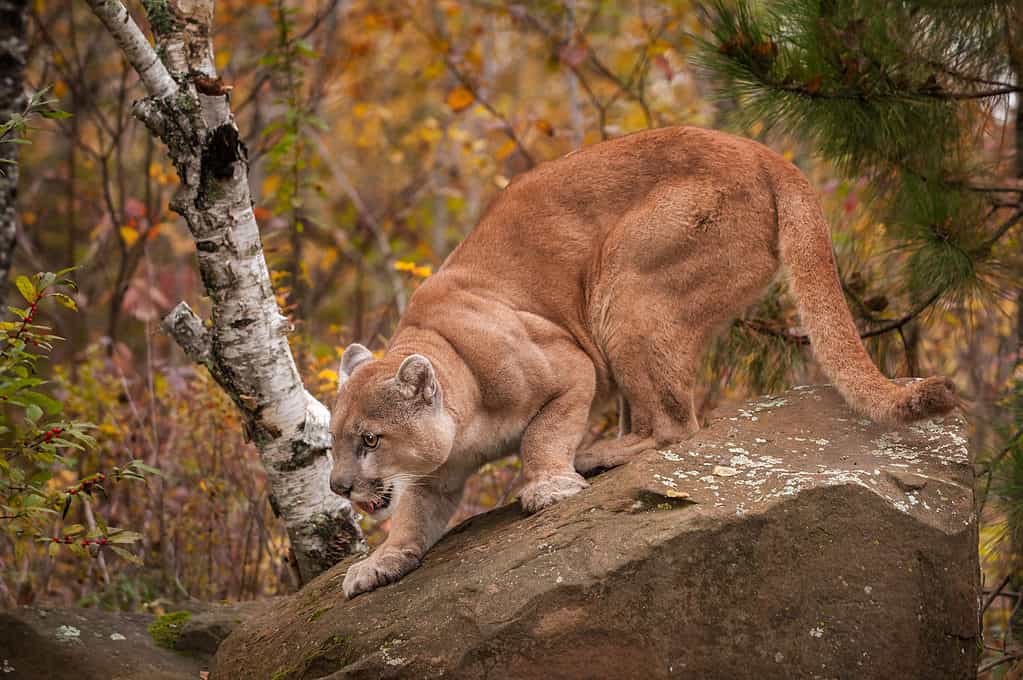
Increasingly, trail cameras and private security systems have captured images and videos that appear to show cougars in New York State. One of the most significant pieces of evidence emerged in 2010, when a cougar was struck and killed by a vehicle on the New York State Thruway near Rochester. Genetic analysis of this animal revealed it was not native to the region and likely originated from a western population, possibly having escaped from captivity or having undertaken an extraordinary dispersal journey.
More recently, trail camera footage from various counties, including Allegany and Steuben, has shown large cats that bear a striking resemblance to cougars. While these images can sometimes be ambiguous due to lighting or distance, they contribute to the growing body of evidence suggesting a possible return of these animals to the state.
Physical Evidence: Tracks and Scat
The discovery of cougar tracks and scat provides more tangible, though still circumstantial, evidence. When experts are able to examine these findings, they can sometimes confirm them as belonging to Puma concolor. However, distinguishing cougar tracks from those of other large mammals, particularly a large coyote or a domestic dog, can be challenging, especially in less-than-ideal substrate conditions.
The NYSDEC’s wildlife biologists are trained to identify such evidence. While definitive positive identifications from tracks and scat that unequivocally confirm a breeding population remain rare, the occasional findings add to the narrative of cougars potentially moving through or establishing themselves in New York.
Scientific Perspectives and Conservation Implications
The potential return of cougars to New York State carries significant implications for wildlife management, conservation efforts, and public safety. Scientists and wildlife agencies are carefully monitoring the situation, seeking to understand the extent of their presence and their impact on the ecosystem.
Tracking and Research Initiatives
While there isn’t a large-scale, state-funded cougar tracking program akin to those in western states, the NYSDEC does conduct research and investigations based on reported sightings and evidence. This includes analyzing genetic material from hair or scat samples when available and studying the movement patterns of cougars reported in neighboring states like Pennsylvania and Vermont.
The success of cougar recovery in some western states demonstrates their remarkable ability to disperse and recolonize suitable habitats. The question for New York is whether the conditions are favorable for a self-sustaining population to re-establish itself. This requires not only sufficient prey and habitat but also a viable breeding population capable of sustained reproduction.
Public Safety and Coexistence
The reintroduction or natural return of any large predator raises concerns about public safety. However, attacks on humans by cougars are exceedingly rare, especially in the eastern United States. Most cougar-human encounters involve either the animal being surprised or a young, inexperienced cat struggling to find food.
Education and awareness are key to promoting coexistence. Understanding cougar behavior, practicing responsible pet and livestock management, and knowing how to react if an encounter occurs can significantly mitigate risks. The NYSDEC provides guidelines on living safely in areas where cougars may be present, emphasizing that these animals generally avoid human interaction.

Conservation Status and Future Outlook
The cougar’s conservation status in New York is complex. Since there is no confirmed, breeding population, they are not officially listed as endangered within the state. However, the possibility of their presence underscores the importance of preserving large, connected habitat corridors.
The long-term outlook for cougars in New York depends on several factors, including the success of dispersal from established western populations, the availability of suitable habitat, and the continued conservation of prey species like the white-tailed deer. As human development continues to expand, maintaining these wild spaces becomes increasingly critical for the survival of species like the cougar and for the ecological health of the entire region. The ongoing scientific investigation and public engagement with this captivating question are vital for understanding and protecting the wild heart of New York State.
LifeOutOfTheBox is a participant in the Amazon Services LLC Associates Program, an affiliate advertising program designed to provide a means for sites to earn advertising fees by advertising and linking to Amazon.com. Amazon, the Amazon logo, AmazonSupply, and the AmazonSupply logo are trademarks of Amazon.com, Inc. or its affiliates. As an Amazon Associate we earn affiliate commissions from qualifying purchases.