
Florida, a state renowned for its sun-drenched beaches, vibrant theme parks, and diverse ecosystems, often conjures images of idyllic vacations. However, for those planning a trip or contemplating outdoor adventures, a common and pertinent question arises: are there poisonous snakes in Florida? The answer is nuanced, but understanding the local herpetofauna is crucial for enjoying the state’s natural beauty safely.
While the term “poisonous” is technically inaccurate when referring to snakes (they are venomous, injecting toxins, rather than poisonous, which are toxic if ingested), the intent of the question is clear. Florida is home to a variety of snake species, some of which possess venom that can cause significant harm to humans. Fortunately, encounters are relatively rare, and with proper knowledge and precautions, visitors can minimize their risks.

Understanding Florida’s Venomous Snake Species
Florida boasts four primary species of venomous snakes, each with distinct characteristics and habitats. Identifying these snakes is the first step in responsible outdoor engagement.
The Eastern Diamondback Rattlesnake
The Eastern Diamondback Rattlesnake is perhaps Florida’s most iconic venomous reptile. As the largest venomous snake in North America, it can reach lengths of up to eight feet. Its name derives from the distinctive diamond-shaped pattern along its back, edged with yellow or white, set against a dark background. A prominent rattle at the end of its tail serves as a warning mechanism.
These snakes are primarily found in pine flatwoods, coastal dunes, and scrub habitats, though they can also inhabit palmetto thickets and the edges of swamps. They are ambush predators, feeding on small mammals like rabbits and rodents. While generally reclusive, the Eastern Diamondback is capable of a rapid strike and possesses potent hemotoxic venom, which can cause severe tissue damage. Its presence is a reminder of the wild beauty that characterizes much of Florida’s landscape, from the Everglades National Park to the coastal regions of the Florida Panhandle.
The Timber Rattlesnake
The Timber Rattlesnake, also known as the Canebrake Rattlesnake, is another formidable venomous snake found in Florida. This species is characterized by a dark, chevron-shaped band across its body and a black, segmented rattle at the tip of its tail. Unlike the Eastern Diamondback, its rattle often produces a buzz rather than a distinct rattle sound.
Timber Rattlesnakes prefer wooded habitats, including hardwood hammocks, pine forests, and mountainous regions, though their presence in Florida is more confined to specific areas. They are often found in proximity to water sources. Their venom is a mix of hemotoxins and neurotoxins, making it dangerous. These snakes are less commonly encountered than some other species, but their presence underscores the need for awareness when exploring the more remote natural areas of the state, such as those found in northern Florida.
The Dusky Pygmy Rattlesnake
Smaller in size compared to its larger rattlesnake cousins, the Dusky Pygmy Rattlesnake is still a venomous snake that warrants respect. Adults typically measure between 16 to 24 inches in length. They have a gray to reddish-brown coloration with a series of dark, irregular blotches along their back. Their rattle is small and often difficult to hear, leading to their reputation for being particularly dangerous as they may not always offer a warning before striking.
Dusky Pygmy Rattlesnakes inhabit a wide range of environments, including moist woodlands, pine needles, palmetto scrub, and the edges of marshes and swamps. They are often found in damp areas. Their venom, while not as potent as the larger rattlesnakes, can still cause significant pain, swelling, and tissue damage. Their widespread distribution across Florida means that encounters, though infrequent, are possible in various natural settings.
The Cottonmouth (Water Moccasin)
The Cottonmouth, also known as the Water Moccasin, is Florida’s only semi-aquatic venomous snake. It is a pit viper with a stout body, a broad, triangular head, and a distinctive white mouth lining, which it displays when threatened, hence its name. Coloration varies from dark brown to olive or black, often with faint crossbands.
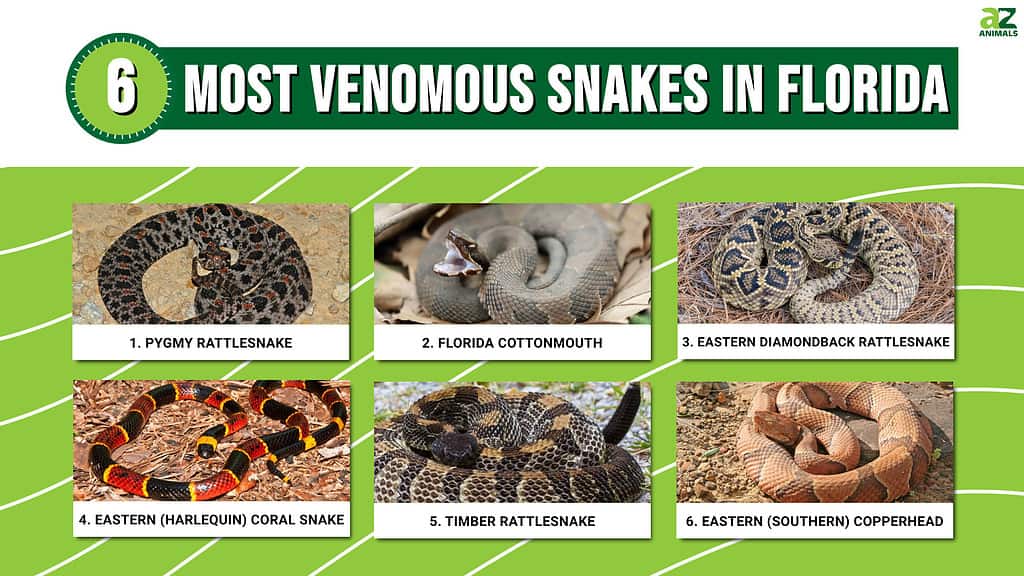
Cottonmouths are found in and around freshwater habitats, including swamps, marshes, lakes, ponds, and ditches, throughout Florida. They are powerful swimmers and can be encountered in or near water. Their venom is primarily hemotoxic, capable of causing severe pain, swelling, and tissue necrosis. Despite their reputation, Cottonmouths are generally not aggressive and will often attempt to escape rather than confront. However, their defensive posture and potent venom necessitate caution around all water bodies in Florida. They are frequently seen near popular fishing spots and boating areas around cities like Orlando and Tampa.
Non-Venomous Snakes and Identification Challenges
It is important to note that Florida is home to a far greater number of non-venomous snake species than venomous ones. Many of these harmless snakes play vital roles in the ecosystem, controlling rodent populations and serving as prey for other wildlife. Misidentifying a non-venomous snake as venomous can lead to unnecessary fear and harm to beneficial creatures.
Some common non-venomous snakes in Florida include:
- Black Racer: A slender, fast-moving black snake that is often seen in gardens and open fields.
- Rat Snake (various species): These constrictors come in various colors and patterns and are excellent climbers.
- Garter Snake: Small to medium-sized snakes often found in damp areas.
- Water Snake (various species): Often mistaken for Cottonmouths, these are non-venomous and primarily feed on fish and amphibians. They may display defensive behaviors similar to Cottonmouths, such as flattening their heads and musking.
The challenge lies in the superficial resemblance of some non-venomous species to their venomous counterparts. For instance, some water snakes can appear similar in color and body shape to the Cottonmouth. Similarly, young Eastern Diamondbacks can sometimes be confused with non-venomous species due to their color variations. Therefore, a general rule of thumb for non-experts is to err on the side of caution and maintain a safe distance from any snake encountered in the wild.
Safety and Prevention: Enjoying Florida Responsibly
The presence of venomous snakes in Florida should not deter visitors from exploring its natural wonders, but it does necessitate an informed and cautious approach. By adhering to simple safety guidelines, the risk of a negative encounter can be significantly reduced.
When Exploring Natural Areas
- Stay on Trails: When hiking or walking in natural areas, particularly those known to be snake habitats, stick to designated trails. This minimizes the chance of inadvertently disturbing a snake that is camouflaged on the ground. Areas like the Ocala National Forest and state parks offer beautiful but sometimes wild terrain.
- Be Aware of Your Surroundings: Pay attention to where you step and place your hands. Snakes often hide under rocks, logs, leaf litter, and in tall grass. Before sitting down, check the area.
- Wear Appropriate Footwear: When venturing into snake-prone areas, wear sturdy, closed-toe shoes or boots. This provides a layer of protection against bites.
- Avoid Reaching into Unknown Areas: Never reach into dense vegetation, rock crevices, or hollow logs without first looking or using a tool to investigate.
- Do Not Handle or Provoke Snakes: It is illegal and dangerous to harass, capture, or kill native snakes, venomous or not. Observe them from a safe distance and allow them to go their own way. Many snakes are more afraid of you than you are of them.
- Be Cautious at Dusk and Dawn: Many snake species are most active during these cooler parts of the day, especially during warmer months.
Around Homes and Accommodations
- Keep Yard Tidy: Tall grass, piles of leaves, and woodpiles can provide excellent hiding places for snakes. Keeping your yard tidy and free of such debris can make it less attractive to them.
- Seal Entry Points: Ensure that screens on windows and doors are in good repair and that there are no gaps around pipes or utilities where snakes could enter a home or hotel.
- Be Mindful Near Water: If staying in accommodations near lakes, canals, or swamps, be extra vigilant, especially around the water’s edge.

What to Do in Case of a Snakebite
Despite all precautions, a snakebite can occur. It is crucial to know how to respond.
- Remain Calm: Panic can increase heart rate and hasten the spread of venom.
- Move Away from the Snake: Get to a safe distance to avoid further bites.
- Call for Emergency Medical Help Immediately: Dial 911 or your local emergency number.
- Keep the Bitten Area Still and Below Heart Level: This can help slow the spread of venom.
- Remove Constricting Items: Remove any rings, bracelets, or tight clothing from the bitten limb, as swelling is likely.
- Do NOT:
- Apply a tourniquet.
- Cut the wound.
- Attempt to suck out the venom.
- Apply ice or heat.
- Drink alcohol or caffeine.
- Take pain relievers unless advised by medical personnel.
Following these steps will ensure the best possible outcome. Florida’s hospitals are well-equipped to handle venomous snakebites, and prompt medical attention is key.
In conclusion, while venomous snakes are a reality in Florida, they are not an insurmountable obstacle to enjoying the state’s abundant natural beauty. By understanding which species are present, recognizing their habitats, and practicing sensible safety measures, visitors and residents alike can confidently explore the Sunshine State and appreciate its diverse wildlife from a safe and respectful distance. From the vibrant wildlife of the Florida Keys to the charming streets of St. Augustine, Florida offers a wealth of experiences, and a little knowledge about its snakes ensures a safer and more enjoyable adventure.
LifeOutOfTheBox is a participant in the Amazon Services LLC Associates Program, an affiliate advertising program designed to provide a means for sites to earn advertising fees by advertising and linking to Amazon.com. Amazon, the Amazon logo, AmazonSupply, and the AmazonSupply logo are trademarks of Amazon.com, Inc. or its affiliates. As an Amazon Associate we earn affiliate commissions from qualifying purchases.