
Navigating the intricacies of vehicle ownership in Texas can often feel like traversing a labyrinth, especially when dealing with vehicles that have a history. One of the more perplexing aspects is understanding the distinction between a “bonded title” and a “clean title.” Many Texans, upon encountering a vehicle with a bonded title, wonder if it holds the same standing and legitimacy as a standard, clean title. This exploration delves into the nature of bonded titles in Texas, their implications, and whether they can truly be considered equivalent to a clean title.

Understanding Texas Titles: Clean vs. Salvage vs. Bonded
Before addressing the specifics of bonded titles, it’s crucial to establish a foundational understanding of the different types of vehicle titles encountered in Texas. The Texas Department of Motor Vehicles (TxDMV) categorizes titles to reflect a vehicle’s history and condition, providing transparency for buyers and sellers.
The “Clean Title” Standard
A clean title, often referred to as a “clear title,” is the most desirable and straightforward type of ownership document. It signifies that a vehicle has not been declared a total loss by an insurance company, nor has it been involved in significant damage that would warrant a salvage or rebuilt designation. Key characteristics of a clean title include:
- No Prior Major Damage: The vehicle has not been declared a total loss due to an accident, flood, fire, or other catastrophic event.
- No Outstanding Liens: All financial obligations (loans, leases) associated with the vehicle have been fully satisfied and released.
- No Previous Salvage/Rebuilt Status: The vehicle has never been branded as salvage or rebuilt.
Owning a vehicle with a clean title generally means less hassle when it comes to registration, insurance, and resale. It represents a straightforward ownership history and a vehicle that, at the time of its last title issuance, was deemed to be in roadworthy condition without significant underlying issues related to its structural integrity or prior catastrophic damage.
The “Salvage Title” and Its Implications
A salvage title is issued when a vehicle has been declared a total loss by an insurance company. This typically occurs when the cost of repairing the vehicle after damage (from an accident, flood, theft, etc.) exceeds a certain percentage of its market value. A salvage title signifies a significant event in the vehicle’s history. While a vehicle with a salvage title can be repaired, it must undergo a rigorous inspection process in Texas to be eligible for a “rebuilt” title.
The “Rebuilt Title” Pathway
After a vehicle has been issued a salvage title and subsequently repaired, it can apply for a rebuilt title. This process involves an inspection by the TxDMV to ensure that the repairs have been completed safely and correctly. A rebuilt title indicates that the vehicle was once a total loss but has since been restored to a condition deemed roadworthy. However, a rebuilt title still carries a significant historical mark that can affect its value and insurability.
What is a Bonded Title in Texas?
Now, let’s turn our attention to the bonded title, often sought by individuals who have acquired a vehicle without the proper documentation, such as a lost title or a title from an out-of-state seller that cannot be properly transferred. A bonded title is essentially a form of title branding that allows an owner to legally register and operate a vehicle when they cannot produce the previous owner’s title.
The Process of Obtaining a Bonded Title
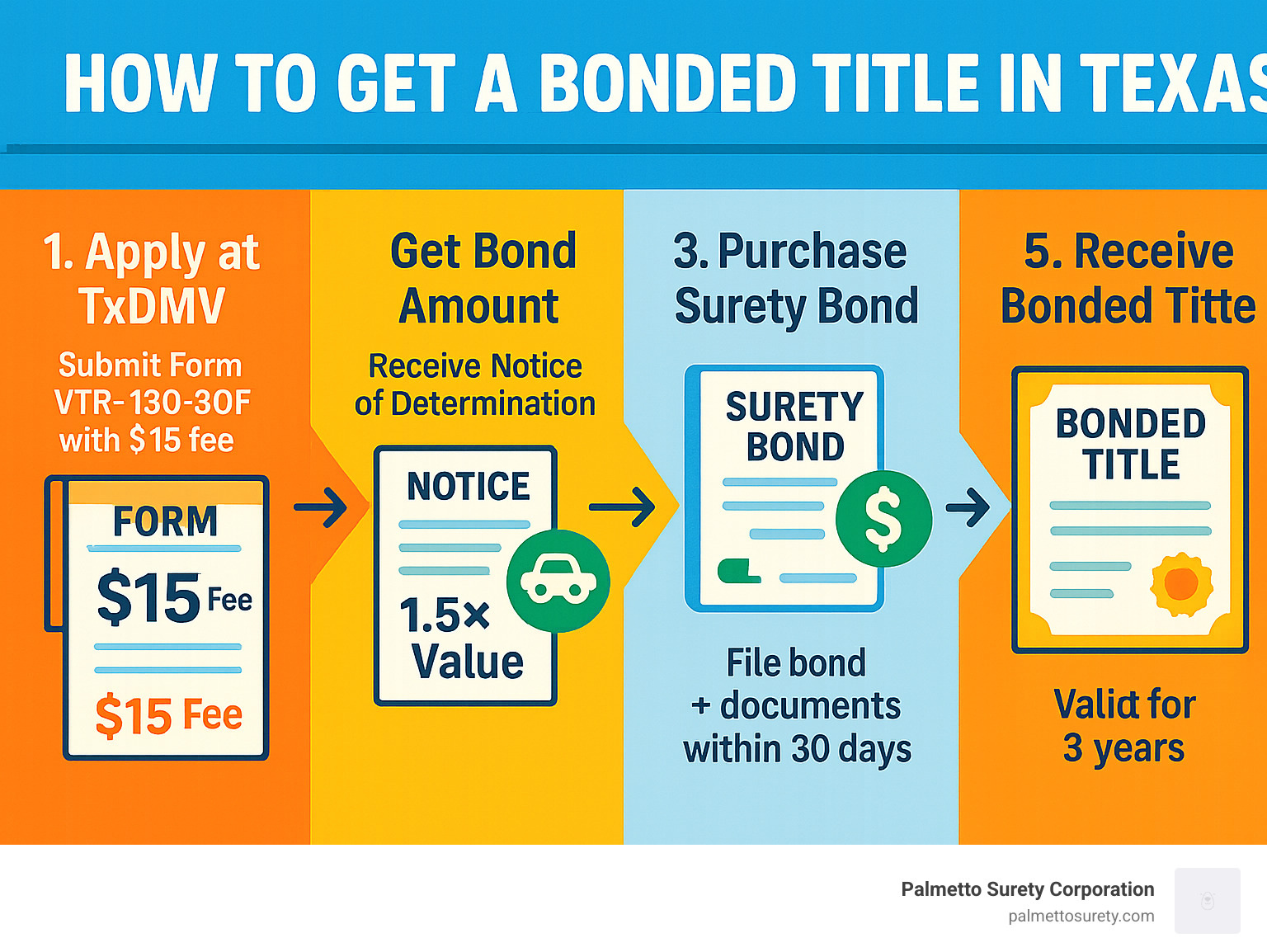
In Texas, obtaining a bonded title involves a multi-step process designed to protect both the applicant and the state from potential fraud or claims from previous owners. The core of this process is a surety bond.
- Application for a Bonded Title: The individual must apply for a bonded title through the TxDMV. This application will require information about the vehicle, the circumstances under which it was acquired, and proof of attempts to locate the previous title.
- Securing a Surety Bond: The applicant must obtain a surety bond from a licensed insurance provider. This bond is essentially a financial guarantee. Its value is typically 1.5 times the declared value of the vehicle. The purpose of the bond is to protect any potential rightful owner or lienholder who may come forward with a claim against the vehicle. If such a claim is proven valid, the surety company will be responsible for compensating the claimant, up to the bond amount.
- Public Notice: The applicant is usually required to publish a notice in a local newspaper for a specified period. This public announcement informs anyone who might have a legal claim to the vehicle that the applicant is seeking a bonded title.
- TxDMV Review and Issuance: If all requirements are met, and no valid claims are filed during the notice period, the TxDMV will issue a bonded title.

The Purpose and Function of a Bonded Title
The primary purpose of a bonded title is to provide a legal pathway for vehicle ownership when traditional title transfer procedures are impossible. This often arises in situations involving:
- Lost or Stolen Titles: The previous owner lost the title, and it cannot be reissued.
- Unrecorded Sales: A vehicle was purchased years ago without a proper title transfer.
- Out-of-State Vehicles: Difficulty in obtaining the necessary documentation from another state.
- Inherited Vehicles: The title is lost or not properly transferred from the deceased owner.
The bonded title serves as a temporary solution, allowing the individual to legally register and use the vehicle. It is crucial to understand that a bonded title is not a permanent solution in the same vein as a clean title. It is a conditional title that carries a lien from the surety company for a set period.
Can a Bonded Title Be a Clean Title in Texas?
The answer to whether a bonded title can be a “clean title” in Texas is no, not in the conventional sense. While a bonded title allows for legal ownership, registration, and operation of a vehicle, it is fundamentally different from a clean title due to its inherent history and the conditions attached to it.
Key Differences and Why a Bonded Title Isn’t “Clean”
The distinction lies in the underlying circumstances and the protections offered.
- Absence of a Documented History: A clean title implies a clear, unbroken chain of ownership and a history free from significant adverse events. A bonded title, by its very nature, arises from a lack of such clear documentation or a historical anomaly. The very act of needing a bonded title signifies a gap or problem in the traditional title chain.
- The Surety Bond as a Lien: The surety bond itself acts as a form of encumbrance or lien on the title. While it’s a guarantee against future claims, it represents an unresolved issue in the title’s history. This is a fundamental departure from a clean title, which has no outstanding claims or guarantees against it.
- Limited Timeframe: In Texas, a bonded title typically becomes a clean title after a statutory period (usually three years) has passed without any claims being filed against the bond. During this period, the bond remains active, and potential claimants have recourse. Only after this period, and if no claims have been made, can the owner apply to have the bond released and the title converted to a clear one. Until that conversion, it remains a “bonded” title.
- Resale and Valuation: Vehicles with bonded titles are generally more difficult to sell and often command a lower market value compared to identical vehicles with clean titles. Potential buyers are often wary of the historical uncertainty and the potential complications that might arise, even after the bond period. Lenders may also be hesitant to finance vehicles with bonded titles.
- Insurance Implications: While insurance can be obtained for vehicles with bonded titles, some insurance companies may charge higher premiums or offer limited coverage due to the title’s history.
When Does a Bonded Title “Become” Clean?
As mentioned, the bonded title is a provisional status. In Texas, after the owner has held the bonded title for three years without any claims being filed against the surety bond, they can petition the TxDMV to have the bond released and a standard, clear title issued. This process essentially “cleans” the title after a period of dormancy and successful legal holding. However, during those three years, it is definitively not a clean title. It is a bonded title, indicating a specific type of ownership status with a conditional history.
Navigating the Texas Vehicle Title Landscape
For any vehicle owner in Texas, understanding the nuances of vehicle titles is paramount. Whether purchasing a vehicle, selling one, or dealing with title issues, accurate information can save considerable time, money, and stress.
Tips for Buyers and Sellers
- For Buyers: Always perform thorough due diligence. Obtain a vehicle history report (such as from Carfax or AutoCheck), and if the title is branded as salvage, rebuilt, or bonded, understand the implications. Ask detailed questions about the vehicle’s history and the title’s status. Be aware that a bonded title, while legal, carries a different risk profile than a clean title.
- For Sellers: Be transparent about your vehicle’s title status. Misrepresenting a title can lead to legal repercussions. If you are selling a vehicle with a bonded title that is nearing the end of its three-year period, be prepared to explain the process to potential buyers.
The Bonded Title as a Solution, Not a Flaw
It’s important to view the bonded title system not as a loophole for fraudulent ownership, but as a mechanism to provide legal recourse and facilitate ownership for individuals who have fallen into complex title situations through no fault of their own. The surety bond process is a safeguard, ensuring that the rights of any legitimate claimant are protected.
In conclusion, while a bonded title in Texas offers a legal pathway to vehicle ownership and operation, it is distinct from a clean title. It signifies a title history that has required a surety bond to validate ownership, and it remains provisional until the bond period expires without incident. Only then can it transition into a clear title, free from the encumbrances and historical questions that define its bonded status. Understanding this distinction is vital for anyone involved in the vehicle marketplace in the Lone Star State.
LifeOutOfTheBox is a participant in the Amazon Services LLC Associates Program, an affiliate advertising program designed to provide a means for sites to earn advertising fees by advertising and linking to Amazon.com. Amazon, the Amazon logo, AmazonSupply, and the AmazonSupply logo are trademarks of Amazon.com, Inc. or its affiliates. As an Amazon Associate we earn affiliate commissions from qualifying purchases.