
Florida, renowned for its sun-drenched beaches, vibrant cities like Miami and Orlando, and a lifestyle that beckons travelers and long-term residents alike, is a prime destination for real estate investment and seasonal homes. From luxurious Key West villas to tranquil Naples condos, property in the Sunshine State is highly coveted. However, for those who own property in Florida, especially those who travel frequently or maintain vacation homes, understanding the intricacies of property law is as crucial as knowing the best local attractions. One such legal concept that often raises questions and concerns is adverse possession – the idea that a squatter could potentially claim ownership of your land.
It might sound like something out of a dramatic screenplay, but the legal doctrine of adverse possession is a very real, albeit complex, aspect of property law across the United States, and Florida is no exception. This article aims to demystify adverse possession in Florida, exploring what it means for property owners, potential investors, and those who cherish their Florida lifestyle, ensuring they can protect their valuable assets while enjoying all the state has to offer.
Understanding Adverse Possession: A Traveler’s Guide to Property Rights
The concept of adverse possession dates back centuries, rooted in the idea of rewarding productive use of land and resolving property disputes by acknowledging long-term, visible occupation. Essentially, it allows an individual to acquire legal title to another’s property without compensation, provided they meet specific statutory requirements for a defined period. While this might seem alarming, particularly for those who leave their Florida properties vacant for extended periods, the bar for successfully claiming adverse possession is intentionally set very high.
For the globetrotter who owns a beachfront condo in Fort Lauderdale or a sprawling estate near Lake Okeechobee, the implications are clear: vigilance is paramount. You invest in property not just for its monetary value, but for the lifestyle it affords – the ability to enjoy Florida’s natural beauty, proximity to world-class resorts, and the warmth of its community. Understanding how adverse possession works is a proactive step in safeguarding that investment and lifestyle.
The Core Principles: What Does “Adverse Possession” Really Mean?
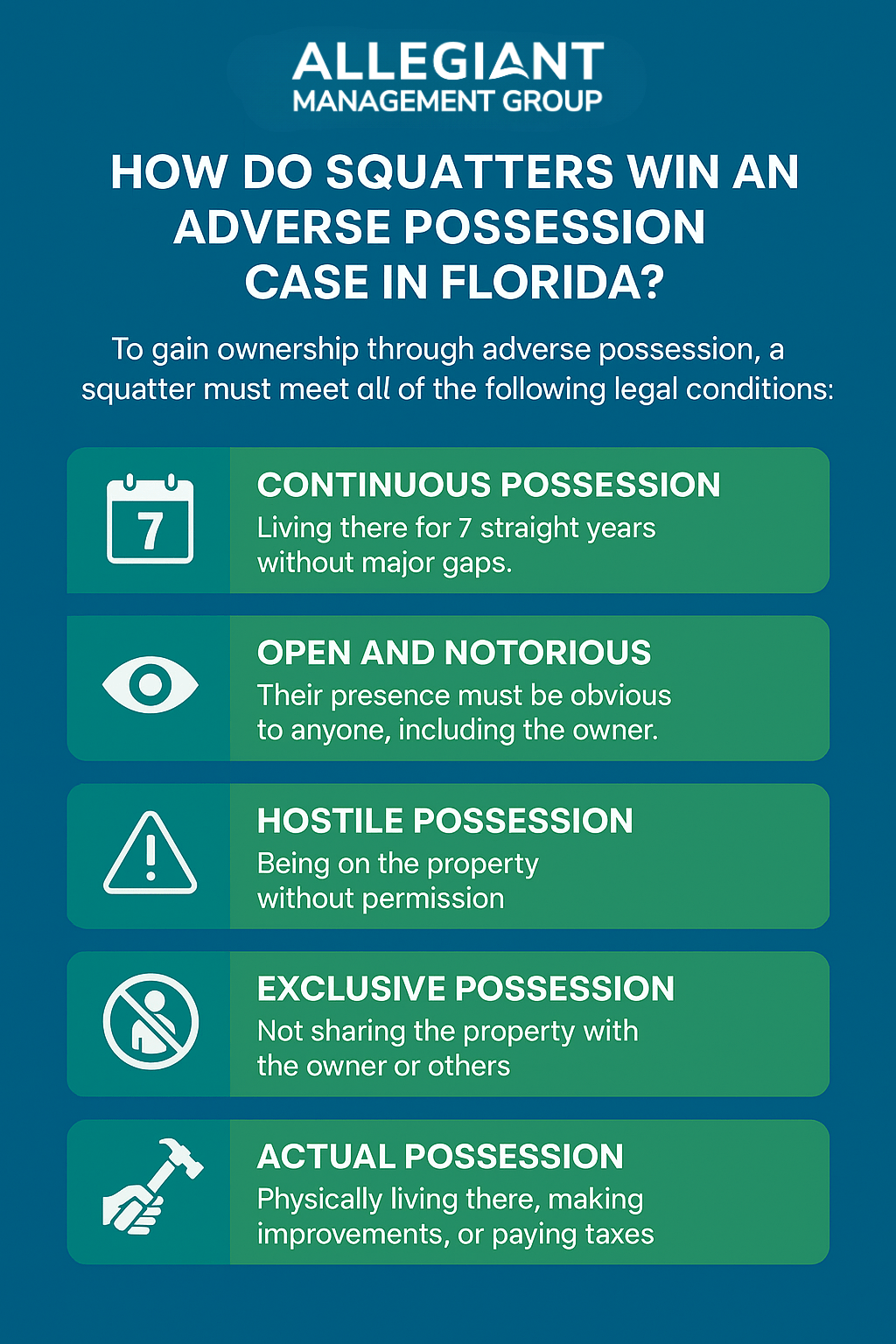
At its heart, adverse possession is about continuous, open, and undisputed occupation of another person’s land. While specific requirements vary by state, the fundamental elements, often summarized by the acronym “OCEAN,” remain consistent:
- Open and Notorious: The squatter’s occupation must be obvious, not hidden. They can’t secretly live on your land; their presence must be evident to anyone, including the actual owner, who makes a reasonable inspection of the property. Think of someone openly cultivating a garden, making visible repairs, or building structures on the land.
- Continuous: The squatter must occupy the property without interruption for the entire statutory period. In Florida, this period is seven years. This doesn’t necessarily mean they have to be physically present every single day, but their use of the property must be consistent with how an owner would use it, without significant breaks that would indicate abandonment.
- Exclusive: The squatter must possess the land to the exclusion of the true owner and the general public. They can’t share possession with the true owner or with others, acting as if it’s their own private domain.
- Adverse or Hostile: This doesn’t imply violence or animosity. Instead, it means the possession is without the true owner’s permission and is contrary to the true owner’s rights. If the owner has granted permission (e.g., through a lease or informal agreement), the possession is not “hostile” and cannot lead to adverse possession.
- Actual Possession: The squatter must physically occupy the property and use it as an owner would. This often involves improving the land, living on it, fencing it, or farming it. Mere claims or occasional visits are typically insufficient.
These elements are cumulative; if even one is not met, the claim for adverse possession will fail. This stringent set of requirements is designed to protect property owners while still allowing for the rare circumstances where adverse possession might apply.
Why Property Owners, Especially Travelers, Should Care
For those who live a life out of the box, exploring destinations from Dubai to Dublin, maintaining a keen eye on their Florida property might not always be top of mind. Yet, vacant properties, undeveloped land, or even vacation homes that sit empty for significant portions of the year are potentially more vulnerable to squatters. A squatter could establish a presence, and if undetected or unaddressed, could slowly begin to meet the criteria for adverse possession.
Imagine owning a stunning waterfront villa in Sarasota that you visit only during the winter months. If, during your absence, someone were to move in, change the locks, maintain the landscaping, and receive mail, they could be laying the groundwork for an adverse possession claim. This is particularly relevant for those who purchase undeveloped land near popular areas like Disney World or along the Emerald Coast with future development plans, as vacant land can be an inviting target.

The good news is that Florida law is generally favorable to property owners, but understanding the mechanisms of adverse possession empowers you to take proactive steps rather than reactive ones.
Florida’s Unique Requirements: Navigating the Sunshine State’s Laws
While the “OCEAN” principles are universal, each state tailors adverse possession laws to its specific context. Florida Statutes Chapter 95, specifically Section 95.18, outlines the precise conditions under which a squatter can claim adverse possession. These conditions are strict and require more than just living on someone else’s land for a period.
The Florida legal framework recognizes two primary scenarios for adverse possession: with “color of title” and without “color of title.” Each scenario presents distinct hurdles that a squatter must overcome, making it difficult for an illegitimate claim to succeed against a diligent property owner.
Seven Years is the Magic Number: Continuous and Exclusive Possession
In Florida, the statutory period for continuous and exclusive possession is seven years. This means a squatter must openly and continuously occupy the property for a full seven years, without interruption by the true owner or others, and without the owner’s permission.
Consider a property owner who travels extensively, perhaps spending half the year at their Florida residence and the other half exploring Europe or Asia. If a squatter moves in during the owner’s absence, they would need to maintain that continuous, exclusive, open, and hostile presence for seven full years. Any intervention by the owner – even a single visit to eject them or a formal legal action – would reset the clock, effectively preventing the claim from maturing. This highlights the importance of property management and regular checks, even if you are thousands of miles away enjoying a luxury cruise.

The Crucial Role of “Color of Title” and Property Taxes
This is where Florida’s law becomes particularly distinct and often serves as a significant barrier for squatters.
-
Adverse Possession With Color of Title: A squatter has “color of title” if they genuinely believe they have a valid claim to the property, even if that claim later proves to be based on a faulty or incorrect deed. For example, they might have purchased the property from someone who didn’t actually own it, or there might be an error in property records. In addition to meeting the “OCEAN” requirements for seven years, a squatter with color of title must have paid property taxes on the property for all seven years. This is a powerful deterrent, as official tax records clearly identify the rightful payer.
The law states that the property is “deemed to have been possessed and occupied” if the person claiming adverse possession entered under a “claim of title founded on a written instrument.” This implies they thought they had a legitimate right, evidenced by some form of documentation, even if flawed. -
Adverse Possession Without Color of Title: This is the more challenging path for a squatter. If there is no flawed deed or other documentation to support their claim, the squatter must not only meet the “OCEAN” elements for seven years but also satisfy two additional, significant requirements:
- They must have paid property taxes on the property for all seven years.
- They must have either enclosed the land (e.g., by fencing it) or cultivated/improved the land for the entire seven-year period.
Crucially, Florida Statute 95.18(2) specifies that a squatter without color of title must make a timely return of the property for taxation, and also pay the taxes annually for the full period. This requirement for paying property taxes is a substantial hurdle. Property tax records are public and clearly show who is paying. It is exceedingly rare for a squatter to successfully pay property taxes on a property for seven consecutive years without the true owner noticing, especially since tax bills are sent to the owner of record.
Beyond Just Occupying: Open, Notorious, and Hostile
The “open and notorious” requirement means the squatter cannot hide their presence. They must be acting like the owner in a way that is visible and apparent to the true owner or anyone else who might inspect the property. This could include living in a structure, maintaining the lawn, installing utilities, or even publicly receiving mail at the address. If a squatter is merely camping in the woods on your undeveloped parcel near Everglades National Park and taking pains to remain hidden, their possession would not be considered “open and notorious,” and thus, their claim would fail.
The “hostile” element, as mentioned, simply means without the owner’s permission. If you, as the property owner, give someone permission to stay on your land – even for free – they are a tenant (or a licensee), not a squatter, and cannot claim adverse possession. This distinction is vital for those who might let friends or family temporarily use their Florida property. Formalizing any such arrangements with a written agreement, even a simple one, can prevent future misunderstandings.
Protecting Your Florida Property: Essential Steps for Owners and Investors
Given the specifics of Florida law, successfully claiming adverse possession without the true owner’s knowledge and inaction is incredibly difficult. However, prevention is always better than cure, especially when it comes to your valuable assets. For individuals who have invested in a vacation rental in St. Petersburg, a retirement home in The Villages, or a piece of paradise in Jupiter, proactive property management is key.
Vigilance is Key: Regular Inspections and Maintenance
The most effective way to prevent adverse possession is to ensure your property never appears abandoned or neglected.
- Regular Property Checks: Whether you live nearby or are managing your property remotely from California or Canada, arrange for regular inspections. This could be a trusted neighbor, a property management company, or a security service. For a frequent traveler, a property manager specializing in long-term stay accommodations or vacant homes can be invaluable. They can check on the exterior, ensure mail isn’t piling up, and report any suspicious activity.
- Maintain the Property: Keep the landscaping tidy, the exterior well-maintained, and utilities active (if applicable). An unkempt property is a billboard for potential squatters. This signals active ownership and removes the “abandoned” appearance that squatters often seek.
- Post “No Trespassing” Signs: While not a foolproof deterrent, clearly posted signs serve as evidence that you are asserting your ownership and that any unauthorized presence is hostile.
- Secure the Property: Ensure all doors and windows are locked, and consider alarm systems or security cameras, especially for properties left vacant for extended periods. Modern smart home technology allows for remote monitoring, a perfect solution for the discerning traveler.
The Power of Paperwork: Deeds, Taxes, and Legal Advice
Maintaining clear records and understanding your legal standing are fundamental to property protection.
- Pay Property Taxes Diligently: This is perhaps the single most critical step. As adverse possession in Florida always requires the squatter to pay property taxes for seven years, ensuring your taxes are paid on time and correctly recorded makes it almost impossible for a squatter to meet this criterion. Review your tax statements annually.
- Keep Your Deed and Records Up-to-Date: Ensure your deed is properly recorded with the county clerk’s office and that your contact information is current.
- Act Promptly Against Trespassers: If you discover someone on your property without permission, act immediately. Do not delay in contacting law enforcement and, if necessary, initiating legal proceedings to remove them. Even a simple notice to vacate can be a crucial first step in demonstrating that their possession is not “hostile” or “without permission.”
- Seek Legal Counsel: If you have concerns about trespassers, property lines, or potential adverse possession claims, consult with a Florida real estate attorney. They can advise on specific actions to take and help navigate complex situations.
Distinguishing Squatters from Tenants: A Vital Difference
It’s important to differentiate between a squatter and a tenant. A tenant has a legal right to occupy a property, typically through a lease agreement, whether written or verbal. Squatters, on the other hand, have no legal right to be on the property.
- Removing Tenants: If a tenant overstays their lease or violates its terms, you must follow specific eviction procedures outlined in Florida landlord-tenant law. Self-help evictions (e.g., changing locks, turning off utilities) are illegal.
- Removing Squatters: While less legally formal than an eviction, removing a squatter still requires legal process. Simply calling the police might be enough if they haven’t established residence. However, if they have utilities, mail, and furnishings, police may consider it a civil matter, requiring you to file an unlawful detainer lawsuit. Acting quickly before a squatter establishes a long-term presence is key to avoiding these more complex legal battles.
Adverse Possession and the Florida Lifestyle: Implications for Long-Term Stays and Investment
The prospect of adverse possession might seem daunting, but for the informed property owner, it’s largely preventable. Its implications stretch beyond just legal ownership; they touch upon the very essence of the Florida lifestyle and property investment strategy.
Vacation Homes and Seasonal Properties: A Special Concern
Florida’s allure as a destination for seasonal residents, or “snowbirds,” means many properties are left vacant for six months or more each year. This makes these properties particularly susceptible to trespassers who might attempt to establish a squatter’s presence. Owners of these types of properties, whether they are charming condos in St. Augustine or luxury homes on the Gulf Coast, should consider professional property management services. These services can ensure regular inspections, handle maintenance, collect mail, and generally provide a deterrent against unauthorized occupation, preserving the owner’s peace of mind as they explore other parts of the world. Utilizing a professional service is a seamless way to maintain a property’s integrity and protect against potential adverse possession claims, allowing property owners to enjoy their nomadic lifestyle without undue worry.
Investing in Florida Real Estate: What to Know Before You Buy
For those considering investing in Florida real estate, understanding adverse possession is another layer of due diligence. When purchasing any property, especially vacant land or foreclosed homes, it’s crucial to perform a thorough title search to ensure there are no lingering claims or encumbrances. While adverse possession is rare, an undiscovered claim could complicate a sale. This is especially true for properties with a history of neglect or unclear ownership. Working with reputable real estate agents and title companies in Florida can help mitigate these risks, ensuring your investment in a Jacksonville apartment or a Tampa commercial space is secure and truly yours.
In conclusion, while the idea of a squatter claiming adverse possession in Florida is a legitimate legal concept, the strict requirements under Florida law make it a difficult feat to accomplish. For the proactive property owner, particularly those who embrace the traveler’s lifestyle, maintaining vigilance, managing property diligently, and acting swiftly against trespassers are the best defenses. By understanding these legal nuances, property owners can continue to enjoy the unparalleled beauty and opportunities that Florida offers, secure in the knowledge that their cherished investments are well-protected.
LifeOutOfTheBox is a participant in the Amazon Services LLC Associates Program, an affiliate advertising program designed to provide a means for sites to earn advertising fees by advertising and linking to Amazon.com. Amazon, the Amazon logo, AmazonSupply, and the AmazonSupply logo are trademarks of Amazon.com, Inc. or its affiliates. As an Amazon Associate we earn affiliate commissions from qualifying purchases.