
When planning a getaway to a destination like New York City or a retreat at a luxury property like the Ritz-Carlton, travelers with disabilities must navigate the complex landscape of hospitality policies. One of the most frequent questions asked by travelers who rely on assistance animals is whether a hotel can legally impose a surcharge, pet fee, or cleaning deposit for a service dog. Navigating this issue requires a clear understanding of legal protections, specifically the Americans with Disabilities Act.
Understanding Legal Protections Under the ADA
In the United States, the Americans with Disabilities Act is the primary piece of legislation governing how places of public accommodation—including hotels, motels, and resorts—must treat individuals with disabilities. A fundamental principle of this law is that service animals are not considered pets.
The Distinction Between Pets and Service Animals
Under federal guidelines, a service animal is defined as a dog that is individually trained to do work or perform tasks for the benefit of an individual with a disability, including a physical, sensory, psychiatric, intellectual, or other mental disability. Because these animals are extensions of the person’s ability to function independently, they are granted access to areas where the general public is allowed.
Why Fees Cannot Be Applied
Because service dogs are classified as medical equipment rather than companions, hotels are prohibited from charging “pet fees” for them. If a property like the Marriott International charges a $50 nightly fee for a dog, that fee cannot be applied to a service dog. The rationale is that charging a fee for a medical necessity would be discriminatory, effectively penalizing an individual for their disability. This protection extends to all forms of lodging, from budget motels to high-end establishments like the Four Seasons Hotel.
What Hotels Can and Cannot Ask
While the law protects the right of individuals to bring service dogs into hotels, it also provides specific guidance on what hotel staff can and cannot ask when a guest arrives at the front desk.
Permissible Inquiries
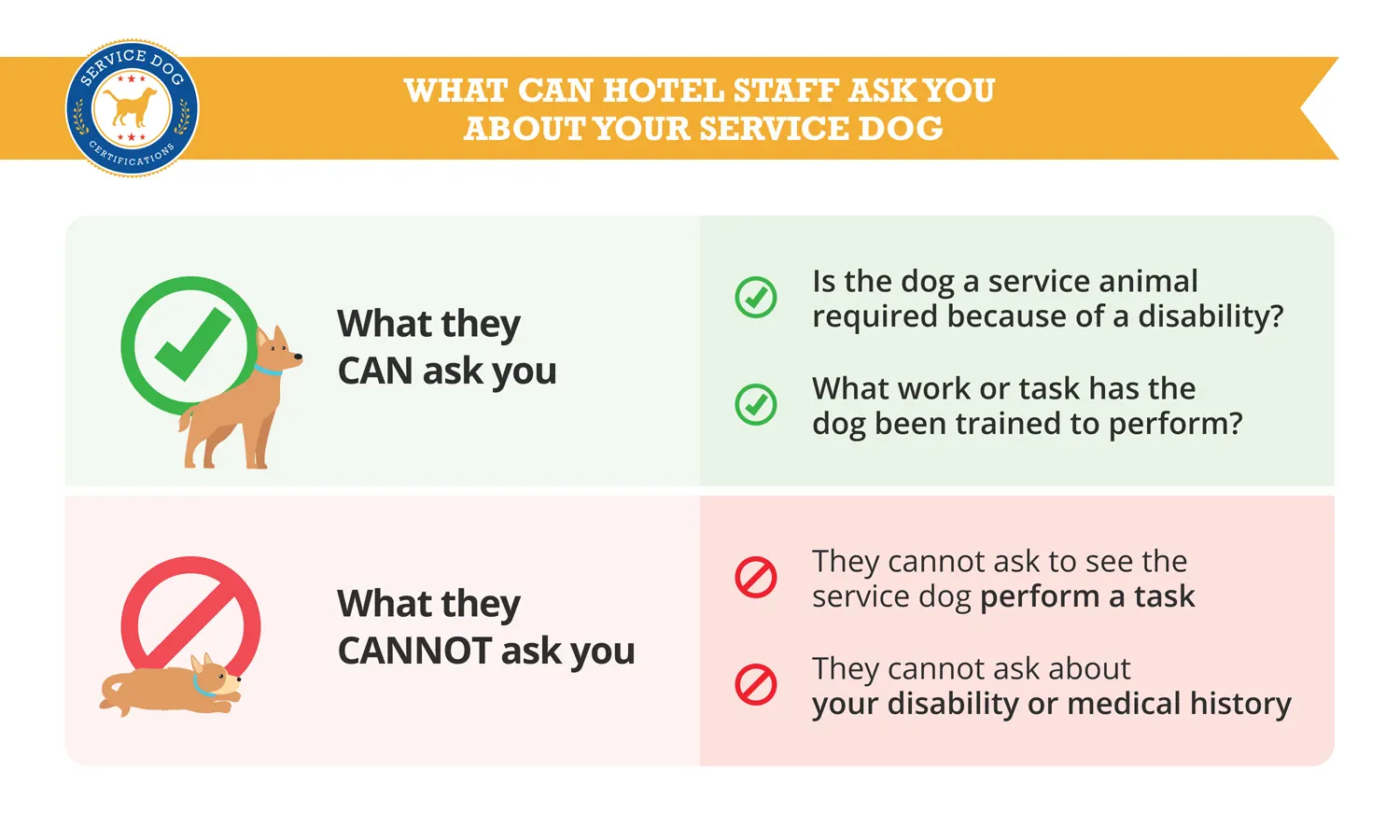
If it is not obvious that the dog is a service animal, hotel staff are legally permitted to ask only two specific questions:
- Is the dog a service animal required because of a disability?
- What work or task has the dog been trained to perform?
Staff may not ask about the nature of the guest’s disability, require medical documentation, or demand a demonstration of the dog’s training. These restrictions are designed to protect the privacy of the guest while ensuring the service dog is indeed providing a task-oriented service rather than just emotional support.
The Problem With Emotional Support Animals (ESAs)
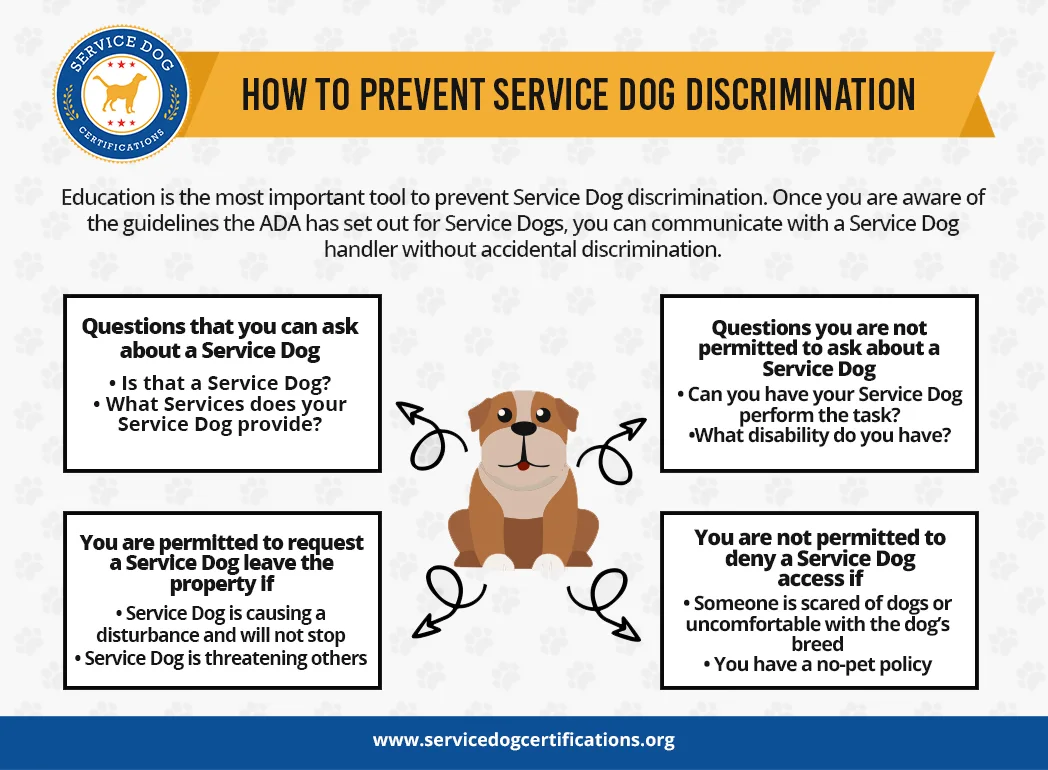
It is vital to distinguish between a trained service dog and an Emotional Support Animal. Under the ADA, ESAs are not recognized as service animals. They do not have the same training requirements, and therefore, they do not fall under the same protections in public accommodations. Consequently, a hotel is entirely within its rights to charge a pet fee for an ESA or even deny them entry entirely if the property has a “no pets” policy.
Liability for Damages and House Rules
While a hotel cannot charge a service fee, this does not mean that the guest is immune to financial responsibility if the animal causes damage. This is a common point of confusion for travelers visiting locations like Las Vegas or Miami, where hotel policies can be strictly enforced.
Responsibility for Property Damage
If a service dog causes damage to a room—such as chewing on furniture, staining carpets, or breaking items—the hotel is permitted to charge the guest for the cost of repairs. This is consistent with how they would treat any guest who damages property. However, this charge must be legitimate; the hotel cannot claim “potential” future damage as a justification for a mandatory cleaning deposit or a “pet surcharge” upon check-in.
Standards of Behavior
While the service dog has the right to be present, the owner is responsible for the animal’s behavior. The dog must be under the handler’s control at all times, usually via a leash, harness, or tether, unless such equipment interferes with the service animal’s task. If a dog is out of control and the handler does not take effective action to control it, or if the dog is not housebroken, the hotel may ask that the animal be removed from the premises. Even in this scenario, the hotel must offer the guest the opportunity to obtain goods or services without the animal present.
Navigating International Travel and Policies
The ADA is a piece of domestic legislation. When traveling abroad, the rules change significantly. If you are staying at a property in London, Paris, or Tokyo, you are subject to the local laws of that country.
International Discrepancies
Many countries do not have the same rigorous legal framework as the United States regarding service animals. In some regions, access for service dogs is granted through local laws, but the definition of what constitutes a “service animal” can be much narrower. For instance, some countries may only recognize guide dogs for the visually impaired, excluding other types of service dogs.
Preparing for Your Stay
Before traveling internationally, it is always recommended to contact the hotel directly. While global chains like Hilton Worldwide may have corporate-wide policies that favor inclusivity, local managers might still adhere to national regulations that allow them to charge for pets or restrict animal access. Always get confirmation of their service dog policy in writing before you book your room.

Best Practices for a Smooth Check-in
To ensure your stay at a property like the Waldorf Astoria or a local boutique resort remains stress-free, consider these proactive steps:
- Advance Notification: Although you are not legally required to inform a hotel that you are bringing a service dog, doing so can prevent misunderstandings at the front desk. A quick note to the reservations department can ensure the staff is prepared and aware of the law.
- Carry Relevant Documentation: Even though you do not have to show paperwork, having information about your dog’s training or the ADA requirements saved on your phone can be useful if a staff member is unfamiliar with the law.
- Respect Public Spaces: While a service dog is allowed in common areas, be mindful of how you navigate spaces like hotel dining rooms or pools. Keeping your dog settled and quiet under a table or beside your lounge chair helps prevent complaints from other guests, which is often what triggers friction with hotel management.
- Know Your Rights: If you are unfairly charged a “pet fee,” calmly explain that the animal is a service dog trained to perform tasks for a disability and that federal law prohibits surcharges for service animals. Most corporate chains have internal policies that align with the ADA, and management will typically waive the fee once they are reminded of these standards.
By understanding the distinction between service animals and pets, and recognizing the limits of hotel policies, you can enjoy your travels with confidence. Whether you are staying at a city-center hotel in San Francisco or a coastal villa in Hawaii, you have the right to travel with your service dog without financial discrimination, provided you respect the standards of behavior and property care expected of all hotel guests.
LifeOutOfTheBox is a participant in the Amazon Services LLC Associates Program, an affiliate advertising program designed to provide a means for sites to earn advertising fees by advertising and linking to Amazon.com. Amazon, the Amazon logo, AmazonSupply, and the AmazonSupply logo are trademarks of Amazon.com, Inc. or its affiliates. As an Amazon Associate we earn affiliate commissions from qualifying purchases.