
Navigating the legal landscape of carrying a concealed weapon while visiting or residing in Florida can be a complex matter. For travelers, understanding the nuances of Florida’s laws is paramount to ensuring a safe and lawful experience. This guide aims to demystify the requirements, restrictions, and reciprocity agreements that govern concealed carry permits within the Sunshine State. Whether you’re planning a vacation to Miami, a business trip to Orlando, or considering a permanent move, knowledge of these regulations is indispensable.
Understanding Florida’s Concealed Weapon Laws
Florida operates under a “shall-issue” policy for concealed weapon licenses. This means that if an applicant meets all the statutory requirements, the licensing authority is generally mandated to issue the license. The primary governing statute is Florida Statute 790.06, which outlines the qualifications and procedures for obtaining a license to carry a concealed weapon or firearm.
Eligibility Requirements
To be eligible for a concealed weapon license in Florida, an individual must meet several criteria:
- Age: Applicants must be at least 21 years of age. There are exceptions for active duty military personnel or honorably discharged veterans who can be as young as 18.
- Residency: Applicants must be a bona fide resident of Florida for at least 90 days preceding the application, or be on active duty in the United States Armed Forces and stationed in Florida.
- Criminal History: Applicants must not have a disqualifying criminal record. This includes felonies, certain misdemeanors, and convictions related to domestic violence. A comprehensive background check is conducted by the Florida Department of Agriculture and Consumer Services (FDACS), the agency responsible for issuing licenses.
- Mental Health: Individuals who have been adjudicated as a mental defective, have been committed to a mental institution, or have been diagnosed with certain mental disorders that may render them dangerous are generally disqualified.
- Drug and Alcohol Abuse: A history of unlawful drug use or addiction, or a recent history of alcohol abuse, can also lead to disqualification.
- Other Disqualifications: This includes individuals who are prohibited from possessing firearms under federal law, those who have been convicted of a crime involving violence, and those who have been found guilty of a crime punishable by imprisonment for a term exceeding one year.
The Application Process
The application process for a concealed weapon license in Florida typically involves several steps:
Training and Education
A crucial component of the application is completing a firearms safety training course. This course must be conducted by a certified instructor and cover topics such as firearm safety, marksmanship, the laws governing the use of deadly force, and the legal aspects of carrying a concealed weapon in Florida. Applicants must submit proof of completion of this training along with their application.
Required Documentation
Along with the completed application form and proof of training, applicants will need to provide:
- A government-issued photo identification, such as a driver’s license.
- Proof of Florida residency.
- Two passport-style color photographs.
- Fingerprints, which are typically taken by a law enforcement agency or a certified fingerprinting service.
Submission and Fees
The application, along with the required documentation and a non-refundable fee, must be submitted to the FDACS. The fee can vary, and it’s advisable to check the FDACS website for the most current fee schedule. The department then conducts a thorough background investigation. The processing time for an application can vary, but by law, the FDACS has 90 days to approve or deny the application.
Reciprocity and Out-of-State Visitors
For individuals who are not residents of Florida but hold a valid concealed carry permit from another state, understanding Florida’s reciprocity laws is essential. Florida recognizes concealed weapon licenses issued by other states if those states have laws or agreements that recognize Florida licenses.
Understanding Reciprocity Agreements
Florida maintains reciprocity agreements with numerous states. This means that a valid concealed weapon license issued by a reciprocating state is recognized as valid for carrying a concealed weapon within Florida. It is critical for visitors to verify the current list of reciprocating states with the FDACS, as these agreements can change.
Key Considerations for Out-of-State Visitors

- Validity of Permit: Ensure your home state permit is current and valid.
- Carrying Practices: You must carry your firearm in accordance with Florida’s laws, even if your home state has different regulations. This includes understanding where firearms are prohibited.
- Identification: You must have your valid concealed weapon license from your home state readily available, along with government-issued identification.
- Federal Laws: Out-of-state visitors must also comply with all federal laws regarding the possession and transportation of firearms.
Places Where Carrying a Concealed Weapon is Prohibited
Even with a valid concealed weapon license, there are numerous locations in Florida where carrying a firearm is strictly prohibited. These restrictions are in place to ensure public safety and are often clearly posted.
Restricted Locations
- Courthouses and Law Enforcement Facilities: Firearms are generally prohibited in courthouses, sheriff’s offices, police stations, and correctional facilities.
- Schools: This includes public and private K-12 schools, colleges, and universities. Specific exceptions may apply for law enforcement officers and licensed security guards.
- Polling Places: During active voting periods, firearms are prohibited at polling locations.
- Airports: While guns may be transported unloaded and in checked baggage under federal law, carrying a concealed weapon within the secure areas of an airport or in terminal buildings is typically prohibited.
- Secure Areas of Public Airports: Access to air carrier airports and sterile areas is restricted.
- Court Facilities: Buildings that are part of the state court system.
- Correctional Institutions: Jails, prisons, and detention centers.
- Federal Buildings: Buildings owned or leased by the federal government.
- Mental Hospitals and Alcohol Treatment Centers: Facilities where individuals are receiving treatment for mental health or substance abuse issues.
- Places of Worship (with notice): While not universally prohibited, churches and other places of worship can prohibit firearms if they provide proper notice.
- Businesses that Primarily Sell Alcohol: Establishments whose primary purpose is the sale of alcoholic beverages for consumption on the premises.
- Theaters and Concert Halls: Places where live performances or motion pictures are shown.
- Sporting Events: Venues hosting professional or amateur sporting events.
- Schools (during school functions): This includes any school-sponsored event taking place on school property.
- Child Care Facilities: Locations where children are being cared for.
Understanding Signage
Many of these prohibited locations are marked with specific signage that clearly indicates firearms are not permitted. Failure to heed these signs can result in severe penalties, including the revocation of your concealed weapon license and potential criminal charges. It is the responsibility of the licensee to be aware of and comply with these prohibitions.
Open Carry in Florida
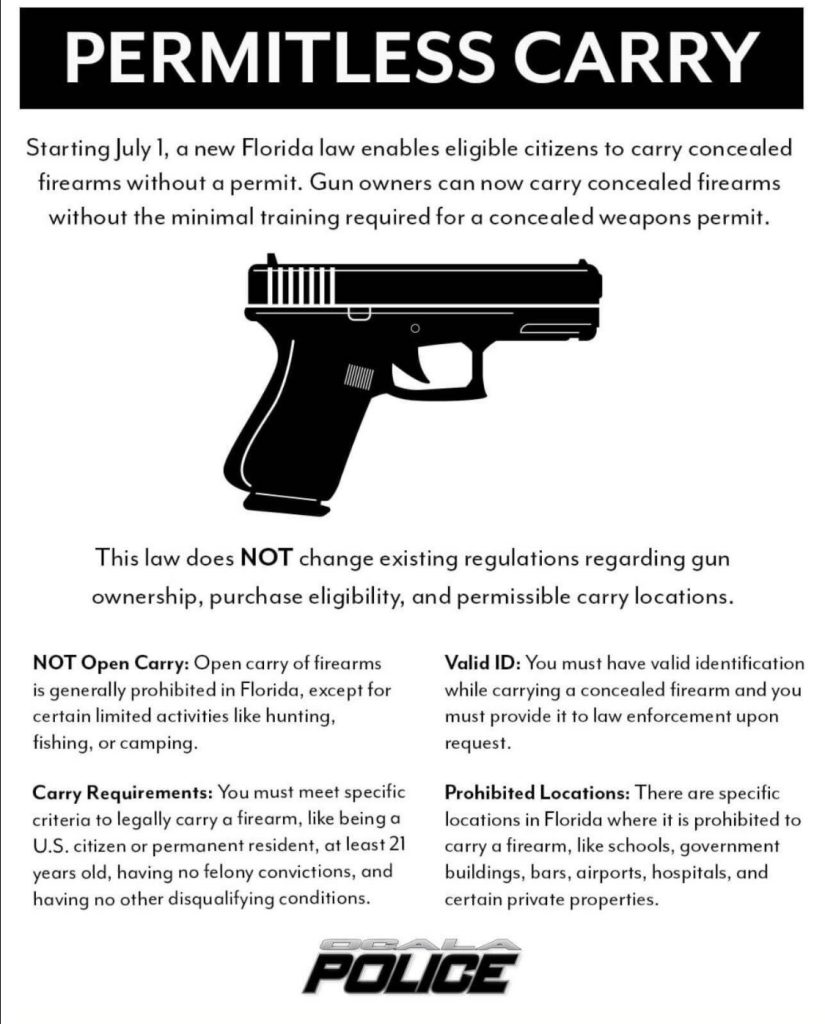
It is important to distinguish between concealed carry and open carry in Florida. Generally, Florida is a “concealed carry” state. Openly carrying a firearm is largely prohibited, with limited exceptions.
The General Rule
Unless you are in your home, your place of business, or your vehicle, openly carrying a handgun is illegal in Florida without a valid concealed weapon license. Even with a license, the firearm must remain concealed.
Limited Exceptions
There are specific circumstances where open carry might be permissible for individuals with a concealed weapon license, such as when engaged in certain outdoor recreational activities like hunting or fishing, or when transporting a firearm for lawful purposes. However, these are often specific and require careful adherence to legal definitions.
Responsible Firearm Ownership and Travel
For those who choose to carry a concealed weapon in Florida, responsible ownership and a thorough understanding of the law are paramount. This includes continuous education on legal changes, maintaining proficiency with your firearm, and practicing safe handling at all times.
Ongoing Legal Awareness
Laws regarding firearm ownership and carry are subject to change. It is advisable for all license holders to stay informed about any updates or amendments to Florida Statutes pertaining to firearms. The FDACS website and reputable legal resources are valuable tools for staying current.
Safe Storage and Transportation
When not carried, firearms must be stored safely and securely, especially in locations like hotels or rental properties. Understanding the legal requirements for transporting firearms in vehicles is also critical. Generally, firearms must be securely encased and not readily accessible to the driver or passengers.

Respecting Local Ordinances
While state law governs concealed carry, some local municipalities may have additional ordinances or restrictions. It is always prudent to research local regulations in the specific areas you plan to visit or reside in.
For visitors to Florida, or residents seeking to obtain or maintain a concealed weapon license, thorough research and adherence to all applicable laws and regulations are essential. This ensures not only personal safety but also compliance with the legal framework of the state.
LifeOutOfTheBox is a participant in the Amazon Services LLC Associates Program, an affiliate advertising program designed to provide a means for sites to earn advertising fees by advertising and linking to Amazon.com. Amazon, the Amazon logo, AmazonSupply, and the AmazonSupply logo are trademarks of Amazon.com, Inc. or its affiliates. As an Amazon Associate we earn affiliate commissions from qualifying purchases.