
The Sunshine State, a perennial favorite for travelers seeking sun-drenched beaches, vibrant nightlife, and family-friendly attractions, also presents a unique set of considerations for those who carry firearms. For residents and visitors alike, understanding Florida’s laws regarding concealed weapons is paramount, especially when planning a trip or a longer stay in cities like Miami, Orlando, or Tampa. This guide delves into the intricacies of carrying a concealed weapon in Florida, covering essential requirements, prohibited locations, and important distinctions, all within the context of enjoying your travels and accommodations, from luxurious resorts to cozy apartments.
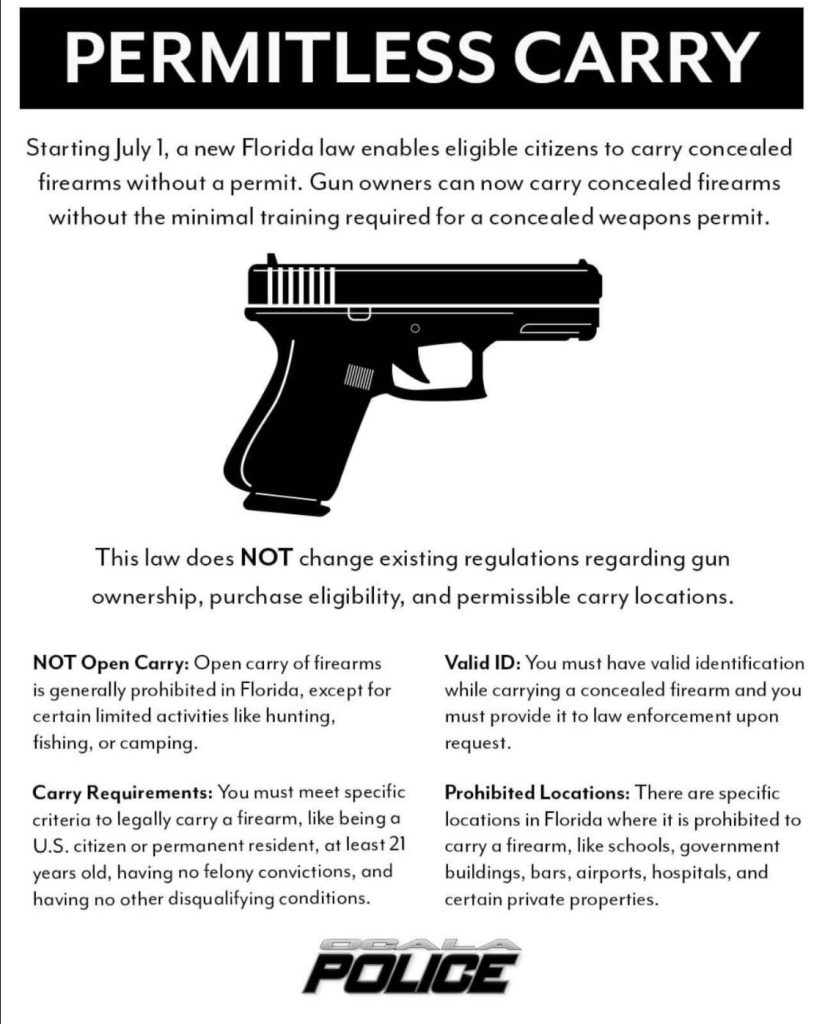
Understanding Florida’s Concealed Weapon Laws
Florida has long been recognized for its relatively permissive firearm laws, making it a state where understanding the specifics of concealed carry is crucial for responsible gun owners. The legal framework governing this practice is detailed and encompasses not only who can carry but also where and under what circumstances.
Who Can Carry a Concealed Weapon in Florida?
Generally, to carry a concealed weapon in Florida, an individual must meet several criteria. The most fundamental requirement is obtaining a Concealed Weapon License (CWL), often referred to as a “concealed carry permit.” This license signifies that the applicant has met the state’s prerequisites for carrying a handgun concealed on their person.
Eligibility Requirements for a Concealed Weapon License
To be eligible for a Florida CWL, an applicant must typically:
- Be at least 21 years old.
- Be a legal resident of Florida or a non-resident who is otherwise eligible.
- Be able to legally possess a firearm under both state and federal law. This includes not having been convicted of certain felonies or domestic violence misdemeanors, not being subject to a domestic violence injunction, and not having a documented history of certain mental health adjudications that would disqualify firearm possession.
- Demonstrate proficiency with a firearm. This is usually satisfied by completing a state-approved firearms safety course or by providing proof of experience such as military service or current law enforcement status.
- Undergo a background check, which includes fingerprinting.
It’s important to note that Florida law also recognizes reciprocity with many other states, meaning that if you hold a valid concealed carry permit from a state with which Florida has a reciprocity agreement, you may be permitted to carry concealed in Florida without obtaining a separate Florida CWL. However, it is always advisable to verify current reciprocity agreements before traveling.
What Constitutes a Concealed Weapon in Florida?
Florida law defines a “concealed weapon” broadly. It includes any firearm, electric weapon or device (such as a taser or stun gun), knife (other than a pocket knife or a knife that can be legally carried openly), or any other weapon that is carried so it is not readily visible to the ordinary observation of any person. This means that if a firearm or weapon is not fully visible, it is considered concealed. The intention behind this definition is to prevent individuals from carrying weapons in a manner that could surprise or endanger others.
Open Carry vs. Concealed Carry in Florida
A significant distinction in Florida law is between open carry and concealed carry. While Florida does permit residents to carry a handgun openly under certain circumstances (with specific restrictions), the most common and widely recognized method of carrying a firearm for personal protection is through a concealed weapon license. Open carry is less prevalent and subject to different rules, which are often misunderstood. For the purposes of this guide, we will focus on concealed carry, which is the primary concern for most individuals seeking to carry a weapon for self-defense while traveling or residing in the state.
Where Can You Legally Carry a Concealed Weapon in Florida?
Even with a valid CWL, there are numerous locations in Florida where carrying a concealed weapon is strictly prohibited. Navigating these restrictions is critical to avoid legal trouble, especially when exploring various attractions and staying in different types of accommodations.
Prohibited Locations for Concealed Carry
Florida statutes explicitly list places where firearms are forbidden. These are often referred to as “sensitive places” and are designed to ensure the safety of the public in specific environments.
- Courthouses: Carrying any weapon is prohibited within any courthouse building.
- Polling Places: Firearms are not allowed at polling places on any election day.
- School Safety Zones: This is a broad category and includes any public school (K-12) facility, school bus, school bus stop, or any building or property used for interscholastic extracurricular activities sponsored by a school. There are exceptions for law enforcement officers and security guards, and for securely storing firearms in a vehicle when dropping off or picking up children, but the general rule is no firearms.
- Law Enforcement Facilities: This includes police stations and sheriff’s offices.
- Correctional Facilities: Prisons and jails are obviously off-limits.
- Federal Buildings: This includes post offices, federal courthouses, and other facilities owned or operated by the federal government.
- Airports: While specific rules can be complex, generally firearms are not permitted in sterile areas of airports.
- Restricted Areas of Airports: Specifically, anywhere past the security checkpoint in an airport is prohibited.
- Bars and Restaurants that Primarily Serve Alcohol: If an establishment derives more than 50% of its revenue from the sale of alcoholic beverages for consumption on the premises, it is a prohibited location. This is often referred to as the “50% rule.”
- Adult Entertainment Establishments: Venues whose primary purpose is entertainment involving nudity or explicit sexual content are also prohibited.
- Hospitals and Nursing Homes: Firearms are generally prohibited in these healthcare facilities.
- Schools of Higher Education (Colleges and Universities): While there has been significant debate and some changes in recent years, carrying firearms in college buildings and campuses remains restricted, with specific exceptions and designated areas sometimes being permissible. It is crucial to check the specific policies of each institution.
- Amusement Parks: While not always explicitly listed in the general statute, many major amusement parks like Walt Disney World Resort or Universal Orlando Resort have their own policies prohibiting firearms on their properties. It is always best to check the individual park’s rules and regulations.
- Private Property with Proper Notice: Property owners have the right to prohibit firearms on their private property. This can be done verbally or through posted signage. Florida law has specific requirements for signage to be legally effective for prohibiting firearms in places not otherwise prohibited by statute.
Understanding Posted Signs

Florida law outlines specific language and placement for signage that prohibits firearms on private property. If a business or private property owner posts a sign that complies with these requirements, it serves as legal notice that firearms are not permitted. Failure to comply with such posted notice can result in criminal charges, even if the location is not otherwise a statutory prohibited place.
Traveling and Staying in Florida with a Concealed Weapon
For tourists and temporary visitors, understanding how these laws apply to your travel plans is essential. This includes considerations for transportation, lodging, and activities across the state.
Transportation and Your Vehicle
When driving in Florida, if you have a valid CWL (or are a non-resident with a valid permit from a reciprocal state), you can generally carry a concealed weapon in your vehicle. This means it can be concealed on your person or in the passenger compartment of your vehicle, provided it is not in plain view. However, once you exit your vehicle, the rules of concealed carry apply as if you were on foot.
- Secure Storage in Vehicles: If you do not have a CWL, federal law and some state laws allow for the transport of firearms in a locked private vehicle for lawful purposes, provided the firearm is unloaded and in a locked container. However, this is a complex area with varying interpretations, and possessing a CWL simplifies transport significantly.
- Rental Cars: If you are renting a car, be aware that while you can carry in the vehicle if you have a CWL, you are still subject to all other prohibited location rules.
Accommodation: Hotels, Resorts, and Rentals
Choosing where to stay in Florida can also impact your ability to carry a concealed weapon. While most standard hotel rooms are not explicitly listed as prohibited locations, there are nuances:
- Hotel Policies: Many hotel chains, including brands like Marriott or Hilton, have their own internal policies regarding firearms on their premises, which may go beyond state law. It is always prudent to check the specific hotel’s policy.
- Private Rentals (Villas, Apartments): If you are renting a private villa, apartment, or home, the property owner’s rules apply. If they have posted signage or have a policy prohibiting firearms, you must abide by it. If it’s a long-term stay situation, establishing these terms clearly with the landlord is important.
- Resorts with Amenities: Resorts often have multiple areas, including restaurants, pools, and common areas. You must be mindful of any specific restrictions within these areas, particularly if they fall under the category of bars or are otherwise marked as prohibited.
Activities and Attractions
From the theme parks of Orlando to the beaches of Clearwater and the cultural districts of Sarasota, Florida offers a vast array of experiences. Your ability to carry a concealed weapon will depend heavily on the specific venue.
- Public Parks and Beaches: Generally, carrying a concealed weapon is permitted in public parks and on beaches, provided you are complying with all other laws and are not in a specifically prohibited area (e.g., a school event taking place in the park).
- Restaurants and Bars: As mentioned, establishments that derive more than 50% of their income from alcohol sales are prohibited. This can be difficult to ascertain, so it’s safer to avoid carrying in such venues unless you are certain. Many restaurants that serve alcohol also serve food and may not meet the 50% threshold, but caution is advised.
- Shopping Centers: Most shopping malls are private property. If they have legally posted signage prohibiting firearms, you cannot carry. If there is no signage, and the establishment itself is not otherwise prohibited (e.g., a bar within the mall), it may be permissible.
- Tourist Attractions: Beyond the major theme parks, many other attractions, such as museums like the Dalí Museum in St. Petersburg or historical sites like Castillo de San Marcos in St. Augustine, may have their own policies or be located within buildings where firearms are prohibited. Always check the specific venue’s rules.
Responsible Carrying and Further Considerations
Carrying a concealed weapon is a significant responsibility. In Florida, as elsewhere, adherence to the law is just the starting point. Responsible carrying involves awareness, discretion, and a commitment to safety.
Training and Proficiency
Beyond the initial requirement for a CWL, continuous training and practice are highly recommended. Familiarity with your firearm and proficiency in its use are crucial for safe handling and effective self-defense, should the need arise.
Situational Awareness
In a state as dynamic and populated as Florida, maintaining situational awareness is paramount. Understanding your surroundings, identifying potential threats, and knowing your escape routes are as important as the ability to carry a weapon. This is particularly relevant when enjoying various lifestyles, from luxury travel experiences to budget-friendly family trips.

Understanding Legal Interpretations
Firearm laws can be complex and are subject to legal interpretation and changes. While this article provides a general overview, it is not a substitute for legal advice. If you have specific questions about your situation or the legality of carrying in a particular place, consulting with a qualified legal professional in Florida is always the best course of action. Staying informed about updates to Florida Statutes Chapter 790 (Weapons and Firearms) is also crucial.
In conclusion, Florida offers a generally permissive environment for concealed carry for licensed individuals, but it is far from a free-for-all. A thorough understanding of the law, including prohibited locations and the rights of property owners, is essential for all gun owners. Whether you are planning a short vacation to explore the natural beauty of the Everglades or a longer business stay in a hotel in Jacksonville, responsible and informed carrying will ensure a safer and more enjoyable experience in the Sunshine State.
LifeOutOfTheBox is a participant in the Amazon Services LLC Associates Program, an affiliate advertising program designed to provide a means for sites to earn advertising fees by advertising and linking to Amazon.com. Amazon, the Amazon logo, AmazonSupply, and the AmazonSupply logo are trademarks of Amazon.com, Inc. or its affiliates. As an Amazon Associate we earn affiliate commissions from qualifying purchases.