
Florida, the Sunshine State, beckons millions of travelers each year with its pristine beaches, vibrant cities, world-class theme parks, and rich cultural tapestry. From the enchanting magic of Walt Disney World Resort in Orlando to the bustling nightlife of Miami and the historic charm of St. Augustine, there’s an experience for every type of traveler. As you plan your itinerary, consider your accommodation, dining choices, and the myriad activities you’ll enjoy. However, for those who are licensed to carry firearms or are considering bringing one on their trip, a crucial question arises: “Can you carry a gun in Florida?”
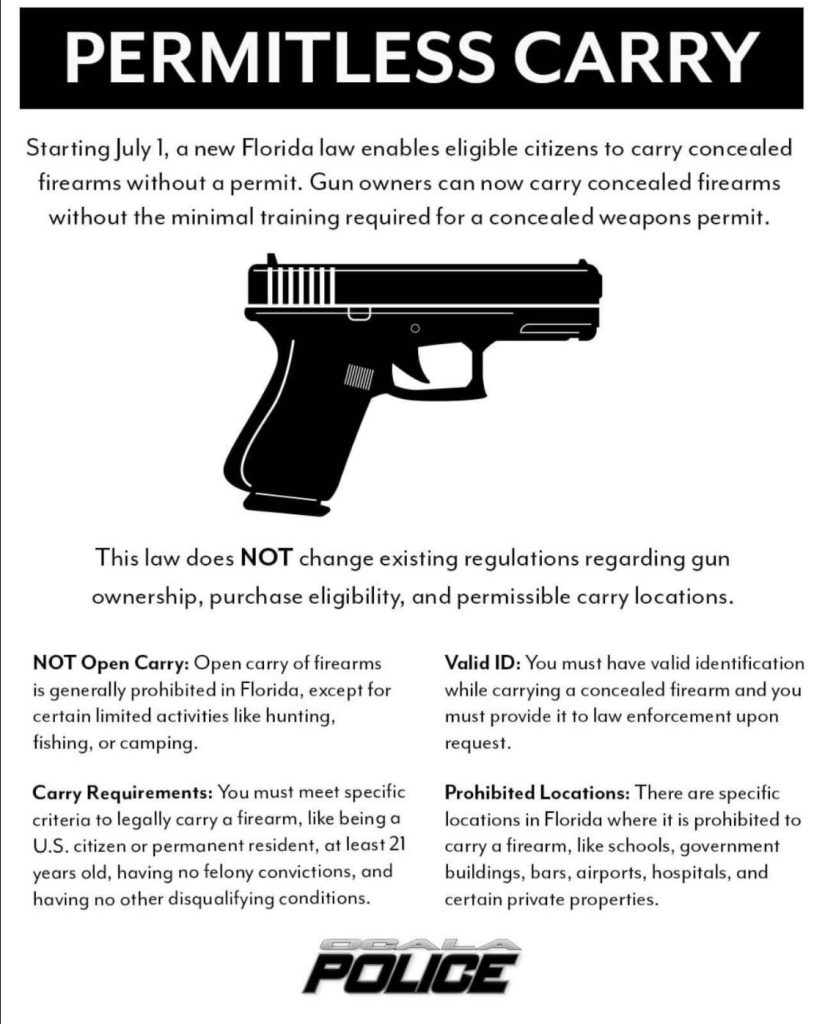
Navigating the legal landscape of firearm possession and carry can be complex, especially when traveling across state lines or even within a state known for its unique gun laws. Our aim here is to provide a comprehensive guide for visitors to Florida, clarifying the state’s regulations, particularly for those concerned with personal safety and legal compliance. Understanding these laws is paramount for a stress-free and enjoyable vacation, ensuring your focus remains on the breathtaking destinations, captivating attractions, and unforgettable experiences Florida has to offer. This guide is tailored to help you understand the nuances of Florida’s firearm laws within the context of travel and tourism, emphasizing where you can and cannot carry, how this might affect your accommodation choices, and general tips for responsible travel.
Understanding Florida’s Firearm Laws for Visitors
Florida’s firearm laws have seen significant changes, particularly with the implementation of what is often referred to as “Constitutional Carry” in July 2023. This change profoundly impacts how residents and visitors interact with the state’s gun statutes. It’s essential for anyone planning a trip to Florida to grasp these fundamental legal shifts.
Constitutional Carry and Who It Applies To
Effective July 1, 2023, Florida enacted a law allowing eligible individuals to carry a concealed firearm without a state-issued concealed weapon license. This is often termed “Constitutional Carry,” though it technically still requires the firearm to be concealed. For many, this signifies a significant liberalization of gun laws.
Who is eligible? This law applies to any person who is legally allowed to own a firearm under both Florida and federal law. This generally means individuals who are 21 years of age or older, are not prohibited felons, have not been adjudicated delinquent, or have not been committed to a mental institution, among other disqualifiers. For visitors, this means that if you meet Florida’s eligibility requirements and are not prohibited from owning a firearm, you may carry a concealed firearm without a Florida concealed weapon license.
Reciprocity with Other States: Prior to Constitutional Carry, Florida had specific reciprocity agreements with other states, meaning it recognized concealed carry permits issued by those states. While the new law reduces the immediate need for a Florida license for eligible individuals, understanding reciprocity can still be relevant for those who prefer to carry under their home state’s permit or for situations that may arise. Always verify current reciprocity agreements if you are relying on an out-of-state permit, although the “Constitutional Carry” provision often makes this less critical for concealed carry within Florida itself for eligible individuals.
Open Carry vs. Concealed Carry
A crucial distinction in Florida firearm law is between open carry and concealed carry. Generally, open carry of firearms is prohibited in Florida. There are very limited exceptions, such as while hunting, fishing, or camping, or on your own property, or when going to and from a shooting range. For the average tourist exploring attractions or dining out, open carry is generally not permitted and could lead to legal trouble.
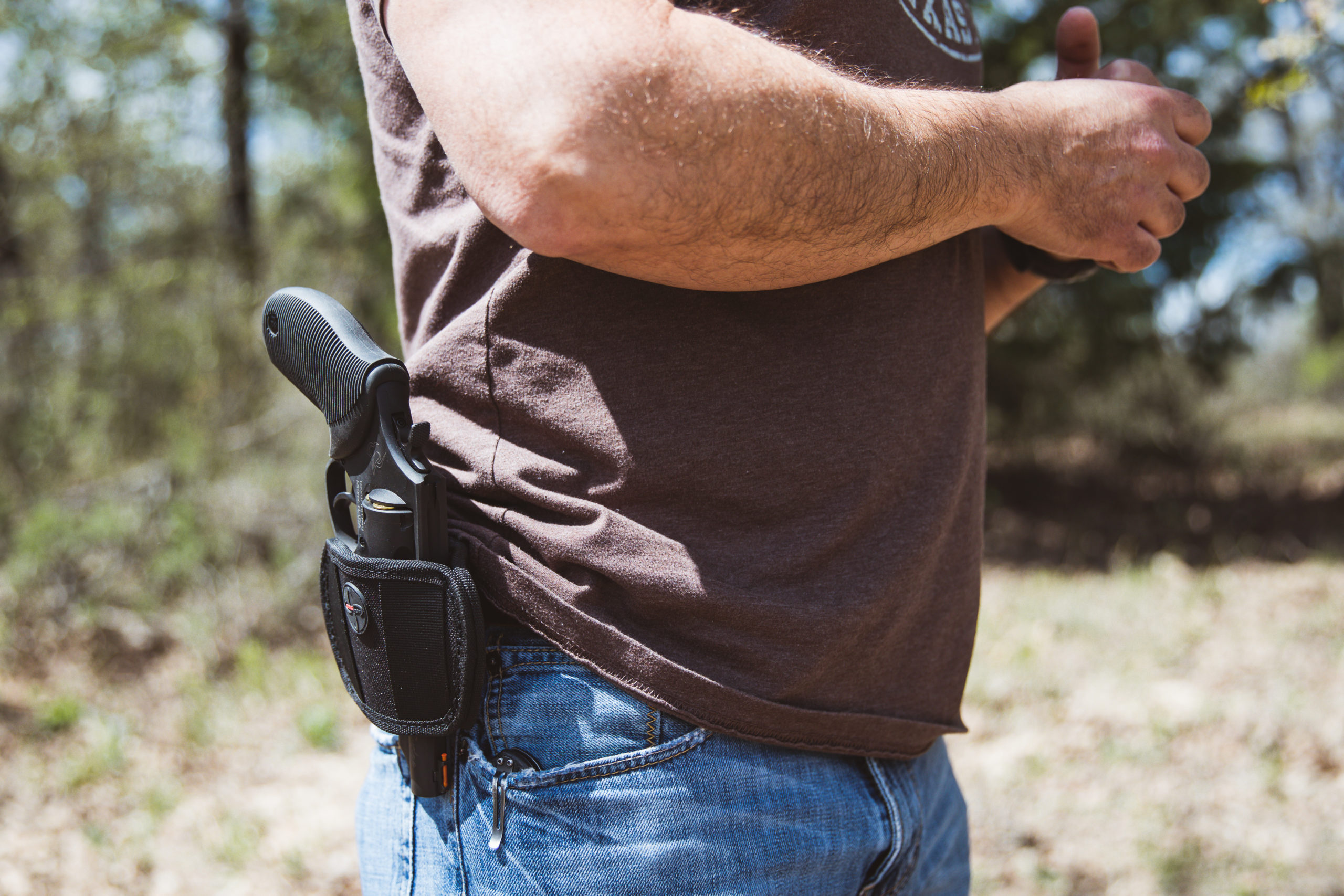
The recent “Constitutional Carry” law only pertains to concealed carry. This means the firearm must be carried in a manner that is not open to ordinary observation. It must be covered by clothing or kept in a purse, backpack, or other container. This is a critical point for travelers: even if you are eligible to carry without a permit, the firearm must remain concealed while in public spaces. Failure to conceal could result in criminal charges.
Eligibility and Restrictions
While Florida has adopted Constitutional Carry for concealed firearms, it’s vital to remember that not everyone is eligible. Beyond the age requirement (21 or older) and not being a prohibited person under state or federal law (e.g., convicted felons, those dishonorably discharged from the military, individuals subject to domestic violence injunctions, or those adjudicated as mentally defective), there are other considerations. For instance, temporary visitors on certain types of visas might not be eligible to possess firearms under federal law.
It is always recommended that visitors confirm their specific eligibility based on their individual circumstances. Ignorance of the law is not a defense, and misinterpreting these regulations could lead to severe consequences, potentially ruining your travel experience and impacting future trips.
Where You Can and Cannot Carry a Firearm in Florida
Even with the advent of Constitutional Carry, there are numerous locations in Florida where carrying a firearm, even concealed, is strictly prohibited. These “no-carry” zones are often places where large crowds gather, where sensitive activities occur, or where federal laws supersede state regulations. For tourists, understanding these restrictions is paramount to avoiding legal issues during their stay.
General “No-Carry” Zones
Florida law explicitly lists several places where firearms are generally prohibited, regardless of whether you have a concealed weapon license or are carrying under the Constitutional Carry provision. These include:
- Schools and School Functions: This encompasses public or private elementary, middle, or high schools, and any school-sponsored event.
- Colleges and Universities: Similarly, firearms are generally not allowed on the campuses of colleges or universities.
- Courthouses: Carrying a firearm inside a courthouse is prohibited.
- Polling Places: While a polling place is in use for an election, firearms are not permitted.
- Government Meetings: Firearms are prohibited at meetings of legislative bodies or local government.
- Airports (Sterile Areas): Beyond the security checkpoints at airports, firearms are strictly forbidden. This impacts those flying into or out of major hubs like Orlando International Airport or Miami International Airport.
- Police Stations, Sheriffs’ Offices, and Detention Facilities.
- Any establishment licensed to dispense alcoholic beverages for consumption on the premises, where the primary purpose is the sale of alcohol (e.g., bars, taverns). Restaurants that primarily serve food but also sell alcohol are generally permissible, but carrying while intoxicated is always illegal.
- Inside any portion of an establishment licensed to dispense alcoholic beverages for consumption on the premises, which portion of the establishment is primarily devoted to such purpose. This nuance means that while a restaurant serving alcohol might be okay, the bar area within that restaurant might not be.
- Federal Buildings: Post offices, federal courthouses, and other federal properties are subject to federal law, which often prohibits firearms.
- Jails, prisons, or detention facilities.
- Any athletic event not related to firearms.
- Areas of public access to seaports.
Ignoring these prohibitions can lead to serious legal repercussions, including arrest and felony charges.
Specific Considerations for Travelers: Hotels and Accommodation

When planning your trip to Florida, your choice of hotels, resorts, apartments, or villas is a significant part of your travel experience. Many travelers consider factors like amenities, location, and reviews. If you plan to carry a firearm, another critical factor comes into play: the accommodation’s policy on firearms.
While Florida law allows for concealed carry, private property owners, including hotels and resorts, retain the right to prohibit firearms on their premises. A Grand Hyatt Hotel in Tampa, a boutique resort in Key West, or a vacation rental in Naples can establish a “no firearms” policy. These policies are typically communicated through signage at entrances, in their terms and conditions, or upon check-in. It is highly advisable to inquire about a hotel’s specific firearm policy directly when booking or before arrival, especially if you intend to have a firearm with you. Respecting these private property rights is not only a legal obligation but also a matter of courtesy and responsible travel.
For long-term stays in serviced apartments or villas, the same principle applies. Always check the rental agreement or contact the property management for clarity on their firearm policies.
Public Spaces and Tourist Attractions
Florida is renowned for its diverse attractions. From the pristine shores of Siesta Key Beach to the thrilling rides at Universal Studios Florida, and the natural wonders of Everglades National Park, tourists have endless options. Understanding firearm regulations in these various settings is crucial:
- Theme Parks: Major theme parks like Walt Disney World Resort and Universal Studios Florida have strict “no weapons” policies. These are private properties and they enforce their rules vigorously, often with metal detectors and bag checks. Attempting to bring a firearm into these venues will result in denial of entry and potential legal action.
- Beaches and Public Parks: Generally, carrying a concealed firearm is permissible in most public beaches and parks in Florida, provided it remains concealed and you are not violating any specific local ordinances. However, certain events or designated areas within parks might have temporary restrictions. For example, South Beach in Miami Beach is generally fine, but if there’s a specific event, rules might change.
- National and State Parks: Florida State Parks generally allow concealed carry, but it’s always wise to check specific park regulations as some areas (like visitor centers or specific historic sites within a park) might be restricted. Federal lands, such as Everglades National Park or the Big Cypress National Preserve, are subject to federal law. Generally, federal law allows individuals to carry firearms in national parks and wildlife refuges in accordance with the laws of the state where the park is located, provided the firearm is not prohibited by federal law. However, carrying in federal facilities (like ranger stations) within these parks is prohibited.
- Museums, Zoos, and Aquariums: These are typically private or quasi-public entities that may prohibit firearms. Always look for signage or inquire beforehand. For example, the Kennedy Space Center Visitor Complex has clear restrictions on firearms.
Transporting Firearms in Florida
For those traveling by car through Florida, understanding how to legally transport a firearm is vital. Even if you don’t intend to carry it on your person, it must be stored correctly.
Florida law permits a non-prohibited person to possess a loaded firearm in their private conveyance (car, truck, RV) if it is securely encased or otherwise not readily accessible for immediate use. “Securely encased” means in a glove compartment (locked or unlocked), snapped in a holster, in a gun case (locked or unlocked), in a luggage compartment, or securely encased in any other container that does not allow for immediate access. If it’s not securely encased, it must be carried in a vehicle compartment that is out of the owner’s immediate reach, such as the trunk. The new Constitutional Carry law permits carrying a concealed firearm on your person in a vehicle without a permit, provided you meet the eligibility criteria, as long as it remains concealed.
For those flying into Florida, federal regulations enforced by the Transportation Security Administration (TSA) govern the transport of firearms on aircraft. Firearms must be declared to the airline, unloaded, and transported in a locked, hard-sided container as checked baggage. Ammunition must also be transported in specific ways. Never attempt to carry a firearm or ammunition onto an airplane in your carry-on luggage. This federal rule applies universally across all airports, including those serving popular Florida destinations like Jacksonville, Fort Lauderdale, and Daytona Beach.
Important Considerations for Responsible Travel with a Firearm
Responsible travel, especially when involving firearms, goes beyond simply knowing the law. It encompasses a broader understanding of local customs, private property rights, and ensuring personal safety through prudent decision-making. As you explore the beautiful landscapes of Florida, from the historic streets of St. Augustine to the serene shores of Amelia Island or the charming villages of Captiva Island and Sanibel Island, these additional considerations are vital for a smooth and enjoyable trip.
Local Ordinances and Private Property Rights
While Florida state law provides a framework for firearm possession and carry, it’s crucial to remember that local municipalities can have specific ordinances that add layers of regulation. Although state law generally pre-empts local governments from enacting their own gun control measures, some specific local rules might apply in certain contexts. Always be aware of your surroundings and look for posted signs, particularly in highly populated areas like Miami Beach or downtown Orlando.
Furthermore, the right of private property owners to prohibit firearms on their premises is a cornerstone of Florida law. This extends to virtually any private establishment: restaurants, shops, museums, entertainment venues, and even specific sections of public venues when under private lease for events. Even if state law allows you to carry, a business can display a sign prohibiting firearms. Ignoring such signage can lead to being asked to leave, trespassing charges, or other legal issues. When you are visiting popular local culture spots, engaging in food tours, or attending activities, always be mindful of these potential restrictions.
Alcohol and Firearms
Florida law strictly prohibits carrying a firearm while under the influence of alcohol or controlled substances. This is a common-sense safety measure and a critical legal point for travelers. Many vacationers enjoy Florida’s vibrant nightlife, exquisite dining, and unique local food and drink scenes. If you plan to consume alcohol, it is imperative that your firearm is securely stored and not on your person. Even in places where a firearm might otherwise be legally carried, intoxication will make carrying illegal. Always prioritize responsible consumption and firearm safety.
Legal Counsel and Up-to-Date Information
Firearm laws are dynamic and can change. While this guide provides a general overview, it is not a substitute for legal advice. Laws can be amended, interpretations can shift, and individual circumstances can vary greatly. Before traveling to Florida with a firearm, especially if you have any questions about your specific eligibility or the nuances of the law, it is highly recommended to consult with a qualified Florida attorney or refer to the most current official statutes published by the State of Florida. Organizations dedicated to firearm rights often provide updated legal guides for travelers. Ensuring you have the most current information will safeguard you against potential legal pitfalls.
General Safety and Awareness
Regardless of whether you choose to carry a firearm, maintaining general safety and awareness is always paramount when traveling. Florida, like any popular tourist destination, can have areas with higher crime rates. Being aware of your surroundings, securing your belongings, and avoiding risky situations are universal travel tips that enhance your overall safety. If you choose to carry, ensure you are proficient, understand safe handling practices, and are committed to de-escalation strategies. The goal of any trip is to create lasting positive memories, and responsible conduct regarding firearms contributes significantly to that goal.
In conclusion, the answer to “Can you carry a gun in Florida?” is generally yes, for eligible individuals, particularly for concealed carry under the state’s Constitutional Carry law. However, this permission comes with significant responsibilities and numerous restrictions. For travelers exploring the diverse attractions of Florida, from the white sands of Pensacola Beach to the historic charm of Key West in the Florida Keys, understanding and adhering to these laws and guidelines is crucial. By being informed, respecting private property rights, and practicing responsible firearm ownership, you can ensure your trip to the Sunshine State is both safe and memorable, allowing you to fully immerse yourself in the unique travel, tourism, and lifestyle experiences Florida has to offer.
LifeOutOfTheBox is a participant in the Amazon Services LLC Associates Program, an affiliate advertising program designed to provide a means for sites to earn advertising fees by advertising and linking to Amazon.com. Amazon, the Amazon logo, AmazonSupply, and the AmazonSupply logo are trademarks of Amazon.com, Inc. or its affiliates. As an Amazon Associate we earn affiliate commissions from qualifying purchases.