
Arizona’s approach to firearm laws, particularly concerning concealed carry, has evolved significantly, positioning it as a state with relatively permissive regulations. For travelers and residents alike, understanding these laws is crucial for responsible firearm ownership and adherence to legal frameworks. This guide delves into the specifics of concealed carry in Arizona, offering insights for those planning a visit or residing within the state.
Understanding Arizona’s Firearm Preemption Laws
Arizona operates under strong preemption laws, which centralize the authority over firearm regulations at the state level. This means that local municipalities, counties, or other political subdivisions cannot enact or enforce ordinances that regulate firearms or ammunition. This preemption is a cornerstone of Arizona’s firearm policy, simplifying the landscape for gun owners by ensuring a consistent set of rules across the state.

The Impact of Preemption on Local Regulations
The absence of local firearm ordinances means that a person legally permitted to carry a concealed firearm in Arizona is generally permitted to do so throughout the state, regardless of the specific city or county. This is a significant point for travelers who might be accustomed to varying regulations in other states or even within different jurisdictions of the same state. The preemption statute aims to create a uniform application of firearm laws, reducing confusion and potential legal pitfalls for law-abiding citizens.
Constitutional and Statutory Basis
Arizona’s strong stance on firearm rights is rooted in both its state constitution and legislative enactments. The Second Amendment of the U.S. Constitution and Article 2, Section 26 of the Arizona Constitution both protect the right of individuals to keep and bear arms. Arizona law further elaborates on these rights, including provisions for concealed carry.
Permissive Concealed Carry Laws in Arizona
Arizona is widely recognized for its permissive stance on concealed carry, largely due to its adoption of permitless concealed carry, also known as “constitutional carry.” This means that individuals who are legally allowed to possess a firearm in the state do not need a permit to carry it concealed.
Permitless Carry Explained
Under Arizona Revised Statutes (A.R.S.) § 13-3112, a person who is 21 years of age or older and not prohibited from possessing a firearm may openly or concealed carry a handgun without a permit. This applies to both residents and non-residents. The law specifies that the handgun must not be visible. This is a critical distinction: while carrying openly is also permissible under constitutional carry, the question at hand specifically addresses concealed carry.
Age and Eligibility Requirements for Permitless Carry
While permitless carry is a significant feature of Arizona’s firearm laws, it’s essential to understand the underlying eligibility requirements. To lawfully carry a concealed firearm under permitless carry in Arizona, an individual must:
- Be at least 21 years of age.
- Be a legal resident of the United States.
- Not be prohibited from possessing a firearm under federal or state law. This includes individuals convicted of felonies, those with domestic violence misdemeanors, individuals adjudicated as mental defectives, and others as defined by law.
- Not be knowingly engaging in criminal activity.
Reciprocity with Other States
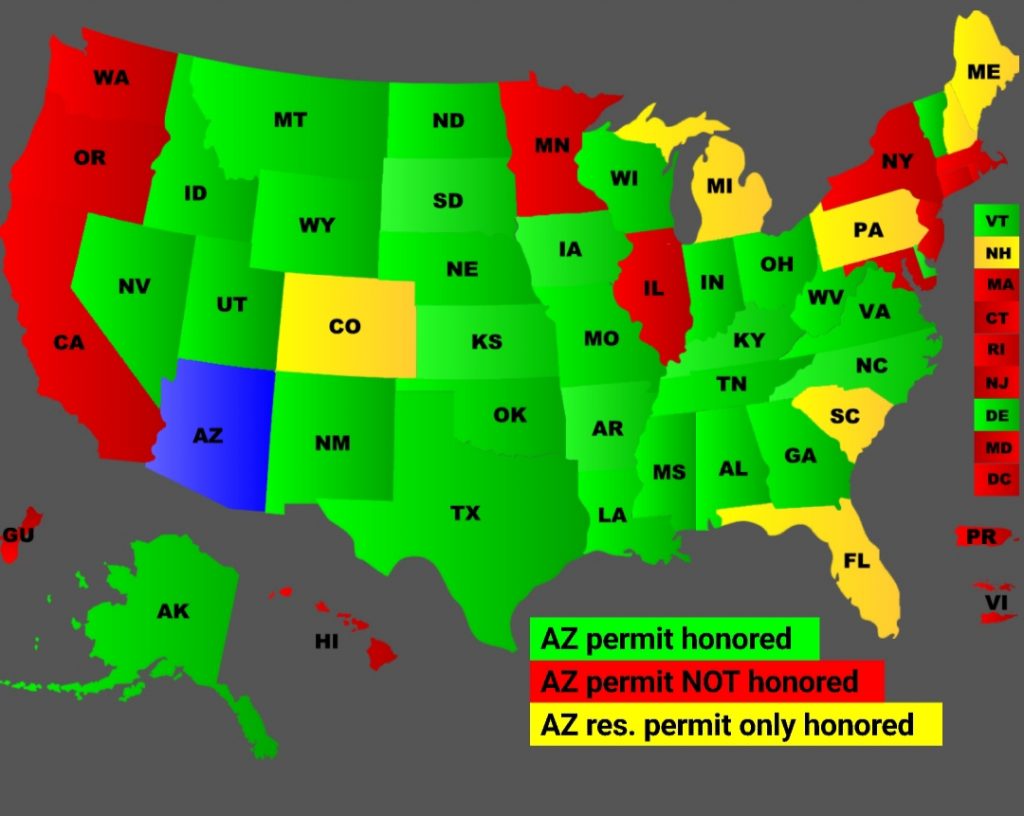
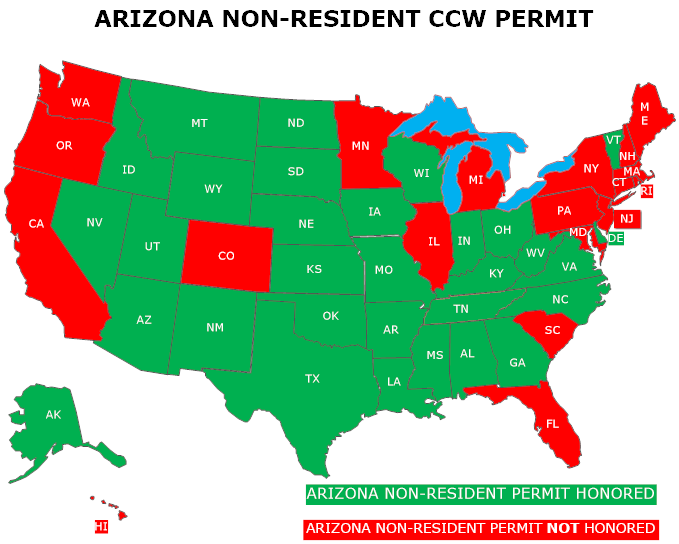
Even though Arizona offers permitless carry, many individuals still opt for a Concealed Carry Weapon (CCW) permit, often referred to as a “concealed carry permit” or “Firearm Safety Education Card” in Arizona. This is primarily for reciprocity purposes. Arizona has reciprocity agreements with numerous other states, meaning that a valid Arizona CCW permit is recognized in those states, allowing the permit holder to carry concealed in accordance with that state’s laws. While permitless carry allows you to carry concealed within Arizona, it does not grant you the same rights when traveling to states that do not recognize permitless carry.
Obtaining an Arizona CCW Permit
For those who wish to obtain an Arizona CCW permit, the process involves completing a firearms safety training course approved by the Arizona Department of Public Safety (DPS) and submitting an application. The permit is issued for five years and can be renewed. The training course covers firearm safety, marksmanship, and the legal aspects of carrying a concealed weapon.
Places Where Concealed Carry is Restricted in Arizona
Despite Arizona’s generally permissive concealed carry laws, there are specific locations where carrying a firearm, whether concealed or openly, is prohibited. These restrictions are in place to enhance safety and security in sensitive areas.
Federal and State Buildings
Federal buildings, including courthouses and post offices, are generally off-limits for carrying firearms, even if you have a permit or are carrying under permitless carry provisions. Similarly, state buildings, such as legislative chambers, correctional facilities, and law enforcement agencies, typically have strict prohibitions against firearms.
Sensitive Places as Defined by Law
Arizona law specifically enumerates certain “sensitive places” where carrying firearms is prohibited. These often include:
- Schools: This is a critical restriction. Carrying firearms on school property, including K-12 schools and universities, is generally illegal, with some exceptions for law enforcement or individuals with specific authorization.
- Polling Places on Election Day: To ensure the integrity of the electoral process and the safety of voters and election workers, firearms are prohibited at polling places on election days.
- Courthouses: While federal courthouses are covered under federal law, state courthouses also have restrictions.
- Law Enforcement Buildings: Carrying firearms in buildings where law enforcement agencies are housed is typically prohibited.
- Correctional Facilities: Prisons and other correctional institutions are strictly firearm-free zones.
- Private Property with Proper Notice: While Arizona law is generally permissive, private property owners can prohibit firearms on their premises. They are required to post clear signage indicating that firearms are not allowed. This signage must conform to specific statutory requirements. If the signage is present and clearly visible, it is legally binding.
Understanding Private Property Rights
For individuals carrying concealed firearms, it is paramount to respect private property rights. If a business or residence clearly displays signage indicating that firearms are not permitted, you must comply with that directive. Failure to do so can result in being asked to leave the premises or facing trespassing charges.
Airports and Airplanes
Carrying firearms in airport terminals is subject to federal regulations. While you can check firearms in your luggage when flying, you cannot carry them openly or concealed within the passenger areas of an airport or on an airplane, unless you are a sworn law enforcement officer in the performance of your duty.
Responsible Concealed Carry in Arizona
Responsible concealed carry in Arizona extends beyond understanding the legal framework. It encompasses a commitment to safety, situational awareness, and continuous education.
Training and Proficiency
While Arizona’s permitless carry law removes the mandatory training requirement for carrying, it does not diminish the importance of proper training. Seeking professional firearms training is highly recommended for all gun owners, regardless of whether they carry concealed. This training should cover:
- Safe gun handling practices.
- Marksmanship and accuracy.
- De-escalation techniques.
- Legal aspects of self-defense and the use of deadly force.
- Situational awareness.
Situational Awareness
A fundamental aspect of responsible concealed carry is developing and maintaining a high level of situational awareness. This involves being observant of your surroundings, identifying potential threats, and being prepared to react appropriately. It means being aware of who is around you, what is happening, and what your escape routes or defensive positions might be.
Understanding Use of Force Laws
Arizona, like all states, has laws governing the use of force, including deadly force. Understanding these laws is critical. Arizona has “Stand Your Ground” laws, which generally mean you are not required to retreat before using deadly force if you are lawfully in a place and reasonably believe that force is necessary to prevent death or serious bodily harm to yourself or another person. However, this is a complex legal area, and individuals should be thoroughly educated on its nuances and limitations. Ignorance of the law is not a valid defense.
Maintaining Firearm Safety
Whether carrying concealed or not, firearm safety must be the top priority. This includes secure storage when the firearm is not on your person, proper maintenance, and ensuring that firearms are not accessible to children or unauthorized individuals.
Traveling to and From Arizona with Firearms
For those traveling to or from Arizona, understanding how to transport firearms legally is essential. Federal law dictates some aspects of interstate firearm transport, but state laws also play a role.
Transporting Firearms in Vehicles
Generally, if you are legally allowed to possess a firearm in Arizona, you can transport it unloaded and secured in a locked container in your vehicle. This container should not be readily accessible to the driver or passengers. When traveling interstate, you must comply with the laws of each state you traverse.
Federal Firearm Transportation Laws
Federal law, specifically the Firearm Owners’ Protection Act (FOPA), can offer some protection for individuals transporting firearms legally through states where they might otherwise be prohibited. However, this protection has limitations and requires strict adherence to specific rules, such as the firearm being unloaded and cased, and the journey being continuous. It is always advisable to research the firearm laws of every state you will be traveling through.
Reciprocity and Travel Considerations
As mentioned earlier, obtaining an Arizona CCW permit can simplify travel to other states that recognize it. If you plan to travel outside of Arizona, it is crucial to research the specific firearm laws of your destination state and any states you will pass through. This includes understanding their laws on concealed carry, open carry, magazine capacity limits, and prohibited locations.
Arizona’s firearm laws offer a significant degree of freedom for law-abiding citizens. However, this freedom comes with the responsibility to be knowledgeable, vigilant, and to always prioritize safety and legal compliance. Whether you are a resident or a visitor, understanding “Can You Conceal Carry In Arizona?” requires a comprehensive look at the state’s permissive yet nuanced legal landscape.
LifeOutOfTheBox is a participant in the Amazon Services LLC Associates Program, an affiliate advertising program designed to provide a means for sites to earn advertising fees by advertising and linking to Amazon.com. Amazon, the Amazon logo, AmazonSupply, and the AmazonSupply logo are trademarks of Amazon.com, Inc. or its affiliates. As an Amazon Associate we earn affiliate commissions from qualifying purchases.