
Florida, often celebrated as the Sunshine State for its pristine beaches, vibrant cities, and world-renowned attractions, draws millions of visitors annually. From the magical theme parks of Orlando to the historic charm of Key West and the bustling energy of Miami, the state offers a kaleidoscope of experiences for every traveler. For many residents and visitors alike, particularly those from states with different firearm regulations, a crucial question arises: “Can you conceal carry in Florida?” Understanding the state’s nuanced gun laws, especially concerning concealed carry, is paramount for anyone considering carrying a firearm, whether for personal protection or as part of their lifestyle.

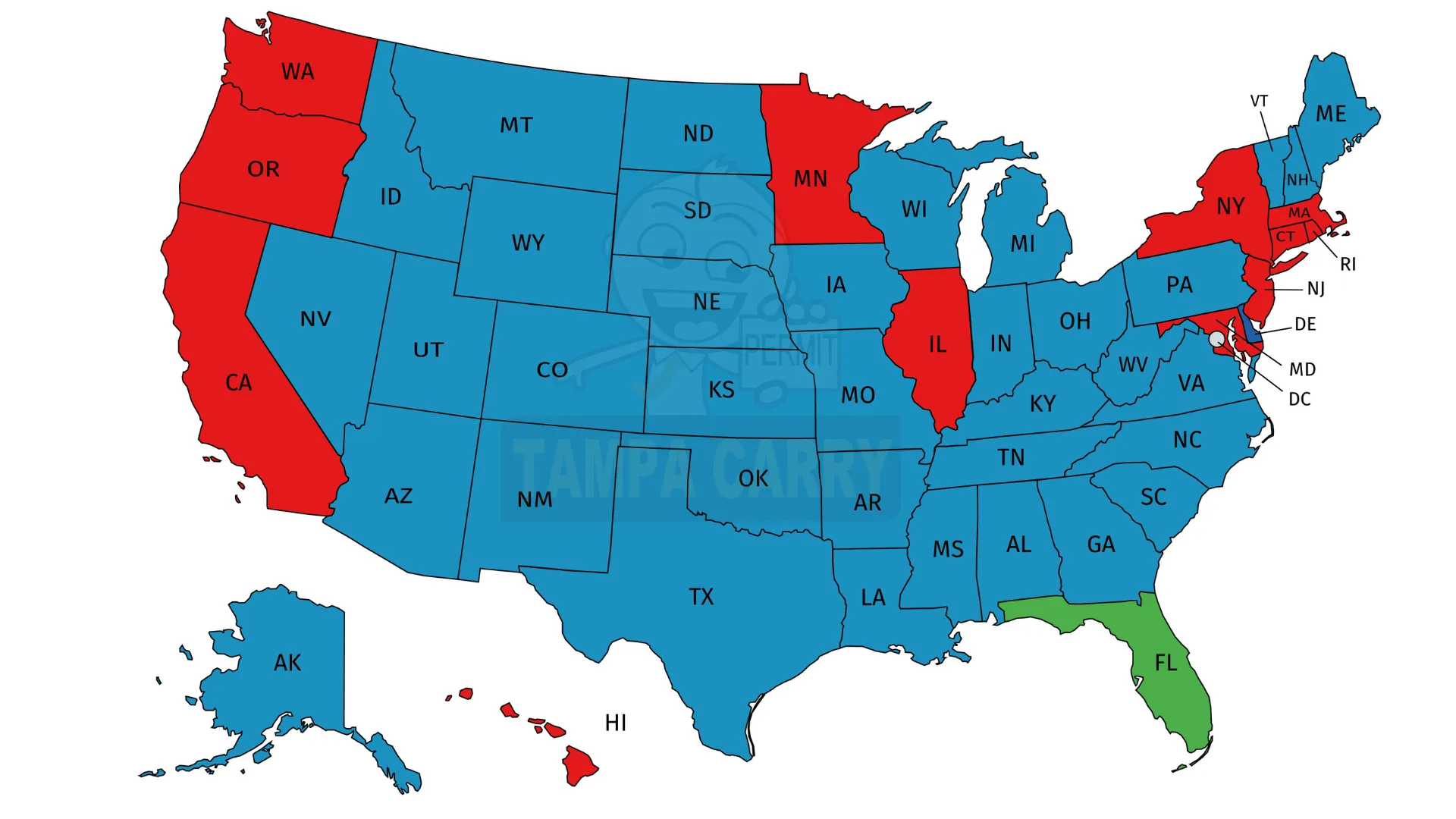
The landscape of firearm ownership and carry laws in the United States is complex, with each state having its own set of regulations. Florida has recently made significant changes to its concealed carry laws, transitioning from a “shall-issue” permit system to a form of Constitutional Carry. This shift has profound implications for how individuals can legally carry a concealed firearm within state borders. For those planning a vacation, considering a move, or simply navigating daily life in Florida, a clear understanding of these laws is not just beneficial but essential to ensure compliance and responsible firearm ownership. This comprehensive guide will delve into the intricacies of Florida’s concealed carry regulations, shedding light on who can carry, where they can carry, and what responsibilities come with this right.
Understanding Florida’s Permitless Carry Law
Florida’s approach to concealed carry underwent a significant transformation on July 1, 2023, when a new law came into effect, effectively making the state a Constitutional Carry jurisdiction for concealed firearms. This change marked a pivotal moment for firearm owners in the Sunshine State, altering the requirements for legally carrying a concealed weapon. However, it’s crucial to understand that “permitless carry” does not equate to “unrestricted carry”; there are still specific qualifications and limitations that individuals must adhere to.
The Shift to Constitutional Carry
Prior to July 1, 2023, carrying a concealed firearm in Florida generally required a valid Florida Concealed Weapon or Firearm License (CWFL) or a recognized permit from a state with reciprocity. The new law eliminated the requirement for this state-issued permit for concealed carry. This legislative move aligns Florida with a growing number of states that have adopted similar Constitutional Carry provisions, allowing eligible individuals to carry a concealed firearm without first obtaining a specific government license to do so. The underlying principle is that the right to bear arms, as enshrined in the Second Amendment of the U.S. Constitution, should not be contingent upon obtaining a government permit.
Who Qualifies for Permitless Carry?
While a permit is no longer required, eligibility for concealed carry under Florida’s permitless carry law is not universal. Individuals must still meet the same criteria that were previously required to obtain a CWFL, with the exception of the application and training process itself. Generally, to legally carry a concealed firearm in Florida without a permit, an individual must:
- Be 21 years of age or older.
- Be a United States citizen or a permanent resident alien.
- Not be a convicted felon or have certain disqualifying misdemeanor convictions.
- Not have a history of domestic violence.
- Not suffer from a physical infirmity that prevents the safe handling of a firearm.
- Not have been adjudicated delinquent or convicted of a crime relating to violence as specified in Florida Statutes.
- Not have been committed to a mental institution.
- Not be prohibited from possessing a firearm under federal law.
It is crucial for anyone considering permitless carry to be fully aware of these disqualifying factors, as carrying a firearm while legally prohibited carries severe penalties. Understanding one’s own legal standing is the first step toward responsible firearm ownership and carry.
What Constitutes Concealed Carry in Florida?
The term “concealed carry” itself has a specific legal definition in Florida that is important to grasp. According to Florida Statutes, a weapon is considered “concealed” if it is carried in such a manner that it is not readily visible to the ordinary observation of a casual passerby. This means the firearm must be hidden from plain view, typically under clothing or in a bag. Examples include carrying a handgun in a holster under a jacket, in a purse, or in a backpack. The intent is that the firearm’s presence is not obvious to others.
The new law specifically applies to “concealed weapons” which includes handguns and other weapons that fit the definition of a concealed weapon. It does not extend to open carry of handguns, which remains generally prohibited in Florida, except in very limited circumstances such as while hunting or fishing, or while engaged in target practice. Therefore, while you may no longer need a permit to carry a concealed firearm, you still cannot openly display one in public. This distinction is vital for avoiding legal complications.
Navigating Concealed Weapon Licenses in Florida
Despite the advent of permitless concealed carry, the Florida Concealed Weapon or Firearm License (CWFL) remains a popular and beneficial option for many residents and even some non-residents. The CWFL, issued by the Florida Department of Agriculture and Consumer Services (FDACS), still offers distinct advantages that permitless carry does not, particularly regarding interstate travel and interaction with law enforcement.
Benefits of a Florida Concealed Weapon or Firearm License (CWFL)
Even with permitless carry in effect, a CWFL provides several compelling benefits:
- Reciprocity with Other States: This is perhaps the most significant advantage. A Florida CWFL is recognized by many other states across the U.S., allowing the holder to legally carry a concealed firearm in those jurisdictions according to their respective laws. For individuals who travel frequently outside of Florida, especially for business or leisure to destinations like Georgia or Alabama, a CWFL can prevent legal issues when crossing state lines. Without a CWFL, permitless carry is only valid within Florida’s borders.
- Streamlined Firearm Purchases: CWFL holders are typically exempt from the mandatory 3-day waiting period when purchasing a firearm from a licensed dealer in Florida. This can be a considerable convenience for those looking to acquire firearms.
- Potential for Smoother Law Enforcement Encounters: While not a legal requirement to declare, presenting a CWFL during a traffic stop or other interaction with law enforcement can sometimes lead to a more direct and less tense situation, as it demonstrates that the individual has undergone a background check and is presumed to be a responsible firearm owner.
- Proof of Training: The application process for a CWFL requires proof of firearm proficiency and training, which enhances responsible ownership and safety knowledge.
- Carrying in Restricted Areas: While permitless carry still adheres to all “gun-free zones,” some specific federal locations might offer exceptions or clearer guidance for permit holders compared to those carrying without a license, though this is rare and highly specific.
For frequent travelers or those who value the added legal clarity and convenience, obtaining a CWFL remains a highly recommended course of action.
Application Process and Requirements
The process for obtaining a Florida CWFL remains largely unchanged despite the permitless carry law. Applicants must meet specific criteria and submit an application to the Florida Department of Agriculture and Consumer Services (FDACS). Key requirements include:
- Age: Be 21 years of age or older.
- Residency: Be a United States citizen or a permanent resident alien. Non-residents may obtain a Florida CWFL if they meet the eligibility criteria and hold a valid license from their home state that Florida recognizes.
- Background Check: Pass a thorough federal and state background check, which scrutinizes criminal history, mental health adjudications, and other disqualifying factors.
- Firearm Training: Provide proof of competency with a firearm. This typically involves completing an approved firearm safety course, which can be taken in person or, in some cases, via recognized online programs followed by a live-fire component. This training demonstrates the applicant’s ability to safely handle and operate a handgun.
- Application Submission: Complete the application form, pay the required fees, and provide fingerprints and a passport-style photograph. Applications can be submitted online or in person at certain county tax collector offices.
The FDACS aims to process applications within 90 days, though this can vary. Once approved, the license is valid for seven years and must be renewed.
Reciprocity with Other States
Florida maintains reciprocity agreements or unilateral recognition of concealed carry permits from many other states. This means that if you hold a valid concealed carry permit from a state that Florida recognizes, you can legally carry a concealed firearm in Florida even without a Florida CWFL or meeting the specific requirements for permitless carry. However, you must always adhere to Florida’s laws regarding restricted locations and the definition of concealed carry. Conversely, a Florida CWFL allows its holder to carry in states that recognize Florida permits, under the laws of those respective states. It is critically important for anyone traveling with a firearm to thoroughly research the specific gun laws of their destination state and any states they will pass through, as these laws can vary dramatically. The FDACS website provides an updated list of states with which Florida has reciprocity.
Where You Cannot Carry: Restricted Locations
While Florida’s permitless carry law expands the freedom to carry a concealed firearm, it does not nullify the existence of “gun-free zones.” Both federal and state laws designate numerous locations where carrying a firearm, even concealed and by an eligible individual, is strictly prohibited. Violating these restrictions can lead to severe legal consequences, including felony charges, making it imperative for both residents and visitors to be fully aware of these off-limits areas.

Federal and State Prohibitions
Florida Statutes explicitly list several categories of locations where carrying a concealed firearm is illegal, regardless of whether you have a CWFL or are carrying permitless. These prohibitions are designed to enhance safety in sensitive environments and include, but are not limited to:
- Any place of nuisance as defined in Florida Statutes.
- Any police station, sheriff’s office, or highway patrol station.
- Any courthouse, courtroom, or polling place.
- Any meeting of the governing body of a county, public school district, municipality, or special district; or any meeting of the Legislature or a committee thereof.
- Any school, college, or professional athletic event not related to firearms.
- Any elementary or secondary school facility or administration building. This includes school buses and property.
- Any establishment licensed to dispense alcoholic beverages for consumption on the premises (e.g., bars, nightclubs), though carrying in a restaurant that serves alcohol but whose primary purpose is food service (and where you are not seated at the bar itself) is generally permissible.
- Any airport passenger terminal beyond the security checkpoint.
- Any portion of an establishment used for the consumption of alcoholic beverages.
- Federal buildings: Carrying firearms is generally prohibited in federal buildings, courthouses, and other federal properties, including National Parks buildings, post offices, and military bases. While carrying within a National Park (like Everglades National Park) may be permissible depending on specific park regulations and state law, carrying in federal buildings within those parks is typically banned. It is crucial to check federal laws and specific park regulations.
- Prisons and jails.
- Ports of entry.
This list is not exhaustive, and individuals should always refer to current Florida Statutes (specifically F.S. 790.06 and F.S. 790.061) for the most up-to-date and complete information.
Private Property Rights and Signage
Beyond the statutory prohibitions, private property owners in Florida retain the right to prohibit firearms on their premises. This is a critical aspect for visitors, especially when visiting attractions, hotels, or businesses. Even if you are legally permitted to carry a concealed firearm, a private property owner’s prohibition, often communicated through visible signage (e.g., “No Weapons Allowed” signs), must be respected. Failure to comply can result in a request to leave the premises, and refusal to do so could lead to a trespassing charge.
Major private attractions, such as theme parks like Walt Disney World Resort and Universal Orlando Resort, explicitly prohibit firearms on their property. Hotels, restaurants, and other businesses may also exercise this right. When planning your itinerary, especially concerning accommodations or tourist activities, it’s advisable to check their specific policies if carrying a firearm is part of your travel plan.
Special Considerations for Travelers
For visitors to Florida, understanding these restrictions is paramount.
- Airports: While you can transport unloaded firearms in checked luggage in accordance with TSA regulations, carrying a concealed firearm into the sterile area of an airport terminal (beyond security checkpoints) is strictly forbidden.
- Hotels and Accommodation: While a hotel cannot override state law regarding carry, they can prohibit firearms on their private property. Travelers staying in hotels should inquire about or observe any signage regarding firearm policies. Storage in a hotel room, particularly if not present, should involve secure, locked containers.
- Rental Cars: Transporting a firearm in a rental car is generally treated the same as in a personal vehicle. The firearm must be concealed if carrying permitless or with a CWFL.
- Public Transportation: Be mindful of specific local ordinances regarding firearms on buses, trains, or other public transit systems, although state law generally governs.
Navigating Florida’s attractions and public spaces with a concealed firearm requires diligent attention to these prohibited areas and private property rules. When in doubt, err on the side of caution and secure your firearm appropriately.
Essential Considerations for Travelers and Residents
Beyond the legal framework of where and how one can carry, responsible firearm ownership and carry in Florida involve several other crucial considerations. These aspects are particularly relevant to travelers who might be unfamiliar with the state’s specific nuances and for residents seeking to ensure they are always acting within the bounds of the law and best safety practices.
Safe Storage and Transport
Whether you’re a resident or a visitor, the safe storage and transport of firearms are non-negotiable.
- In Vehicles: When transporting a firearm in a vehicle, it must be securely encased or otherwise not readily accessible for immediate use, unless you are legally carrying it concealed on your person. “Securely encased” means it’s in a holster, gun case, box, or other container. It can also be in the glove compartment or a closed console. For permitless carry, the firearm must remain concealed. If traveling with a firearm not on your person, it’s best practice to unload it and secure it in a locked case, especially if you anticipate entering a gun-free zone.
- In Accommodations: If staying in a hotel, resort, apartment, or villa, secure your firearm when not on your person. A locked safe in your room or a personal gun safe is highly recommended, especially if traveling with children or leaving the room unoccupied. Never leave a firearm unsecured where it could be accessed by unauthorized individuals.
- Children and Access: Florida has specific laws regarding allowing access to firearms by minors. It is a felony to store or leave a loaded firearm within the reach or easy access of a minor (under 18) if they gain access to it, with some exceptions (e.g., if the minor obtains the firearm as a result of a lawful entry by a person other than the minor). Always store firearms safely, locked, and unloaded when not under your direct control.
Adhering to strict safety protocols for storage and transport is critical not only for legal compliance but, more importantly, for preventing accidents and unauthorized access.
Understanding “Stand Your Ground”
Florida is well-known for its “Stand Your Ground” law, which provides legal protections for individuals who use deadly force in self-defense. Unlike traditional self-defense laws that often require a duty to retreat before using deadly force, Florida’s statute (F.S. 776.012 and 776.013) states that a person has no duty to retreat and has the right to stand his or her ground and meet force with force, including deadly force, if he or she reasonably believes it is necessary to prevent death or great bodily harm to himself or herself or another, or to prevent the commission of a forcible felony.
Key aspects of “Stand Your Ground”:
- Reasonable Belief: The core of the law relies on the individual’s “reasonable belief” that they are in imminent danger. This is an objective standard; what a reasonable person would believe under similar circumstances.
- Location: The law applies in any place where a person has a legal right to be (e.g., public places, private property, vehicle, home).
- No Duty to Retreat: Crucially, it removes the legal obligation to attempt to escape a dangerous situation before resorting to deadly force.
While “Stand Your Ground” offers significant protections, it is not a license for aggressive or unwarranted use of force. Any use of deadly force will be subject to intense scrutiny by law enforcement and the legal system. Understanding this law is vital for anyone carrying a firearm for self-defense, but it should be viewed as a last resort in extreme circumstances. Responsible gun owners prioritize de-escalation and avoidance of conflict whenever possible.
General Safety Tips for Florida Visitors
For visitors carrying a firearm, integrating firearm awareness with general travel safety tips can ensure a smoother and more secure trip.
- Stay Informed: Laws can change. Always check the most current Florida Statutes and FDACS website before and during your visit.
- Situational Awareness: Regardless of whether you carry a firearm, maintaining good situational awareness is your first line of defense. Be aware of your surroundings, avoid potentially dangerous areas, especially at night, and trust your instincts.
- Secure Valuables: Florida is a popular tourist destination, and like any such place, it can attract opportunistic crime. Keep valuables out of sight in your vehicle and secure them in your accommodation.
- Responsible Alcohol Consumption: If you carry a firearm, avoid alcohol entirely or exercise extreme caution. Carrying a firearm while intoxicated can lead to severe legal penalties and compromises your judgment.
- Emergency Contact: Know who to contact in an emergency (911 in the U.S.). If you use your firearm in self-defense, contact law enforcement immediately and clearly articulate that you were acting in self-defense. Do not move anything at the scene.
By combining an understanding of firearm laws with general common-sense travel safety, visitors can enjoy all that Florida has to offer with peace of mind.
Conclusion: Responsible Carry in the Sunshine State
Florida’s evolution to a permitless concealed carry state represents a significant shift in its firearm laws, offering eligible individuals the ability to carry a concealed weapon without the prerequisite of a state-issued license. This change, effective July 1, 2023, underscores the state’s commitment to upholding the rights of its citizens. However, it is paramount to reiterate that “permitless” does not mean “unrestricted.” The same disqualifying factors that applied to obtaining a CWFL still apply, and a comprehensive list of prohibited locations remains in effect.
For both long-term residents of cities like Jacksonville, Tampa, or Tallahassee, and the millions of tourists flocking to destinations across the Sunshine State, understanding these legal nuances is not just a recommendation but a necessity. The decision to carry a concealed firearm comes with immense responsibility, requiring not only an adherence to the law but also a deep commitment to safe handling, ethical considerations, and continuous education.
While a Florida Concealed Weapon or Firearm License (CWFL) is no longer a requirement for concealed carry within the state, its benefits, particularly concerning interstate travel and reciprocity, make it a valuable asset for many. Ultimately, responsible concealed carry in Florida hinges on vigilance, knowledge, and a commitment to personal and public safety. By staying informed about the current statutes, respecting prohibited zones and private property rights, practicing safe storage and transport, and understanding self-defense laws like “Stand Your Ground,” individuals can confidently navigate the legal landscape of firearm ownership in the Sunshine State.
LifeOutOfTheBox is a participant in the Amazon Services LLC Associates Program, an affiliate advertising program designed to provide a means for sites to earn advertising fees by advertising and linking to Amazon.com. Amazon, the Amazon logo, AmazonSupply, and the AmazonSupply logo are trademarks of Amazon.com, Inc. or its affiliates. As an Amazon Associate we earn affiliate commissions from qualifying purchases.