
Traveling to new places, whether for leisure or business, often involves navigating unfamiliar local customs and laws. For those visiting or residing in Texas, a common question that arises in our increasingly connected and documented world is about the legality of recording conversations. From capturing a memorable moment on a family trip to documenting an important business discussion in a Dallas hotel, understanding the nuances of Texas law regarding electronic recordings is crucial. This isn’t just a matter of legal compliance but also of ethical considerations, privacy, and ensuring a smooth, hassle-free experience in the Lone Star State.
In a world where smartphones are ubiquitous and always within reach, the ability to record audio or video is instantaneous. This technological ease, however, does not always align with legal permissibility or social etiquette. For tourists exploring the vibrant streets of Austin, business professionals negotiating deals in Houston, or families enjoying the historical richness of San Antonio, knowing the rules around recording conversations can prevent potential legal pitfalls and contribute to a more informed and responsible lifestyle. This comprehensive guide delves into Texas’s stance on recording conversations, offering insights relevant to travelers, residents, and anyone looking to understand this important aspect of local law.
Understanding Texas Wiretapping Laws: The One-Party Consent Rule
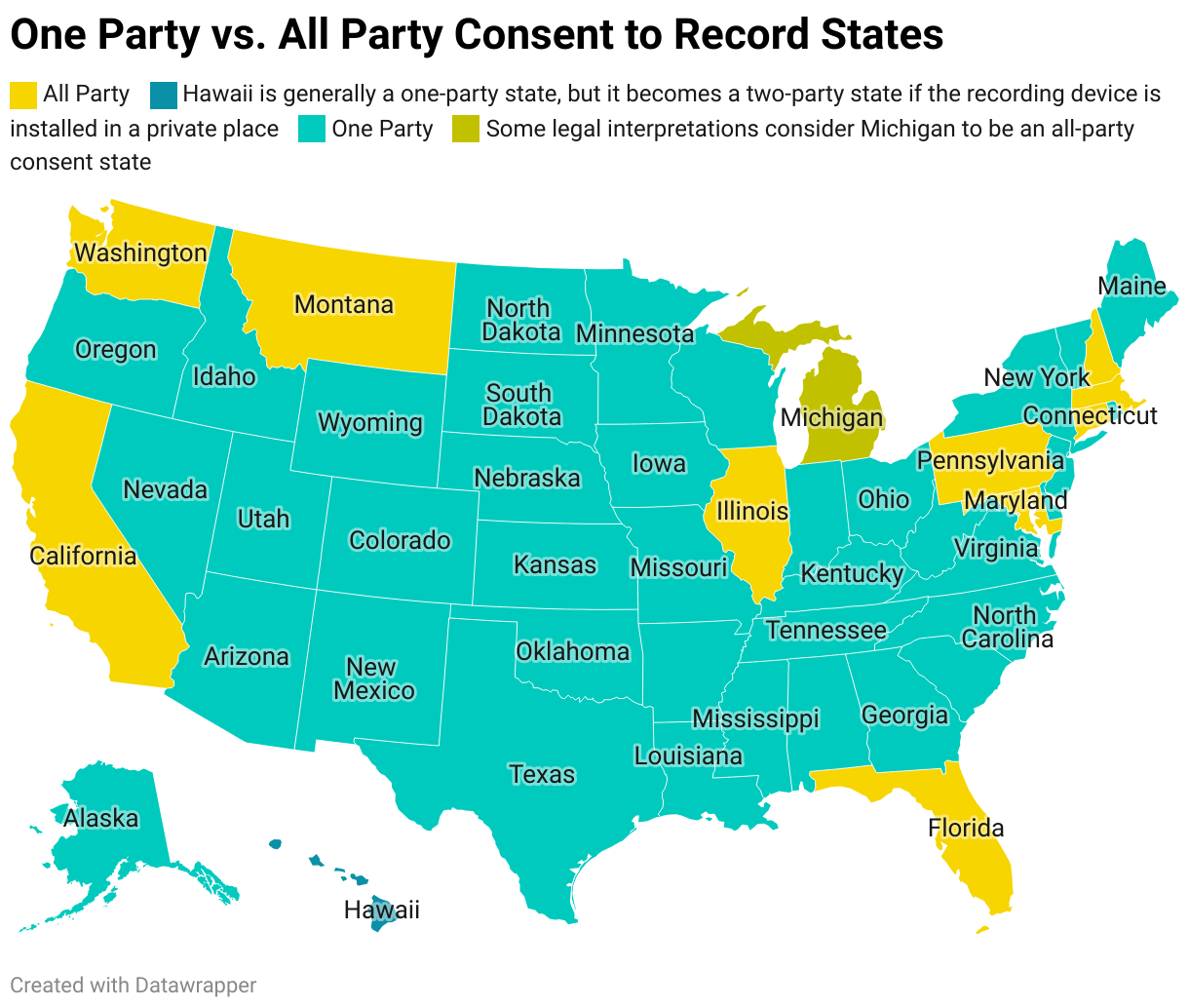
The core of Texas law regarding the recording of conversations revolves around the concept of “one-party consent.” This is a critical distinction that sets Texas apart from some other states in the United States. Under Texas Penal Code § 16.02, it is legal to record an in-person or telephonic conversation as long as at least one party to the conversation consents to the recording. This means that if you are a participant in the conversation, you can legally record it without needing to inform or obtain permission from the other parties involved. Your participation in the conversation constitutes your consent, fulfilling the legal requirement.
This “one-party consent” rule is also consistent with federal wiretapping laws, specifically 18 U.S.C. § 2511, which permits recording if one of the parties to the communication has given prior consent to such interception. This alignment between state and federal law simplifies matters somewhat, particularly for those traveling across state lines or engaging in conversations that might involve interstate communication. However, it’s vital to remember that while federal law provides a baseline, individual state laws can be more restrictive. In this case, Texas law mirrors the federal standard, making it one of the more permissive states in this regard.
The rationale behind one-party consent laws often involves balancing privacy interests with the need for individuals to document interactions for various legitimate reasons, such as evidence in a dispute, personal record-keeping, or journalistic purposes. For a business traveler, this might mean recording a crucial client meeting to ensure accuracy, or for a tourist, it could be about documenting an interaction with a service provider to clarify terms later. However, the legal permissibility does not automatically equate to ethical acceptability, a point we will explore further. It merely outlines the legal boundaries within which such actions are allowed without incurring criminal charges under wiretapping statutes.
What Constitutes Consent in Texas?
In Texas, consent under the one-party rule is generally straightforward: if you are part of the conversation, your participation implies your consent to record. You do not need explicit verbal or written permission from the other parties. This applies whether the conversation is face-to-face, over the phone, or through other electronic means. The key is your direct involvement. If you are not a party to the conversation, recording it would be illegal without the consent of at least one of the actual participants. This is why surreptitiously placing a recording device in a room where you are not present would be a clear violation of the law.
The context of the conversation can also play a role, particularly when considering public versus private spaces. While consent is paramount, the expectation of privacy varies significantly. In a private setting, such as a hotel room at the Four Seasons Hotel Austin or a rented apartment, individuals generally have a higher expectation of privacy. Recording someone in such a setting, even with one-party consent, could lead to civil lawsuits related to invasion of privacy, even if it doesn’t violate wiretapping laws. Conversely, in public spaces, the expectation of privacy is considerably lower.
It’s also important to distinguish between recording a conversation and merely recording in a public space. If you are filming a street scene in San Antonio’s River Walk and happen to capture snippets of conversations from passersby, this is generally permissible as long as you are not intentionally “intercepting” a private communication where there’s an expectation of privacy. The intent and the nature of the communication are key. For instance, recording a live performance in a public park is different from deliberately recording a specific private dialogue between two individuals without their knowledge, even if you are one of them. Understanding these subtle distinctions is vital for anyone wielding a recording device in Texas.
Practical Scenarios for Travelers and Residents
For those traversing the vast landscapes of Texas, from the bustling metropolises to serene natural parks, understanding how recording laws apply in various real-world scenarios is essential. The legality, while based on the one-party consent rule, can still have different implications depending on the environment and the nature of the interaction.
Recording Conversations in Public Spaces
In public areas such as city streets, parks, public squares, or at tourist attractions like the Alamo or Space Center Houston, the expectation of privacy is significantly diminished. Generally, you are legally allowed to record conversations if you are a party to them, consistent with the one-party consent rule. This extends to capturing video footage in public, which often incidentally records audio from others. For example, if you are vlogging your visit to the Sixth Floor Museum at Dealey Plaza in Dallas and have a conversation with a local guide, you can record that interaction.
However, even in public spaces, there can be nuances. If a conversation is clearly private and the individuals involved have taken steps to ensure privacy (e.g., whispering in a quiet corner of a busy market), deliberately amplifying and recording that conversation without consent, even if you are present, could potentially lead to ethical dilemmas or claims of harassment, even if it doesn’t strictly violate wiretapping laws. The key is understanding that “public” doesn’t always mean “no privacy expectations whatsoever.” For travelers and tourists, this often means exercising discretion and respecting personal boundaries, even when legally permitted to record.
Recording in Private Settings and Business Interactions
The rules become more nuanced when recording in private settings, such as within a hotel room at the Hilton Anatole Dallas or a suite at the JW Marriott San Antonio Hill Country Resort & Spa, private residences, or during business meetings. While Texas’s one-party consent law still applies, meaning you can record a conversation you are part of, the risk of civil lawsuits for invasion of privacy increases significantly in these private environments.

Imagine you’re having a business negotiation in a private conference room or discussing travel plans with a booking agent in the lobby of The Driskill Hotel. While you could legally record the conversation because you are a participant, doing so without informing the other parties might be seen as a breach of trust, potentially damaging professional relationships or personal rapport. Many businesses, for instance, have policies against recording conversations during meetings without prior notice and consent from all participants, even in one-party consent states. For a business traveler, understanding and respecting these unwritten rules can be as important as knowing the letter of the law. When conducting business, especially if confidential information is being discussed, it is always advisable to explicitly state that a conversation is being recorded and seek verbal consent from all parties. This transparent approach mitigates risk and fosters trust.
The Ramifications of Illegal Recording
Despite the relatively permissive one-party consent rule, illegally recording a conversation in Texas can lead to serious consequences. If you record a conversation without the consent of at least one party involved, you could face criminal charges under Texas Penal Code § 16.02, which defines unlawful interception, use, or disclosure of wire, oral, or electronic communications. This offense can be classified as a felony, potentially leading to significant fines and even imprisonment. The severity often depends on the intent behind the recording and how the intercepted communication is used.
Beyond criminal penalties, there are also civil ramifications. An individual whose conversation was illegally recorded could sue you for damages under various legal theories, including invasion of privacy or intentional infliction of emotional distress. These civil lawsuits can result in substantial financial penalties, impacting your personal finances or business reputation, especially for those involved in tourism, accommodation, or travel services where trust and privacy are paramount. Furthermore, any illegally obtained recording would likely be inadmissible as evidence in a court of law, rendering it useless for its intended purpose and potentially harming your case if it was meant to be documentation.
For travelers, the implications extend to potential legal entanglements in an unfamiliar jurisdiction, which can be incredibly disruptive and costly. It’s not just about avoiding jail time or fines; it’s about protecting your travel experience, ensuring your business trips run smoothly, and maintaining a positive personal and professional lifestyle. Always remember that even if you believe you have a strong reason to record, understanding the legal framework is your first line of defense against unintended complications. Consulting with legal professionals or entities like the Texas Department of Public Safety for specific advice before acting is always recommended for complex situations.
Ethical Considerations and Best Practices for Recording
While the law in Texas allows for one-party consent recording, legality doesn’t always equate to ethical propriety. For many, especially those in the travel and hospitality industries, or individuals engaged in personal lifestyle choices, the “right thing to do” often extends beyond mere legal compliance. Understanding the ethical landscape of recording conversations is crucial for maintaining trust, fostering good relationships, and ensuring a respectful interaction with others.
Ethical considerations come into play when recording conversations, even if you are a participant. Ask yourself: Why am I recording this? Is there a genuine need, such as documenting an agreement, protecting myself from false accusations, or clarifying details for later recall? Or is it merely to gather potentially embarrassing information or to catch someone off guard? The intent behind the recording heavily influences its ethical standing. For instance, secretly recording a conversation with a service provider to document their promises might be considered acceptable by some, while recording a casual chat with a new acquaintance on a tour bus could be seen as a significant breach of trust.
Best practices for recording conversations, especially for those who travel frequently for business or leisure, revolve around transparency and respect. When possible and appropriate, it is always best to inform all parties that a conversation is being recorded. A simple phrase like, “Just so you know, I’m recording this for my notes,” or “I’d like to record our discussion to ensure I capture all the details correctly,” can make a world of difference. While not legally required in Texas, this approach demonstrates respect for others’ privacy and helps build trust. In many professional settings, especially within hotels, resorts, or formal business environments, this is often expected.
Furthermore, consider the potential impact of a recording being discovered without prior knowledge. It can lead to feelings of betrayal, anger, and damaged relationships, whether personal or professional. For someone managing accommodations or providing tourist experiences, a reputation for covert recording could severely harm their business. Similarly, for a traveler, it could lead to strained interactions or even official complaints if an establishment has a no-recording policy. Always err on the side of caution and transparency. If there’s any doubt about the appropriateness of recording, it’s often best to refrain or to explicitly seek consent from all involved parties. Your integrity and relationships are often more valuable than a discreetly captured audio file.
Travel, Technology, and Texas Law
In an age dominated by technology, the intersection of travel, personal devices, and local laws like those in Texas is increasingly relevant. Modern smartphones, dashcams, discreet voice recorders, and even smartwatches offer unparalleled capabilities for capturing audio and video. For many travelers, these devices are essential tools for navigation, communication, and documenting their experiences. However, their use for recording conversations must always be considered within the legal and ethical framework of the place they are visiting.
For international travelers visiting Texas, it’s particularly important to be aware of the state’s one-party consent law. While they might come from countries with different, perhaps more stringent, recording regulations (e.g., two-party consent or requiring explicit consent for all recordings), they are subject to Texas law once within the state’s borders. This means that while they might not need permission from others to record a conversation they are part of, they should also be aware that others might be legally recording them under the same principles. This can be a significant cultural and legal adjustment that warrants attention.
The lifestyle aspect of travel also plays a role. Many individuals document their travels extensively through vlogs, social media posts, and personal digital journals. While recording the sights and sounds of Austin’s live music scene or the vibrant atmosphere of Houston is generally permissible in public, recording conversations that are central to these narratives must adhere to the one-party consent rule. For professional travel bloggers or content creators, this distinction is crucial, as their livelihood depends on both engaging content and legal compliance.
Moreover, technology has introduced more subtle ways of recording. Smart devices in hotel rooms or rental accommodations, for instance, can sometimes have voice recording capabilities. While these are typically designed for smart home functions, their presence raises questions about privacy and consent. As a guest, you generally have a reasonable expectation of privacy in your accommodation. Property owners are typically expected to disclose the presence of recording devices. Conversely, guests using their own devices must also respect the privacy of staff and other guests. The constant evolution of recording technology necessitates ongoing awareness of how these tools interact with existing laws and societal expectations, especially in sensitive environments like hotels and resorts.

Conclusion: Navigating Conversations Responsibly in the Lone Star State
Understanding whether you can record a conversation in Texas boils down to one primary rule: one-party consent. If you are an active participant in a conversation, you are legally permitted to record it without the explicit knowledge or permission of the other parties involved. This aligns with federal law and provides a clear guideline for residents and visitors alike. However, legal permissibility is just one piece of the puzzle. The context, setting, and ethical implications of recording can significantly influence the outcome and impact of your actions.
For travelers exploring the diverse attractions of Texas, from the historic battlegrounds to modern cityscapes, or for business professionals engaging in critical discussions, exercising discretion and promoting transparency are paramount. While you might be legally entitled to record a conversation in the lobby of a grand hotel or during a public event, considering the potential damage to trust and relationships is crucial. A simple verbal notification, even when not legally required, can often foster a more respectful and cooperative environment.
Illegal recording, on the other hand, carries serious consequences, including felony charges and substantial civil penalties, not to mention the irreparable harm to one’s reputation. Whether you’re planning a luxury trip, a budget adventure, a family vacation, or a crucial business stay, being well-informed about local laws ensures a smoother, more enjoyable, and legally compliant experience. Always prioritize responsible conduct, and when in doubt about specific or complex situations, consulting with legal counsel or official sources like the Texas Department of Public Safety is the wisest course of action. By doing so, you can confidently navigate your interactions in the Lone Star State, ensuring both your peace of mind and the respect of those around you.
LifeOutOfTheBox is a participant in the Amazon Services LLC Associates Program, an affiliate advertising program designed to provide a means for sites to earn advertising fees by advertising and linking to Amazon.com. Amazon, the Amazon logo, AmazonSupply, and the AmazonSupply logo are trademarks of Amazon.com, Inc. or its affiliates. As an Amazon Associate we earn affiliate commissions from qualifying purchases.