
The spectacle of the Northern Lights, or Aurora Borealis, is one of nature’s most breathtaking displays, painting the night sky with ethereal hues of green, pink, and purple. While typically associated with the high latitudes of the Arctic Circle, the captivating question of whether this celestial dance can grace the skies over Colorado tonight is one that frequently sparks curiosity among residents and visitors alike. Colorado, known for its majestic Rocky Mountains, pristine wilderness, and often clear, dark skies, might seem like a plausible, albeit uncommon, candidate for aurora sightings. This article delves into the science, circumstances, and sheer luck required to witness the Northern Lights from the Centennial State, providing a comprehensive guide for those hoping to catch a glimpse of this elusive phenomenon.

The Allure of the Aurora Borealis and Its Rarity in Colorado
The Northern Lights evoke a sense of wonder, drawing millions annually to colder climes. Their occasional appearance further south, however, turns a rare sight into an almost mythical event. Understanding what creates these lights and why they are so seldom seen in Colorado is the first step in appreciating the magnitude of such an observation.
What Are the Northern Lights?
At its core, the Aurora Borealis is a cosmic light show caused by solar activity. The sun constantly emits a stream of charged particles known as the solar wind. When these particles reach Earth’s magnetic field, they are largely deflected. However, near the magnetic poles, some particles manage to penetrate the atmosphere, colliding with atoms of gases like oxygen and nitrogen. These collisions excite the atoms, causing them to emit light. The color of the aurora depends on the type of gas hit and the altitude of the collision: oxygen typically produces green and reddish light, while nitrogen emits blue or purplish-red light. The intensity and shape of the aurora vary dramatically, from faint glows to vibrant, shimmering curtains that dance across the sky.
Why Seeing Them in Colorado is a Special Event
Colorado’s geographical location, situated around 37 to 41 degrees North latitude, places it well south of the primary auroral oval—the ring around the magnetic pole where the Northern Lights are most frequently observed. Most reliable aurora viewing destinations, such as Alaska, Canada, and Scandinavia, are located at much higher latitudes, typically above 60 degrees North.
For the Northern Lights to be visible in Colorado, an exceptionally strong geomagnetic storm is required. These powerful storms are triggered by significant events on the sun, such as coronal mass ejections (CMEs) or high-speed solar wind streams. When these events send a massive influx of charged particles towards Earth, they can expand the auroral oval, pushing it further south and making sightings possible in regions like Colorado. Such strong storms are relatively infrequent, making a Colorado aurora sighting a rare and memorable occasion.
Factors Influencing Aurora Visibility in Colorado
Catching a glimpse of the Northern Lights in Colorado hinges on a convergence of specific conditions. Even with a strong solar event, other environmental factors must align perfectly for a successful viewing.
Geomagnetic Activity: The Kp-Index Explained
The primary indicator for aurora visibility is the Kp-index, a scale ranging from 0 to 9 that measures global geomagnetic activity. A Kp-index of 0-2 indicates very little activity, while 5 or higher signifies a geomagnetic storm. For the aurora to be potentially visible from Colorado, a Kp-index of 7 or higher is generally required. A Kp-index of 8 or 9 indicates a severe geomagnetic storm, which drastically increases the chances of seeing the lights further south. Forecasting agencies like the National Oceanic and Atmospheric Administration’s (NOAA) Space Weather Prediction Center (SWPC) provide real-time Kp-index readings and aurora forecasts, which are indispensable tools for aspiring aurora chasers.
Clear Skies and Dark Locations: Essential Conditions
Even with an extreme Kp-index, a cloudy sky will obscure any potential aurora display. Clear, moonless nights are paramount for viewing. Furthermore, light pollution from cities like Denver, Colorado Springs, or Fort Collins can easily wash out the faint glow of a distant aurora. To maximize chances, one must venture far away from urban centers, seeking out designated dark sky areas or remote locations in the Rocky Mountains or eastern plains. Places like Great Sand Dunes National Park, Black Canyon of the Gunnison National Park, or remote areas of the Pawnee National Grassland offer significantly darker skies.
Time of Year and Time of Night
While geomagnetic storms can occur at any time, certain periods offer better viewing conditions. Winter months in Colorado typically bring longer nights and often clearer, drier air, which can be advantageous. However, the most critical factor is the timing of the solar event itself. Auroras are generally most active between 10 PM and 2 AM local time, though they can appear anytime after astronomical twilight (when the sun is more than 18 degrees below the horizon) and before dawn. Patience and vigilance during these prime viewing hours are crucial.
Recent Sightings and Notable Aurora Events in Colorado
Despite its southerly location, Colorado has, on rare occasions, been treated to the spectacle of the Northern Lights. These events serve as a testament to the power of solar storms and the enduring hope of aurora enthusiasts.
Documented Occurrences and Their Causes
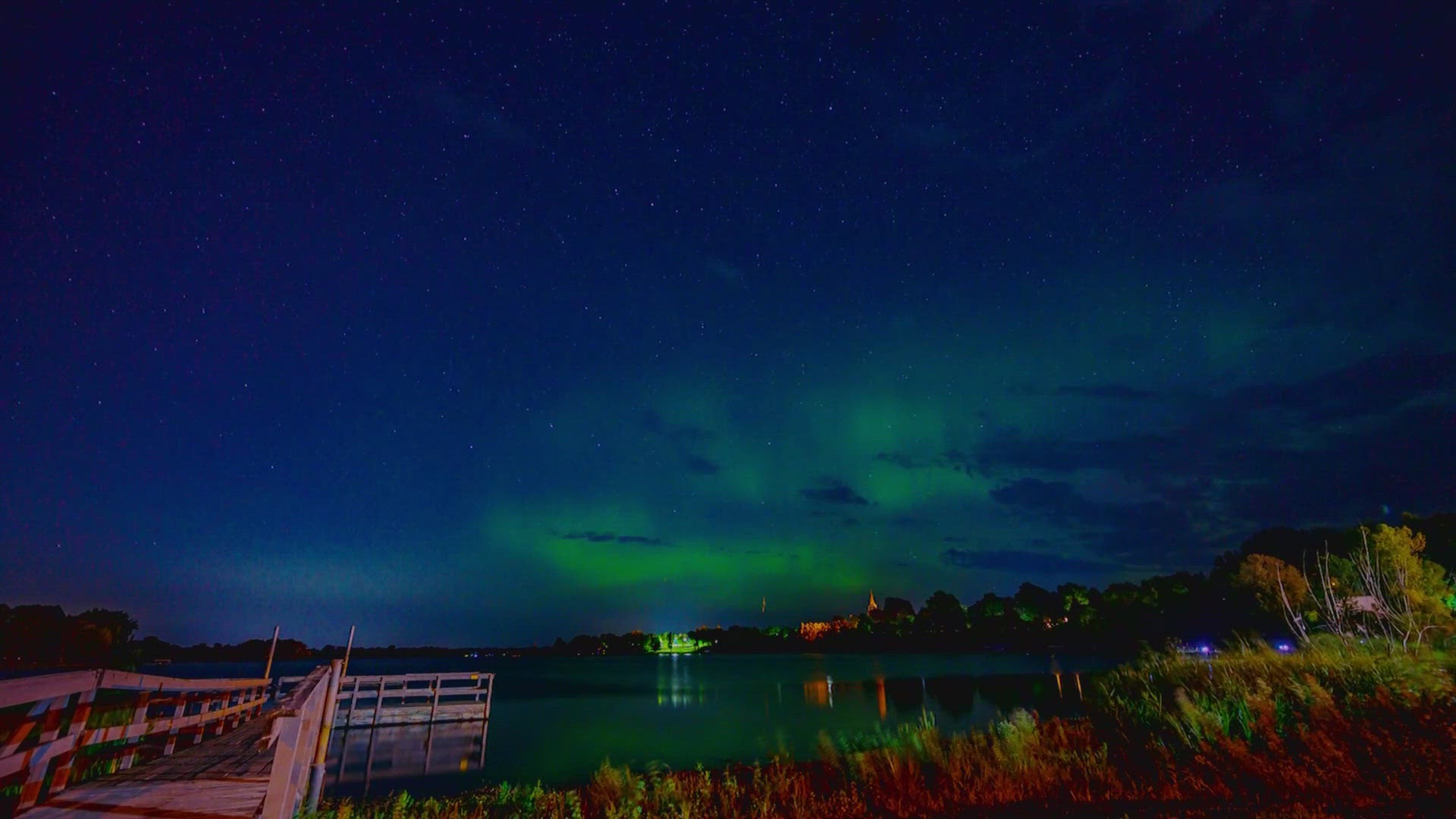
Historically, strong geomagnetic storms have pushed the auroral oval far enough south to allow sightings in Colorado. One of the most significant recent events occurred in May 2024, when an extreme G5 geomagnetic storm, the strongest in over two decades, led to widespread aurora sightings across the United States, including numerous reports and photographs from Colorado. During this event, the Kp-index reached 9, allowing the aurora to be seen from places like Jefferson County, Larimer County, and even near metropolitan areas for those who ventured to the darker outskirts. Prior to this, notable events in 2003 and 1989 also produced aurora visible from the state. These occurrences are directly linked to exceptionally powerful coronal mass ejections that delivered a significant shockwave and dense stream of plasma to Earth’s magnetosphere.
Best Regions Within Colorado for Potential Viewing
If a strong geomagnetic storm is underway, certain areas in Colorado offer a better chance of seeing the aurora.
- Eastern Plains: Flat, open terrain with minimal light pollution and an unobstructed view of the northern horizon is ideal. Areas east of Denver and Colorado Springs, away from towns, provide some of the darkest skies.
- High Mountain Passes: While often remote, mountain locations can offer dark skies, but tall peaks might obstruct the low northern horizon. Choose locations with wide-open northern views, such as high mountain meadows or plateaus.
- National Parks and Forests: Rocky Mountain National Park, Great Sand Dunes National Park, and various National Forests offer excellent dark sky conditions. However, be mindful of accessibility and potential road closures, especially in winter.
- Western Slope: Parts of the Western Slope, particularly away from towns like Grand Junction, can also provide sufficiently dark skies.
Always prioritize safety, especially when driving to remote areas at night.
Planning Your Northern Lights Chase in Colorado
Successfully witnessing the Northern Lights in Colorado requires preparation, real-time monitoring, and a good dose of luck and patience.
Tools and Resources for Tracking the Aurora
To maximize your chances, stay informed about space weather forecasts.
- NOAA Space Weather Prediction Center (SWPC): This is the authoritative source for real-time Kp-index data, aurora forecasts, and alerts for geomagnetic storms. Their website provides a wealth of information.
- Aurora Tracking Apps: Many mobile applications leverage SWPC data to provide personalized aurora alerts and forecasts based on your location. Examples include My Aurora Forecast & Alerts or AuroraNow.
- Social Media and Local Forums: Join local astronomy clubs or online forums (e.g., Facebook groups for Colorado astrophotography) where enthusiasts often share real-time sightings and tips.
Set up alerts for high Kp-index values (Kp7+) and be ready to act quickly when a strong storm is predicted.
Essential Gear and Preparedness
If you decide to embark on an aurora chase in Colorado, come prepared:
- Warm Clothing: Even on a mild evening, nights in Colorado can get very cold, especially in remote, high-altitude locations. Dress in layers.
- Red Light Headlamp: A headlamp with a red light setting preserves your night vision and is courteous to other stargazers.
- Camera Gear: While your eyes might struggle to see faint aurora at low latitudes, a camera can often capture it. A DSLR or mirrorless camera with a wide-angle lens (f/2.8 or faster) and a sturdy tripod is essential. Learn basic astrophotography settings beforehand (high ISO, long exposure).
- Full Tank of Gas and Supplies: Ensure your vehicle is fueled and you have water, snacks, and emergency supplies, especially if heading to remote areas.
- Safety First: Inform someone of your plans, be aware of wildlife, and stick to known roads. Cell service can be spotty in the mountains.
Alternative Night Sky Experiences in Colorado
Even if the Northern Lights remain elusive, Colorado’s dark skies offer incredible stargazing opportunities. The Milky Way is often visible on clear, moonless nights, and meteor showers are regular occurrences. Many state parks and national parks in Colorado host stargazing events, providing a fantastic alternative for experiencing the wonders of the night sky.
Beyond Colorado: Where to Go for Guaranteed Aurora Views
While a Colorado aurora is a thrilling possibility, those truly committed to witnessing the Northern Lights should consider traveling to locations within the auroral oval.
Top Global Destinations for Aurora Enthusiasts
For a nearly guaranteed chance of seeing the aurora during the active season (typically September to April), look to these prime destinations:
- Fairbanks, Alaska: Known as one of the best places in the U.S. for aurora viewing, Fairbanks offers reliable access and infrastructure.
- Yellowknife, Northwest Territories, Canada: Often boasts a clear advantage due to its location directly beneath the auroral oval.
- Tromsø, Norway: A vibrant city in the heart of the Norwegian Arctic, offering a mix of cultural experiences and aurora tours.
- Iceland: Its entire landmass lies within the auroral zone, making it a popular choice for aurora hunters, often combined with other unique landscapes.
- Sweden and Finland (especially Lapland): Offer stunning winter landscapes and various aurora-focused activities.
- Greenland: More remote, but offers some of the most pristine and spectacular aurora views.
- Yukon, Canada: Offers wild, untamed landscapes and excellent aurora viewing opportunities away from city lights.

The Unforgettable Experience of an Aurora Trip
Undertaking a journey to witness the Northern Lights in their natural habitat is an unparalleled travel experience. Beyond the celestial display, these destinations offer unique winter activities, cultural insights, and breathtaking scenery. While chasing the aurora in Colorado is an exciting and rare pursuit, planning a trip to a dedicated aurora destination ensures a higher probability of experiencing one of Earth’s most magnificent natural phenomena.
In conclusion, while seeing the Northern Lights in Colorado is not an everyday occurrence, it is indeed possible under extraordinary circumstances. By monitoring space weather forecasts, seeking out dark skies, and being prepared, you might just be one of the lucky few to witness the aurora dance over the Colorado landscape. Whether tonight is that night remains a question only the sun and the heavens can answer.
LifeOutOfTheBox is a participant in the Amazon Services LLC Associates Program, an affiliate advertising program designed to provide a means for sites to earn advertising fees by advertising and linking to Amazon.com. Amazon, the Amazon logo, AmazonSupply, and the AmazonSupply logo are trademarks of Amazon.com, Inc. or its affiliates. As an Amazon Associate we earn affiliate commissions from qualifying purchases.