
Navigating the vast and diverse landscape of Texas presents myriad opportunities for exploration, from the vibrant cultural hubs of Austin and Dallas to the sprawling natural beauty of the Big Bend National Park and the coastal allure of Galveston. Travelers often seek to immerse themselves in the unique experiences this Lone Star State offers, whether it’s savoring authentic Tex-Mex cuisine, exploring historic missions, or enjoying world-class entertainment. However, amidst the excitement of planning an itinerary, a crucial aspect of safety and preparedness often surfaces: emergency communication. Understanding how to access help, especially through modern channels, is paramount for any visitor. This guide delves into the capabilities of texting 911 within Texas, providing essential information for travelers to ensure their well-being while experiencing all that this dynamic state has to offer.

Understanding Emergency Communication in Texas
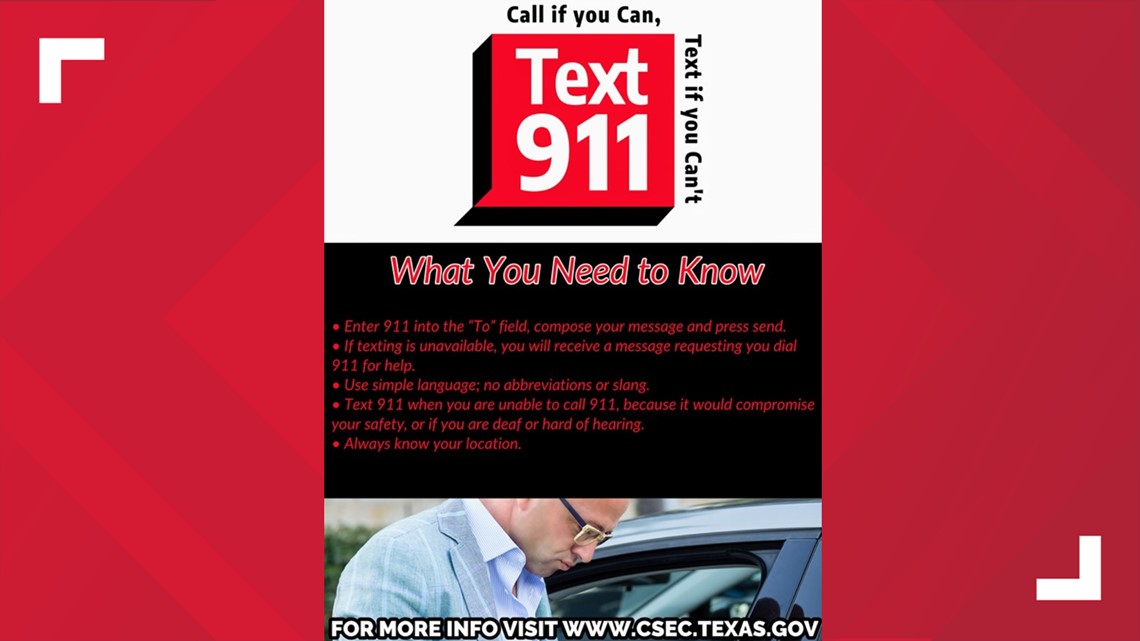
The advent of mobile technology has revolutionized how we interact with emergency services. While the traditional method of calling 911 has long been the standard, the ability to send a text message to 911 offers an alternative that can be vital in specific situations. This service, often referred to as “Text-to-911,” is designed to supplement, not replace, voice calls. Its primary benefit lies in its utility for individuals who are deaf, hard of hearing, or whose speech is impaired, as well as in scenarios where making a voice call might be dangerous or impossible, such as during a home invasion or in a location with poor cell signal where texting might still function.
The Evolution of 911 Services
For decades, the 911 Public Safety Answering Point (PSAP) has been the cornerstone of emergency response in the United States. When a call is placed to 911, it is routed to a dispatcher who can then summon police, fire departments, or ambulance services. The system has been incredibly effective, but it has inherent limitations, particularly concerning individuals with communication disabilities. The introduction of TTY (teletypewriter) devices allowed for text-based communication with 911, but this technology required specialized equipment that was not widely adopted. The widespread use of mobile phones, however, paved the way for more accessible and modern solutions.
Benefits of Text-to-911
The advantages of Text-to-911 are significant, particularly for those who cannot easily make a voice call. For travelers, this means an added layer of security, especially when exploring remote areas or engaging in activities that might limit vocal communication. The ability to discreetly send an emergency message can be a lifesaver. Furthermore, in situations where ambient noise is overwhelming, such as at a loud concert or a busy tourist attraction, texting can ensure that the message is received clearly. It also provides a record of the communication, which can be helpful for dispatchers and for the individual sending the message.
Text-to-911 Availability in Texas
The implementation of Text-to-911 services across Texas has been a progressive effort. Not all counties or municipalities have fully integrated this capability into their emergency response systems. This means that while you might be able to text 911 in one area of the state, the service may not be available in another. It is crucial for travelers to be aware of the specific services offered in the regions they plan to visit.
National and Statewide Initiatives
The Federal Communications Commission (FCC) has been a strong advocate for the expansion of Text-to-911. Many states have been working towards statewide coverage, but the process involves significant technical integration and coordination between various public safety agencies. In Texas, the deployment has been managed at the local and regional levels, leading to a patchwork of availability.
How to Check for Local Availability
Before embarking on a trip to a specific region in Texas, it is advisable to research the emergency communication capabilities of that area. Many county emergency management agencies or 911 districts provide information on their websites regarding Text-to-911 availability. Some resources also allow for a quick check based on your current location using your mobile device. For instance, if you are visiting a major city like Houston or San Antonio, the likelihood of Text-to-911 being available is higher than in more rural parts of West Texas.
What Happens If Text-to-911 is Not Available?
If you attempt to send a text to 911 in an area where the service is not yet implemented, you will likely receive an automatic bounce-back message informing you that your message did not reach 911 and instructing you to call 911 instead. This is why it remains critical to know the actual emergency number and to have a way to make voice calls if possible. In such a scenario, if you have a companion, they might be able to make the call, or you may need to find a safer location from which to attempt a voice call.
How to Text 911 in Texas
When the Text-to-911 service is available, sending an emergency message is straightforward. However, adhering to specific guidelines ensures that the dispatcher receives the most critical information quickly and efficiently. This is especially important when you consider that text messages may not be as immediate as voice calls and can sometimes be affected by network congestion.
Crafting Your Text Message
The most important rule is to “go to the location of the emergency” and “call or text 911.” When composing your message, be clear, concise, and provide essential details.
- Location: This is the absolute most critical piece of information. Provide the exact address, including the city and county. If you are unsure of the exact address, give as much detail as possible, such as landmarks, cross streets, or descriptions of your surroundings. For example, “I am at the corner of Main Street and Elm Avenue in Austin, Texas.”
- Nature of the Emergency: Briefly describe the problem. Is it a medical emergency, a fire, a crime in progress, or a suspicious activity?
- Your Name: State your name.
- Details about the Situation: Provide any other relevant information, such as the number of people involved, whether weapons are present, or the status of any victims.
- Stay on the Line (or Text Line): Do not end the conversation prematurely. The dispatcher may have follow-up questions. Be prepared to answer them.
Important Considerations and Best Practices
- Use Plain Language: Avoid slang, abbreviations, or acronyms, as these can be misinterpreted.
- One Emergency Per Text: Do not try to report multiple unrelated incidents in a single text message.
- Wireless Priority Service (WPS): In some areas, emergency responders may utilize WPS to prioritize voice calls over data services. While texting is a data service, the underlying infrastructure can still be affected by network congestion.
- Location Services: Ensure your phone’s location services are enabled if possible. This can help dispatchers pinpoint your location even if you cannot provide it precisely.
- “MLO” to 911: In some areas, the initial text might be to a specific number like 411 or a dedicated short code, and then you might be prompted to send your message to 911 or the dispatcher will prompt you to send your message to 911. However, the direct “Text to 911” feature is usually to the number 911 itself. The general instruction is to text “911” as the recipient.
- Do Not Text and Drive: This should go without saying, but safety is paramount.
What to Expect from the Dispatcher
Once you send your text, you should receive an acknowledgment message from the 911 dispatcher, confirming that your message has been received. They will likely ask clarifying questions or provide instructions. Respond promptly to their messages. If you receive a message indicating that Text-to-911 is not available in your area, you will be instructed to call 911. It’s important to follow these instructions precisely.
Alternative Emergency Resources in Texas
While the ability to text 911 is an invaluable addition to emergency services, it is not the only resource available to travelers in Texas. Understanding the full spectrum of emergency communication options can enhance your safety preparedness.
Traditional 911 Calls
The most reliable method for emergency communication remains a voice call to 911. Even in areas with Text-to-911 capabilities, a voice call is often preferred because it allows for immediate, real-time interaction and the transmission of audio cues that can be crucial in an emergency. If you can safely make a voice call, it is generally the best option.
Local Emergency Numbers
While 911 is the universal emergency number in the United States, some specific situations or locales might have secondary emergency numbers for non-life-threatening issues or for contacting specific departments. However, for immediate life-or-death situations, 911 is always the primary contact.
Tourist Information Centers and Law Enforcement
In tourist areas, visitor information centers or local law enforcement agencies often have staff available who can assist with various needs, including directing you to emergency services or providing guidance in non-immediate situations. Knowing the location of the nearest police station or sheriff’s office in the areas you are visiting can also be beneficial for non-emergency assistance.
Travel Insurance and Assistance Services
Many travel insurance policies include emergency assistance services that can be invaluable while traveling. These services can help with medical emergencies, lost documents, or even provide guidance on navigating local emergency procedures. It is wise to have the contact information for your travel insurance provider readily accessible.
Preparing for Emergencies While Traveling in Texas
Proactive preparation is key to ensuring a safe and enjoyable trip to Texas. Understanding emergency communication protocols is just one part of a larger safety strategy.
Pre-Trip Research
Before you depart for your trip, familiarize yourself with the specific regulations and services in the areas you plan to visit. This includes checking the Text-to-911 availability for the counties where you will be staying and sightseeing. Websites of local 911 districts or emergency management agencies are excellent resources.
Emergency Contact Information
Ensure you have a list of emergency contacts saved on your phone and, ideally, written down in a secure place. This list should include family members, friends, your doctor, and your travel insurance provider. In the event of an emergency, these contacts can be crucial for support and coordination.
Communication Plan
Discuss with your travel companions what to do in case of an emergency. Establish clear communication plans and meeting points if you become separated. Knowing how to use your phone to contact help, whether through voice or text, is a critical component of this plan. For example, if you are planning a hike in Palo Duro Canyon State Park, understanding cell service limitations and emergency procedures in that specific park is vital.

Staying Informed and Aware
While exploring Texas, remain aware of your surroundings. Pay attention to local news and advisories, especially concerning weather or public safety alerts. Utilizing local tourism websites or official city/county apps can provide real-time updates. For instance, if you are attending a large event like the State Fair of Texas, being aware of the event’s safety protocols and emergency contact points is essential.
By understanding the nuances of Text-to-911 services in Texas and implementing comprehensive safety measures, travelers can confidently explore the state’s rich offerings, secure in the knowledge that they are prepared for a wide range of eventualities. Whether you’re exploring the historic streets of San Antonio, enjoying the music scene in Austin, or marveling at the natural wonders of West Texas, preparedness is your most valuable travel companion.
LifeOutOfTheBox is a participant in the Amazon Services LLC Associates Program, an affiliate advertising program designed to provide a means for sites to earn advertising fees by advertising and linking to Amazon.com. Amazon, the Amazon logo, AmazonSupply, and the AmazonSupply logo are trademarks of Amazon.com, Inc. or its affiliates. As an Amazon Associate we earn affiliate commissions from qualifying purchases.