
Navigating the roadways of any new destination can present unique challenges, and understanding local traffic laws is paramount to a safe and stress-free journey. For travelers exploring the vast and varied landscapes of Texas, one common question that arises, particularly for those accustomed to different driving regulations, concerns the legality of turning left on a red light. This seemingly simple query opens a door to understanding the intricacies of Texas traffic codes and how they impact your travel experience, from city excursions to scenic drives.
The General Rule: Red Means Stop
In Texas, as in most of the United States, the fundamental principle governing traffic signals remains consistent: a red light signifies a mandatory stop. Drivers are required to bring their vehicles to a complete halt behind the marked stop line, crosswalk, or, if none are present, before entering the intersection. This pause is not merely a suggestion but a legal imperative, designed to prevent collisions and ensure the orderly flow of traffic.
The primary purpose of a red light is to grant the right-of-way to vehicles and pedestrians traveling on the intersecting street or approaching from the opposite direction. Failing to stop at a red light is a traffic violation that can result in citations, fines, and points on your driving record. For visitors, this can lead to unexpected expenses and potential complications with rental car agreements or future travel plans.
Exceptions to the Rule
While the general rule is clear, traffic laws often contain specific exceptions designed to improve traffic efficiency when safety is not compromised. In Texas, the most significant exception to the red-light rule pertains to turning right.
The Right Turn on Red
In Texas, a driver facing a steady red light is permitted to turn right after making a complete stop, unless a sign explicitly prohibits such a turn. This common practice, often referred to as “right turn on red,” is a widely accepted aspect of American driving. The key conditions for this maneuver are:
- Complete Stop: The vehicle must come to a full and complete stop before proceeding. This means the tires should cease their rotation entirely.
- Yield to Pedestrians and Other Traffic: After stopping, drivers must yield the right-of-way to any pedestrians in or approaching the crosswalk and to any vehicles lawfully proceeding through the intersection. This includes vehicles traveling on the intersecting street and those making a legal left turn from the opposite direction.
- No Prohibitory Signage: If a sign is posted that says “NO TURN ON RED,” “LEFT TURN PROHIBITED,” or similar wording, the right turn on red is forbidden. These signs are typically placed at intersections where a right turn on red would pose a particular safety hazard, such as near schools, pedestrian-heavy areas, or intersections with limited visibility.
It is crucial for drivers to be attentive to signage at every intersection, as these directives override the general allowance for right turns on red.
The Specific Case: Left Turn on Red in Texas
Now, let’s address the core of the inquiry: Can you turn left on red in Texas? The answer, in most circumstances, is no.
Unlike the allowance for right turns on red, Texas law generally prohibits left turns on a steady red light. This prohibition stems from the inherent safety considerations associated with left turns, which typically involve crossing lanes of oncoming traffic.
The One Exception: One-Way Streets
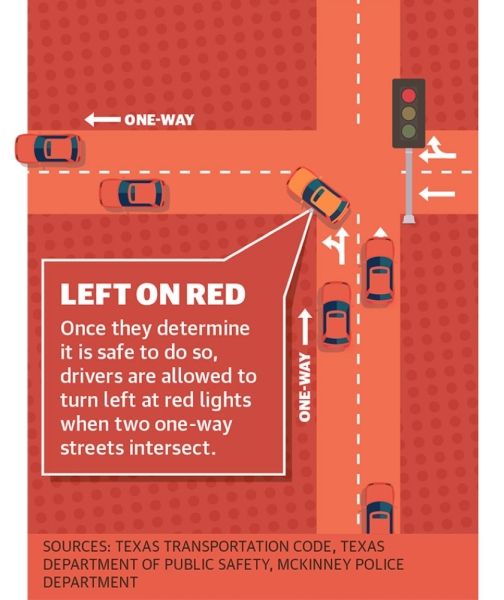
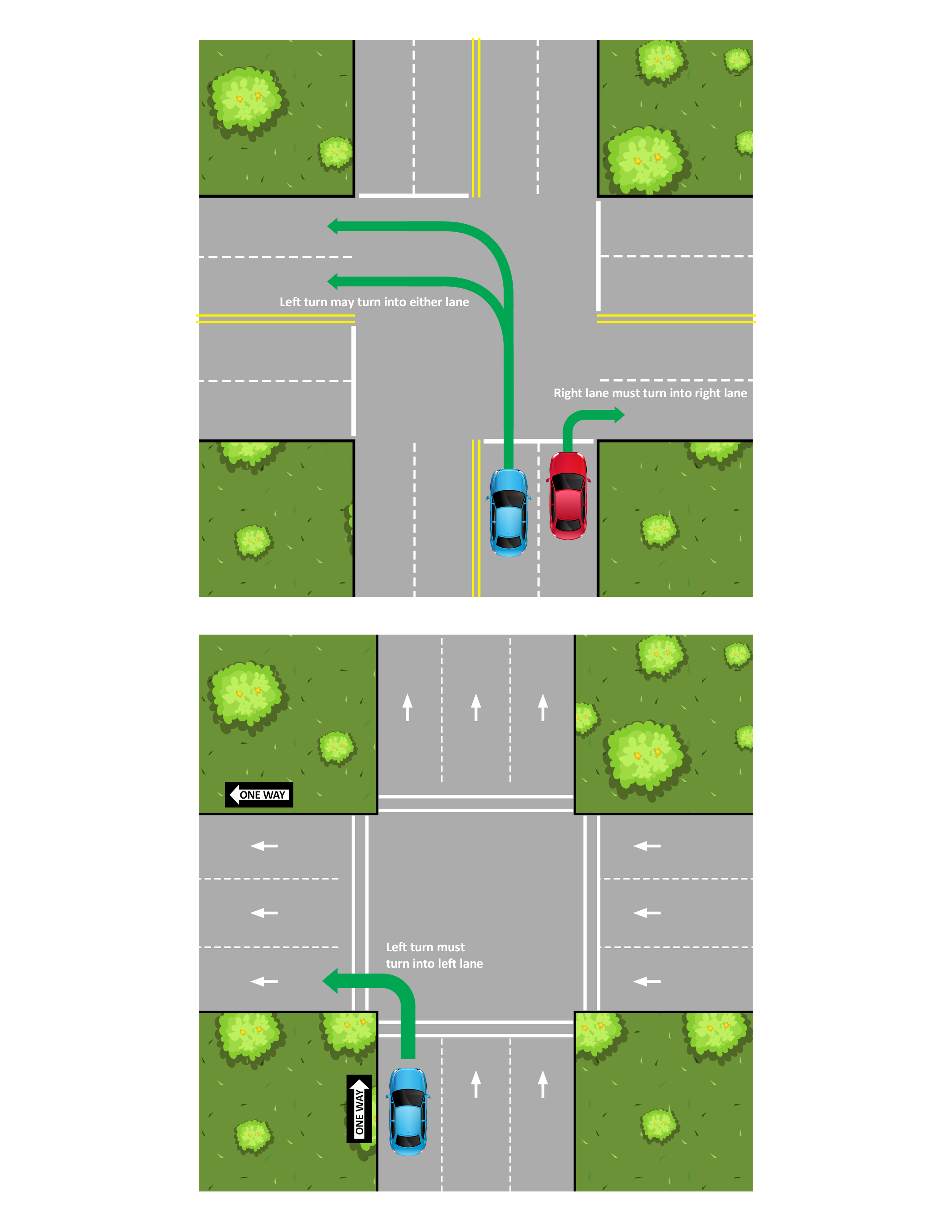
There is a singular, important exception to the general prohibition against left turns on red in Texas. This exception applies when turning from a one-way street onto another one-way street.
In this specific scenario, a driver facing a steady red light on a one-way street is permitted to turn left onto another one-way street after making a complete stop, provided that such a turn is not prohibited by a sign.

The rationale behind this exception is that on a one-way street, all traffic is moving in the same direction. When turning onto another one-way street, the turning vehicle is only crossing the path of traffic that is also moving in the same direction as the original street. This significantly reduces the risk compared to turning left from a two-way street onto another street, where oncoming traffic must be considered.
The conditions for this specific left turn on red are identical to those for a right turn on red:
- Complete Stop: A full stop is mandatory.
- Yield to Pedestrians and Other Traffic: Yield to all pedestrians and any traffic that has the right-of-way. This includes traffic already lawfully in the intersection or approaching it from the left on the target one-way street.
- No Prohibitory Signage: Always obey any “NO TURN ON RED” or similar signs.
It is vital for drivers to accurately assess the nature of the streets involved. Misinterpreting a two-way street as a one-way street, or vice versa, can lead to a dangerous misunderstanding of the traffic laws.
Practical Implications for Travelers in Texas
Understanding these traffic rules is not just about avoiding tickets; it’s about ensuring a safe and enjoyable travel experience across Texas. Whether you are driving through the bustling streets of Dallas, the vibrant avenues of Houston, the historic lanes of San Antonio, or the expansive highways connecting these cities, adhering to traffic laws is fundamental.
Navigating Urban Environments
Major Texas cities are characterized by complex intersections, heavy traffic volumes, and diverse driver behaviors. In urban centers, drivers are more likely to encounter intersections with specific signage, pedestrian crossings, and a higher density of traffic. It is in these environments that paying close attention to every detail—stop lines, traffic signals, and posted signs—is most critical. For instance, when driving through the Arts District in Dallas or the Riverwalk area in San Antonio, the presence of pedestrians and cyclists means drivers must be extra vigilant when considering any turn, especially those potentially made on red.
Scenic Routes and Rural Roads
While the complexities of urban driving are significant, rural Texas presents its own set of challenges. Intersections on scenic routes, such as those along the Texas Hill Country or near national parks like Big Bend National Park, may be less frequently patrolled but are no less governed by traffic statutes. Even in remote areas, the rule of “red means stop” and the specific conditions for turns on red must be observed. The absence of other vehicles might tempt drivers to rush a turn, but the law remains the same.
Rental Cars and Insurance
For those renting vehicles during their Texas travels, understanding these laws is also crucial from a practical standpoint. Traffic violations incurred while driving a rental car can lead to significant fines, administrative fees charged by the rental company, and potentially impact your rental agreement. In the event of an accident, a violation of traffic laws, such as an improper turn on red, can affect insurance claims and liability.
Pedestrian and Cyclist Awareness
Texas cities and towns are increasingly prioritizing pedestrian and cyclist safety. This means that when you are permitted to turn right or left on red (in the specific one-way to one-way scenario), you must be acutely aware of individuals on foot or on bicycles. These road users often have the right-of-way and can be harder to spot than other vehicles. Always scan thoroughly before proceeding, even after a full stop and when the signal is red.
Conclusion: Drive Smart in the Lone Star State
In summary, the answer to “Can you turn left on red in Texas?” is predominantly no, with one significant exception: turning from a one-way street onto another one-way street, provided no prohibitive signage is present. Right turns on red are generally permitted after a complete stop, unless signs indicate otherwise.
By understanding and adhering to these Texas traffic laws, travelers can navigate the state with confidence, ensuring their journeys are safe, legal, and enjoyable. Whether you’re heading to a rodeo in Fort Worth, exploring the museums in Austin, or enjoying the coastal breeze in Galveston, a little knowledge of local driving etiquette goes a long way in making your Texas adventure a memorable one for all the right reasons. Always prioritize safety, stay attentive to your surroundings, and obey all posted traffic signs and signals.
LifeOutOfTheBox is a participant in the Amazon Services LLC Associates Program, an affiliate advertising program designed to provide a means for sites to earn advertising fees by advertising and linking to Amazon.com. Amazon, the Amazon logo, AmazonSupply, and the AmazonSupply logo are trademarks of Amazon.com, Inc. or its affiliates. As an Amazon Associate we earn affiliate commissions from qualifying purchases.