
The image of Florida is almost universally that of sunshine, sandy beaches, and year-round warmth. It’s a state synonymous with tropical breezes, orange groves, and vibrant theme parks. So, the question “Did it ever snow in Florida?” might seem as far-fetched as finding a polar bear in the Everglades. Yet, like many places, Florida isn’t a monolithic climate zone, and its history, though rarely touched by frost, does hold a few surprising chapters. While a blizzard may never have paralyzed the Sunshine State, significant snowfall events, though infrequent and localized, have indeed occurred, leaving behind a trail of bewildered residents and a unique place in the annals of Florida weather.
A Glimpse into Florida‘s Unexpected Winter Wonderland
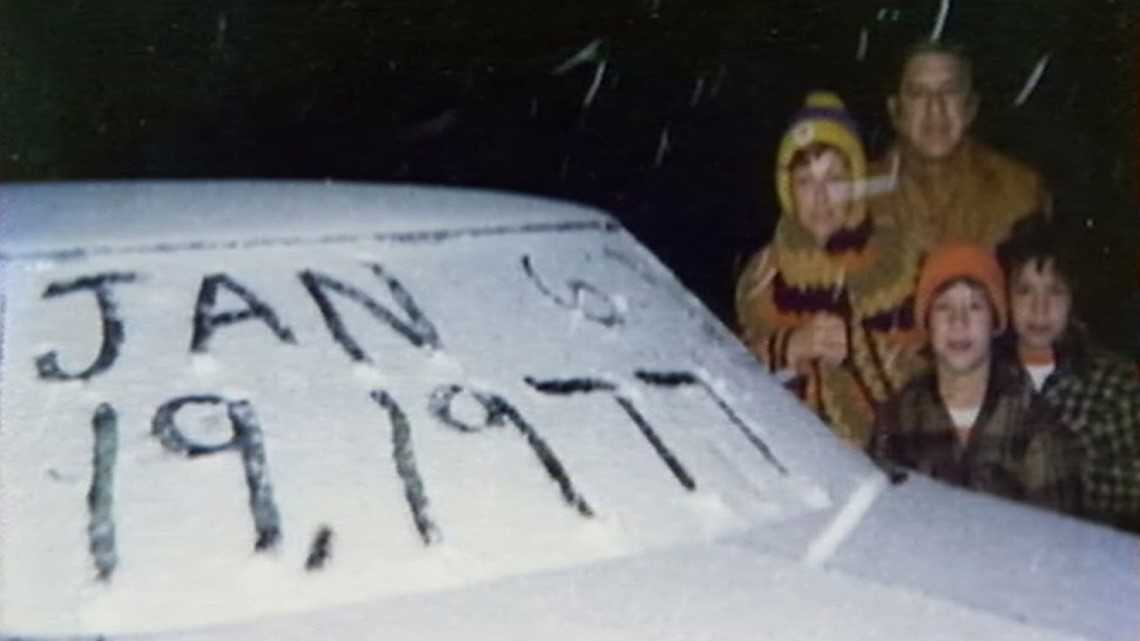
While the average Floridian might associate winter with mild temperatures perfect for outdoor activities and perhaps a light jacket, a deeper dive into historical weather records reveals that the state has, on rare occasions, witnessed the magic of falling snow. These instances are not everyday occurrences; they are anomalies, meteorological curiosities that underscore the dynamic nature of climate and the unexpected turns that weather patterns can take. The most significant and widely reported snowfall in Florida history occurred in January 1977, a date etched in the memories of those who experienced it. This event wasn’t confined to the panhandle, a region more accustomed to cooler weather; it extended its frosty reach southwards, impacting areas that rarely, if ever, see any form of frozen precipitation.
The Great Snowfall of 1977: A Sunshine State Surprise
The winter of 1977 was a period of unusual cold across much of the United States. Driven by a potent cold air mass, this frigid air pushed unusually far south, creating the perfect conditions for snow to fall on parts of Florida. On January 19, 1977, residents across the state awoke to a surreal sight: a dusting of white covering palm trees and beaches. This was not a light flurry; in some areas, it accumulated enough to be measured. The Florida Panhandle, naturally the most susceptible region to such events, experienced the heaviest snow, with reports of several inches in cities like Pensacola and Tallahassee.
However, the true shock of the 1977 event was its southward expansion. Snowflakes were observed, and in some cases, accumulated, as far south as Orlando, the heart of Central Florida and home to world-renowned theme parks. Tourists visiting places like Walt Disney World Resort and Universal Orlando Resort found themselves in a scene straight out of a winter postcard, a stark contrast to the usual tropical ambiance. The iconic Magic Kingdom, with its Cinderella Castle, was temporarily transformed into a winter wonderland. Even the beaches of the Gulf Coast saw light snow, an image so improbable that many initially questioned its reality.
The impact of this unprecedented snowfall was significant. Schools were closed, particularly in areas where the accumulation caused travel disruptions. While Florida‘s infrastructure is not designed for snow removal, the light nature of the accumulation in most southern areas meant that the snow melted relatively quickly, leaving behind a memorable, albeit brief, wintery experience. The event sparked immense local excitement and fascination, with many residents capturing photos and videos of the rare phenomenon. It became a talking point for years, a testament to the fact that even in the sun-drenched Sunshine State, the unexpected can happen.
Other Fleeting Encounters with Snow
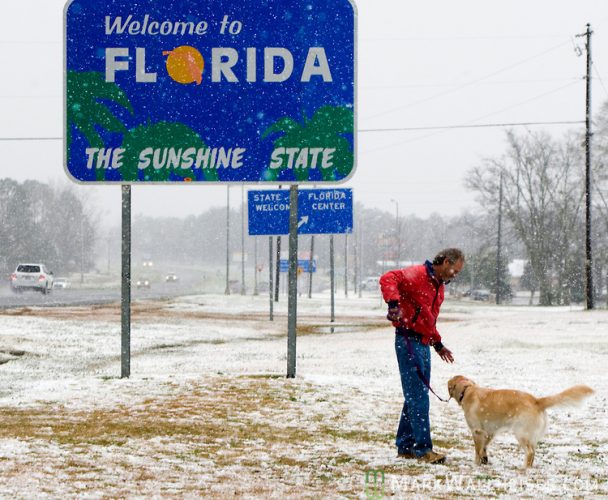
While the 1977 event remains the most prominent, it wasn’t the only time Florida has brushed shoulders with snow. Throughout history, there have been other instances, though often less widespread and less significant in accumulation.
Occasional Flurries and Freezing Temperatures
- 1899: Another notable cold snap occurred in February 1899, bringing with it snow to parts of North Florida and even light flurries as far south as Tampa. This event, often referred to as the “Great Florida Freeze,” was more significant for its incredibly low temperatures, which caused widespread damage to citrus crops, a cornerstone of the state’s economy at the time. However, the snow itself was generally light and short-lived.
- 1917: Reports from January 1917 indicate snow in Jacksonville and other parts of North Florida. Again, this was a relatively minor event, more of a curiosity than a disruptive weather phenomenon.
- 2018: More recently, in January 2018, a cold wave brought snow flurries to parts of the Florida Panhandle, and even a trace of snow was reported in areas as far south as Central Florida. This was a very light event, more of a dusting than a significant snowfall, but it was enough to generate buzz and remind residents of Florida‘s occasional winter visitors.
These events, while less impactful than 1977, demonstrate a recurring pattern: when cold air masses venture far enough south, coupled with sufficient moisture, Florida can indeed experience snowfall, predominantly in its northern regions. The further south one travels, the rarer and lighter these occurrences become, with south Florida and the Keys almost entirely exempt from such wintry displays. The chance of experiencing a white Christmas in Miami remains infinitesimally small, though a chilly winter day is certainly not unheard of.
Why is Snow So Rare in Florida?
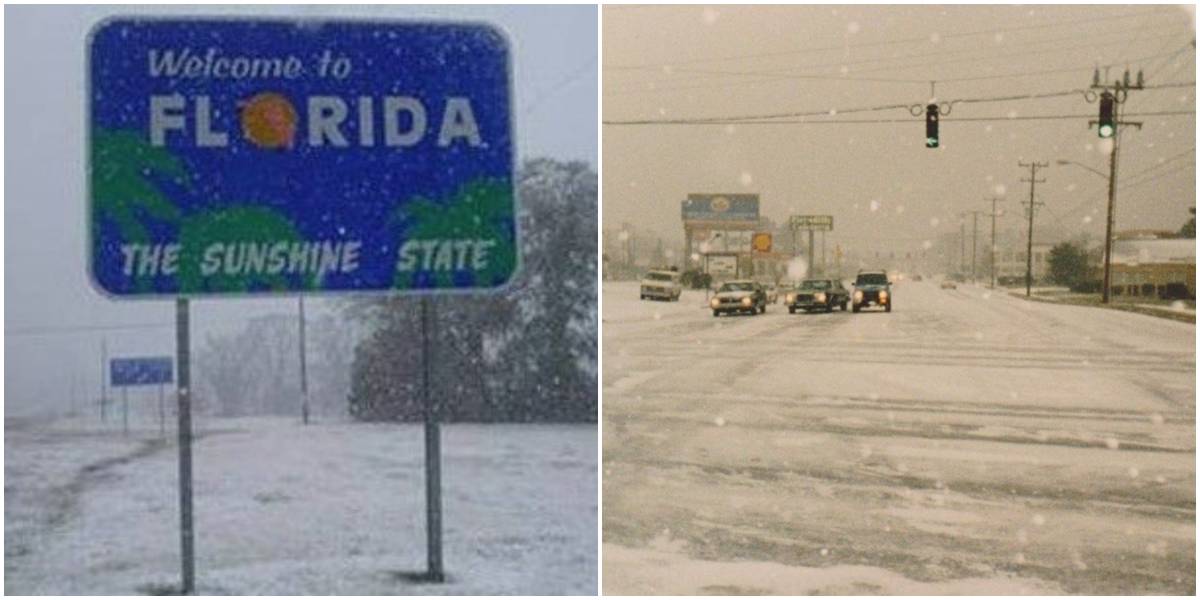
The primary reason Florida rarely experiences significant snowfall is its geographical location and prevailing climate patterns. Situated in the southeastern United States, Florida is largely influenced by warm, moist air masses originating from the Gulf of Mexico and the Atlantic Ocean. These maritime tropical air masses keep temperatures mild to warm throughout much of the year.
Climatological Factors at Play
- Latitude: Florida‘s southernmost latitudes mean it generally receives a high amount of solar radiation, contributing to its warm climate. Even in winter, temperatures are often too mild for snow formation. For snow to fall, the air temperature needs to be at or below freezing (32°F or 0°C) from the cloud layer all the way down to the ground.
- Proximity to Warm Waters: The surrounding warm ocean waters act as a natural buffer against extreme cold. While cold air masses can penetrate the state, the nearby ocean typically moderates their impact, preventing temperatures from plummeting to sustained freezing levels across the entire state.
- Typical Winter Weather Patterns: Florida‘s winters are characterized by the southward movement of continental polar air masses. However, for snow to occur, these cold air masses need to be sufficiently strong and persistent, and crucially, they must collide with a source of moisture. Often, the moisture present during cold snaps is more conducive to rain or freezing rain rather than snow.
When snow does occur, it usually happens when a strong cold front pushes down from the north, bringing very cold, dry air. If this cold air then encounters moisture, often from a departing low-pressure system or a slow-moving frontal boundary, the conditions can become favorable for snow. The northern part of the state, particularly the Panhandle, is at a higher latitude and can be more easily affected by these cold air incursions. Cities like Pensacola, with its proximity to Alabama and Mississippi, are more likely to see snow than, say, Key West, which is situated at the southernmost tip of the state, hundreds of miles from the mainland and firmly within tropical climes.
Even when temperatures dip low enough, the duration of freezing temperatures is usually insufficient for significant accumulation. The rapid melting of any fallen snow is typical, making a lasting winter scene a fleeting memory. The memory of snow in Florida remains a cherished and often surprising footnote in the state’s otherwise sun-drenched history, a reminder that nature can always present a delightful, albeit rare, surprise. For those planning a visit, while you might pack for warmth, knowing these historical anomalies adds a unique layer to understanding Florida‘s diverse and sometimes unpredictable meteorological tapestry. You might even find yourself checking the forecast with a newfound sense of anticipation, though a true snow day in Miami remains a far-fetched dream.
LifeOutOfTheBox is a participant in the Amazon Services LLC Associates Program, an affiliate advertising program designed to provide a means for sites to earn advertising fees by advertising and linking to Amazon.com. Amazon, the Amazon logo, AmazonSupply, and the AmazonSupply logo are trademarks of Amazon.com, Inc. or its affiliates. As an Amazon Associate we earn affiliate commissions from qualifying purchases.