
The image of Hawaii is almost universally painted in shades of turquoise, emerald, and gold. Travelers flock to the Pacific Ocean archipelago seeking the warmth of the tropical sun, the soft sands of Waikiki Beach, and the lush greenery of the Na Pali Coast. Yet, a common query persists among curious adventurers: can you actually find snow in this tropical paradise? The answer is a resounding yes, provided you know where—and how high—to look.
The Alpine Peaks of the Big Island
While most visitors spend their time lounging in the coastal resorts of Kona or exploring the historic sites of Hilo, the true geological wonder of Hawaii lies in its sky-piercing volcanoes. Snow is not a seasonal norm for the state, but it is an annual visitor to the highest summits of the Big Island.

Mauna Kea: The Crown of the Pacific
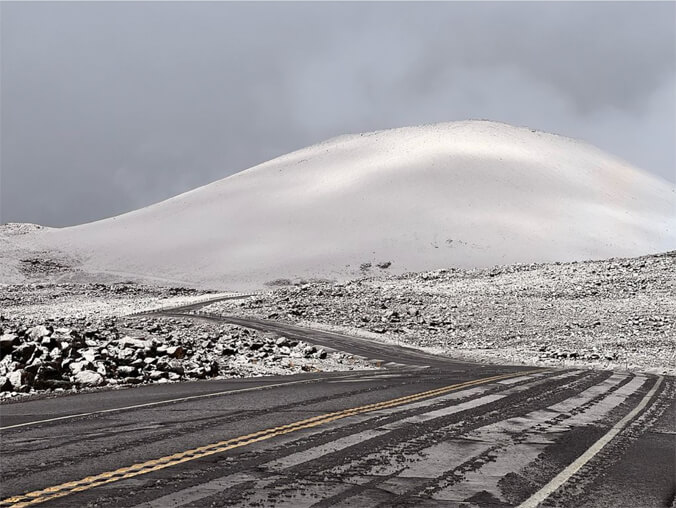
The dormant volcano Mauna Kea stands at an awe-inspiring 13,803 feet above sea level. Because of its extreme elevation, the summit sits well above the tropical cloud layer. During the winter months—typically between December and March—storms passing through the North Pacific occasionally dump a layer of snow upon its cinder cones. When this happens, the stark contrast between the black volcanic rock and the pristine white powder creates a surreal landscape that feels more like Alaska than Polynesia.
Mauna Loa: The Sleeping Giant
Not to be outdone, Mauna Loa, the largest subaerial volcano in the world by mass and volume, also experiences periodic snowfall. Rising to 13,679 feet, this massive shield volcano occasionally wears a white cap. Unlike the summit of Mauna Kea, which is easily accessible via road, the upper reaches of Mauna Loa are rugged and challenging, making snow sightings there a reward for the most intrepid hikers and scientists.
Why Hawaii Experiences Occasional Snowfall
To understand why snow falls in the middle of a tropical climate, one must look at the atmospheric conditions of the Central Pacific. The phenomenon is not driven by long, frigid winters, but by specific weather systems known as “Kona Lows.”
The Role of Kona Lows
A Kona Low is a specific type of low-pressure system that develops in the subtropics. These storms shift the typical trade winds and pull cooler, moisture-laden air from the north. When these systems stall over the Hawaiian Islands, the moisture is forced up the slopes of the tall volcanoes. As the air rises, it cools rapidly. At elevations above 10,000 feet, the temperature drops below freezing, turning rain into snow.
Atmospheric Lapse Rate
The “lapse rate”—the rate at which temperature decreases with altitude—plays a critical role in Hawaii’s weather. Even when the temperature at Honolulu is a balmy 80 degrees Fahrenheit, the summit of a tall mountain may be 50 to 60 degrees cooler due to the sheer vertical rise. This rapid transition is one of the most drastic climatic shifts in the world, allowing one to go from surfing at Hapuna Beach to standing in snow within a few hours of driving.
Preparing for High-Altitude Exploration
If you are hoping to catch a glimpse of snow during your stay in Hawaii, it is vital to remember that these environments are dangerous and unforgiving. The summit of Mauna Kea is not a standard tourist destination like Diamond Head State Monument.
Altitude Sickness Risks
At nearly 14,000 feet, the air contains roughly 40% less oxygen than at sea level. Visitors who drive straight from the beach to the summit of Mauna Kea without proper acclimation are at high risk for acute mountain sickness. Symptoms include headaches, nausea, and dizziness. Most travel guides recommend spending at least an hour at the Onizuka Center for International Astronomy visitor station—located at the 9,000-foot level—to allow the body to adjust to the thinner air.
Necessary Gear and Safety
There are no ski resorts, chairlifts, or warm lodges waiting at the top of these peaks. Any snow that falls is thin, patchy, and melts quickly under the intense tropical sun.
- Layering: Even if it is sunny at sea level, the summit can experience gale-force winds and near-freezing temperatures. Heavy jackets, gloves, and sturdy boots are non-negotiable.
- Vehicle Requirements: A four-wheel-drive vehicle is strictly required to travel the road past the visitor station. The road is steep, gravel-covered, and hazardous for standard rental cars.
- Respecting the Land: For Native Hawaiians, the summits of Mauna Kea and Mauna Loa are sacred sites. Visitors are expected to tread lightly, stay on marked trails, and refrain from engaging in activities that might desecrate these peaks, such as building snowmen or scattering trash.
Seasonal Variability and Climate Change
The frequency of snow in Hawaii is increasingly tied to the broader shifts in global climate patterns. While the El Nino and La Nina cycles significantly influence the number of storm systems reaching the islands, there is growing observation regarding the thickness and longevity of the snowpack.
Historically, snow could persist for weeks on the highest cinder cones. Today, even when significant snowfall occurs, the increased solar radiation and slight shifts in ambient temperatures often see the snow disappear within days. For the scientific community, the peaks of Hawaii serve as a delicate barometer for the health of our atmosphere.

Beyond the Snow: The Allure of the High Summits
Even if the mountains are bare during your visit, the summits offer an experience that is just as breathtaking as seeing snow. Because of the limited light pollution and high elevation, the Mauna Kea Observatories provide some of the best stargazing opportunities on the entire planet. Looking up from the top of Hawaii feels like staring directly into the infinite expanse of the universe.
The juxtaposition of the Pacific horizon, the volcanic craters, and the potential for a rare dusting of white creates a travel narrative that is uniquely Hawaiian. Whether you are chasing the snow or simply seeking the quiet solitude of the high-altitude desert, the volcanoes remain an essential part of the Hawaii experience.
In conclusion, while you should not plan your beach vacation around the likelihood of building a snowman, the possibility of snow adds a layer of mystery and majesty to the islands. It serves as a reminder that Hawaii is a land of extremes—from the depths of the Pacific Ocean to the snowy caps of the clouds. When the conditions are just right, the mountains of the Big Island offer a rare, fleeting, and unforgettable winter moment in the heart of the tropics. Always check local weather reports from the National Weather Service before venturing into the high country, and remember that the greatest reward is not the snow itself, but the journey through one of the most diverse ecosystems on Earth.
LifeOutOfTheBox is a participant in the Amazon Services LLC Associates Program, an affiliate advertising program designed to provide a means for sites to earn advertising fees by advertising and linking to Amazon.com. Amazon, the Amazon logo, AmazonSupply, and the AmazonSupply logo are trademarks of Amazon.com, Inc. or its affiliates. As an Amazon Associate we earn affiliate commissions from qualifying purchases.