
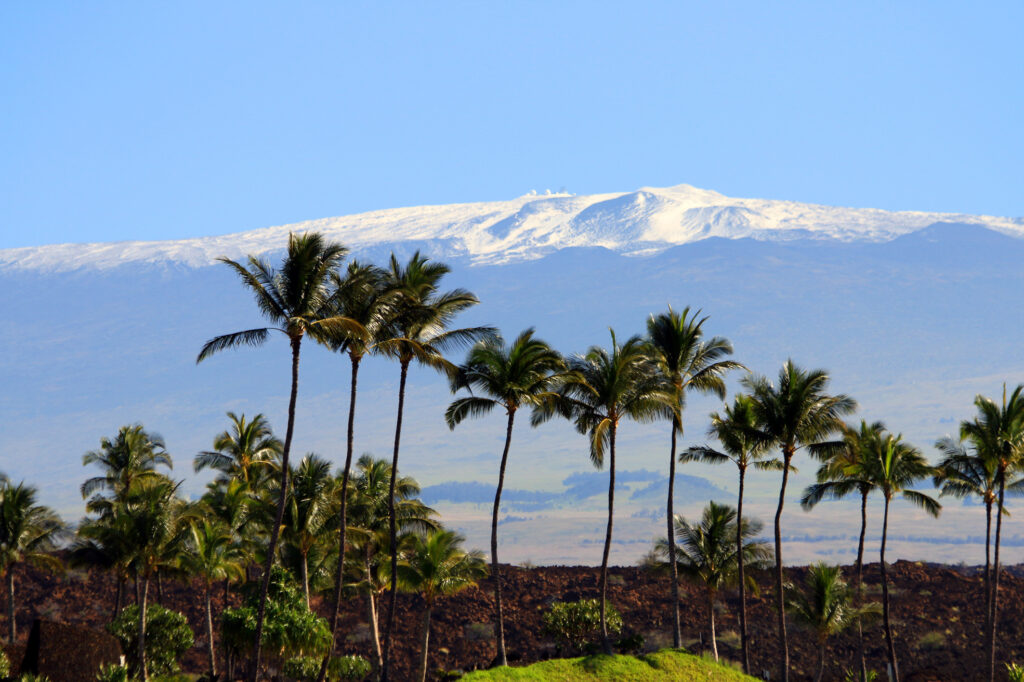
When most people envision a Hawaiian vacation, images of sun-drenched beaches, lush rainforests, and vibrant coral reefs immediately come to mind. The allure of the Aloha State lies in its tropical climate, consistent warmth, and the promise of an escape from colder climes. Yet, amidst the iconic images of surfers catching waves and hula dancers swaying to island rhythms, a curious question often arises: Did it snow in Hawaii? The answer, perhaps surprisingly to some, is a resounding yes. While you won’t find snowflakes drifting onto Waikiki Beach, Hawaii’s unique topography allows for a phenomenon that defies conventional tropical expectations.

Hawaii, an archipelago formed by volcanic activity, boasts some of the tallest mountains in the world when measured from their base on the ocean floor. Three of these colossal peaks regularly pierce the cloud cover and reach elevations high enough to experience winter weather conditions, including snow. These are Mauna Kea, Mauna Loa, and Haleakala, each a dormant or semi-dormant volcano that provides a stark contrast to the balmy coastal areas.
The Majestic Peaks: Where Tropical Meets Tundra
The presence of snow in Hawaii is a testament to the island’s incredible geographical diversity. It’s a phenomenon primarily confined to the summits of its tallest volcanoes, offering a truly unique juxtaposition of climates within a single island chain.
Mauna Kea: A Celestial Observatory and Snowy Summit
Standing at over 13,800 feet above sea level, Mauna Kea on the island of Hawaii (the Big Island) is the highest point in the state. Its summit is not only a world-renowned location for astronomical observation due to its clear skies and dry air, but it also receives a significant amount of snowfall during the winter months, typically from November to May. The snow can accumulate to several feet, transforming the stark volcanic landscape into a winter wonderland.
The Mauna Kea Access Road winds its way up the mountain, providing visitors with the opportunity to witness this extraordinary change. As you ascend, the temperature drops dramatically, and the vegetation shifts from arid scrub to alpine desert. At the summit, you are essentially in a subarctic climate, a world away from the tropical beaches below. This stark contrast is what makes a trip to Mauna Kea so remarkable. For those seeking an adventure beyond the typical beach holiday, the chance to experience snow in Hawaii is an unforgettable experience.
It’s important to note that while the summit road is often accessible to vehicles with four-wheel drive, snow can occasionally close the upper portions, especially after heavy accumulations. Visitors should always check weather conditions and road closures before planning their ascent. The experience of standing on a snow-covered volcano, with views that can stretch for hundreds of miles, is a truly humbling and awe-inspiring event.
Mauna Loa: The Sleeping Giant’s Winter Crown
Adjacent to Mauna Kea on the Big Island, Mauna Loa is another shield volcano that reaches an impressive elevation of over 13,600 feet. Like its neighbor, Mauna Loa experiences snowfall during the winter. While its summit is less accessible to the general public compared to Mauna Kea due to its remote nature and the presence of active volcanic areas, the possibility of snow dusting its vast caldera is very real.
The sheer scale of Mauna Loa is breathtaking. It is the largest volcano on Earth by volume, a truly colossal geological formation. When snow falls here, it blankets the vast, undulating slopes, creating an ethereal landscape. While not a typical tourist destination for snow play, the presence of snow on Mauna Loa further emphasizes the dramatic climatic variations found in Hawaii. It’s a reminder that this island paradise holds more geological wonders and climatic extremes than its tropical reputation might suggest.
Haleakala: The House of the Sun’s Snowy Slumber

On the island of Maui, the massive dormant volcano Haleakala offers another prime location for experiencing snow in Hawaii. At over 10,000 feet, its summit frequently experiences freezing temperatures and snowfall during the winter months. The Haleakala National Park encompasses the volcano, providing stunning vistas and hiking opportunities.
Driving up to the summit of Haleakala is an experience in itself. The landscape transforms from lush, green hillsides to a barren, almost lunar-like environment as you climb. The air becomes thin and crisp, and the temperature plummets. When snow falls, the crater of Haleakala can be transformed into a surreal, white expanse, contrasting sharply with the red and brown volcanic rock.
Sunrise and sunset views from Haleakala are legendary, drawing crowds from around the world. However, experiencing the summit dusted with snow adds another layer to this already magical location. It’s a chance to see Maui in a completely different light, far removed from the beaches and resorts of the coast. The Haleakala Visitor Center and the summit observatories are often the sites where snow accumulation is most noticeable.
Planning Your Snowy Hawaiian Adventure
For travelers seeking an unusual yet authentic Hawaiian experience, incorporating a visit to these snowy summits can be an incredible addition to their itinerary. It’s a journey that offers a deeper appreciation for the diverse ecosystems and geological marvels of the Pacific Islands.
When and Where to Look for Snow
The winter months, roughly from November to May, are the prime time to witness snow in Hawaii. The likelihood of snowfall increases with higher elevations and colder temperatures. While Mauna Kea and Haleakala offer the most accessible opportunities for visitors, Mauna Loa also contributes to the snowy phenomenon, albeit in a less visited capacity.
When planning a trip, it is crucial to research the specific weather patterns for the desired time of year and the particular island you are visiting. Websites dedicated to Hawaiian tourism and national park information will provide the most up-to-date advisories.
What to Expect and How to Prepare
Visiting the snowy peaks of Hawaii requires a different kind of preparation than a typical beach vacation.
- Altitude Sickness: The high altitudes of Mauna Kea and Haleakala can affect individuals differently. It’s advisable to ascend gradually, stay hydrated, and avoid strenuous activity. For Mauna Kea, many visitors opt to stop at the Visitor Information Station at 9,200 feet for an hour before continuing to the summit to acclimate.
- Cold Weather Gear: Even though you are in Hawaii, the summit temperatures can drop well below freezing. Pack warm layers, including a heavy jacket, gloves, a hat, and sturdy, waterproof footwear. Thermal undergarments are also highly recommended.
- Vehicle Requirements: For Mauna Kea, a four-wheel-drive vehicle is often recommended, and sometimes required, for accessing the summit, especially during snowy conditions. Check rental car agreements and local advisories carefully. Haleakala‘s summit road is generally paved and accessible to most vehicles, but road conditions can change rapidly with weather.
- Daylight Hours and Visibility: Plan your visit to take advantage of daylight hours. During winter months, days are shorter. Also, be aware that fog and clouds can obscure views, even when there is snow. Patience and flexibility are key.
The experience of seeing snow in Hawaii is not just about the visual spectacle; it’s about understanding the incredible environmental diversity that this seemingly single-climate destination possesses. It’s a chance to explore volcanic landscapes that are both ancient and alive, and to witness the power of nature in its many forms.
From the bustling shores of Waikiki on Oahu to the serene, snow-capped peaks of Hawaii Island, Hawaii truly offers a spectrum of experiences that can surprise and delight even the most seasoned traveler. So, to answer the initial question: yes, it does snow in Hawaii, and it’s an experience that adds an extraordinary dimension to its already captivating allure. It’s a destination that constantly reminds us that appearances can be deceiving, and that adventure often lies just beyond the expected horizon, even in the heart of the tropics.
LifeOutOfTheBox is a participant in the Amazon Services LLC Associates Program, an affiliate advertising program designed to provide a means for sites to earn advertising fees by advertising and linking to Amazon.com. Amazon, the Amazon logo, AmazonSupply, and the AmazonSupply logo are trademarks of Amazon.com, Inc. or its affiliates. As an Amazon Associate we earn affiliate commissions from qualifying purchases.