
The question of whether the Boston Massacre occurred in England often arises from a nuanced understanding of colonial history and the complex relationship between the American colonies and Great Britain. To definitively answer, no, the Boston Massacre did not take place in England. This pivotal event in American history unfolded on the cobblestone streets of Boston, Massachusetts, then a bustling port city under British rule. Its true location is integral to its significance as a landmark event leading to the American Revolution, shaping not only a nation’s identity but also imprinting its memory upon specific sites that endure today.
Unpacking the Geographical Truth: A Landmark of Colonial Resistance
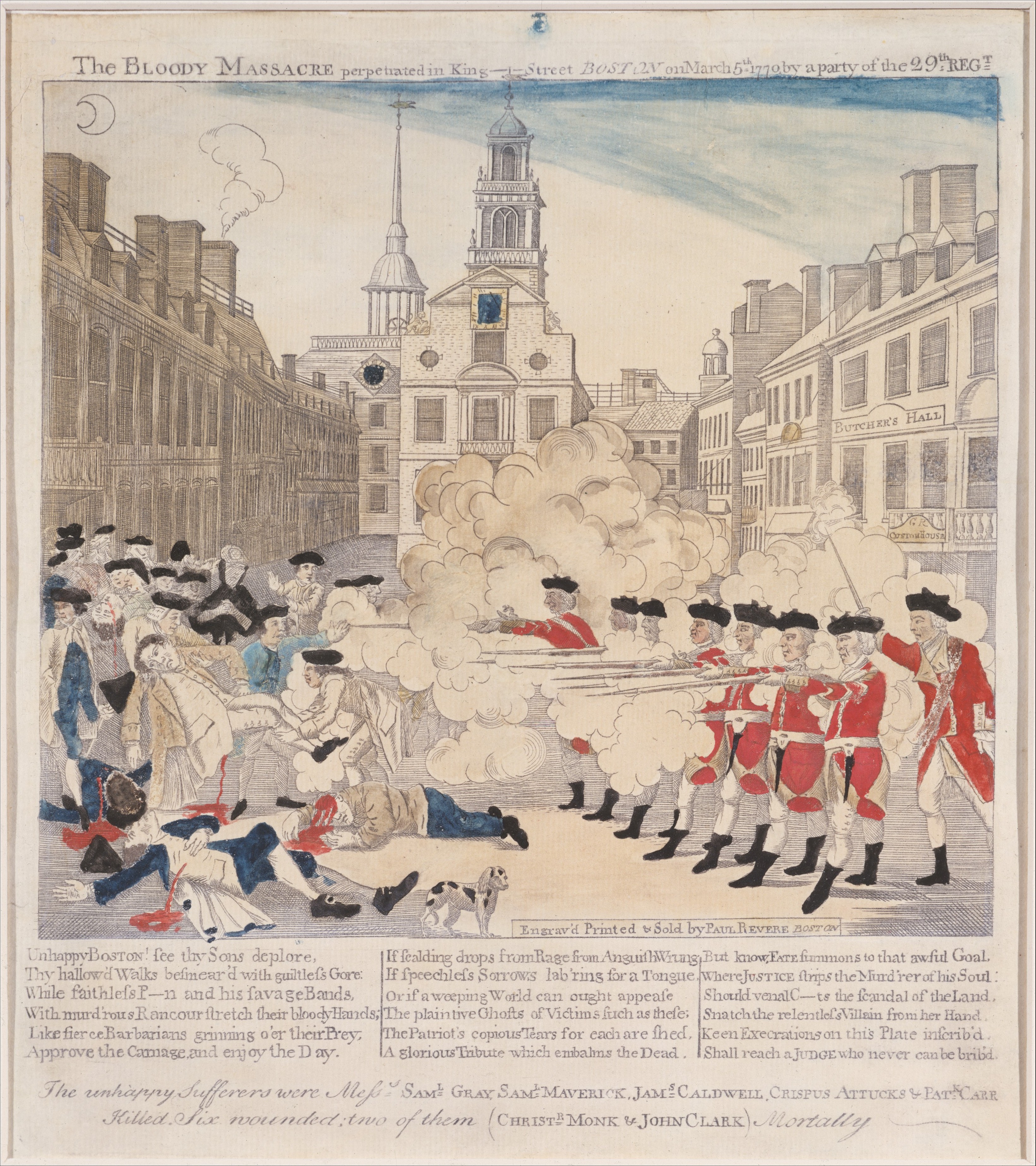
The Boston Massacre, which transpired on March 5, 1770, was a direct confrontation between British soldiers and a crowd of Bostonians. This fateful encounter occurred on King Street, known today as State Street, directly in front of the Old State House in downtown Boston. This building, an enduring symbol of colonial governance and later independence, was then the seat of the Massachusetts colonial government and the Royal Governor’s office.
The location itself is crucial. Boston was, at the time, a hotbed of revolutionary sentiment, bristling under British taxation and military occupation. The presence of British soldiers in such numbers, quartered in civilian homes and constantly patrolling, was a constant source of friction. The massacre was not a distant event across the Atlantic; it was a deeply local tragedy, occurring on the very streets where colonists lived, worked, and gathered. Its immediate proximity to key governmental and commercial hubs amplified its impact, turning a street skirmish into a rallying cry for independence across the thirteen colonies.
The Strategic Importance of Boston
Boston’s geographical position as a major port city made it a critical strategic point for both Britain and the burgeoning colonial resistance. It was a nexus of trade, communication, and intellectual discourse. The British military occupied Boston to enforce unpopular acts like the Townshend Acts, which imposed duties on goods imported into the colonies. This occupation, far from England’s shores, underscored the growing divide and the geographic separation that nurtured distinct colonial identities. The events on King Street cemented Boston’s reputation as the epicenter of revolutionary fervor, a physical space where abstract ideals of liberty clashed violently with imperial authority.
The Immediate Aftermath and Commemoration
The immediate aftermath of the Boston Massacre reverberated throughout the colonies. Five colonists, including Crispus Attucks, often cited as the first casualty of the American Revolution, lost their lives. The trials that followed, notably with future President John Adams defending the British soldiers to uphold the rule of law, further highlighted the complex legal and moral landscape of the era.
The site itself rapidly became a landmark of memory and protest. Patriot leaders like Samuel Adams and Paul Revere masterfully used propaganda, including Revere’s famous engraving, to sensationalize the event and rally support for the colonial cause. This manipulation of public perception, combined with the visceral reality of violence against unarmed civilians, solidified the massacre’s place in the collective colonial consciousness.
Memorializing the Victims
The victims of the Boston Massacre were buried in the Granary Burying Ground, another significant landmark in Boston where other prominent figures like Samuel Adams, John Hancock, and the parents of Benjamin Franklin are interred. The shared burial ground transforms these individual graves into a collective monument, a tangible link to the sacrifices made during the struggle for independence. The memorial for the massacre victims stands as a solemn reminder of the human cost of colonial tensions, a pilgrimage site for those seeking to connect with the origins of the United States.
The Boston Massacre Site Today: A Living Landmark
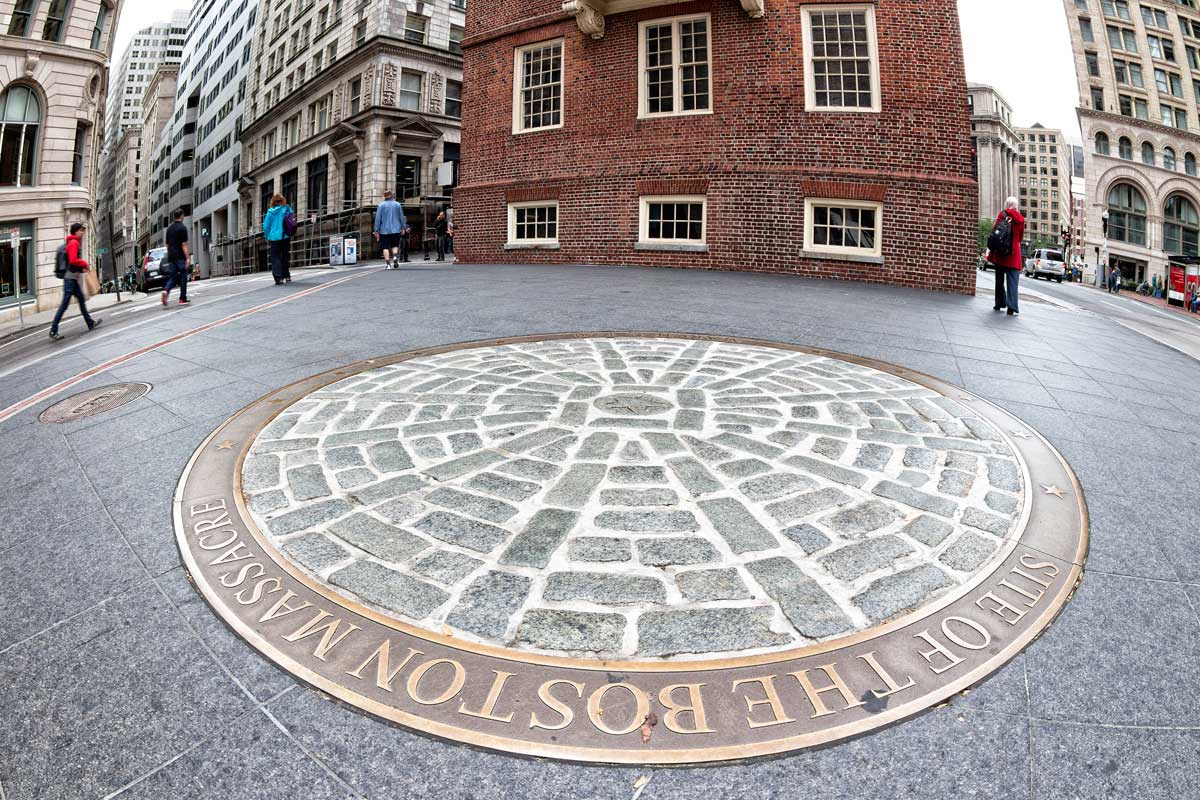
Today, the site of the Boston Massacre remains a powerful and accessible landmark, central to understanding the genesis of American liberty. Located at the intersection of State Street and Congress Street, a cobblestone circle with a star inlay marks the exact spot where the first shots were fired. This subtle yet profound marker allows visitors to stand precisely where history was made, offering a unique connection to the past.
The Old State House, immediately adjacent to the massacre site, further enhances this experience. As Boston’s oldest public building, it now operates as a museum managed by the Bostonian Society, dedicated to preserving and interpreting Boston’s revolutionary heritage. Inside, exhibits detail the events leading up to the massacre, the trials, and its broader implications, providing crucial context for the outdoor landmark.
Part of the Freedom Trail
The Boston Massacre site is a key stop on the Freedom Trail, a 2.5-mile red-lined path through downtown Boston that connects 16 historically significant sites. This trail effectively transforms the entire city center into an open-air museum, allowing visitors to follow the footsteps of revolutionaries. Other nearby landmarks on the trail, such as Faneuil Hall (where colonists debated independence), the Paul Revere House, and the Old North Church, provide a comprehensive narrative of the events surrounding the massacre and the wider push for independence. Exploring these sites together paints a vivid picture of colonial America and underscores the fact that these events were deeply rooted in specific American locales, not in the mother country.

Preserving the Narrative: Education and Interpretation
The preservation and interpretation of the Boston Massacre site are vital for educating future generations about the complexities of history. The site serves as a physical reminder that historical narratives are often contested and that events like the massacre were not simple, clear-cut incidents but rather products of deep-seated political, economic, and social tensions.
Educational programs and guided tours regularly utilize the massacre site and the Old State House to bring history to life. These programs emphasize critical thinking, encouraging visitors to consider multiple perspectives: those of the British soldiers who felt threatened, the colonists who felt oppressed, and the evolving relationship between the colonies and Britain. This approach ensures that the landmark is not just a place to observe but a space for engagement and contemplation.
By firmly establishing the Boston Massacre within its actual geographical context—the streets of Boston, Massachusetts—we gain a clearer understanding of its enduring legacy. It stands not as a European incident, but as a foundational American landmark, a testament to the struggles and sacrifices that paved the way for a new nation. The physical location breathes life into the historical account, allowing visitors to grasp the tangible reality of the nascent revolution and the profound human drama that unfolded there.
LifeOutOfTheBox is a participant in the Amazon Services LLC Associates Program, an affiliate advertising program designed to provide a means for sites to earn advertising fees by advertising and linking to Amazon.com. Amazon, the Amazon logo, AmazonSupply, and the AmazonSupply logo are trademarks of Amazon.com, Inc. or its affiliates. As an Amazon Associate we earn affiliate commissions from qualifying purchases.