
Navigating the entry requirements for any international travel can feel like deciphering a complex puzzle. For many, the allure of Puerto Rico – its vibrant culture, stunning beaches, and rich history – makes it a top-tier travel destination. However, a crucial question often arises for those planning a visit: “Do I need a visa to go to Puerto Rico?” Understanding the specific status of Puerto Rico within the United States’ framework is key to answering this.
Puerto Rico’s Unique Status: An Unincorporated U.S. Territory
To comprehend Puerto Rico‘s visa requirements, one must first understand its political status. Puerto Rico is an unincorporated territory of the United States. This means that while it is a U.S. territory, it is not part of the United States in the same way that a state is. Residents of Puerto Rico are U.S. citizens, and the U.S. dollar is the official currency. This unique status has significant implications for travel, particularly for U.S. citizens and residents.
U.S. Citizens and Permanent Residents
For U.S. citizens traveling from the mainland United States, or from other U.S. territories like Guam or the U.S. Virgin Islands, a visa is not required to enter Puerto Rico. You can travel freely to Puerto Rico with a valid government-issued photo ID, such as a driver’s license or state ID. This is because Puerto Rico is considered a domestic destination for U.S. citizens. Think of it akin to traveling between two states within the United States.
Similarly, U.S. Lawful Permanent Residents (green card holders) traveling from the United States to Puerto Rico generally do not need a visa. They should, however, carry their Green Card as proof of their residency status.
International Travelers and Visa Requirements
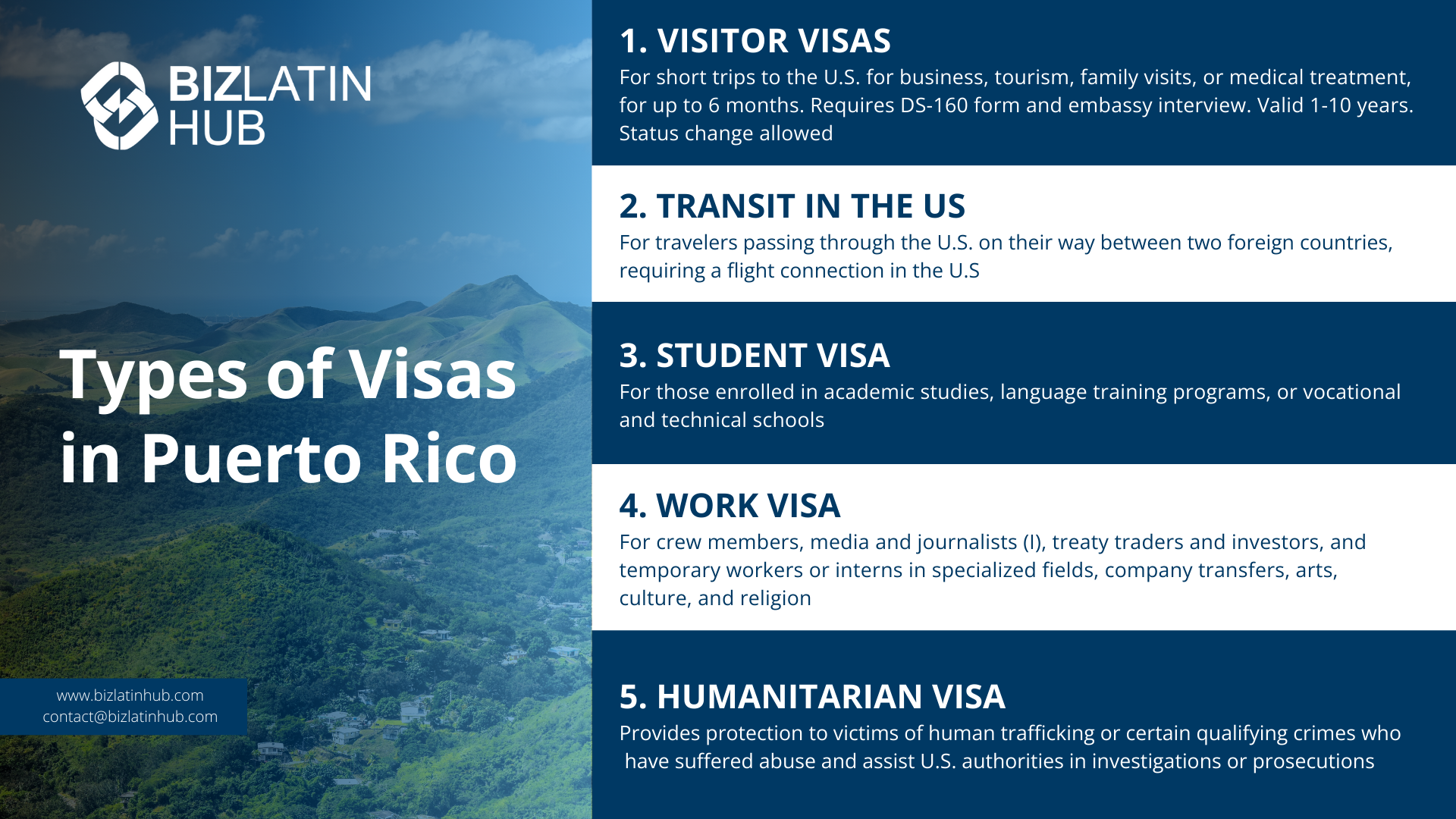
The situation becomes more nuanced for international travelers, particularly those who would typically require a visa to enter the mainland United States. Since Puerto Rico is a U.S. territory, the U.S. immigration laws and policies apply. Therefore, if you require a visa to enter the United States, you will likely require a visa to enter Puerto Rico.
Visa Waiver Program (VWP) Participants
For citizens of countries participating in the Visa Waiver Program (VWP), the rules are as follows: If you are traveling from a VWP country to the United States (including its territories) for tourism or business for 90 days or less, you can enter without a visa, provided you obtain an approved Electronic System for Travel Authorization (ESTA) prior to your travel. This applies to travel to Puerto Rico as well. Countries in the VWP include Australia, New Zealand, Japan, South Korea, and most Western European nations. It is crucial to check the current list of VWP countries and ensure your passport is eligible.
Non-VWP International Travelers
If you are a citizen of a country that is not part of the Visa Waiver Program, and you wish to travel to Puerto Rico, you will need to apply for a U.S. visa. The type of visa will depend on the purpose of your visit, typically a B-1 visa for business or a B-2 visa for tourism. The visa application process is managed by the U.S. Department of State and involves submitting an application, attending an interview at a U.S. embassy or consulate, and providing supporting documentation.
Traveling to Puerto Rico from Outside the U.S.
For international visitors, the journey to Puerto Rico often involves flying into San Juan, the capital city, via Luis Muñoz Marín International Airport. As Puerto Rico is under U.S. federal jurisdiction for immigration and customs, all international arrivals are processed by U.S. Customs and Border Protection (CBP) officers. This means that even if your flight is direct to San Juan, you will go through U.S. immigration and customs.
Direct Flights from International Destinations
If you are flying directly from an international location to Puerto Rico, you will be subject to the same entry requirements as if you were flying directly into any major U.S. airport like Miami International Airport or John F. Kennedy International Airport. This includes presenting the necessary travel documents, whether that’s a passport, visa, or ESTA authorization.
Connecting Flights Through the U.S. Mainland
If your travel plans involve a connecting flight through the mainland United States before arriving in Puerto Rico, you will clear U.S. immigration and customs at your first point of entry into the United States. This means that even if your final destination is San Juan, you will go through the full U.S. immigration process upon arrival in cities like New York, Atlanta, or Orlando. Once you have cleared customs and immigration in the mainland United States, your subsequent flight to Puerto Rico will be treated as a domestic flight, and you will not need to go through immigration or customs again upon arrival in San Juan.
Specific Considerations for Different Nationalities
The core principle remains: if you need a visa to enter the United States, you need a visa to enter Puerto Rico.
Canadian Citizens
Canadian citizens typically do not require a visa to enter the United States for tourism or business purposes for up to six months. They can travel to Puerto Rico with a valid passport. However, it’s always advisable for Canadians to carry proof of their status, such as their passport, when traveling.
Mexican Citizens
Citizens of Mexico, like those from many other countries, generally require a U.S. visa to enter the United States and, by extension, Puerto Rico. They would need to apply for a B-1/B-2 visitor visa.
Citizens of U.S. Commonwealths and Trust Territories
Individuals from other U.S. commonwealths or trust territories, such as the Northern Mariana Islands or American Samoa, are generally considered U.S. nationals or citizens and can travel to Puerto Rico without a visa, provided they have appropriate identification.
Planning Your Trip: Essential Travel Documents
Regardless of your nationality, proper documentation is paramount for a smooth journey to Puerto Rico.
For U.S. Citizens
- Valid Government-Issued Photo ID: A driver’s license or state-issued ID is sufficient for domestic travel.
- Passport (Recommended): While not strictly required for U.S. citizens traveling from the mainland to Puerto Rico, carrying a passport is always a good idea for international travel and can serve as an additional form of identification.
For International Travelers
- Valid Passport: Your passport must be valid for at least six months beyond your intended stay.
- U.S. Visa: If your nationality requires a U.S. visa, ensure it is obtained and stamped in your passport before your travel.
- ESTA Approval: For eligible Visa Waiver Program participants, an approved ESTA is mandatory.
- Return or Onward Ticket: You may be asked to present proof that you intend to leave Puerto Rico and the United States.
- Sufficient Funds: Evidence that you have enough money to cover your expenses during your stay.

Important Notes and Recommendations
- Check Official Sources: Immigration laws and regulations can change. Always consult the official website of the U.S. Department of State and U.S. Customs and Border Protection (CBP) for the most up-to-date information regarding visa requirements and travel advisories before planning your trip.
- Contact the U.S. Embassy/Consulate: If you are unsure about your specific visa requirements, it is best to contact the nearest U.S. embassy or consulate in your home country.
- Travel Insurance: While not directly related to visa requirements, purchasing travel insurance is highly recommended for any trip, covering unforeseen medical emergencies or trip cancellations, especially when traveling to a new destination.
- Enjoy Your Trip: Once you’ve clarified your entry requirements, you can focus on the incredible experiences Puerto Rico has to offer, from the historic streets of Old San Juan to the bioluminescent bays and the lush rainforests of the El Yunque National Forest.
In summary, the question of whether you need a visa to go to Puerto Rico hinges entirely on your nationality and your status as a traveler. For U.S. citizens and residents, it’s a domestic journey. For international visitors, it aligns with the entry requirements for the United States itself. Careful planning and adherence to official guidelines will ensure your tropical getaway is as seamless as it is memorable.
LifeOutOfTheBox is a participant in the Amazon Services LLC Associates Program, an affiliate advertising program designed to provide a means for sites to earn advertising fees by advertising and linking to Amazon.com. Amazon, the Amazon logo, AmazonSupply, and the AmazonSupply logo are trademarks of Amazon.com, Inc. or its affiliates. As an Amazon Associate we earn affiliate commissions from qualifying purchases.