
Unpacking Alaska Airlines’ International Reach
The question of whether Alaska Airlines flies internationally often arises due to its strong domestic presence and its name, which might imply a focus solely on the United States. While it’s true that Alaska Airlines primarily operates a vast network across the United States, particularly dominant on the West Coast and to its namesake state of Alaska, its international reach extends significantly, though perhaps not in the way many would initially imagine.
At its core, Alaska Airlines directly serves several countries beyond the U.S. borders. These are predominantly its North American neighbors, Canada and Mexico. These flights, while technically international, are often considered short to medium-haul routes, integrating seamlessly into its North American network. This direct service forms the first, more visible layer of its international operations. However, the full extent of Alaska Airlines’ global connectivity truly blossoms through its strategic partnerships, most notably its membership in a major global airline alliance. This distinction is crucial for travelers looking to understand how they can leverage Alaska Airlines’ services for truly global itineraries, far beyond North America. The airline’s operational model emphasizes efficiency and customer satisfaction on its established routes, which in turn enhances its appeal as a connecting carrier for more ambitious international journeys.
North American Journeys
Alaska Airlines offers a robust schedule of flights to key cities in both Canada and Mexico, making it a significant player in cross-border North American travel. For those venturing north, destinations in Canada include popular metropolitan centers and scenic locales. Travelers can fly directly to Vancouver, Calgary, Victoria, Edmonton, and Kelowna, primarily from its strong West Coast hubs. These routes cater to both business travelers and tourists looking to explore Canada’s vibrant cities and stunning natural landscapes.
Heading south, Mexico represents an even larger international footprint for Alaska Airlines. The airline serves a multitude of popular vacation destinations, particularly along the Mexican Riviera and other coastal hotspots. Direct flights are available to cities like Cancun, Puerto Vallarta, Los Cabos (San José del Cabo), Mazatlán, and Guadalajara. These routes are particularly popular during the winter months, offering an escape from colder climates. The breadth of Mexican destinations highlights Alaska Airlines’ commitment to leisure travel and its strategic positioning to serve the strong demand for sun-soaked getaways from the Western United States. These North American flights are characterized by their convenience and often provide a full-service experience tailored to the journey’s length.
The Power of the Oneworld Alliance
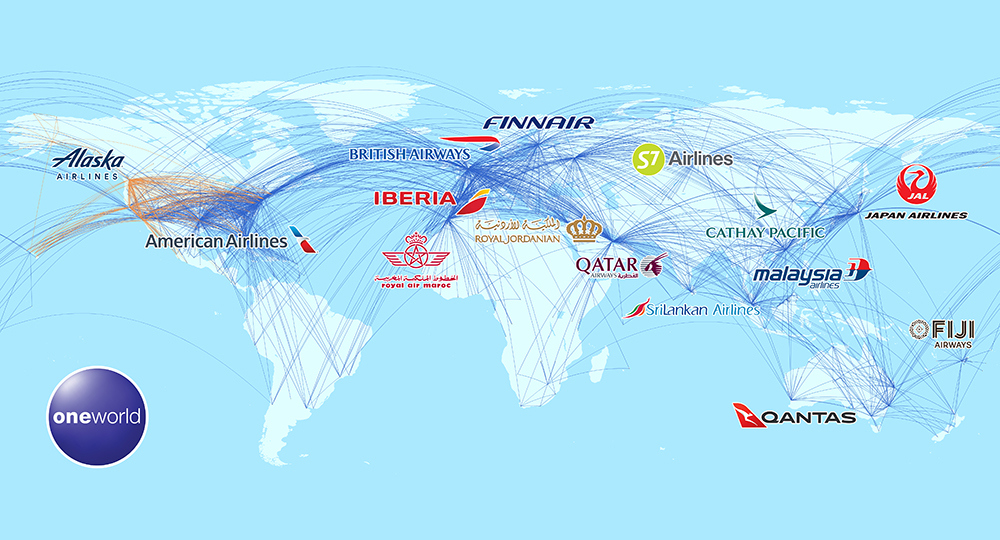
While Alaska Airlines’ direct international flights are confined to Canada and Mexico, its entry into the Oneworld Alliance in March 2021 dramatically expanded its global reach. This alliance membership is a game-changer for travelers, effectively transforming Alaska Airlines into a gateway for worldwide travel. Oneworld is one of the largest global airline alliances, comprising 13 world-class airlines, each with its own extensive network. Through this alliance, Alaska Airlines passengers gain access to nearly 1,000 destinations in over 170 countries and territories.
The primary mechanism for this expanded reach is through codeshare agreements and interline partnerships with fellow Oneworld members. This means travelers can book a single itinerary that includes flights on both Alaska Airlines and one or more of its partner airlines. Beyond simply booking flights, Oneworld membership also offers reciprocal benefits, which are highly valued by frequent flyers. Passengers can earn and redeem miles with Alaska Airlines’ highly regarded Mileage Plan program across the entire Oneworld network. Elite status earned with Alaska Airlines (MVP, MVP Gold, MVP Gold 75K, MVP Gold 100K) is recognized across the alliance, granting benefits such as priority check-in, priority boarding, lounge access, and increased baggage allowances on international segments operated by partner airlines. This seamless integration makes complex international travel much more manageable and rewarding for passengers starting their journey with Alaska Airlines.
Seamless Connections Across Continents
The true power of Alaska Airlines’ international capabilities lies in its ability to serve as the crucial first or last leg of a journey that spans continents. Imagine a traveler residing in a city like Spokane or Boise wanting to reach Europe or Asia. They can comfortably fly Alaska Airlines from their home airport to a major international gateway on the West Coast, such as Seattle, Portland, San Francisco, or Los Angeles. From these hubs, they can then seamlessly connect to a long-haul international flight operated by a Oneworld partner.

For instance, a passenger might fly Alaska Airlines from Eugene to Seattle-Tacoma International Airport (SEA) and then board a British Airways flight directly to London, or a Japan Airlines flight to Tokyo. Similarly, connections through Dallas/Fort Worth with American Airlines can open up routes to South America or further into Europe. Other key partners like Cathay Pacific offer connections to Hong Kong and beyond, while Qatar Airways provides extensive reach into the Middle East, Africa, and Asia via Doha. Finnair facilitates travel to Northern Europe through Helsinki. The convenience of booking such multi-segment journeys under a single reservation, with consistent baggage policies and coordinated flight schedules, significantly enhances the international travel experience. This allows travelers to accumulate and redeem their valuable Mileage Plan miles, maximizing the rewards of their global adventures.
Strategic Hubs and Growth
Alaska Airlines’ operational strategy heavily relies on a network of strategically located hubs, predominantly along the United States’ West Coast. These hubs are critical not just for its extensive domestic network but also for facilitating its international connections, both direct and indirect through its alliance partners. The most prominent hub is Seattle-Tacoma International Airport (SEA), which serves as Alaska Airlines’ largest base of operations. From Seattle, travelers have direct access to numerous international destinations in Canada and Mexico, and critically, seamless connections to long-haul international flights operated by Oneworld partners like British Airways, Japan Airlines, and Qatar Airways.
Other significant hubs include Portland International Airport (PDX), Anchorage International Airport (ANC), San Francisco International Airport (SFO), and Los Angeles International Airport (LAX). Each of these airports plays a vital role in funneling passengers from smaller regional airports onto Alaska Airlines’ mainline routes, and then onward to international destinations. LAX and SFO, in particular, are major international gateways for many Oneworld carriers, making them crucial connecting points for Alaska Airlines passengers. The airline’s growth strategy has primarily focused on strengthening its presence in these key West Coast markets, enhancing its route network, and increasing flight frequencies, all of which contribute to a more robust platform for both domestic and international travel. By dominating these strategic regions, Alaska Airlines ensures it remains a preferred choice for travelers seeking connectivity, whether their ultimate destination is within the United States or across an ocean.
Enhancing the Traveler’s Journey
For travelers embarking on an international adventure, the initial leg of their journey often sets the tone. Alaska Airlines has cultivated a reputation for customer service, operational reliability, and a comfortable flying experience, even on shorter routes. This makes it an ideal choice for connecting passengers. The airline’s commitment to onboard comfort, including options for first-class and premium class seating, complimentary entertainment, and a selection of food and beverages, ensures that the start of a long international trip is as pleasant as possible.
Furthermore, the seamless transfer process at its hubs is a significant advantage. With coordinated baggage handling and often co-located terminals for Oneworld partners, travelers can transition from an Alaska Airlines flight to a long-haul international flight with minimal stress. This focus on the end-to-end travel experience, even when involving partner airlines, underscores Alaska Airlines’ understanding of the modern international traveler’s needs and its role as a key facilitator in global journeys.
Planning Your International Adventure with Alaska Airlines
For those looking to leverage Alaska Airlines for their next international trip, a structured approach to planning can maximize convenience and value. The first step involves identifying your ultimate international destination. If it’s Canada or Mexico, you can directly search and book flights on the Alaska Airlines website or through your preferred travel agency. For destinations further afield, the process involves considering the Oneworld Alliance network.
Begin by searching for your international destination on the Alaska Airlines website, even if it’s not a direct service. The booking engine is designed to display itineraries that combine Alaska Airlines flights with those of its Oneworld partners. Alternatively, you can search directly on partner airline websites (e.g., British Airways, American Airlines, Japan Airlines) for long-haul segments, and then add the connecting Alaska Airlines segments. When booking codeshare flights, it’s always advisable to confirm details regarding baggage allowances and check-in procedures, as these can sometimes be governed by the operating carrier’s rules, even if booked through Alaska Airlines. Maximizing Mileage Plan benefits is also a key consideration; ensure your Mileage Plan number is applied to all segments of your itinerary to earn valuable miles and status credits.

Beyond the Ticket: Pre-Trip Essentials
Successful international travel extends beyond just booking a ticket. Meticulous pre-trip planning is paramount. Firstly, always verify passport validity and visa requirements for all countries you plan to visit or transit through. Many countries require passports to be valid for at least six months beyond your intended departure date. Research specific entry requirements, which can include health declarations, proof of onward travel, or specific vaccinations. Travel insurance is highly recommended for international trips, providing peace of mind against unforeseen circumstances such as medical emergencies, trip cancellations, or lost luggage. Familiarize yourself with local customs, currency, and basic phrases for your destination, enhancing your experience and facilitating smoother interactions. Consulting government travel advisories for your destination is also a critical step to stay informed about any safety or health concerns. By addressing these essentials, travelers can embark on their international adventures with Alaska Airlines and its partners, well-prepared for a rewarding journey.
LifeOutOfTheBox is a participant in the Amazon Services LLC Associates Program, an affiliate advertising program designed to provide a means for sites to earn advertising fees by advertising and linking to Amazon.com. Amazon, the Amazon logo, AmazonSupply, and the AmazonSupply logo are trademarks of Amazon.com, Inc. or its affiliates. As an Amazon Associate we earn affiliate commissions from qualifying purchases.