
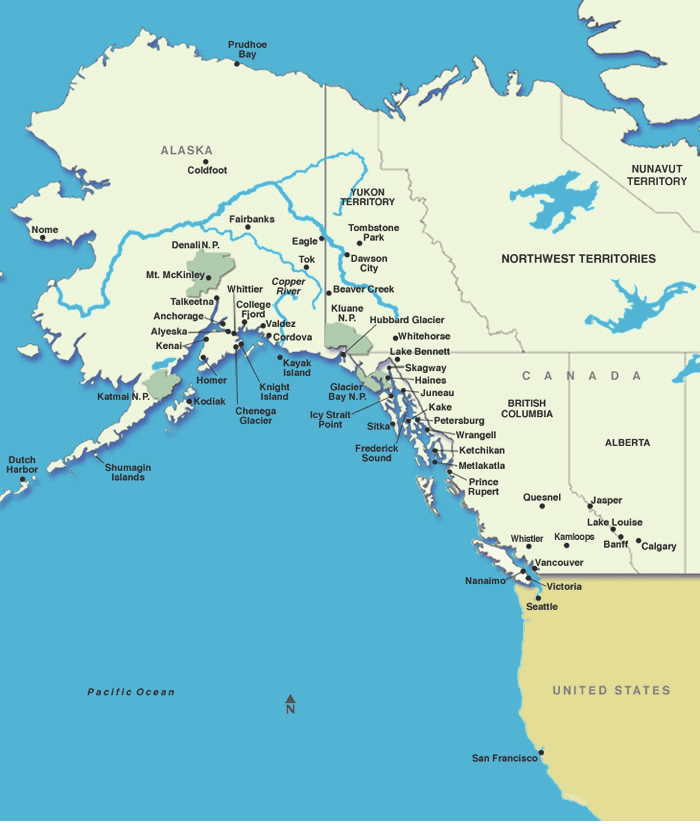
Yes, Alaska emphatically borders Canada. As the largest state in the United States by area, Alaska’s unique geographical position as an exclave of the U.S. means it shares an extensive land boundary with Canada, specifically with the Yukon Territory to the east and British Columbia to the southeast. This shared border is not merely a line on a map; it represents a significant corridor for travel, commerce, and cultural exchange, profoundly shaping the travel experience for anyone venturing into this rugged and spectacular corner of North America. Understanding this geographical reality is the first step in planning an unforgettable journey through these northern landscapes.

The Geographical Reality: Answering the Question
The question of whether Alaska borders Canada is a fundamental one for travelers, often sparking curiosity about the logistics and nature of exploring this remote region. The answer is a resounding yes, and the characteristics of this border are as diverse and wild as the terrain it traverses.
Alaska’s Unique Position
Alaska is a prime example of a near-exclave, meaning it is a portion of a country geographically separated from its main part. In Alaska’s case, it is separated from the contiguous United States by Canadian territory. This geographical isolation necessitates crossing Canada for most overland travel between Alaska and the Lower 48 states, making the Canadian border not just a demarcation but a vital artery for connection. The border spans approximately 1,538 miles (2,475 kilometers), cutting through a mix of dense forests, towering mountain ranges, vast wilderness, and numerous rivers and lakes.
The Canada-Alaska Boundary
The land boundary between Alaska and Canada is delineated into two primary sections, each with distinct geographical characteristics and historical significance. The eastern border of Alaska stretches along the 141st meridian west longitude, separating the main body of Alaska from the Yukon Territory. This portion of the border is relatively straight, a testament to the survey lines drawn during the early 20th century to demarcate the territories. Further south, the Alaska Panhandle, a narrow strip of land along the Pacific coast, shares a complex and jagged border with British Columbia. This intricate boundary was defined by the Alaska Boundary Dispute in the early 1900s, reflecting the irregular geography of the Coastal Mountains and the inlets that characterize the region. For travelers, these diverse border regions offer varied entry points and scenic routes, each promising a different glimpse into the wild beauty of the North American continent.
Travel Implications: Crossing the Border
The existence of this extensive border naturally has significant implications for travelers planning to visit Alaska, whether they are coming from the contiguous U.S., other parts of Canada, or international destinations. The choice of travel mode often dictates the specific border crossing experience.
Road Travel via the Alaska Highway
The most famous and frequently used overland route connecting Alaska to the rest of North America is the Alaska Highway, also known as the Alcan Highway. This iconic route, stretching approximately 1,387 miles (2,232 kilometers) from Dawson Creek, British Columbia, to Delta Junction, Alaska, involves multiple border crossings into and out of Canada. Travelers will typically cross from British Columbia into the Yukon Territory and then from the Yukon into Alaska. Key border crossings along this route include Beaver Creek in the Yukon and Port Alcan (Tok) in Alaska. Other notable road crossings include the Top of the World Highway near Dawson City (Yukon) and Poker Creek (Alaska), which is the northernmost border crossing between the two nations. Driving the Alaska Highway is a quintessential North American road trip, offering unparalleled access to wilderness, wildlife, and stunning vistas.
Air and Sea Routes
While road travel through Canada is common, air and sea routes also offer viable options to reach Alaska. Major Alaskan cities like Anchorage and Fairbanks have international airports with direct flights from various U.S. and sometimes Canadian cities, bypassing land border crossings. For the Alaska Panhandle, the Alaska Marine Highway System (AMHS) operates ferries that connect coastal Alaskan communities like Juneau, Ketchikan, and Sitka with Bellingham, Washington, without directly entering Canadian waters for customs. However, cruise ships often navigate the Inside Passage of British Columbia and Alaska, and while passengers might disembark in Canadian ports like Vancouver or Prince Rupert, the customs and immigration process is typically streamlined for the cruise itinerary. For private boaters, understanding maritime border regulations is crucial, especially when navigating the intricate waterways of the Inside Passage.
Essential Travel Considerations for the Canada-Alaska Corridor

Venturing across the Canada-Alaska border requires careful planning and adherence to international travel protocols. These considerations ensure a smooth and enjoyable journey through some of North America’s most remote yet stunning landscapes.
Documentation and Entry Requirements
For U.S. citizens, a valid passport is the primary document for re-entry into the United States from Canada and is highly recommended for entry into Canada. Other accepted forms of identification for land and sea crossings may include a NEXUS card, an Enhanced Driver’s License (EDL), or a passport card. Non-U.S. citizens will require a valid passport and, depending on their nationality, may also need a Canadian visa or an Electronic Travel Authorization (eTA) to transit through or visit Canada. It is imperative to check the most current entry requirements for both Canada and the United States well in advance of travel, as these can change.
Customs and Border Services
Border crossings, whether by road, air, or sea, involve interactions with customs and immigration officials from both the Canada Border Services Agency (CBSA) and U.S. Customs and Border Protection (CBP). Travelers should be prepared to declare all goods, including firearms, alcohol, tobacco, and any agricultural products. Strict regulations apply to certain items, and failing to declare them can lead to significant penalties. Furthermore, travelers must be honest and cooperative with border agents. Common questions often relate to the purpose of the trip, duration of stay, and items being transported. Vehicle requirements, such as adequate insurance coverage, are also crucial for those driving through Canada to Alaska.
Seasonal Travel and Remote Areas
The Alaska-Canada border region is characterized by extreme seasonality. Summer (June to August) offers the most favorable conditions for travel, with longer daylight hours, milder temperatures, and most services operational. However, even during summer, weather can be unpredictable. Winter travel is challenging, with heavy snowfall, icy roads, and limited services, particularly in remote areas. Some border crossings, such as the Top of the World Highway, are seasonal and close during winter. Travelers should always carry emergency supplies, including extra fuel, food, water, and first-aid kits, especially when venturing off main highways or into less populated regions of the Yukon and Interior Alaska. Cellular service can be spotty or non-existent in many areas, making satellite phones or personal locator beacons a wise addition to travel gear.
Popular Travel Experiences Along the Border
The border region between Alaska and Canada is a treasure trove of natural wonders, historical sites, and vibrant communities, offering an array of experiences for every type of traveler.
The Yukon Territory and its Charms
As the primary Canadian gateway to Alaska, the Yukon Territory is a destination in itself. Whitehorse, the capital, serves as a central hub for supplies and services, offering access to numerous outdoor activities and historical insights into the Klondike Gold Rush era. Further north, Dawson City transports visitors back in time with its preserved turn-of-the-century architecture and lively cultural scene. The Yukon is home to vast protected areas like Kluane National Park and Reserve, a UNESCO World Heritage site boasting Canada’s highest peaks and immense icefields. Travelers often pause at Watson Lake to visit the iconic Sign Post Forest, a quirky collection of over 100,000 signs from around the world.
British Columbia’s Northern Gateways
The southeastern Alaska Panhandle shares its rugged coastline with British Columbia’s northern reaches. Towns like Stewart, B.C., offer access to the unique cross-border community of Hyder, Alaska, where grizzlies can often be spotted fishing for salmon. The coastal waters of British Columbia are also integral to the famous Inside Passage cruise routes that link Vancouver or Seattle with Alaskan ports. Travelers driving the Cassiar Highway (Highway 37) through British Columbia can experience equally dramatic scenery and abundant wildlife before heading towards the Yukon or coastal Alaskan towns accessible by ferry.
Alaska’s Panhandle and Inland Passages
Once across the border, Alaska unveils its own set of distinct attractions. The Alaska Panhandle, with its capital Juneau (accessible only by air or sea), features stunning fjords, vast glaciers like the Mendenhall Glacier, and rich Tlingit and Haida cultural heritage in towns like Ketchikan and Sitka. For adventurers, the historic Chilkoot Trail near Skagway offers a challenging but rewarding hike tracing the footsteps of gold seekers. Inland, after crossing from the Yukon, travelers can explore Interior Alaska, home to iconic destinations such as Denali National Park and Preserve, where Mount Denali, North America’s highest peak, dominates the skyline. The cities of Fairbanks and Anchorage serve as major starting points for further Alaskan exploration, offering diverse activities from dog mushing to glacier trekking. The proximity to Canada truly enhances the Alaskan travel experience, making cross-border journeys an integral part of discovering this magnificent region.
LifeOutOfTheBox is a participant in the Amazon Services LLC Associates Program, an affiliate advertising program designed to provide a means for sites to earn advertising fees by advertising and linking to Amazon.com. Amazon, the Amazon logo, AmazonSupply, and the AmazonSupply logo are trademarks of Amazon.com, Inc. or its affiliates. As an Amazon Associate we earn affiliate commissions from qualifying purchases.