
For many travelers planning a trip to the sun-drenched landscapes of the American Southwest, a perplexing question often arises: Does Arizona observe Daylight Savings Time (DST)? The simple answer, which often surprises first-time visitors, is largely no. While most of the United States “springs forward” an hour in March and “falls back” in November, the majority of Arizona remains steadfastly on Mountain Standard Time (MST) year-round. This unique temporal status, rooted in the state’s desert climate and historical decisions, has significant implications for tourism, travel planning, and the overall lifestyle experienced within the Grand Canyon State.
Understanding Arizona’s relationship with DST is crucial for anyone venturing into its iconic red rock canyons, vibrant cities, or serene desert expanses. From coordinating flight arrivals and hotel check-ins to planning a sunrise hike or an evening dinner reservation, this subtle difference can impact nearly every aspect of your journey. Moreover, there’s one notable exception within the state – the sprawling Navajo Nation – which adds another layer of intrigue to the state’s timekeeping. Let’s delve into the specifics, offering a comprehensive guide to navigating time in one of America’s most captivating destinations.
Navigating Time in the Grand Canyon State: What Travelers Need to Know
The consistent refusal to participate in the biannual time shift sets Arizona apart, transforming what might seem like a minor detail into a defining characteristic for both residents and visitors. This unique approach to time management has practical implications for travel, affecting everything from flight connections to the operating hours of beloved attractions.
Understanding Arizona’s Unique Time Zone Status
The primary reason Arizona abstains from Daylight Savings Time lies in its geography and climate. The state experiences abundant sunshine and exceptionally high temperatures, particularly during the summer months. The original intent behind DST was to maximize daylight in the evenings, primarily to save energy and make better use of daylight hours. However, in Arizona, where summer days are already long and searingly hot, extending daylight into the evening would simply mean extending the period of intense heat. Most residents prefer to have earlier sunrises in summer, allowing them to complete outdoor tasks and enjoy activities during the cooler morning hours before the midday sun becomes unbearable. Shifting the clock forward would push these activities into even hotter parts of the day, proving counterproductive.
Historically, Arizona initially observed DST when it was first introduced nationwide during World War I and then again in World War II. However, after the Uniform Time Act of 1966 standardized DST across the country, states were given the option to opt out. Arizona experimented with it for a year in 1967 but quickly rescinded its participation in 1968, finding it unsuitable for its climate and lifestyle. Since then, the state has remained on Mountain Standard Time year-round.
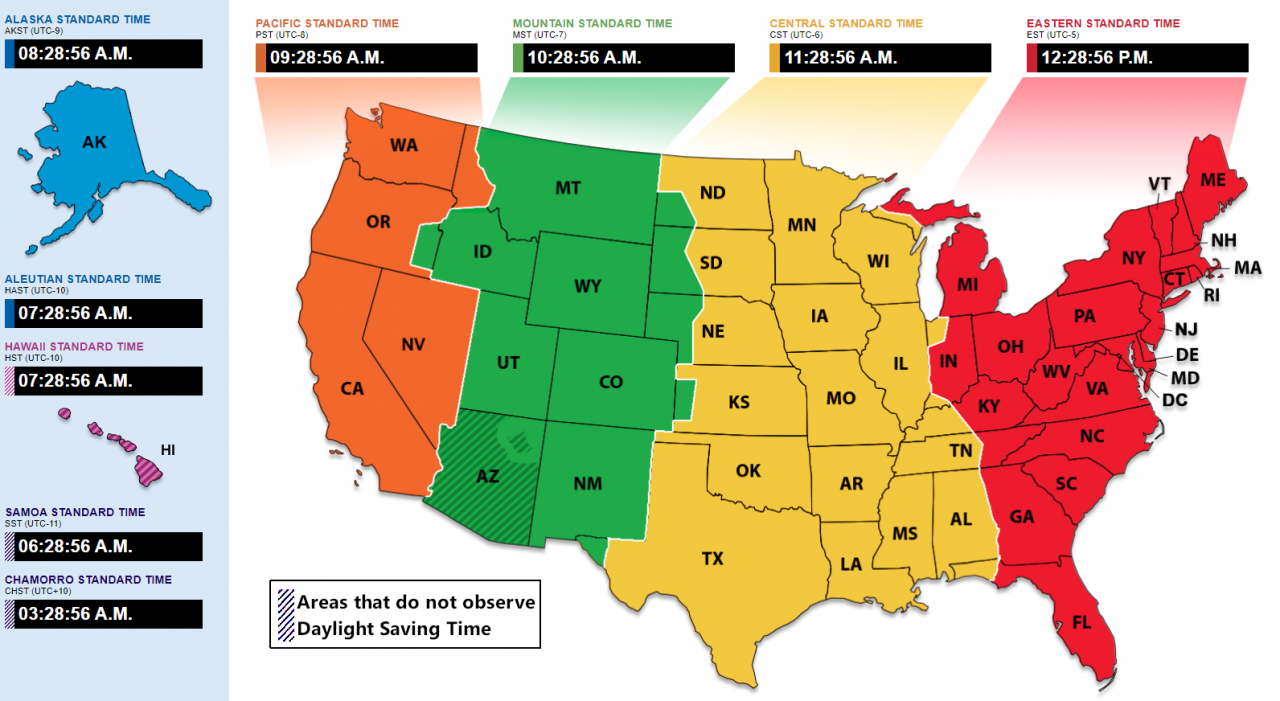
What this means in practice is that for half the year, from March to November, when most other states observe Daylight Savings Time, Arizona’s time aligns with Pacific Daylight Time (PDT). So, if you’re traveling from California during the summer, there’s no time difference. However, from November to March, when the rest of the country reverts to standard time (e.g., Pacific Standard Time), Arizona remains on MST, making it one hour ahead of PST.
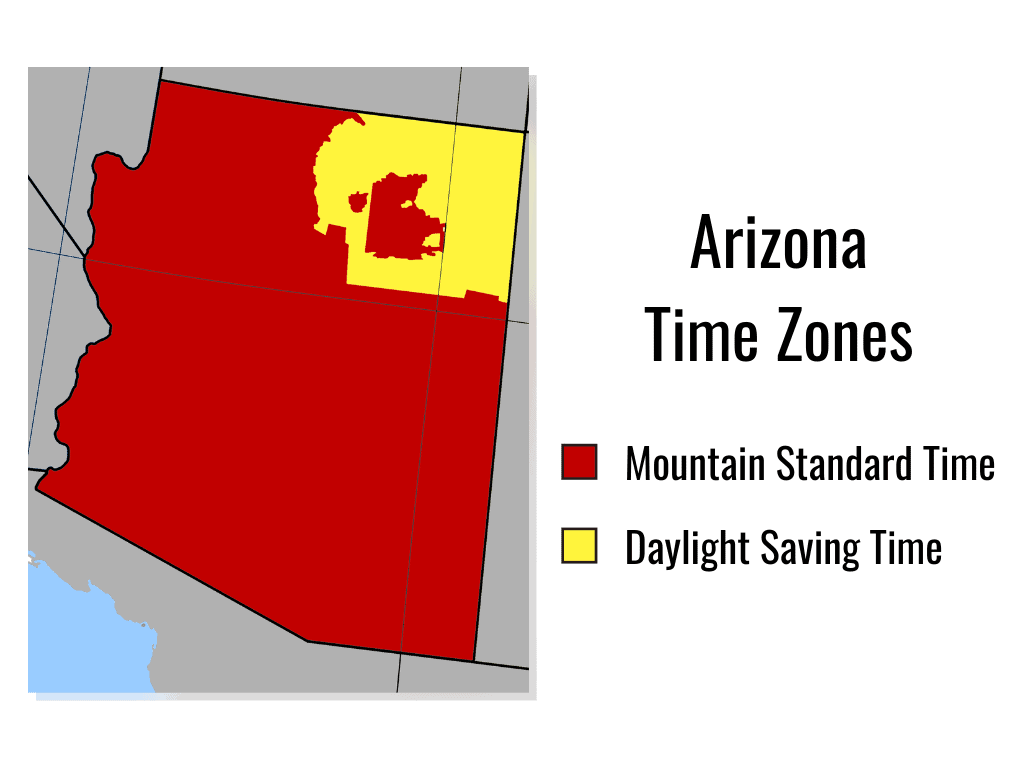
The one critical exception to this rule is the Navajo Nation, which spans parts of Northeastern Arizona, as well as New Mexico and Utah. The Navajo Nation does observe Daylight Savings Time to maintain consistency with the rest of its reservation lands that extend into other states that follow DST. This means that if you’re traveling from Phoenix to visit iconic sites within the Navajo Nation, such as Monument Valley or parts of the Grand Canyon’s East Rim near Page, you will need to adjust your clock forward by one hour during the summer months. Towns like Window Rock, the capital of the Navajo Nation, will be an hour ahead of Flagstaff during DST.
Planning Your Arizona Itinerary: Time Zone Considerations
For the savvy traveler, understanding Arizona’s time zone behavior is key to a smooth and stress-free journey. This knowledge impacts several aspects of your trip, from initial booking to daily excursions.
When it comes to travel, flight schedules are perhaps the most critical consideration. Airlines and online booking platforms typically display times in local time zones, but it’s always wise to double-check. Arriving in Arizona from a state that observes DST will mean either “gaining” or “losing” an hour relative to your departure point, depending on the season and your origin. For instance, if you’re flying from New York (EDT) to Phoenix (MST) in July, you’ll experience a three-hour time difference (EDT is MST + 3 hours). In contrast, if you’re flying from Los Angeles (PDT) to Phoenix during the same period, there will be no time difference. This consistency, or lack thereof, can affect connections and the overall sense of jet lag.
For attractions and activities, particularly those with strict operating hours, time zone awareness is paramount. Imagine planning to visit the Grand Canyon at sunrise or sunset, only to realize you’ve miscalculated the time. Popular landmarks such as the Desert Botanical Garden in Phoenix, the artistic community of Sedona, or the historic streets of Tucson will always adhere to MST. This predictability is largely a positive, simplifying scheduling for tour groups and independent explorers alike. However, for those venturing into the Navajo Nation for tours of Antelope Canyon or other tribal parks, remembering the one-hour shift during DST is crucial to avoid missing your slot or showing up at the wrong time.

From a tourism perspective, booking local tours, making restaurant reservations, or scheduling spa treatments at a resort like The Phoenician or JW Marriott Desert Ridge Resort & Spa in Scottsdale requires a careful check of local times. While most online booking systems are sophisticated enough to handle time zone conversions based on your device’s location, a quick confirmation can prevent any mix-ups. This is especially true when communicating with businesses via phone from outside the state. Moreover, if you’re planning to participate in an early morning hot air balloon ride or a late afternoon golf game, having a consistent time zone simplifies the planning process, allowing you to maximize your enjoyment of Arizona’s unique offerings.
The Arizona Lifestyle: Embracing Perpetual Standard Time
Beyond the practicalities of travel, Arizona’s decision to forgo Daylight Savings Time deeply influences the daily rhythms and overall lifestyle within the state. It creates a subtle but pervasive sense of consistency that both residents and long-term visitors come to appreciate.
Impact on Daily Life and Local Culture
One of the most immediate effects on lifestyle is the absence of the bi-annual disruption caused by changing clocks. Residents never have to contend with the “spring forward” hour of lost sleep or the “fall back” adjustment. This consistency contributes to more stable sleep patterns and avoids the temporary confusion that many other states experience. Morning routines remain constant, and the internal clock of the state ticks on without interruption. For those who value predictability, this aspect of Arizona life is a definite plus.
The consistent time also shapes outdoor activities, which are central to the Arizona experience. In the summer, staying on MST means earlier sunrises compared to DST states. This naturally encourages early morning outdoor pursuits like hiking in Camelback Mountain or exploring Saguaro National Park before the intense heat of the day sets in. Locals often start their day early, enjoying the cooler temperatures and breathtaking desert light before retreating indoors during the hottest hours. Conversely, in winter, remaining on MST translates to later sunsets than in PST states, providing more daylight for afternoon recreation. This steady solar rhythm integrates seamlessly with the climate, allowing for optimized enjoyment of Arizona’s natural beauty.
Even aspects like food and dining are subtly influenced. Restaurant opening and closing times, happy hour specials, and popular dining hours remain consistent throughout the year, removing potential confusion for diners. The lack of a time shift means that the social calendar, from community events to family gatherings, operates on a predictable schedule, fostering a relaxed and uncomplicated social environment. For family travel, this consistency is a boon. Parents with young children often dread the time changes that disrupt delicate sleep schedules. In Arizona, children’s routines are less likely to be thrown off, making for happier and less stressed family vacations.
Advantages for Tourism and Accommodation
For the tourism sector, Arizona’s unique time zone status often becomes a quirky talking point, a distinctive feature that sets it apart from other destinations. For frequent visitors or those with property in the state, this consistency simplifies travel planning year after year. There’s no need to remember when the time changes; it simply doesn’t. This lack of fluctuation adds an element of ease and simplicity to the travel experience, reinforcing Arizona’s reputation as a welcoming and straightforward destination. It also means that information provided on websites, brochures, and in-person will remain accurate regarding operating hours for attractions, without the need for seasonal adjustments due to time shifts.
Accommodation providers, from luxury hotels in Phoenix and Scottsdale to charming bed-and-breakfasts in Sedona and rustic cabins near Flagstaff, also benefit from this consistent time. Hotel systems, staff schedules, and guest services operate on an unchanging clock, streamlining internal operations. For guests checking in from different time zones, the adaptation process is often smoother because there’s one less variable to consider. Whether you’re staying at a sprawling resort like Hyatt Regency Scottsdale Resort & Spa at Gainey Ranch or a boutique hotel in downtown Tucson, the consistent time contributes to a seamless and predictable guest experience, allowing visitors to fully immerse themselves in the destination without temporal worries. The clarity around check-in and check-out times, dining hours, and activity schedules means a more relaxed stay for everyone.
Practical Tips for a Seamless Arizona Experience
While Arizona’s time zone is largely straightforward, a few key reminders can help ensure your trip unfolds without a hitch. A little preparation goes a long way in making your experience in the Grand Canyon State truly unforgettable.
Essential Reminders for Time-Savvy Travelers
- Always Verify Times: This is the golden rule. Even with Arizona’s consistency, it’s always best practice to confirm times for flights, tour departures, dinner reservations, or business meetings. This is especially true if any of your plans involve regions observing Daylight Savings Time, such as the Navajo Nation or neighboring states like Utah, Colorado, or New Mexico. A simple phone call or a check of the booking confirmation can prevent any confusion.
- Check Your Devices: Most modern smartphones, tablets, and smartwatches are designed to automatically update their time based on your location and cellular network. When you cross into Arizona, your device should correctly reflect Mountain Standard Time and not adjust for DST during the summer months (unless you enter the Navajo Nation). It’s a good idea to ensure your device’s automatic time zone setting is enabled to avoid manual errors. However, if you rely on an analog watch or a non-smart device, remember to adjust it yourself if coming from a DST zone during the summer.
- Embrace the Sun: Arizona’s decision to forgo DST is intrinsically linked to its sunny climate. Plan your outdoor activities around the consistent sunrise and sunset patterns, particularly in the summer. Early mornings are often the most pleasant time for hiking, golfing, or exploring natural landmarks before the midday heat. Sunsets across the desert are legendary, and with the consistent time, you can precisely plan your photography excursions or evening drives to capture these spectacular moments.
- Consider the Seasonal Differences Relative to Other States: While Arizona’s own time doesn’t change, its relationship to other time zones does.
- During Daylight Savings Time (March-November): Arizona (MST) will be 3 hours behind Eastern Daylight Time (EDT), 2 hours behind Central Daylight Time (CDT), 1 hour behind Mountain Daylight Time (MDT), and the same time as Pacific Daylight Time (PDT).
- During Standard Time (November-March): Arizona (MST) will be 2 hours behind Eastern Standard Time (EST), 1 hour behind Central Standard Time (CST), the same time as Mountain Standard Time (MST in other states), and 1 hour ahead of Pacific Standard Time (PST). Keeping these relative differences in mind will help avoid confusion, especially when coordinating with people or businesses outside Arizona.
In conclusion, Arizona’s decision to largely forgo Daylight Savings Time is more than just a quirky detail; it’s a defining characteristic that shapes the rhythm of life and travel within the state. By staying on Mountain Standard Time year-round, except for the Navajo Nation, Arizona offers a unique blend of predictability and convenience. With a little awareness and foresight, navigating time in the Grand Canyon State is straightforward, contributing to a seamless, enjoyable, and refreshingly consistent travel experience. So pack your bags, set your clocks, and get ready to enjoy the timeless beauty of Arizona.
LifeOutOfTheBox is a participant in the Amazon Services LLC Associates Program, an affiliate advertising program designed to provide a means for sites to earn advertising fees by advertising and linking to Amazon.com. Amazon, the Amazon logo, AmazonSupply, and the AmazonSupply logo are trademarks of Amazon.com, Inc. or its affiliates. As an Amazon Associate we earn affiliate commissions from qualifying purchases.