
For travelers exploring the academic landscape of Massachusetts or prospective students weighing their options, the question of specific academic programs at renowned institutions often arises. Among the venerable universities dotting the New England landscape, Boston College stands out with its distinct Gothic Revival architecture, vibrant campus life, and deep-rooted Jesuit tradition. When considering a visit to this iconic Chestnut Hill destination, understanding its academic focus is key to appreciating its unique character. One common query, particularly in an era driven by technological advancement, is whether Boston College offers engineering programs. The answer, while perhaps surprising to some, sheds light on the institution’s enduring academic identity and its place among the nation’s top universities.

The Academic Heart of Boston College: A Jesuit Liberal Arts Legacy
Boston College, founded in 1863, has always carved a distinctive path in higher education, rooted in its Jesuit Catholic mission. This mission emphasizes intellectual rigor, social justice, and the holistic development of individuals, often translating into a strong focus on the liberal arts and sciences.
A Legacy of Liberal Arts
At its core, Boston College is renowned for its comprehensive liberal arts education. This tradition is primarily housed within the Morrissey College of Arts and Sciences, which offers a vast array of majors and minors spanning the humanities, social sciences, and natural sciences. The curriculum is designed to foster critical thinking, ethical reasoning, and a broad understanding of the world, preparing students not just for a specific job, but for a lifetime of learning and leadership. Other prominent schools, like the highly regarded Carroll School of Management and the Lynch School of Education and Human Development, further complement this foundation, offering specialized programs built upon a liberal arts base. For visitors exploring the campus, this academic emphasis is palpable in the intellectual vibrancy and the diverse range of discussions you might encounter.
Dispelling the Engineering Myth
To directly address the popular question: No, Boston College does not offer a dedicated undergraduate engineering degree program in the traditional sense. Unlike many universities that have established schools of engineering, Boston College has historically chosen to prioritize and excel in other academic domains, aligning with its foundational philosophy. This distinction is often a key differentiator for the institution. While some prospective students and their families might assume a comprehensive university would include engineering, Boston College’s strength lies in its commitment to a different educational model—one that cultivates intellectual breadth and ethical leadership rather than specialized technical training in engineering disciplines. This doesn’t mean a lack of rigor in quantitative fields, but rather a deliberate focus on how those fields integrate within a broader humanistic context.
Exploring STEM at Boston College (Without the “E”)
While traditional engineering degrees are not part of Boston College’s offerings, the university is far from lacking in robust science, technology, and mathematics (STEM) programs. Visitors interested in the cutting edge of scientific inquiry will find plenty to appreciate.
Strong Science and Math Foundations
Boston College boasts exceptionally strong departments in fundamental STEM fields. Students can pursue demanding majors in:
- Physics: Covering everything from quantum mechanics to astrophysics.
- Chemistry: With state-of-the-art labs and research opportunities.
- Biology: Offering diverse tracks from cell biology to ecology.
- Computer Science: A highly popular and rapidly growing field that provides a strong foundation in computational theory and application.
- Mathematics: From pure theory to applied statistics.
These departments are home to world-class faculty engaged in groundbreaking research, often involving undergraduate students in their projects. Many Boston College graduates from these STEM fields go on to top graduate schools, medical schools, or successful careers in research, technology, and healthcare. The institution excels at preparing students for careers that utilize scientific and mathematical principles, even if they aren’t explicitly called “engineering.” For instance, a Boston College computer science graduate could easily pursue a career as a software engineer, having a strong theoretical grounding and practical skills.
Interdisciplinary Approaches and Applied Fields
Students at Boston College interested in the application of scientific principles, often associated with engineering, can find numerous pathways through interdisciplinary studies. Programs like:
- Data Science: Merging computer science, mathematics, and statistics to analyze complex data sets.
- Environmental Science: Combining biology, chemistry, geology, and policy to address pressing ecological challenges.
- Computational Science: An emerging field that integrates computer science with various scientific disciplines to solve complex problems through simulation and modeling.
- Neuroscience: An increasingly popular major that combines biology, chemistry, physics, and psychology to study the brain.
These programs often involve problem-solving methodologies and analytical thinking that resonate with the engineering mindset, even if they don’t lead to an “engineering” degree. Furthermore, the university’s strong pre-medical and pre-health programs prepare a significant number of students for careers in medicine and biomedical research, fields heavily reliant on scientific innovation and applied knowledge. The emphasis is on developing adaptable, critical thinkers who can contribute to scientific and technological advancements from a broad, ethically informed perspective.
Beyond Academics: Boston College as a Destination
For any traveler, whether a prospective student, an alum, or simply a curious explorer, Boston College offers much more than just its academic profile. Its campus is a destination in itself, rich in history, architectural beauty, and cultural vibrancy.
Architectural Grandeur and Campus Life
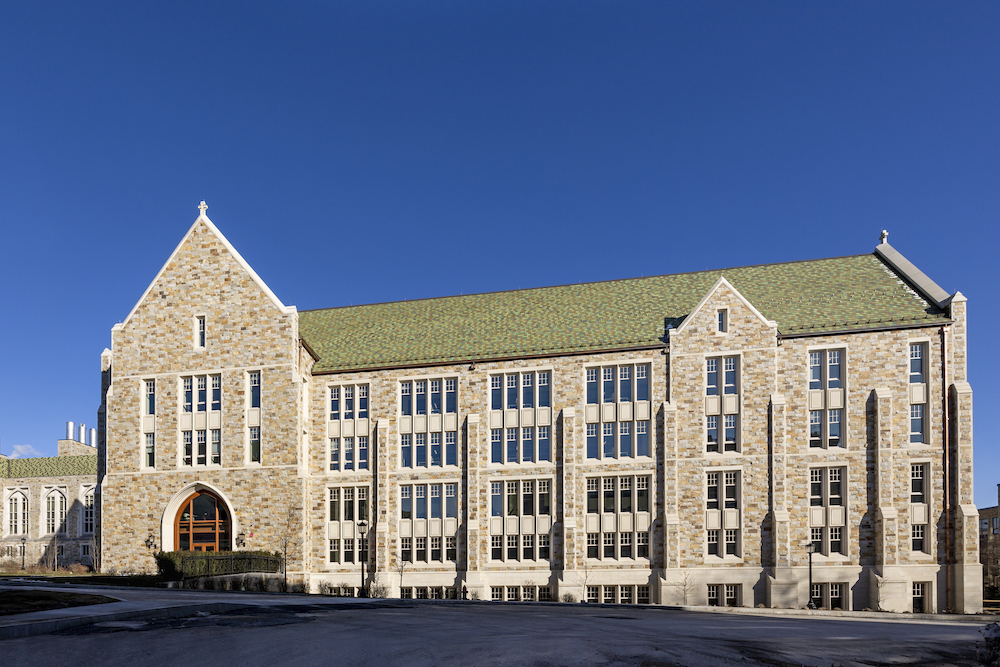
The Boston College campus, often referred to as “the Heights,” is a breathtaking example of collegiate Gothic Revival architecture. Iconic buildings like Gasson Hall with its striking bell tower, and the majestic Bapst Library (often mistaken for a cathedral), transport visitors to a different era. The intricate stone carvings, soaring arches, and stained-glass windows make for a truly picturesque setting. The campus is meticulously maintained, with sprawling green quads and pathways that invite leisurely strolls. The panoramic views of the Boston skyline and the serene Chestnut Hill Reservoir from various vantage points are particularly captivating. Experiencing the vibrant student life, with students hurrying to class, gathering on the lawns, or cheering at a sporting event, adds to the destination’s energetic atmosphere.
Arts, Athletics, and Community
Beyond its academic buildings, Boston College is a hub of cultural and athletic activity. The McMullen Museum of Art hosts world-class exhibitions, offering a diverse range of artistic experiences. The university’s performing arts scene is robust, with numerous student groups showcasing theater, music, and dance. For sports enthusiasts, catching a game featuring the Boston College Eagles is a quintessential BC experience. Alumni Stadium (for football) and the Conte Forum (for basketball and hockey) are vibrant venues where school spirit runs high. The sense of community, often referred to as the “BC Family,” is a tangible aspect of the campus culture, making it a welcoming place for visitors and a compelling reason to include it on any Boston itinerary.
Planning Your Visit to Boston College
Making the most of your trip to Boston College involves a little planning, ensuring you experience both its unique academic environment and its broader appeal as a travel destination.
Getting There and Around
Boston College is conveniently located just a few miles west of downtown Boston and is easily accessible. The most straightforward way to reach the campus is via the MBTA Green Line B branch, which terminates directly at the campus (Boston College station). This makes it an easy day trip from any part of Boston accessible by subway. For those driving, visitor parking is available, though it’s always advisable to check the university’s website for current parking information and potential event-related restrictions. Once on campus, the best way to explore is on foot. Guided campus tours are available for prospective students and their families, offering insights into both the academic and student life aspects. Self-guided tours are also popular, allowing visitors to wander at their own pace and soak in the atmosphere.

Nearby Attractions and Boston Exploration
A visit to Boston College can easily be integrated into a larger exploration of Boston and its surrounding areas. The charming neighborhoods of Brighton and Newton are adjacent, offering local eateries and shops. A short ride on the Green Line can take you to attractions like Fenway Park, the Museum of Fine Arts, or the bustling streets of Copley Square. Boston is a city rich in history, culture, and educational institutions, and Boston College serves as an excellent starting point or complement to a broader New England travel itinerary focused on academia and architectural beauty.
In conclusion, while Boston College does not offer traditional engineering degrees, its profound commitment to the liberal arts, robust STEM programs, and vibrant campus environment make it a highly desirable academic institution and a compelling destination for travelers. Its unique educational philosophy, coupled with its stunning aesthetics and dynamic community, ensures that a visit to “the Heights” is an enriching experience, regardless of one’s specific academic interests.
LifeOutOfTheBox is a participant in the Amazon Services LLC Associates Program, an affiliate advertising program designed to provide a means for sites to earn advertising fees by advertising and linking to Amazon.com. Amazon, the Amazon logo, AmazonSupply, and the AmazonSupply logo are trademarks of Amazon.com, Inc. or its affiliates. As an Amazon Associate we earn affiliate commissions from qualifying purchases.