
For travelers planning an unforgettable journey to the Golden State, understanding the intricacies of local timekeeping is more than just a trivial detail; it’s a crucial aspect that can influence everything from flight schedules to sunset views over the Pacific. So, to answer the burning question: Yes, California currently observes Daylight Saving Time (DST), meaning residents and visitors alike “spring forward” an hour in early March and “fall back” an hour in early November. This biannual clock change, while seemingly minor, has significant implications for tourism, accommodation, and the overall travel experience in one of the most visited states in the United States.
Understanding the history and future of Daylight Saving Time in California is key to navigating your adventure seamlessly. From catching a morning surf session in Malibu to planning an evening stroll along the Santa Monica Pier, these time shifts can subtly reshape your itinerary and perception of daylight hours. This comprehensive guide will delve into California’s relationship with Daylight Saving Time, its practical effects on your travel plans, and provide essential tips to ensure your trip is as smooth and enjoyable as possible, regardless of what time the clock says.
A Brief History of Daylight Saving Time in California
The concept of shifting clocks to maximize daylight has a surprisingly long and often contentious history, and California is no stranger to this debate. While the idea of Daylight Saving Time was first proposed by Benjamin Franklin in a whimsical essay, it wasn’t widely adopted until the early 20th century, primarily as an energy-saving measure during wartime.
The Origins and Early Adoption
When the United States officially implemented Daylight Saving Time with the Standard Time Act of 1918, it sparked immediate controversy. Many states and localities opted out or quickly repealed the measure. California’s journey with Daylight Saving Time really solidified after World War II.
Proposition 12 (1949) and Proposition 7 (2018)
In 1949, California voters approved Proposition 12, which formally established the observance of Daylight Saving Time in the state. This move was largely driven by the desire to align with national standards and extend daylight into the evening hours, which was seen as beneficial for recreation, commerce, and agricultural activities. For decades, this system remained largely unchallenged, becoming an ingrained part of life for residents and a subtle factor for visitors.
However, the debate surrounding Daylight Saving Time reignited in recent years, fueled by growing concerns about its impact on health, energy consumption, and the economy. In 2018, California voters once again weighed in, passing Proposition 7 with a resounding 60% approval. This proposition did not immediately abolish Daylight Saving Time or make it permanent. Instead, it repealed the 1949 Proposition 12 and granted the state legislature the power to change Daylight Saving Time rules by a two-thirds vote, provided such changes are consistent with federal law.
Despite the passage of Proposition 7, the California Legislature has yet to take definitive action to either permanently adopt Daylight Saving Time or revert to year-round Pacific Standard Time. As a result, California continues to observe the traditional “spring forward” and “fall back” clock changes, meaning that for now, travelers must still account for these shifts.
Understanding California’s Current Time Zones for Travelers
When you visit California, your travel experience will largely unfold within one of two time zones, depending on the time of year: Pacific Standard Time (PST) and Pacific Daylight Time (PDT). Understanding the distinction is vital for seamless planning.
Pacific Standard Time (PST) vs. Pacific Daylight Time (PDT)
California operates under the Pacific Time Zone. During the winter months, typically from early November to early March, the state observes Pacific Standard Time (PST), which is UTC-8. This means it is eight hours behind Coordinated Universal Time.
When Daylight Saving Time comes into effect, the clocks “spring forward” by one hour, shifting California to Pacific Daylight Time (PDT), which is UTC-7. This change occurs on the second Sunday in March and lasts until the first Sunday in November. For travelers, this means that during the peak tourist seasons of spring, summer, and early fall, California will be operating on Pacific Daylight Time.
What the “Spring Forward” and “Fall Back” Mean for Your Trip
The “spring forward” and “fall back” events can have practical implications for visitors.
-
Spring Forward (Early March): When clocks jump forward an hour, you effectively “lose” an hour of sleep on that specific day. For travelers arriving around this time, especially from time zones to the east, this can exacerbate jet lag. More importantly, it means that evenings will have more daylight. A 6 PM sunset during Pacific Standard Time would become a 7 PM sunset during Pacific Daylight Time, allowing for longer evenings for outdoor activities, dining al fresco, and enjoying attractions after conventional working hours. This can be a huge benefit for maximizing your sightseeing and leisure time.
-
Fall Back (Early November): When clocks “fall back,” you gain an hour. While this might sound like a bonus hour of sleep, it also means that daylight ends an hour earlier. A 6 PM sunset under Pacific Daylight Time will become a 5 PM sunset under Pacific Standard Time. This shift is important for planning evening activities, especially those outdoors. If you’re visiting landmarks like the Golden Gate Bridge or the Griffith Observatory for sunset views, you’ll need to adjust your timing accordingly. Early November marks the transition from the golden hues of autumn to the shorter days of winter, influencing the ambiance and scheduling of your trip.
The Impact of Daylight Saving Time on Your California Travel Experience
The observance of Daylight Saving Time in California extends beyond simply adjusting your watch; it subtly influences various facets of your travel experience, from logistical planning to how you immerse yourself in the local lifestyle.
Planning Your Itinerary and Attractions Visits
The shift to Pacific Daylight Time during the spring and summer months effectively grants an extra hour of daylight in the evenings. This is a significant boon for travelers eager to pack their days with activities. Imagine having an extra hour of sunlight to explore Yosemite National Park before dusk, or to linger longer at Disneyland Resort after the parades, without feeling rushed by encroaching darkness.
For urban explorers in Los Angeles or San Francisco, extended daylight means more time for sightseeing. You can comfortably visit iconic spots like the Hollywood Walk of Fame, then enjoy a leisurely dinner, and perhaps still catch a late-evening show or enjoy the city lights from a rooftop bar, all without feeling like you’re racing against the clock. When visiting historic sites like Alcatraz Island, later sunset times can mean more flexibility in booking afternoon tours and still having plenty of light for photos on the return ferry.
Conversely, during Pacific Standard Time in the fall and winter, daylight hours are shorter. This might necessitate an earlier start to your day to visit attractions or to plan indoor activities for the late afternoon and evening. Ski resorts in Lake Tahoe will still operate, but the window for sun-drenched slopes might feel shorter. Therefore, checking opening and closing times for attractions is even more critical during these months.
Accommodation and Transportation Logistics
For hotels and accommodation providers, Daylight Saving Time is a standard operational consideration. Check-in and check-out times, breakfast hours, and scheduled resort activities at places like The Ritz-Carlton, Laguna Niguel or Beverly Wilshire, A Four Seasons Hotel will always align with the local time. The main impact on travelers comes from their own body clocks and potential for jet lag. If you arrive in California just as clocks “spring forward,” you might feel more fatigued initially, as your internal clock is an hour behind the local time.
When it comes to transportation, airlines, train services, and bus companies rigorously adhere to local time. Your flight arriving at Los Angeles International Airport or San Francisco International Airport will always be scheduled according to the local time zone, including any DST adjustments. The crucial tip here is to double-check your booking confirmations and flight status in the days leading up to your travel, especially if your trip coincides with the exact “spring forward” or “fall back” date. This helps prevent any confusion about arrival or departure times. Car rental agencies will operate on local time, and navigation systems typically update automatically.
Embracing California’s Lifestyle and Activities
Daylight Saving Time significantly enhances the outdoor-centric lifestyle for which California is famous. Longer daylight hours in spring and summer mean more time for:
- Beach Culture: Enjoying extended evenings at the beaches of San Diego or Santa Monica, watching glorious sunsets, or having late-afternoon surfing lessons.
- Outdoor Adventures: Hiking in national parks like Joshua Tree National Park or Death Valley National Park, mountain biking, or exploring the dramatic coastline of Big Sur. The extra light provides a safer and more enjoyable experience.
- Wine Tasting: In regions like Napa Valley or Mendocino, longer daylight allows for extended vineyard tours and leisurely outdoor tastings, followed by dinner as the sun slowly sets.
- Dining and Nightlife: Restaurants with outdoor patios thrive under Pacific Daylight Time, offering patrons the chance to dine under natural light well into the evening. Nightlife in vibrant cities like Palm Springs, Los Angeles, and San Francisco can feel more accessible and lively when the transition from day to night is smoother and later.
For budget travelers, the extended daylight offers more opportunities for free outdoor activities. For luxury travelers, it means more time to enjoy resort amenities, golf courses, or private beach access. Daylight Saving Time effectively extends the “golden hour” for photographers and provides a more relaxed pace for family trips.
The Ongoing Debate: Why California Might Change Its Stance
Despite the benefits for tourism and recreation, the debate over Daylight Saving Time in California is far from settled. Proposition 7 in 2018 clearly signaled a public appetite for re-evaluating the biannual clock change, and legislative efforts continue in Sacramento to determine the state’s future timekeeping.
Health, Economy, and Energy Considerations
The arguments against Daylight Saving Time are compelling and often focus on its potential negative impacts:
- Health Concerns: Studies have linked the “spring forward” transition to an increase in heart attacks, strokes, and traffic accidents, attributing these to sleep disruption and circadian rhythm misalignment. For travelers, this can mean a more pronounced struggle with jet lag or general fatigue during the initial days of a trip.
- Economic Impact: While proponents argue Daylight Saving Time boosts retail and recreation, opponents point to lost productivity, increased absenteeism, and the economic costs associated with adjusting complex systems twice a year.
- Energy Savings: The original rationale for Daylight Saving Time—saving energy—has been largely debunked by modern research, which suggests that any savings on lighting are often offset by increased use of heating and air conditioning.
For the travel and tourism industry, a permanent time change (either year-round Pacific Daylight Time or year-round Pacific Standard Time) would bring consistency and eliminate the need for biannual adjustments in scheduling and visitor communication.
What the Future Holds for California’s Time
Since the passage of Proposition 7, several legislative bills have been introduced in California to address Daylight Saving Time. Options explored include:
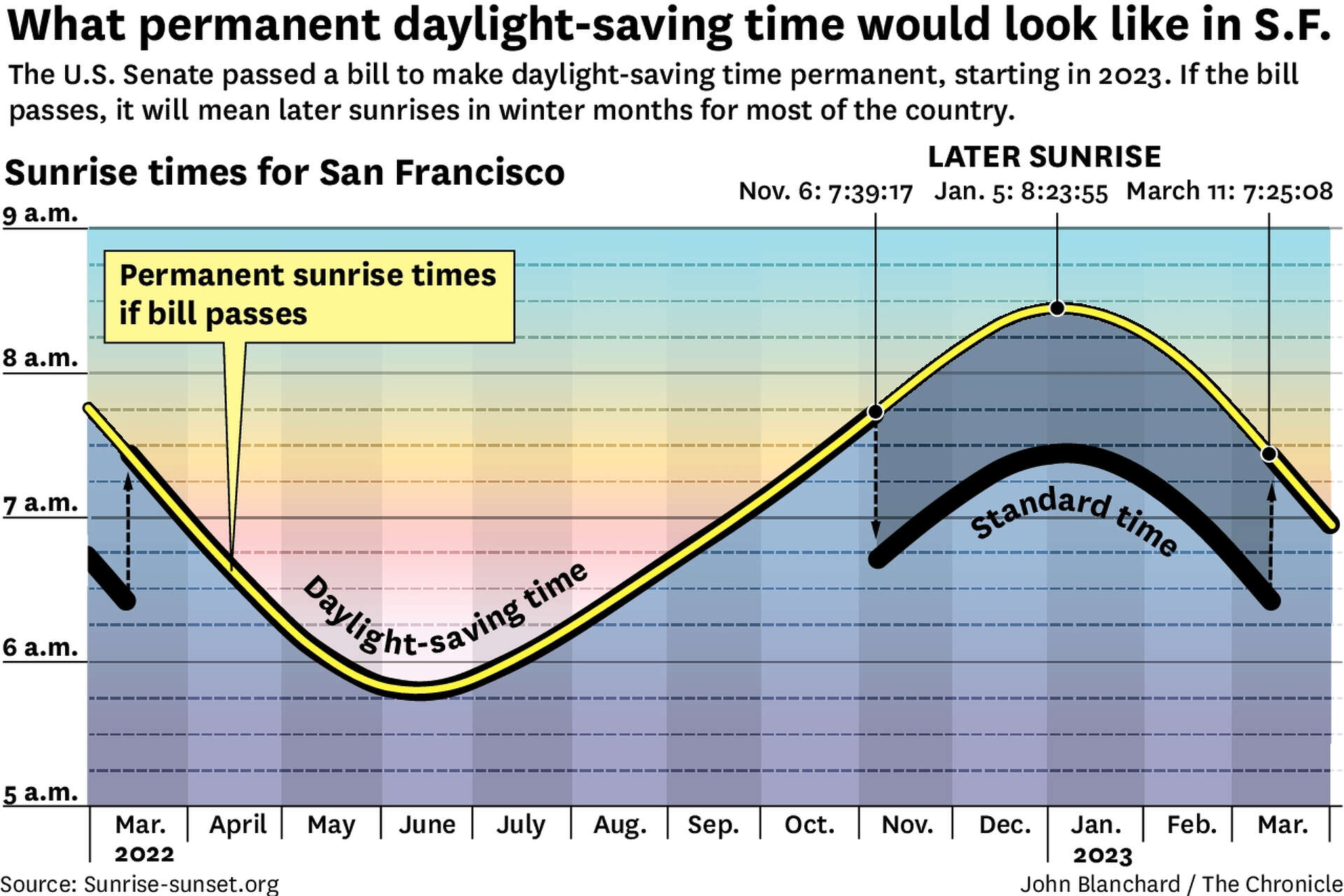
- Permanent Pacific Daylight Time: This would mean California remains on UTC-7 year-round, essentially keeping the longer evening daylight hours permanently. This would require an act of the United States Congress, as federal law currently only allows states to opt out of Daylight Saving Time and observe Pacific Standard Time year-round, not to make Daylight Saving Time permanent.
- Permanent Pacific Standard Time: This would mean California reverts to UTC-8 year-round, eliminating the “spring forward” altogether and having earlier sunsets in the summer. This option does not require federal approval.
As of now, no definitive action has been taken by the California Legislature. Therefore, for the foreseeable future, travelers should continue to anticipate the “spring forward” and “fall back” clock changes. Keeping an eye on state legislative developments, especially if planning a long-term stay or repeated visits, can be beneficial for staying informed about potential changes.
Essential Tips for Travelers Navigating DST in California
Regardless of the ongoing debate, Daylight Saving Time is a present reality for visitors to California. With a few simple preparations, you can ensure that these time shifts don’t disrupt your travel plans and allow you to fully enjoy everything the state has to offer.
Staying Prepared and Making the Most of Your Visit
- Verify Flight and Accommodation Times: Always double-check your flight itineraries, hotel check-in/check-out times, and any pre-booked tours or activities. Most digital systems will automatically update, but a quick verification can save you from an early rush or a missed appointment. This is especially critical if your travel dates fall on the exact Sunday of the time change.
- Adjust Your Internal Clock Gradually: If you’re arriving around the “spring forward” weekend, try to shift your sleep schedule by 15-30 minutes each day in the week leading up to your trip. This can help minimize the effects of jet lag combined with the time change. Embrace the natural light upon arrival to help reset your circadian rhythm.
- Utilize Technology: Your smartphone, smartwatch, and other digital devices will typically update to the correct local time automatically. Rely on these for accurate timekeeping, but consider bringing a traditional travel alarm clock as a backup, especially if you have an early morning flight or tour.
- Embrace the Extended Daylight (PDT): If you’re visiting during Pacific Daylight Time (March to November), plan for longer evenings. This is a fantastic opportunity to enjoy additional outdoor activities, explore destinations like Santa Monica or San Diego into the evening, or simply relax at a café and soak in the vibrant atmosphere without the pressure of an early sunset. It can be particularly beneficial for family trips where extra playtime outdoors is always a plus.
- Plan for Shorter Days (PST): During Pacific Standard Time (November to March), daylight hours are more limited. Prioritize outdoor activities earlier in the day and schedule indoor attractions, museum visits, or dining experiences for the late afternoon and evening. This is also a perfect time to enjoy cozy amenities at your hotel or resort.
- Stay Informed: While unlikely to change suddenly, being aware of any potential legislative updates regarding California’s Daylight Saving Time stance can be helpful, especially for those planning future visits or considering a long-term stay in the state.
In conclusion, California does indeed observe Daylight Saving Time, transitioning between Pacific Standard Time and Pacific Daylight Time as most of the United States does. While the “spring forward” and “fall back” can sometimes feel like a minor inconvenience, particularly when combined with travel, the impact on your California adventure is largely positive, offering more daylight hours to enjoy the state’s incredible destinations, attractions, and vibrant lifestyle. By understanding these time shifts and planning accordingly, you can ensure your trip to the Golden State is nothing short of spectacular.
LifeOutOfTheBox is a participant in the Amazon Services LLC Associates Program, an affiliate advertising program designed to provide a means for sites to earn advertising fees by advertising and linking to Amazon.com. Amazon, the Amazon logo, AmazonSupply, and the AmazonSupply logo are trademarks of Amazon.com, Inc. or its affiliates. As an Amazon Associate we earn affiliate commissions from qualifying purchases.