
The question of whether California has the death penalty is a complex one, delving deep into the state’s legal history, its evolving societal values, and the intricate dance between judicial rulings and public opinion. For visitors and residents alike, understanding the nuances of the state’s legal framework offers a unique glimpse into the fabric of California’s lifestyle and its commitment to justice, even on the most contentious issues. While legally on the books, capital punishment in the Golden State operates under a unique, albeit perhaps temporary, statewide moratorium, making the practical answer quite different from the statutory one. This duality reflects a deeply divided sentiment and a protracted legal battle that has spanned decades.
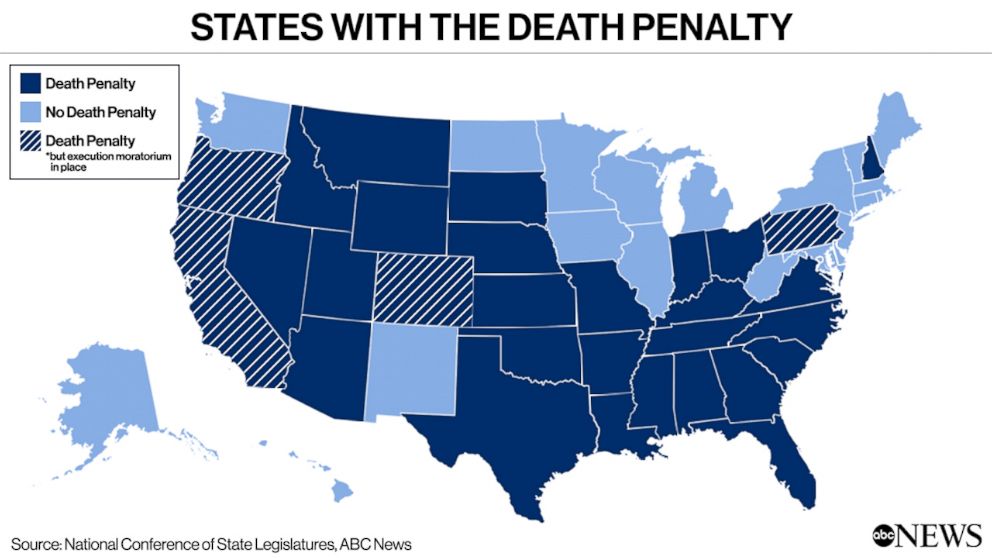
At its core, yes, California does legally have the death penalty. State law permits capital punishment for specific egregious crimes. However, no executions have been carried out since 2006, and a formal moratorium enacted in 2019 has effectively halted all future executions indefinitely. This fascinating blend of legal existence and practical suspension is a hallmark of California’s approach to this ultimate sanction, highlighting its distinctive role within the broader United States legal landscape.
A Historical Overview of Capital Punishment in California
To truly grasp the current state of capital punishment in California, one must embark on a journey through its rich and often tumultuous history concerning the death penalty. This journey reveals shifting methodologies, landmark legal decisions, and a persistent societal debate that continues to shape the state’s legal and ethical identity. Understanding these historical threads is crucial for anyone seeking to comprehend the intricate “local culture” of justice in the Golden State.
Early Practices and Evolution of Methods
The practice of capital punishment in what is now California predates its statehood. In the pre-state era, executions were often carried out by local authorities, typically by firing squad or hanging. These were public spectacles, intended both as punishment and a stark warning to others. Upon joining the United States in 1850, California formalized its approach to capital punishment, centralizing control and standardizing methods. The state took over all executions from local authorities in 1891, establishing designated execution facilities.
For many decades, hanging remained the primary method. However, as public opinion and understanding of human rights evolved, so too did the perceived “humanity” of execution methods. In 1937, California introduced lethal gas as an alternative, seen at the time as a more “modern” and less brutal form of execution. This method was utilized for several decades. Later, in the 1990s, the state transitioned again to lethal injection, mirroring a nationwide trend towards what was presented as a more sterile and less visibly violent means of carrying out death sentences.
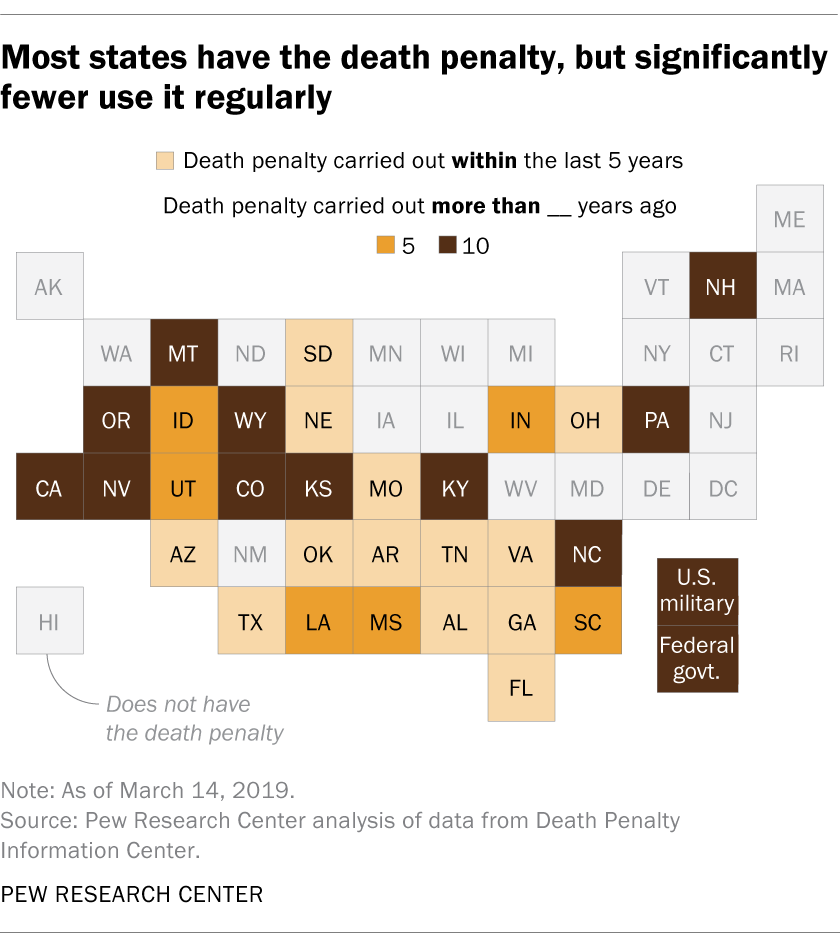
Historically, the number of executions in California was substantial. Before a pivotal legal ruling in 1972, more than 700 individuals were executed by the state. This period reflects a time when capital punishment was more widely and routinely applied, with fewer legal challenges and a different prevailing public sentiment. Following the reintroduction of the death penalty, however, the pace of executions dramatically slowed. Since 1978, only 13 individuals have been executed in California, a stark contrast to earlier periods and a testament to the increasingly complex legal and ethical hurdles involved.
The Legal Back-and-Forth: Reinstatement and Challenges
The modern history of capital punishment in California is defined by a series of significant legal challenges and legislative responses. A landmark moment occurred in 1972 with the People v. Anderson decision. In this case, the California Supreme Court ruled that the death penalty, as then administered, constituted cruel or unusual punishment under the state’s constitution, thereby rendering it unconstitutional. This decision effectively commuted the sentences of all individuals on death row at the time to life imprisonment, bringing executions to a halt.
However, this abolition was short-lived. Public sentiment, still largely in favor of capital punishment, quickly mobilized. In 1978, California voters approved Proposition 7, a ballot initiative that successfully reinstated the death penalty by amending the state constitution. This legislative action explicitly declared that capital punishment was not cruel or unusual punishment under California law, paving the way for its return.
Following its reinstatement, the legal pathway for death penalty cases in California became incredibly protracted and intricate. Any death sentence handed down automatically triggers an appeal to the California Supreme Court. These state-level appeals often take many years, delving into every aspect of the trial to ensure fairness and constitutional adherence. Beyond the state system, condemned individuals can also pursue federal appeals, which lead their cases through the Ninth Circuit Court of Appeals and, in some instances, even up to the U.S. Supreme Court. This multi-layered appeals process is notoriously lengthy, resulting in individuals spending an average of over 20 years on death row. This extended period, fraught with legal challenges and uncertainties, is a significant part of the cost and complexity associated with capital punishment in the state.
The Current Legal Status: Moratorium and Public Debate
The legal status of the death penalty in California today is characterized by a striking paradox: it is legally permissible, yet practically halted. This unique situation is the result of both judicial action and executive decree, further fueling a vibrant and ongoing public debate that is central to understanding the state’s modern “lifestyle” and ethical considerations.
Governor Newsom’s Moratorium and the Fate of San Quentin
The practical halt to executions in California began even before a formal moratorium. In 2006, a federal judge issued an injunction stopping all executions in the state, citing concerns over the constitutionality of its lethal injection protocol. This ruling effectively put executions on hold due to questions surrounding the methodology’s compliance with the Eighth Amendment’s prohibition against cruel and unusual punishment. For over a decade, despite the legal existence of the death penalty, no executions could take place while these protocol concerns remained unresolved.
Then, in 2019, Governor Gavin Newsom took a decisive step, issuing a statewide moratorium on the death penalty. This executive order meant that no executions would be carried out during his tenure as governor, regardless of future legal developments regarding lethal injection protocols. More than a simple pause, Governor Gavin Newsom’s order also directed the dismantling of the execution chamber at San Quentin State Prison, the facility where all state executions had historically taken place. This symbolic and practical action underscored the administration’s commitment to ending capital punishment, at least temporarily, within California. The moratorium did not commute sentences but rather suspended their enforcement, leaving over 700 individuals on death row in a state of indefinite limbo.
Public opinion regarding capital punishment in California is a mosaic of shifting views. While historically there has been strong support for the death penalty, recent years have seen a significant shift, leading to a more divided or even opposed populace. This evolution is reflected in recent ballot initiatives. In 2016, two competing propositions appeared on the ballot: Proposition 62, which sought to repeal the death penalty and replace it with life imprisonment without parole, failed to pass. Simultaneously, Proposition 66, designed to expedite death penalty appeals and streamline the execution process, did pass. However, Proposition 66 faced immediate legal challenges and its implementation has been significantly hampered, particularly in light of the subsequent gubernatorial moratorium. These electoral outcomes highlight the deeply conflicted nature of public sentiment, with voters seemingly wanting both a more efficient system and, simultaneously, expressing doubts about its application.

Shifting Public Opinion and the Cost of Justice
The reasons behind the evolving public opinion are manifold. Primary among them are concerns about the immense financial cost associated with the death penalty. Due to the prolonged appeals process, the specialized legal representation required, and the infrastructure needed for death row facilities, capital cases are significantly more expensive than cases where life imprisonment without parole is sought. Estimates suggest that California has spent billions of dollars on a system that has executed only a handful of individuals in four decades.
Another profound concern is the irreversible nature of the death penalty and the inherent risk of executing an innocent person. While California has not officially exonerated anyone from its death row who was subsequently executed, the possibility of such a miscarriage of justice weighs heavily on many consciences, especially given national trends of exonerations in other states. Ethical considerations about the morality of state-sanctioned killing, regardless of the crime, also play a significant role for a growing segment of the population.
Furthermore, issues of racial bias within the criminal justice system are a persistent concern. Critics argue that the death penalty is disproportionately applied to defendants of color, particularly when the victim is white. This perceived inequality in application raises serious questions about fairness and justice, contributing to the erosion of public confidence in the system. These multifaceted concerns underscore why capital punishment remains one of the most vigorously debated topics, shaping discussions around human rights and social justice within the California “lifestyle.”
California’s Stance in a Global Context
When viewed through a global lens, California’s position on the death penalty reveals a striking contrast with much of the international community. Understanding this broader context adds another layer to appreciating the state’s unique approach to legal and ethical questions, positioning it within a worldwide dialogue on justice and human rights.
The United States as an Outlier
The vast majority of countries around the world have abolished the death penalty in law or in practice. Nations across Europe, Mexico, Canada, and a significant number of countries in Africa, Asia, and South America have either removed capital punishment from their statutes or have ceased executions for many years. This global trend towards abolition highlights the United States as an outlier among Western democracies and developed nations.
Within the United States, there is also a growing movement away from the death penalty. While it remains legally available in 27 states, many of these states, like California, have imposed moratoriums or have not carried out executions in decades. The geographical distribution of executions within the United States is also concentrated in a relatively small number of states, primarily in the South. California’s decision to maintain the death penalty on its books while effectively pausing its application places it in a unique category: among states that retain capital punishment but choose not to enforce it, aligning it more closely with the de facto abolitionist stance of many international peers, despite the legal text. This nuanced position reflects a state grappling with its own internal divisions while being increasingly aware of global human rights norms.
Ethical Considerations and the Path Forward
The debate surrounding the death penalty in California is fundamentally driven by profound ethical considerations that resonate far beyond its borders. Proponents often argue for its necessity as a just punishment for heinous crimes, emphasizing the concept of retribution for victims and their families. They also frequently cite deterrence, suggesting that the threat of execution can prevent future crimes, and incapacitation, ensuring that convicted murderers can never harm society again. These arguments tap into deeply held beliefs about justice and societal protection.
Conversely, opponents raise a litany of counter-arguments, rooted in both practical and philosophical objections. They assert that the death penalty constitutes cruel and unusual punishment, violating fundamental human rights. The irreversible nature of execution means that any error, however remote, cannot be corrected. Concerns about the immense cost to taxpayers, without demonstrable benefits in deterrence, are also prominent. Furthermore, the persistent questions surrounding racial bias in its application and the potential for executing innocent individuals cast a long shadow over its legitimacy.
The path forward for California regarding the death penalty remains uncertain and complex. While the moratorium is in effect, the underlying law remains. Future political landscapes, ballot initiatives, and court rulings could potentially alter its status. Whether California will eventually move towards formal abolition, join the ranks of states that rarely use it, or somehow resume executions, is a question that continues to spark passionate debate. This ongoing dialogue is a testament to the state’s commitment to critically examine its justice system, reflecting a vibrant aspect of California’s unique “lifestyle” where public discourse shapes legal and ethical realities. The question of the death penalty in California is not merely a legal technicality; it is a profound societal conversation, mirroring the dynamic and often progressive spirit of the state itself.
LifeOutOfTheBox is a participant in the Amazon Services LLC Associates Program, an affiliate advertising program designed to provide a means for sites to earn advertising fees by advertising and linking to Amazon.com. Amazon, the Amazon logo, AmazonSupply, and the AmazonSupply logo are trademarks of Amazon.com, Inc. or its affiliates. As an Amazon Associate we earn affiliate commissions from qualifying purchases.