
For many travelers, the allure of Florida’s sun-drenched roads, scenic coastal highways, and vibrant cities presents an irresistible invitation to explore on two wheels. Imagine cruising along Overseas Highway in the Florida Keys, feeling the warm ocean breeze, or navigating the lively streets of Miami. However, before you rent that motorcycle or bring your own, a crucial question arises: “Does Florida have a helmet law?” Understanding the regulations is not just about avoiding fines; it’s about ensuring your safety and enjoyment in the Sunshine State. This comprehensive guide delves into Florida’s motorcycle helmet laws, offering insights and practical advice for travelers looking to experience the state responsibly and safely. We’ll explore the nuances of the law, discuss the undeniable benefits of helmet use, and equip you with the knowledge needed to make informed decisions as you embark on your Florida adventure.
Understanding Florida’s Motorcycle Helmet Laws
Florida’s approach to motorcycle helmet laws is distinct and often a source of confusion for visitors. Unlike many states with universal helmet mandates, Florida operates under a more nuanced system, a reflection of its historical legislative journey and the strong advocacy of rider groups. For travelers, understanding these specific requirements is paramount to a lawful and worry-free ride.
The Evolution of Helmet Legislation in the Sunshine State
The history of motorcycle helmet laws in Florida dates back to the 1960s, mirroring a national trend towards enhancing road safety. Initially, Florida implemented a universal helmet law, requiring all motorcyclists and their passengers to wear helmets. This mandate remained in effect for several decades, contributing significantly to a reduction in head injuries and fatalities among riders. However, in 2000, a significant legislative change occurred, altering the landscape of motorcycle safety in the state. Responding to arguments concerning rider freedom and personal choice, Florida revised its statute, making helmet use optional for a specific segment of the riding population. This shift sparked considerable debate and has since defined the state’s unique stance on motorcycle helmets. This historical context is vital for travelers to grasp, as it explains the specific conditions under which helmets are, or are not, legally required today.
Current Statutes: Who Must Wear a Helmet?
As of the current legislation, motorcyclists in Florida are not universally required to wear helmets under certain conditions. The law stipulates that any person operating or riding on a motorcycle who is 21 years of age or older is exempt from wearing a helmet, provided they have an insurance policy providing at least $10,000 in medical benefits for injuries incurred as a result of a motorcycle crash. This specific clause is the cornerstone of Florida’s current helmet law. Conversely, all motorcyclists and passengers under the age of 21, regardless of insurance coverage, are legally required to wear a helmet that complies with federal safety standards. Furthermore, if a rider aged 21 or older does not carry the stipulated medical benefits insurance, they are also legally obligated to wear a helmet. These rules apply equally to residents and visitors, meaning travelers must adhere to them without exception. Ensuring compliance before you hit the road is not just a recommendation; it’s a legal imperative.
Financial Responsibility and Insurance Requirements
The medical benefits insurance requirement is a critical component of Florida’s helmet law for riders aged 21 and above. This $10,000 personal injury protection (PIP) coverage is intended to cover medical expenses in the event of an accident, compensating for the increased risk associated with riding without a helmet. For travelers, especially those renting motorcycles, it is absolutely essential to verify that their personal insurance policy or the rental company’s insurance meets this specific Florida requirement. Failure to have adequate coverage while riding unhelmeted can lead to severe financial consequences in the aftermath of an accident, in addition to potential legal penalties for non-compliance. Many rental agencies will inform you of these requirements, but it remains the rider’s responsibility to confirm full adherence. Always carry proof of insurance with you, as law enforcement officials may request it. This aspect of the law underscores Florida’s pragmatic approach: while offering a degree of freedom, it also places a significant emphasis on financial preparedness for potential risks.
Beyond the Law: The Case for Helmet Use
While Florida’s law offers an option for some riders to forgo helmets, focusing solely on legal compliance misses the broader, more critical discussion around safety. For travelers, particularly those unfamiliar with Florida’s diverse road conditions and traffic patterns, the decision to wear a helmet transcends mere legality; it becomes a paramount consideration for personal well-being and responsible travel.
Safety Statistics: The Impact of Helmets
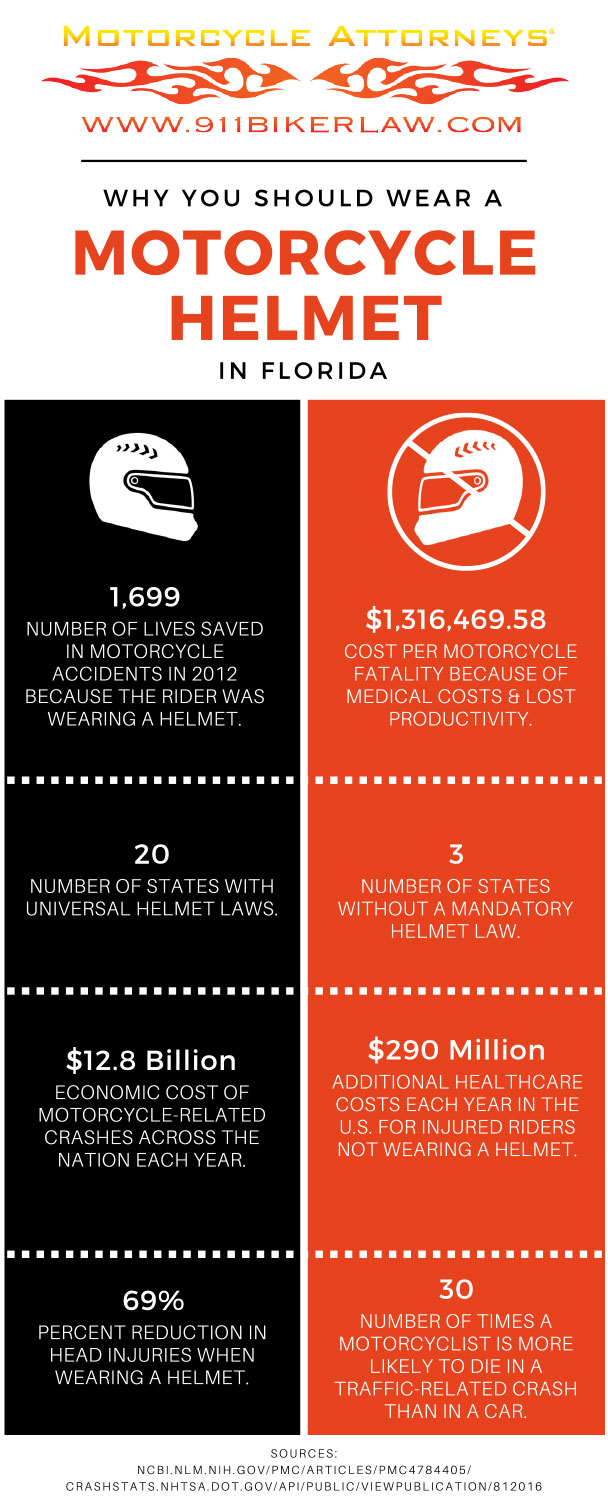
Numerous studies and real-world statistics consistently highlight the profound impact of helmet use on motorcycle safety. The National Highway Traffic Safety Administration (NHTSA) and the Centers for Disease Control and Prevention (CDC) have extensively documented that helmets are highly effective in preventing head injuries and fatalities in motorcycle crashes. For instance, the NHTSA estimates that helmets are 37% effective in preventing fatalities for motorcycle riders and 41% effective for passengers. They also significantly reduce the risk of head injury by 69%. In states where universal helmet laws were repealed, like Florida, there has often been a subsequent increase in head injury rates and fatalities among motorcyclists. These statistics are not abstract numbers; they represent lives saved and severe injuries avoided. For a traveler exploring an unfamiliar environment, the inherent risks of motorcycling are amplified, making the added layer of protection a wise choice regardless of the law.
Types of Helmets and Their Protection Levels
Not all helmets are created equal, and understanding the different types and their protective capabilities is essential for making an informed choice. The most common types include:
- Full-face helmets: These offer the most comprehensive protection, covering the entire head, face, and chin. They are ideal for high-speed riding and offer excellent protection against wind, debris, and impact.
- Modular (flip-up) helmets: Combining features of full-face and open-face designs, the chin bar can be flipped up. They offer good protection but may be slightly less secure than a true full-face helmet.
- Open-face (3/4) helmets: These cover the top, back, and sides of the head but leave the face exposed. While offering more ventilation, they provide less protection against facial injuries.
- Half helmets: These offer the least protection, covering only the top of the head. They are popular for their minimalist design but leave the face, jaw, and much of the skull vulnerable.
When choosing a helmet, ensure it meets safety standards set by the U.S. Department of Transportation (DOT), indicated by a DOT sticker on the back. Some riders also opt for helmets certified by organizations like the Snell Memorial Foundation, which conduct even more rigorous testing. For a traveler, especially one renting a motorcycle, choosing a full-face or modular helmet offers the best peace of mind and protection against the unpredictable nature of road travel.
The Risks of Riding Unhelmeted
Choosing to ride without a helmet, even when legally permissible for those over 21 with insurance, significantly escalates the risks associated with motorcycling. The most obvious and severe risk is head injury. In a crash, the head is highly vulnerable, and even a low-speed impact can result in traumatic brain injury (TBI), which can lead to permanent disability, cognitive impairment, or death. Beyond direct impact, riding unhelmeted exposes the face and eyes to debris, insects, and harsh weather elements, which can impair vision and lead to accidents. The absence of a helmet also increases exposure to wind noise, potentially leading to hearing damage over time. Moreover, the lack of an aerodynamic design can contribute to rider fatigue. For travelers exploring a new destination, these added risks can detract from the overall experience and transform a dream vacation into a nightmare. Prioritizing safety by wearing a helmet is not just about adhering to the law; it’s about protecting your life and ensuring you can fully enjoy all that Florida has to offer.
Implications for Travelers and Florida Visitors
Traveling to Florida with the intention of riding a motorcycle requires more than just understanding the helmet law. It involves practical considerations, safety awareness tailored to the local environment, and an understanding of common pitfalls. For visitors, being prepared can significantly enhance the safety and enjoyment of their trip.
Renting a Motorcycle in Florida: What You Need to Know
For many tourists, renting a motorcycle is the preferred way to experience Florida’s open roads. When renting, it is crucial to clarify several points with the rental agency. First, confirm their policy on helmet provision; many agencies will offer helmets for rent or include them as part of the rental package, especially if you are under 21 or don’t meet the insurance requirement. Second, verify that the rental agreement includes the necessary $10,000 medical benefits insurance, or ensure your personal policy covers you adequately in Florida. Reputable rental companies in cities like Orlando, Miami, and Daytona Beach are usually well-versed in these requirements and can guide you. Always inspect the helmet for DOT certification and proper fit if you choose to wear one. Don’t assume that because you are offered the option to ride without a helmet that it’s the safest choice. Rental agencies have a commercial interest, but your personal safety should always be your top priority.
Navigating Florida’s Roads: Safety Tips for All Riders
Beyond helmet laws, general road safety is paramount, particularly for travelers. Florida’s roads can present unique challenges. The state is known for its heavy tourist traffic, especially in popular areas like Orlando and the Florida Keys, and drivers may be distracted or unfamiliar with local routes. Be extra vigilant for aggressive drivers, sudden stops, and vehicles changing lanes without signaling. Weather can also be a factor; sudden tropical downpours are common, making roads slippery and visibility poor. Always ride defensively, maintain a safe following distance, and be aware of your surroundings. Consider taking a defensive riding course before your trip if you haven’t recently. Even experienced riders can benefit from refreshing their skills, especially when riding in an unfamiliar environment. Utilize appropriate gear beyond just a helmet, such as protective jackets, gloves, and sturdy footwear, to minimize injury risk in the event of an accident.
Common Misconceptions and Legal Advice
A common misconception among travelers is that if helmets are optional for adults, they are universally unnecessary. This overlooks the insurance requirement and the significant safety advantages of helmet use. Another mistake is assuming that out-of-state insurance automatically covers the Florida medical benefits requirement; always confirm with your insurer. If pulled over by law enforcement, always remain courteous and cooperate. If you are riding unhelmeted and are 21 or older, be prepared to present proof of your $10,000 medical benefits insurance policy. Failure to do so can result in a citation and fines. While this article provides general information, it is not a substitute for legal advice. If you have specific concerns about Florida’s laws or an incident occurs, consulting with a legal professional specializing in Florida motorcycle law is advisable. The goal is to avoid legal complications and ensure a smooth, enjoyable journey.
Exploring Florida Safely: A Traveler’s Perspective
Florida offers an incredible array of experiences for motorcyclists, from the historic charm of St. Augustine to the vibrant culture of South Beach. Maximizing these experiences means not just riding, but riding smart and safely. For the adventurous traveler, the open road beckons, but responsibility must always be the co-pilot.
Scenic Routes and Popular Destinations
Florida boasts some truly iconic motorcycle routes. The aforementioned Overseas Highway (US-1) to Key West is a must-do, offering breathtaking ocean views and charming island stops. The A1A coastal highway provides stunning beachfront vistas from Jacksonville down to Miami. Inland, routes around Ocala National Forest offer lush, green scenery, a stark contrast to the beaches. Motorcycle events like Daytona Bike Week and Biketoberfest in Daytona Beach attract thousands of riders annually, creating a festive atmosphere for enthusiasts. When planning your route, consider the type of roads, potential traffic, and available services. Many online resources and local motorcycle clubs can provide insights into the best rides and stops. Always have a clear itinerary and backup plans, especially regarding fuel and rest stops in less populated areas.
Preparing for Your Florida Motorcycle Adventure
Thorough preparation is key to a successful motorcycle trip in Florida. Beyond understanding the helmet law and securing insurance, consider the following:
- Motorcycle Condition: If riding your own, perform a pre-trip inspection of tires, brakes, lights, and fluids. If renting, ensure the bike is well-maintained and in good working order.
- Navigation: While paper maps are a good backup, a reliable GPS or smartphone app with offline map capabilities is invaluable, especially in areas with poor cell service.
- Packing: Pack light but include essentials like rain gear (a common necessity in Florida), sunscreen, water, and basic first-aid supplies.
- Physical Preparedness: Long rides can be physically demanding. Ensure you are well-rested and stay hydrated, especially in Florida’s heat and humidity.
- Emergency Plan: Share your itinerary with someone, and know what to do in case of a breakdown or accident. Having roadside assistance coverage is highly recommended.
Taking these preparatory steps will ensure that your focus remains on the joy of the ride and the beauty of Florida, rather than on unforeseen complications.
Enjoying the Ride Responsibly
Ultimately, the goal of any motorcycle trip through Florida is enjoyment and memorable experiences. Riding responsibly means making conscious choices that prioritize your safety and the safety of others on the road. This includes adhering to speed limits, avoiding alcohol and drugs, and being aware of your surroundings at all times. It also means respecting local laws and customs, even if they differ from what you’re used to. While the freedom of the open road is a major draw for motorcyclists, it comes with a significant responsibility. By choosing to ride safely, whether you opt for a helmet or meet the requirements to ride without one, you contribute to a positive experience for yourself and uphold the reputation of the motorcycling community. The beauty of Florida awaits, and experiencing it from the saddle of a motorcycle can be an unparalleled adventure, provided you ride with wisdom and caution.
Conclusion: Prioritizing Safety on Florida’s Open Roads
The question “Does Florida have a helmet law?” leads to a nuanced answer, underscoring the importance of informed decision-making for any traveler planning to ride a motorcycle in the Sunshine State. While riders aged 21 and over with specific medical benefits insurance coverage may legally forgo a helmet, the overwhelming evidence points to the life-saving and injury-preventing benefits of always wearing one. For visitors, navigating unfamiliar roads and traffic conditions adds another layer of complexity, making the added protection of a DOT-compliant helmet an unequivocally wise choice.
Florida’s diverse landscapes, from the vibrant energy of South Florida to the tranquil natural preserves, offer unparalleled opportunities for motorcycle exploration. By understanding the law, ensuring adequate insurance, equipping yourself with proper safety gear, and practicing defensive riding, you can unlock these experiences safely and responsibly. Your Florida motorcycle adventure should be memorable for its scenic beauty and exhilarating freedom, not for preventable accidents or legal complications. Prioritize safety, make informed choices, and enjoy the open roads of Florida with confidence and peace of mind.
LifeOutOfTheBox is a participant in the Amazon Services LLC Associates Program, an affiliate advertising program designed to provide a means for sites to earn advertising fees by advertising and linking to Amazon.com. Amazon, the Amazon logo, AmazonSupply, and the AmazonSupply logo are trademarks of Amazon.com, Inc. or its affiliates. As an Amazon Associate we earn affiliate commissions from qualifying purchases.