
When most travelers envision Las Vegas, they conjure images of shimmering heat waves rising off the asphalt, poolside cocktails under a relentless sun, and the dry, baking air of the Mojave Desert. For much of the year, this image is entirely accurate. However, there is a common misconception that because Nevada is a desert state, it remains a tropical paradise year-round. The reality of the high desert climate in the United_States is far more nuanced. Not only does it get cold in the city of lights, but the winter season offers a completely different perspective on the tourism experience, blending crisp air with festive luxury.

The Reality of the Mojave Desert Climate
To understand why Las Vegas experiences such a dramatic shift in temperature, one must look at the geography of the region. Sitting in a valley surrounded by mountain ranges, the city is subject to “diurnal temperature variation.” This means that without the presence of humidity to trap heat, the ground releases its warmth rapidly as soon as the sun sets.
The Winter Temperature Profile
From late November through early March, the thermometer takes a noticeable dip. During the day, temperatures typically hover between 50°F and 60°F (10°C to 15°C). While this might seem mild to those visiting from Canada or the United Kingdom, the nights are a different story. It is not uncommon for the mercury to drop into the 30s, and occasionally, frost blankets the palm trees that line the boulevards.
The wind is another factor that tourists often overlook. The desert is prone to “north winds” that sweep through the valley, making a 50-degree day feel significantly colder. For anyone planning to walk the length of The Strip, these gusts can be biting, necessitating more than just a light sweater.
Seasonal Transitions: When the Chill Sets In
The transition from the scorching summer to the cool winter is often abrupt. October usually provides the “Goldilocks” weather—perfectly balanced—but by the time the Las Vegas Grand Prix or Thanksgiving arrives, the evening chill is undeniable. This seasonal shift transforms the city’s tourism appeal from pool parties to sophisticated indoor entertainment and cool-weather outdoor exploration.
Winter Tourism: Festivals and Seasonal Attractions
While the outdoor beach clubs may close their doors, the city compensates with an array of winter-specific attractions that take advantage of the cooler temperatures. Tourism in Las Vegas during the winter months is focused on spectacle, lights, and holiday spirit.
Holiday Displays on The Strip
One of the most iconic winter experiences is visiting the Bellagio Conservatory & Botanical Gardens. Each winter, the garden is transformed into a massive holiday wonderland, featuring tens of thousands of fresh flowers, towering Christmas trees, and intricate animatronic displays. It is a testament to the city’s ability to create a festive atmosphere regardless of the environment.
Nearby, The Cosmopolitan of Las Vegas takes the winter theme a step further. Every year, they convert their Boulevard Pool into a functional ice rink. Visitors can skate on real ice while overlooking the neon lights of the Eiffel Tower at Paris Las Vegas. The experience of roasting s’mores over an open fire while looking out at the desert skyline is a unique highlight of winter tourism.
Downtown Celebrations and Light Shows
The Fremont Street Experience in downtown Las Vegas offers a different kind of winter vibe. The Viva Vision canopy hosts holiday-themed light shows, and the area is often less congested than the main resort corridor. For a more traditional holiday light experience, many tourists head to the Ethel M Chocolate Factory in Henderson. Their cactus garden is adorned with over a million lights, creating a uniquely Nevadan holiday walk that is staples for locals and savvy tourists alike.
Outdoor Excursions: The Best Time for Adventure
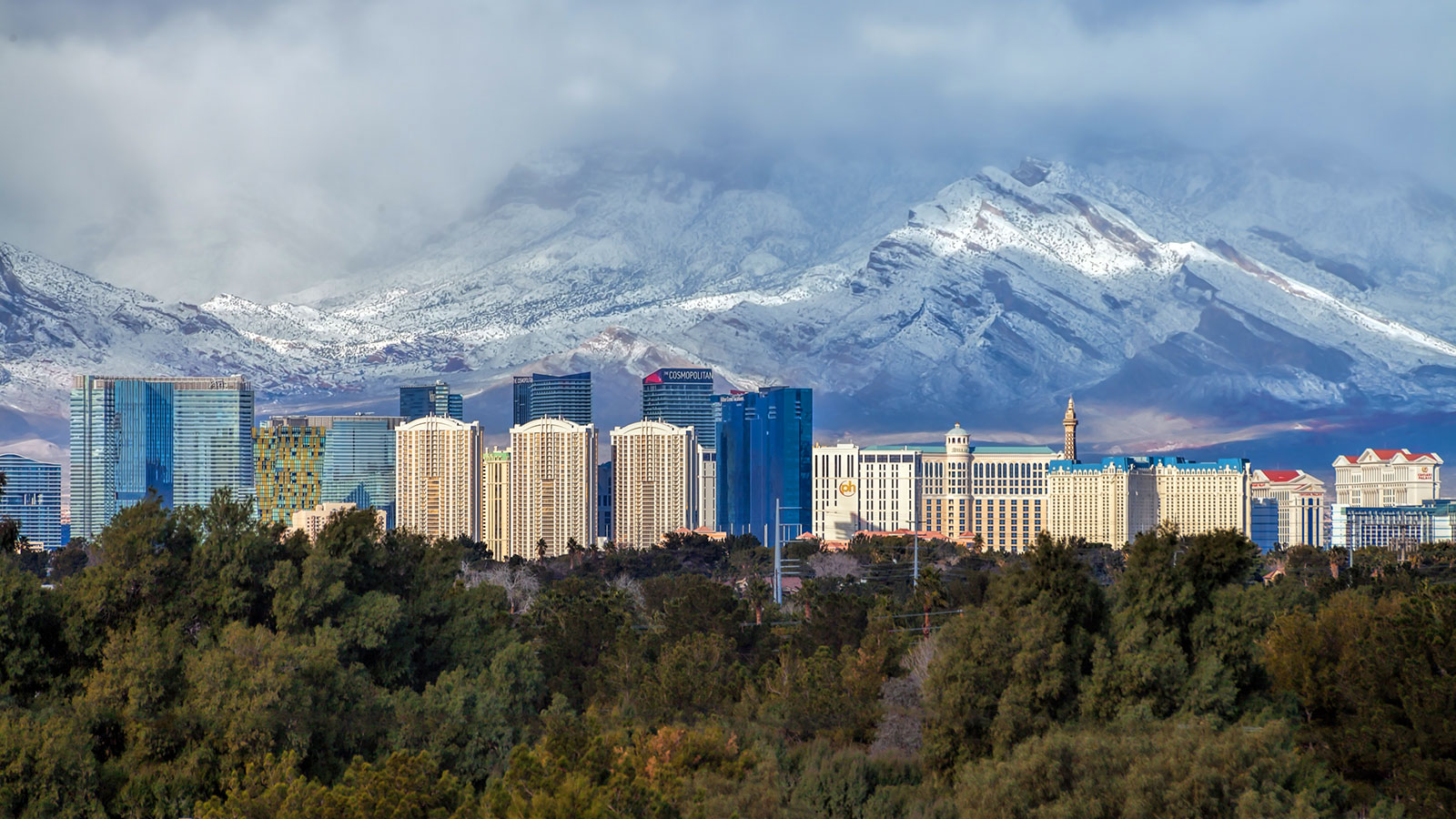
Perhaps the greatest advantage of the cold weather in Las Vegas is the accessibility of the surrounding natural landmarks. During the summer, hiking in the desert can be dangerous due to extreme heat. In the winter, however, the local parks become a haven for hikers, climbers, and photographers.
Red Rock Canyon National Conservation Area
Just a short drive from the city, Red Rock Canyon National Conservation Area is at its most beautiful when the air is crisp. The vibrant red Aztec sandstone contrasts sharply against the clear blue winter sky. Winter is the peak season for rock climbers from around the world who flock to the canyon to take advantage of the friction provided by the cool stone. For tourists, a drive along the 13-mile scenic loop offers breathtaking vistas that are often capped with a dusting of snow on the highest peaks of the Spring Mountains.
Valley of Fire State Park
Located about an hour north of the city, Valley of Fire State Park is another must-visit during the cooler months. The stunning rock formations, such as the Fire Wave and Elephant Rock, are much more enjoyable to explore when the ground isn’t radiating 110-degree heat. The “cold” weather here is usually quite pleasant for physical activity, often staying in the mid-50s during the day.
Hoover Dam and Lake Mead
Visiting the Hoover Dam is a significantly more comfortable experience in January than in July. Exploring the massive concrete structure and walking across the Mike O’Callaghan-Pat Tillman Memorial Bridge involves a fair amount of outdoor exposure. The cool winter breeze off Lake Mead makes the historical tour much more manageable for families and elderly visitors.
Snow in the Desert: Day Trips to the Mountains
It may surprise many to learn that you can go from the desert floor to a ski resort in less than an hour. The dramatic elevation changes around the valley allow for a true “white winter” experience just a few miles away from the casinos.
Mount Charleston and Lee Canyon
For those who truly crave the cold, Mount Charleston is the ultimate destination. Rising over 11,000 feet, the mountain often sees several feet of snow throughout the winter season. Lee Canyon, a ski and snowboard resort located on the mountain, provides a full winter sports experience. It is a surreal juxtaposition to spend the morning skiing on a snow-covered peak and the evening watching a world-class show at Caesars Palace.
The Grand Canyon in Winter
While further away, many Las Vegas tourists take helicopter or bus tours to the Grand Canyon. Visiting the South Rim in winter is a prestigious experience. The crowds are thinner, and the sight of snow resting on the ancient geological strata of the canyon is a view that few summer tourists ever get to see. The Grand Canyon West rim, home to the Skywalk, also experiences chilly temperatures, requiring visitors to dress in heavy layers.
Essential Tips for Visiting Las Vegas in Winter
Navigating the “cold” of the desert requires a bit of strategic planning. Because the temperature fluctuates so wildly between day and night, your packing list and daily itinerary should reflect the unique climate.
Layering is Key
The golden rule of Las Vegas winter travel is layering. A typical day might start out at 40°F, rise to 62°F by 2 PM, and plummet back to 45°F by the time you head out for dinner. A versatile wardrobe including a medium-weight jacket, scarves, and comfortable walking shoes is essential. Remember that while it is cold outside, the interiors of resorts like Wynn Las Vegas or The Venetian Las Vegas are kept at a consistent, comfortable temperature, so you’ll want to be able to shed layers easily once you step inside.
Stay Hydrated
One of the biggest mistakes tourists make is forgetting to drink water. In the summer, the heat reminds you to hydrate constantly. In the winter, the air is just as dry, but because you aren’t sweating as visibly, it’s easy to become dehydrated. The “dry cold” can also be hard on your skin and lips, so packing moisturizer and lip balm is a must for any desert excursion.

Booking and Pricing
From a tourism perspective, the winter months (excluding the weeks around Christmas, New Year’s Eve, and major conventions like CES) can often be the most budget-friendly time to visit. With the pools closed, room rates at premier properties like MGM Grand or Luxor Hotel and Casino often drop. It is an excellent time for those who prioritize dining, shopping, and shows over sunbathing.
In conclusion, while Las Vegas will always be synonymous with the desert sun, the cold season brings a sophisticated, crisp, and festive atmosphere to the city. Whether you are hiking the red rocks of Nevada, skating under the neon lights, or taking a snowy day trip to Mount Charleston, the winter months offer a refreshing side of the United States most famous playground. So, does it get cold in Las Vegas? Absolutely—and it is one of the best times to experience the city.
LifeOutOfTheBox is a participant in the Amazon Services LLC Associates Program, an affiliate advertising program designed to provide a means for sites to earn advertising fees by advertising and linking to Amazon.com. Amazon, the Amazon logo, AmazonSupply, and the AmazonSupply logo are trademarks of Amazon.com, Inc. or its affiliates. As an Amazon Associate we earn affiliate commissions from qualifying purchases.