
When travelers and history enthusiasts venture into the heart of the American Midwest, their interest in Nebraska often extends beyond the rolling prairies and the vibrant urban landscapes of Omaha or Lincoln. Understanding the social and legal fabric of a state provides a deeper context for its historical landmarks and its ongoing cultural narrative. Among the questions that arise regarding the state’s legislative history is its complex relationship with capital punishment.
The Legal Landscape of Capital Punishment in the Cornhusker State
The death penalty in Nebraska has been a subject of intense debate, political upheaval, and public referendums for decades. For those visiting the state, particularly those touring sites like the Nebraska State Capitol in Lincoln, it is helpful to understand the trajectory of this policy, as it reflects the state’s evolving perspectives on justice and morality.
A History of Legislative Conflict
For much of the 20th century, Nebraska maintained capital punishment as a legal sentence. However, the application of the law faced numerous constitutional challenges. In 2008, the Nebraska Supreme Court famously declared the state’s sole method of execution—the electric chair—unconstitutional. This ruling effectively halted executions for several years, as the state scrambled to identify a new protocol, eventually settling on a method involving lethal injection.
The Legislative Repeal and the Voter Reversal
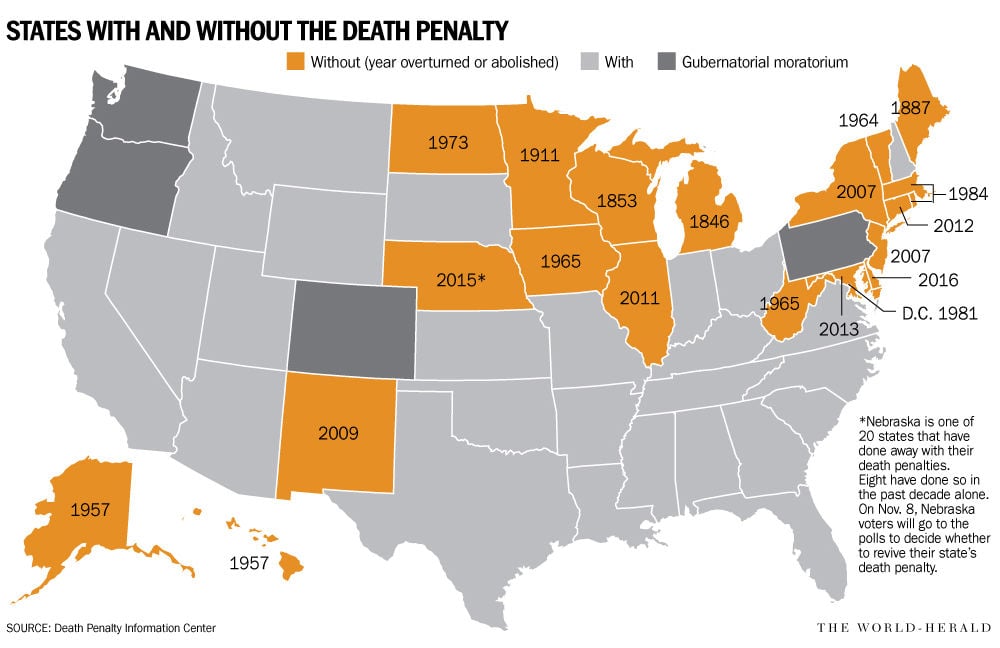
In 2015, the Nebraska Legislature made national headlines by voting to abolish the death penalty. This decision was largely driven by a coalition of conservative lawmakers who questioned the cost, the morality, and the efficacy of the practice. However, this repeal was short-lived. A successful petition drive led to a statewide referendum in 2016. In the subsequent election, voters chose to reinstate capital punishment, effectively overriding the legislative branch. Consequently, the death penalty remains technically legal in Nebraska today, though its practical application remains rare and administratively fraught.
Historical Landmarks and the Legacy of Justice
The intersection of law and history is a fascinating element for those visiting Nebraska. Many travelers make a point to visit significant sites that tell the story of the state’s development. Understanding how the state addresses matters of severe punishment offers a somber perspective on the institutional history found within Lincoln and surrounding areas.
The Role of State Institutions
When wandering through the Old Market in Omaha, one is immersed in the historical charm of the state. While the modern Nebraska is known for its hospitality and agricultural innovation, the state also grapples with the weight of its penal history. Facilities associated with the Nebraska Department of Correctional Services represent the physical reality of the statutes passed in Lincoln. For the history buff, these institutions are more than just buildings; they are artifacts of a political process that has seen the state sway between strict adherence to capital punishment and a desire for reform.

Cultural Context for Modern Visitors
Tourism in Nebraska often focuses on the natural beauty of the Platte River or the intellectual culture surrounding the University of Nebraska-Lincoln. However, engaging with the state’s legislative reality provides a well-rounded view of the Midwestern experience. The debate over the death penalty is not just a matter of law; it is a reflection of the values held by the people of the United States. It highlights a population deeply invested in how justice is served, how tax dollars are spent, and how human rights are balanced against public safety.
The Future of Capital Punishment in the Midwest
As the legal environment continues to shift across the United States, Nebraska sits at a crossroads. The rarity of executions in the state, despite their legality, suggests a cautious approach that is becoming increasingly common across the region.
Navigating Evolving Public Opinion
In Omaha, there is a palpable sense of progress, with new developments in the Downtown Omaha district mirroring a state looking toward the future. This forward-looking attitude is often in tension with long-standing traditions. Whether the death penalty will eventually be abolished permanently remains a point of speculation among legal scholars and politicians in Lincoln. For the observant traveler, the presence or absence of the death penalty serves as a lens through which to view the deeper cultural currents of the region.
Why Context Matters for the Traveler
Engaging with the difficult topics of a destination—be it the history of Native American displacement, the trials of the Dust Bowl, or modern debates over capital punishment—enriches the travel experience. Nebraska is a state that rewards those who look beneath the surface. From the architectural grandeur of the Nebraska State Capitol to the quiet, rolling plains of the Sandhills, there is an undeniable sense of gravitas in the air.
- Awareness of Local Law: Travelers should always be mindful of local laws when visiting any state or country. While the death penalty is a policy issue, it speaks to the broader legal environment one enters when crossing state lines.
- The Power of Dialogue: Engaging with locals in Lincoln or Omaha often reveals that while the law may be settled, the conversation is far from over. There are passionate arguments on both sides of the issue, reflecting the diverse perspectives found within the Midwest.

Conclusion: The Evolving Identity of Nebraska
For those seeking to understand the soul of Nebraska, the question of the death penalty acts as a marker of the state’s character. It is a place that values tradition yet is not afraid to engage in rigorous self-examination. Whether you are visiting the bustling streets of Omaha or the scholarly corridors of Lincoln, you are engaging with a state that remains deeply committed to its democratic processes.
The legal status of capital punishment today is clear—it remains on the books—but the journey to that status has been paved with civic participation, judicial review, and public debate. As Nebraska continues to grow and change, its approach to justice will undoubtedly remain a point of interest for visitors and residents alike. By exploring these facets of the state, travelers do more than just see the sights; they connect with the ongoing story of a unique and resilient American landscape. The next time you find yourself planning a trip through the Great Plains, remember that the most profound travel experiences often come from asking the difficult questions and seeking to understand the complex realities that define the places we visit.
LifeOutOfTheBox is a participant in the Amazon Services LLC Associates Program, an affiliate advertising program designed to provide a means for sites to earn advertising fees by advertising and linking to Amazon.com. Amazon, the Amazon logo, AmazonSupply, and the AmazonSupply logo are trademarks of Amazon.com, Inc. or its affiliates. As an Amazon Associate we earn affiliate commissions from qualifying purchases.