
Embarking on a journey to Alaska, often hailed as the Last Frontier, presents an unparalleled adventure for travelers seeking pristine wilderness and breathtaking landscapes. However, the sheer remoteness and vastness of the state raise a critical question for many planning their trip: will my cellular service work? Specifically for customers of one of the nation’s largest carriers, the query “Does Verizon work in Alaska?” is a common and essential consideration. Ensuring connectivity, whether for navigation, emergencies, or simply sharing memories, is a fundamental aspect of modern travel planning. This guide delves into the realities of Verizon coverage across Alaska, providing insights and practical advice for a connected and safe travel experience.
Navigating Connectivity in the Last Frontier
Alaska is unique among U.S. states regarding infrastructure, particularly when it comes to telecommunications. Unlike the Lower 48, where cellular towers are ubiquitous, Alaska’s sparse population and challenging terrain make widespread, high-speed cellular coverage a significant logistical hurdle. Vast stretches of untouched wilderness, towering mountain ranges, and expansive water bodies inherently limit the reach of even the most robust networks. For travelers, this means a different approach to anticipating and managing their connectivity needs. Understanding this fundamental difference is the first step in preparing for any Alaskan adventure. The expectation of seamless service, akin to what one might experience in major metropolitan areas elsewhere, must be adjusted. Instead, travelers should plan for areas of strong signal, intermittent coverage, and complete dead zones, necessitating alternative communication strategies.
Verizon’s Footprint Across Alaska
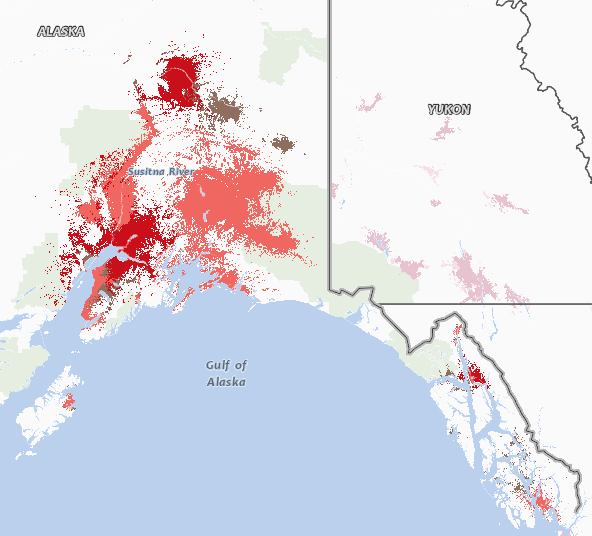
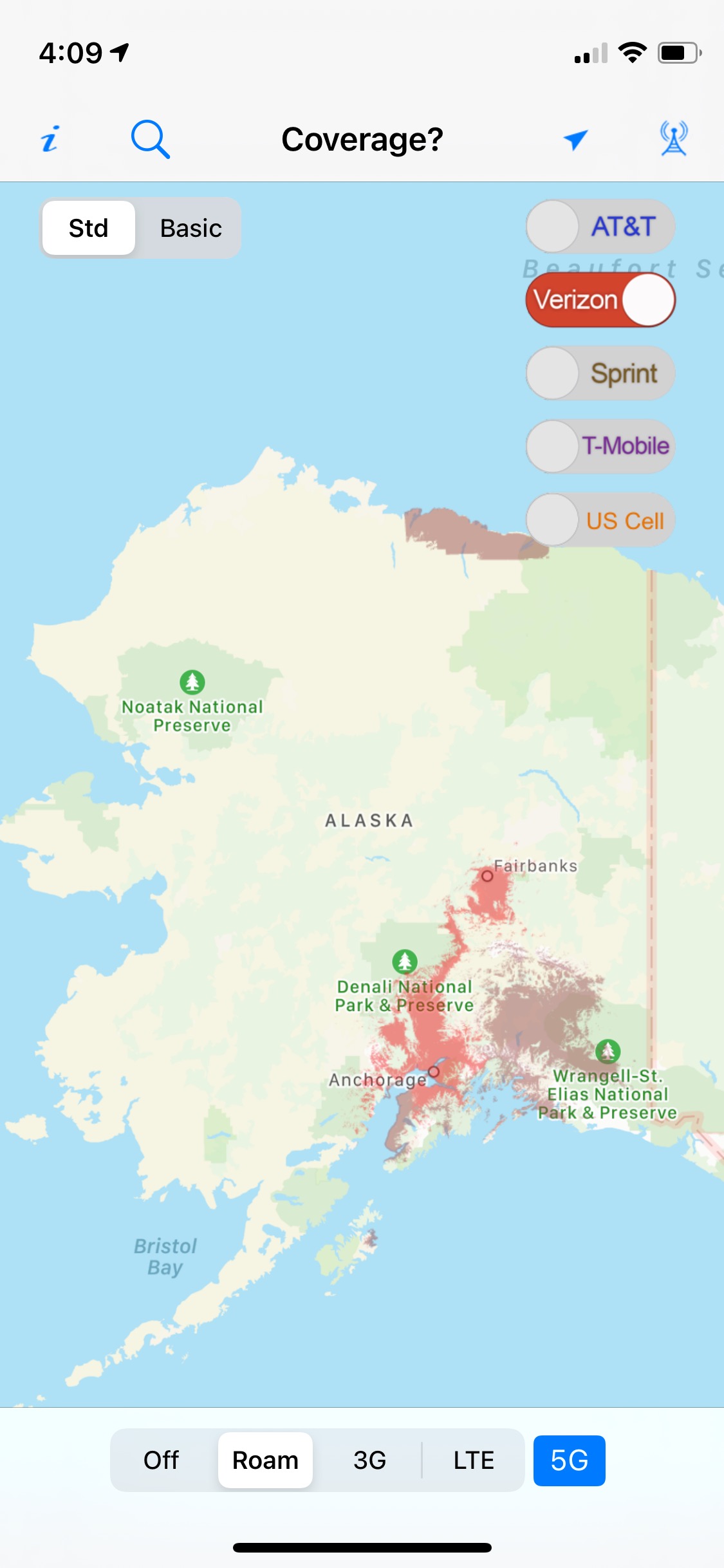
Verizon does indeed have a presence in Alaska, but its coverage model differs significantly from its typical operation in other states. Rather than owning an extensive network of towers throughout the entire state, Verizon primarily relies on roaming agreements with local Alaskan carriers. The most prominent of these partnerships is with GCI, Alaska’s largest telecommunications provider. This strategic alliance allows Verizon customers to access GCI’s network, ensuring some level of service in populated areas.
Major Cities and Tourist Hubs
In Alaska’s largest urban centers and most frequented tourist destinations, Verizon users can generally expect reliable service. Cities like Anchorage, the state’s most populous city, offer strong 4G LTE coverage, making it easy to use data, make calls, and send texts. Similarly, in Fairbanks, the gateway to the Arctic Circle, and Juneau, the capital city accessible primarily by air and sea, Verizon service is typically stable, albeit primarily through the roaming partnership with GCI.
Coastal towns popular with cruise ship passengers, such as Ketchikan, Sitka, Homer, and Seward, also tend to have decent connectivity, especially within the town limits. While coverage might not be as robust as in the Lower 48, it is generally sufficient for essential communication and internet browsing. Travelers visiting these areas should still be mindful that service can become spotty or disappear entirely once they venture a short distance outside the main populated zones.
Remote Areas and National Parks
The true challenge for Verizon users in Alaska arises when venturing into the state’s vast remote areas, national parks, and wilderness reserves. Places like Denali National Park and the expansive Kenai Peninsula are world-renowned for their untouched beauty but are largely devoid of cellular infrastructure. Even on major roadways connecting distant towns, coverage can be nonexistent for long stretches.
In many of Alaska’s most iconic natural attractions, including many national park interiors, even partner networks like GCI do not have towers. This means that for much of the genuine Alaskan wilderness experience – hiking, fishing, wildlife viewing far from urban centers – cell service, regardless of carrier, becomes unreliable or completely unavailable. Travelers must be prepared for this reality and plan for periods of being entirely off-grid.
Understanding Roaming and Partner Networks
For Verizon customers, understanding how roaming works in Alaska is crucial. When your phone displays “GCI” or another local carrier’s name, it indicates that you are using Verizon’s roaming partner network. Most current Verizon plans include domestic roaming at no extra charge, meaning calls, texts, and data used on partner networks in Alaska will be treated the same as if you were on Verizon’s native network. However, it is always wise to confirm your specific plan details with Verizon before your trip to avoid any unexpected charges or service limitations. Data speeds on roaming networks might also vary, and in some very remote areas, coverage might be limited to 2G or 3G, if available at all.
Beyond Cell Towers: Alternative Communication Strategies for Travelers
Given the inevitable gaps in cellular coverage across Alaska, smart travelers incorporate alternative communication methods into their preparedness plans. Relying solely on a smartphone, even with a strong carrier like Verizon, is often insufficient for safety and convenience in the truly wild parts of the state.
Satellite Phones and Devices
For serious adventurers, hikers, remote campers, or those venturing into areas without any cell service, a satellite phone or a satellite messenger device is an invaluable tool, bordering on essential. These devices operate independently of terrestrial cell towers, instead connecting directly to orbiting satellites.
Satellite phones allow for voice calls and text messages from virtually anywhere, offering a critical lifeline in emergencies. Satellite messenger devices, such as those that provide two-way texting and GPS tracking, offer a more compact and often more affordable option for staying in touch and signaling for help. Renting one for the duration of your trip is a common and highly recommended practice for those exploring Alaska’s backcountry.
Wi-Fi Hotspots and Public Access
In areas with limited or no cellular service, Wi-Fi becomes a traveler’s best friend. Most hotels, lodges, restaurants, and cafes in Alaskan towns and even some remote visitor centers offer Wi-Fi access, sometimes for a fee. Many Alaska state park cabins and national park facilities also have satellite-based Wi-Fi available, albeit often slower and more expensive than urban connections.
Downloading offline maps, communicating via Wi-Fi calling apps, and checking emails can be done efficiently whenever Wi-Fi is available. Travelers can also consider purchasing a portable Wi-Fi hotspot if they have multiple devices or a significant need for internet access in an area where only a single Wi-Fi connection is available. Starlink satellite internet is also becoming more prevalent in remote lodges and residences, offering high-speed alternatives where traditional infrastructure is lacking.
Offline Maps and Communication Apps
Before departing for areas with anticipated poor reception, download offline maps for all your navigation needs. Google Maps, Apple Maps, and specialized hiking apps often allow users to download entire regions for offline use, ensuring you can still navigate even without a data connection.
Additionally, make sure to download any essential travel documents, booking confirmations, and contact information to your device before losing service. For communication, apps like WhatsApp or iMessage (for Apple users) can be set to send messages when a Wi-Fi connection is re-established, providing a delayed but effective way to communicate. Consider setting up Wi-Fi calling on your Verizon device, allowing you to make and receive calls over any available Wi-Fi network.
Optimizing Your Verizon Experience in Alaska
To make the most of your Verizon service and ensure connectivity when it matters most, a proactive approach to preparation is key.
Pre-Trip Planning and Research
Before you even pack your bags, consult Verizon’s official coverage maps, paying close attention to the specific areas you plan to visit. Remember that these maps often show best-case scenarios; actual coverage can be impacted by terrain, weather, and building density. Cross-reference this with local knowledge from Alaskan tourism websites, forums, or guidebooks. Understand that coverage might exist along main highways but vanish once you turn off onto smaller roads or trails. Confirm your Verizon plan’s roaming policies to ensure you won’t incur unexpected charges while utilizing partner networks.
Essential Phone Settings and Features
When you arrive in Alaska, ensure your phone’s “Data Roaming” is enabled in your cellular settings. Without this, your device might not connect to Verizon’s partner networks like GCI. Consider enabling Wi-Fi calling, which will allow your phone to make and receive calls and texts over Wi-Fi when cellular service is unavailable. To conserve battery life in areas of weak signal, which can drain power quickly as your phone constantly searches for a network, switch to airplane mode or turn off cellular data when you don’t need it. Portable power banks are also indispensable for keeping devices charged on long excursions.
Emergency Preparedness
Even with thorough planning, there will likely be moments in Alaska when your phone has no service. It is critical to have a plan for emergencies. Inform trusted individuals of your itinerary, including expected check-in times and locations. Carry a physical map and compass in addition to digital navigation. In remote areas, a personal locator beacon (PLB) or satellite messenger with SOS capabilities is highly recommended. These devices can transmit your location to emergency services even without cellular signal, providing a vital layer of safety for any traveler venturing into Alaska’s vast wilderness.
The Broader Connectivity Landscape for Alaskan Adventures
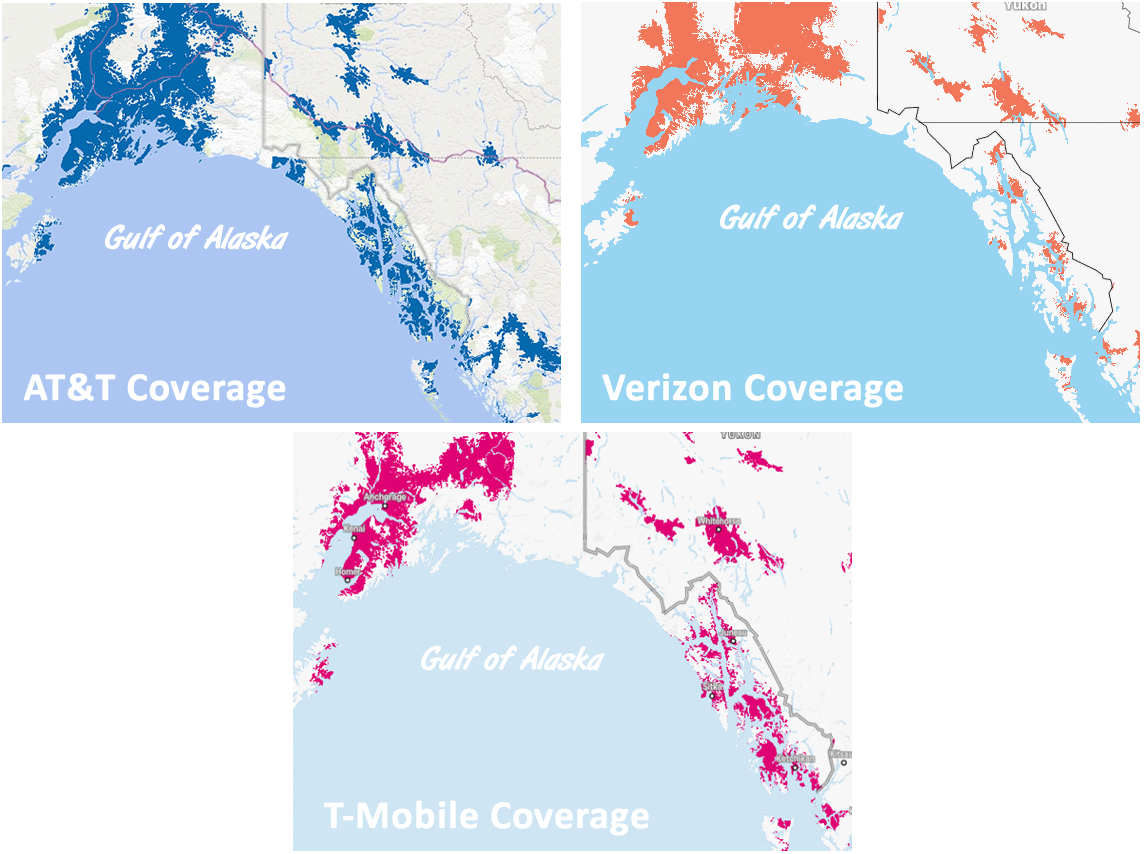
While this guide focuses on Verizon, it’s worth noting that the challenges and solutions discussed generally apply to other major carriers as well. AT&T and T-Mobile also operate in Alaska through a mix of their own infrastructure and roaming agreements, primarily with GCI and Alaska Communications. No single carrier offers ubiquitous coverage throughout the entire state. Therefore, irrespective of your provider, a mindset of preparedness for intermittent or absent service is the most prudent approach to travel in Alaska. Embracing this reality allows travelers to fully immerse themselves in the state’s natural beauty without being overly dependent on constant digital connection, while simultaneously ensuring safety through thoughtful planning and alternative communication tools.
LifeOutOfTheBox is a participant in the Amazon Services LLC Associates Program, an affiliate advertising program designed to provide a means for sites to earn advertising fees by advertising and linking to Amazon.com. Amazon, the Amazon logo, AmazonSupply, and the AmazonSupply logo are trademarks of Amazon.com, Inc. or its affiliates. As an Amazon Associate we earn affiliate commissions from qualifying purchases.