
The vast, untamed expanse of Alaska, known for its majestic landscapes and rich natural resources, holds a unique place in the tapestry of the United States. Its journey from a distant, often-forgotten territory to the 49th star on the American flag is a testament to perseverance, political acumen, and the enduring spirit of its people. This historical narrative, unfolding over nearly a century, reveals a complex interplay of international diplomacy, economic ambition, and a relentless pursuit of self-determination. Understanding how Alaska achieved statehood is not merely an academic exercise; it offers profound insights into the evolution of American expansion, the challenges of integrating disparate regions, and the very definition of a “state” within the federal system.
From Russian America to American Territory
The story of Alaska’s statehood truly begins long before it was even a consideration for the United States. Its initial ownership and subsequent sale set the stage for its eventual integration into the American political landscape.
The Russian Presence and Sale
For over a century, Alaska was known as Russian America. Russian explorers and fur traders first arrived in the 18th century, establishing settlements and exploiting the region’s abundant fur-bearing animals, particularly sea otters. Posts like Sitka became bustling centers of commerce and culture, albeit under harsh conditions. However, by the mid-19th century, Russia found its North American colony increasingly difficult and expensive to maintain, especially after its defeat in the Crimean War. The long supply lines, the threat of British expansion, and the dwindling fur resources made the territory a liability rather than an asset.
In a move that would dramatically alter the geopolitical map, Russia offered to sell Alaska to the United States. On March 30, 1867, U.S. Secretary of State William H. Seward negotiated the purchase of Alaska for $7.2 million, roughly two cents per acre. Initially ridiculed by critics as “Seward’s Folly” or “Seward’s Icebox,” the transaction added a vast and strategically important landmass to the United States. The formal transfer ceremony took place in Sitka on October 18, 1867, marking the end of Russian rule and the beginning of American oversight.
Early Territorial Challenges and Neglect
Despite its acquisition, Alaska remained largely an afterthought for Washington D.C. for decades. Administered initially by the War Department and then the Treasury Department, it lacked a coherent governmental structure. Its immense size, harsh climate, and sparse population made effective governance challenging. For seventeen years, Alaska was essentially a military district, with minimal civil law. The Organic Act of 1884 provided Alaska with its first civil government, creating a district court, a governor, and other federal officials, but it stopped short of establishing a territorial legislature. This meant that vital decisions affecting Alaska were still made by Congress thousands of miles away, often with little understanding of local needs or conditions. This period of neglect fostered a growing sense of frustration among Alaskans, fueling the earliest whispers of self-governance.
The Dawn of Statehood Aspirations
The turn of the 20th century brought significant changes to Alaska, transforming it from a remote outpost into a region with burgeoning economic potential and a more vocal populace.
Economic Growth and Population Influx
The late 19th century witnessed a series of gold rushes, most notably the Klondike Gold Rush of 1896, which although primarily in Canada, spurred significant migration through Alaska and led to discoveries within the territory itself. Towns like Fairbanks and Nome sprang up, attracting thousands of prospectors, entrepreneurs, and laborers. This influx of people, coupled with the development of the salmon fishing industry, timber, and later oil, began to reshape Alaska’s economic landscape. Railroads were built, infrastructure slowly developed, and permanent communities grew. These economic booms highlighted the immense resource wealth of Alaska and the potential for further growth, but also underscored the need for local control over these resources.
The Drive for Self-Governance
With a growing and increasingly permanent population, the desire for greater political autonomy intensified. Alaskans felt increasingly disenfranchised by distant federal rule, believing that their unique challenges and opportunities were not adequately addressed by Congress. The push for statehood was primarily driven by several key factors:
- Taxation Without Representation: Alaskans paid federal taxes but had no voting representation in Congress (only a non-voting delegate).
- Resource Control: Federal agencies managed vast tracts of Alaskan land and resources, often in ways that locals felt hindered economic development or disregarded their interests.
- Judicial System: The federal court system was perceived as cumbersome and unresponsive to local needs.
- Political Maturity: Many felt that Alaska had reached a point of political and economic maturity where it deserved the full rights and responsibilities of statehood.
The Second Organic Act of 1912 granted Alaska a territorial legislature, a significant step forward, allowing Alaskans to pass their own laws. However, this legislature still had limited powers, with Congress retaining ultimate authority. This partial victory only emboldened statehood advocates, who saw full statehood as the logical next step in their political evolution.
Navigating the Political Landscape
Achieving statehood was far from a straightforward process. Alaska faced significant opposition and had to build a strong, bipartisan case for its inclusion in the Union.

Opposition and Arguments Against Statehood
Opposition to Alaskan statehood came from various quarters, both within the territory and in the continental United States:
- Sparse Population: Critics argued that Alaska’s small population (even after the gold rushes) made it unfit for statehood, as it would be disproportionately represented in the Senate.
- Economic Viability: Concerns were raised about Alaska’s economic self-sufficiency, with some believing it would be a drain on federal resources.
- Strategic Importance (and Vulnerability): During the Cold War, some military leaders and politicians viewed Alaska as a vital strategic outpost against the Soviet Union but feared that statehood might complicate federal control over defense installations.
- Distance and Disconnection: The vast geographical distance from the rest of the United States was cited as a reason for its continued territorial status.
- Special Interests: Powerful fishing and mining lobbies, which benefited from federal oversight rather than local control, actively campaigned against statehood.
These arguments created substantial hurdles, requiring proponents to engage in extensive lobbying and public relations campaigns to counter the negative perceptions and highlight Alaska’s potential.
Building Bipartisan Support
Despite the opposition, the statehood movement gained momentum, particularly after World War II. Alaska’s strategic importance as a bulwark against the Soviet Union became more evident, and military investment brought further population growth and infrastructure development. Key figures emerged as champions for statehood, including territorial governors, delegates to Congress, and dedicated citizens. They argued that statehood would not only empower Alaskans but also strengthen the United States by integrating a resource-rich and strategically vital region more fully.
The Alaska Constitutional Convention, held at the University of Alaska Fairbanks from 1955 to 1956, was a pivotal moment. Delegates drafted a modern and progressive state constitution, demonstrating Alaska’s readiness for self-governance. This document, which was ratified by Alaskans, served as a powerful declaration of their intent and capability. The “Tennessee Plan” was adopted, where Alaskans elected two “Senators-designate” and a “Representative-designate” to lobby in Washington D.C. even before statehood was granted, effectively putting political pressure on Congress.
The Path to the 49th Star
The culmination of decades of effort, the late 1950s saw the final legislative battles that would transform Alaska into a state.
The Alaska Statehood Act
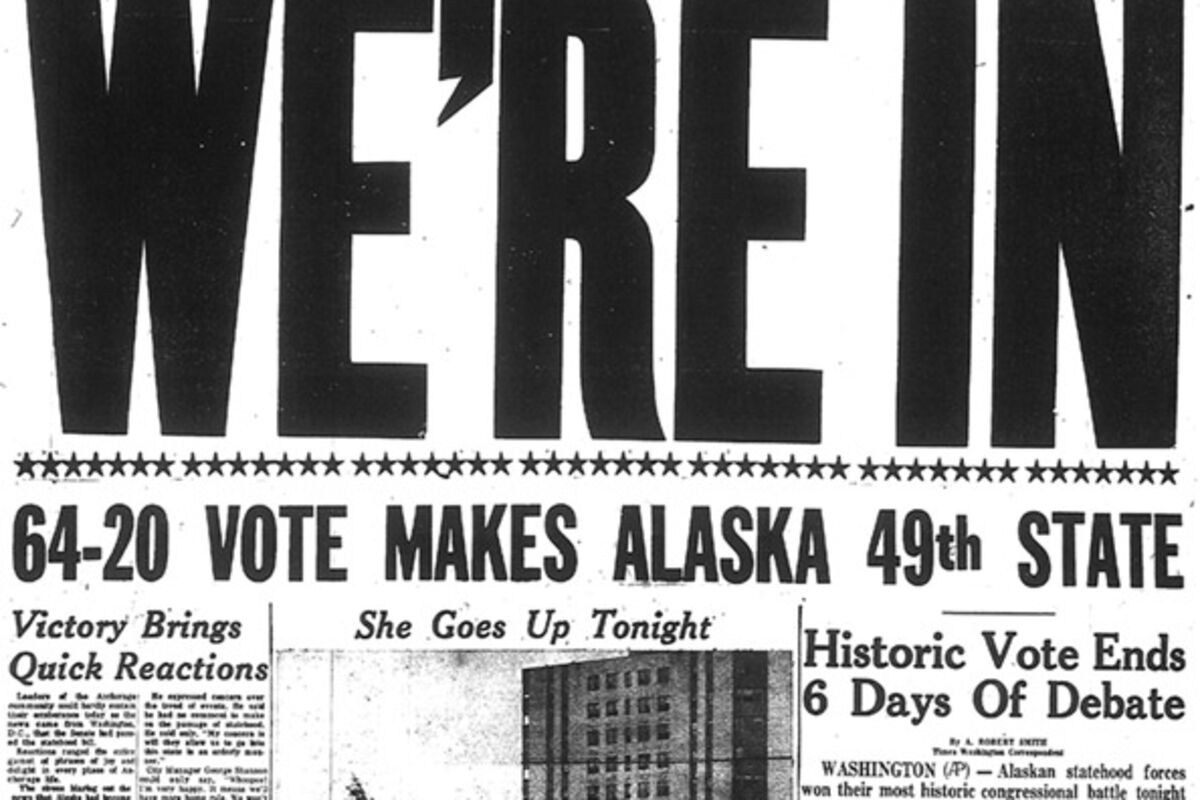
The persistent efforts of Alaskan leaders, coupled with a growing recognition in Washington D.C. of Alaska’s strategic and economic value, finally led to legislative action. The statehood movement also benefited from the parallel efforts of Hawaii to achieve statehood, as the two territories often supported each other’s bids. In a landmark bipartisan effort, the Alaska Statehood Act passed both houses of Congress. Key supporters, including influential House and Senate members, successfully argued that granting statehood would not only fulfill democratic ideals but also bolster national security and economic development. The act outlined the terms of Alaska’s admission, including land grants, jurisdiction, and the transition of federal properties.
Ratification and Formal Proclamation
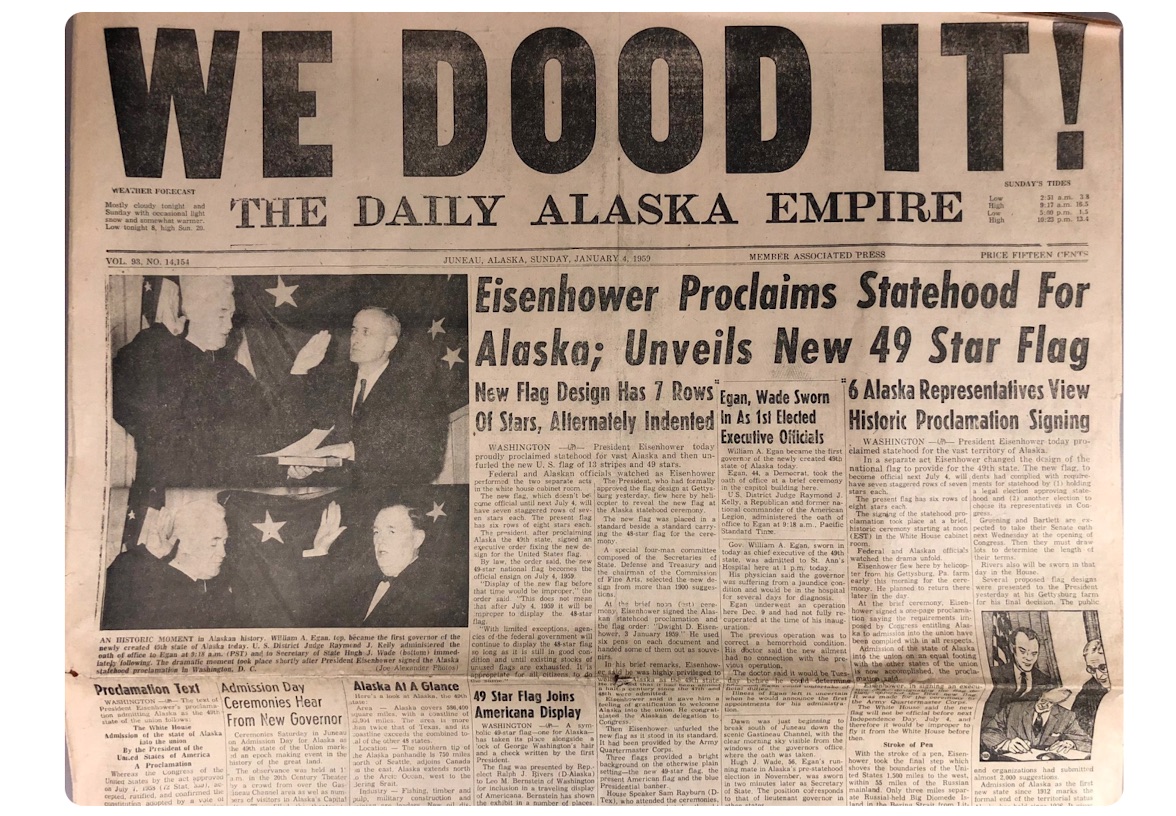
On July 7, 1958, President Dwight D. Eisenhower signed the Alaska Statehood Act into law. This historic moment was met with jubilation in Alaska. However, the process wasn’t complete until Alaskans themselves formally accepted the terms of the act. In a special election held on August 26, 1958, voters overwhelmingly approved the provisions of the Statehood Act and ratified the constitution they had drafted. With this final step, Alaska had officially met all requirements. On January 3, 1959, President Eisenhower issued Proclamation 3269, formally admitting Alaska to the Union as the 49th state. The transformation was complete, and the largest state in the United States was born. The territorial capital of Juneau became the state capital, and two senators and one representative took their seats in Congress.
A Legacy of Resilience and Resourcefulness
Alaska’s journey to statehood is more than just a historical footnote; it is a foundational chapter in its ongoing story, shaping its identity and impact on the nation.
Impact on the United States
The admission of Alaska significantly altered the geographical and political landscape of the United States. It added an immense territory, rich in natural resources from oil to fisheries, and extended American strategic reach into the Arctic and across the Bering Strait. The state provided a crucial staging ground during the Cold War and continues to play a vital role in national defense. Economically, Alaska’s resources have fueled industries and contributed significantly to the national economy, while its unique environment has offered unparalleled opportunities for scientific research and conservation. The narrative of Alaska’s statehood also served as a precedent and inspiration for Hawaii, which achieved statehood later in 1959, completing the admission of all current states.
Alaska’s Enduring Identity
Today, Alaska stands as a vibrant and unique state, its identity deeply rooted in its history. The challenges of its territorial days instilled a fierce independence and a strong sense of community among its residents. Its statehood marked a pivotal moment, allowing Alaskans to take control of their destiny, manage their vast lands and resources, and address their distinct needs with greater autonomy. From the bustling streets of Anchorage to the remote villages, the legacy of how Alaska became a state continues to inform its political discourse, its relationship with the federal government, and the resilient spirit of its people, who remain committed to preserving their unique way of life amidst one of the world’s most breathtaking natural environments. The story of its statehood is a testament to the idea that even the most distant and challenging frontiers can be fully integrated into the grand experiment of American democracy.
LifeOutOfTheBox is a participant in the Amazon Services LLC Associates Program, an affiliate advertising program designed to provide a means for sites to earn advertising fees by advertising and linking to Amazon.com. Amazon, the Amazon logo, AmazonSupply, and the AmazonSupply logo are trademarks of Amazon.com, Inc. or its affiliates. As an Amazon Associate we earn affiliate commissions from qualifying purchases.