
When considering any aspect of personal finance, especially one as common and potentially lucrative as receiving a bonus, understanding the tax implications is paramount. For residents of the Lone Star State, the question of how bonuses are taxed in Texas is a particularly pertinent one, especially given Texas unique tax landscape. This article delves into the specifics of bonus taxation within Texas, examining federal and state withholdings, common scenarios, and strategic considerations for maximizing your take-home pay.
Understanding Bonus Taxation: The Federal Layer
Before we delve into the nuances of Texas specific tax treatment, it’s crucial to understand that bonuses are, at their core, considered supplemental wages by the Internal Revenue Service (IRS). This means they are subject to federal income tax withholding, just like your regular salary. However, the method in which this withholding is calculated can differ, leading to potential variations in the amount of tax taken out.
The Two Primary Withholding Methods
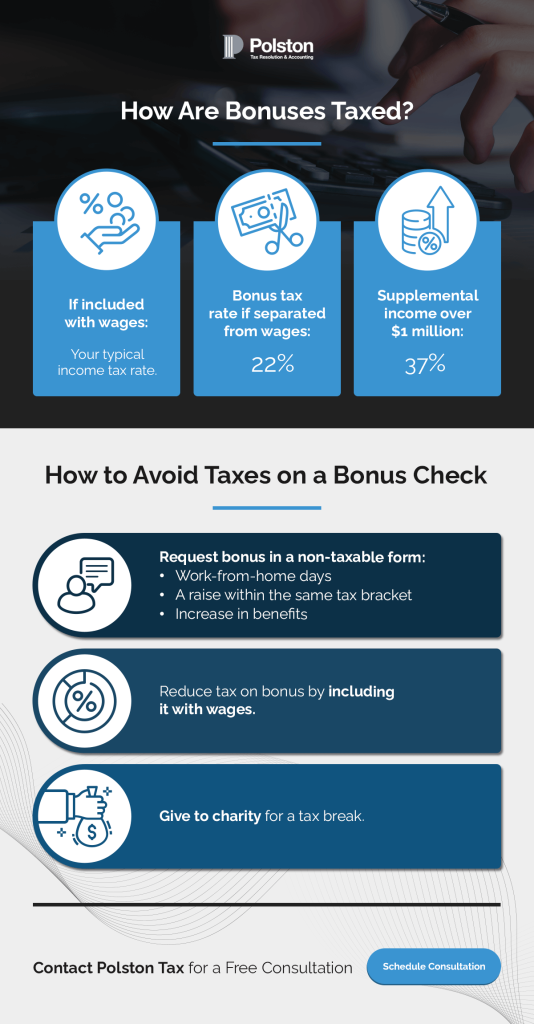
The IRS outlines two primary methods for employers to calculate federal income tax withholding on supplemental wages like bonuses:
-
The Percentage Method: This is the most common method. Employers withhold a flat percentage of the bonus amount. This percentage is typically the highest individual income tax rate in effect. As of recent tax years, this rate has been 22% for supplemental wages up to a certain threshold (currently $1 million). For amounts exceeding this threshold, a higher rate of 37% applies. The rationale behind using a higher flat rate is to err on the side of caution, ensuring that enough tax is withheld to cover potential tax liabilities, thus minimizing the risk of underpayment penalties for the employee.
-
The Aggregate Method: In this method, the employer combines the bonus payment with the employee’s regular wages for a payroll period and then calculates the withholding as if the total amount were a single, larger paycheck. This method can sometimes result in a higher withholding than the percentage method, especially if the bonus pushes the employee into a higher tax bracket for that particular pay period. However, when reconciled at the end of the year, the total tax paid should be the same as if the percentage method were used.
Impact on Your Paycheck
Regardless of the method used, you will notice that the net amount of your bonus, after federal withholding, is often less than the gross amount. This is a normal occurrence due to the nature of supplemental wage taxation. It’s important not to be alarmed by this reduced amount; it is simply the federal government’s mechanism for ensuring taxes are paid on this additional income.
Social Security and Medicare Taxes
In addition to federal income tax withholding, bonuses are also subject to Social Security and Medicare taxes. These are often referred to as FICA taxes.
-
Social Security Tax: This tax has a wage base limit. For instance, in 2023 and 2024, the Social Security tax rate is 6.2% on earnings up to a certain annual limit (e.g., $160,200 for 2023 and $168,600 for 2024). If your regular wages have already reached this limit for the year, your bonus will not be subject to Social Security tax. However, if you haven’t reached the limit, the bonus will contribute towards it.
-
Medicare Tax: This tax does not have an income limit. The Medicare tax rate is 1.45% for employees. This means that your bonus will always be subject to Medicare tax, regardless of your overall earnings for the year. For higher earners, there’s an additional Medicare tax of 0.9% on income above a certain threshold, which also applies to bonuses.
Texas: The State Tax Advantage
One of the most significant aspects of bonus taxation in Texas is the absence of state income tax. Texas is one of the few states in the U.S. that does not levy a state income tax on its residents. This means that any income earned within Texas, including bonuses, is not subject to state-level income tax withholding.
No State Income Tax Withholding
For residents of Texas, this translates into a more substantial take-home amount for bonuses compared to residents of states with state income taxes. While federal taxes will still be withheld as described above, you won’t see deductions for state income tax on your bonus paycheck. This can be a considerable financial advantage, effectively increasing the net value of your bonus.
Implications for Businesses in Texas
The lack of state income tax also has implications for businesses operating in Texas. It can simplify payroll administration, as there’s no need to track and withhold state income tax for employees. This can also make Texas an attractive location for businesses and their employees.
Common Scenarios and Considerations
Understanding the general rules is one thing, but applying them to real-world scenarios can raise further questions. Here are some common situations and considerations regarding bonus taxation in Texas:
Performance Bonuses vs. Special Bonuses
The tax treatment of a bonus generally doesn’t differentiate between a performance-based bonus (tied to individual or company achievements) and a special bonus (e.g., a holiday bonus or a retention bonus). Both are considered supplemental wages and are taxed accordingly at the federal level.

Bonuses Paid in Stock or Other Assets
While less common for typical cash bonuses, some companies may offer bonuses in the form of company stock or other assets. The taxation of these types of bonuses can be more complex. Generally, the fair market value of the stock or asset at the time it is received is considered taxable income. This income is subject to federal income tax, Social Security, and Medicare taxes. The employee will receive a Form W-2 reflecting the value of the stock as wages. When the employee eventually sells the stock, any gain or loss will be subject to capital gains tax rules, depending on how long the stock was held.
Timing of Bonus Payouts
The timing of when a bonus is paid can have a minor impact on your overall tax liability for a given year, especially if the bonus is substantial. A large bonus received late in the year might push your total income into a higher tax bracket for that year, potentially affecting your tax refund or balance due when you file your annual tax return. Conversely, receiving a bonus early in the year might spread its impact across more pay periods if it’s aggregated with regular wages, or it might be subject to the 22% withholding rate if paid separately under the percentage method.
Year-End Bonuses
Year-end bonuses are a common form of incentive compensation. As mentioned, their taxation follows the standard rules for supplemental wages. Employers often process these bonuses in December, and the withholding will be reflected on that month’s paycheck.
Strategic Planning for Your Bonus
While you cannot entirely control how taxes are withheld on your bonus, there are strategies and considerations that can help you manage its impact.
Reviewing Your W-4 Form
Your W-4 form dictates how much federal income tax your employer withholds from your regular paychecks. If you anticipate receiving a significant bonus, you might consider adjusting your W-4 closer to the bonus payout date. However, this is a delicate balance.
-
Increasing Withholding: If you have a tendency to owe taxes at the end of the year, or if you want to ensure you have sufficient tax paid on your bonus, you could adjust your W-4 to have additional amounts withheld from your regular paychecks. This is typically done by claiming fewer allowances or by specifying an additional dollar amount to be withheld.
-
Decreasing Withholding (with caution): Conversely, if you find that too much tax is being withheld from your regular pay and you are consistently due a large refund, you might adjust your W-4 to decrease withholding. However, this should be done cautiously, especially if you expect a large bonus, as it could lead to underpayment if not managed carefully.
It’s crucial to remember that any adjustments to your W-4 are meant to align your withholding with your estimated annual tax liability. A substantial bonus can significantly alter this liability for the year it is received.
Understanding Your Tax Bracket
While bonus withholding often uses a flat percentage, your ultimate tax liability is determined by your total annual income and the applicable tax brackets. A bonus, when added to your regular salary, contributes to your total taxable income. Understanding your marginal tax bracket for the year can help you anticipate the actual tax you’ll owe on that bonus when you file your return.
Retirement Contributions
If your employer offers a retirement plan, such as a 401(k), and allows contributions from bonuses, this can be a highly effective tax-saving strategy.
-
Pre-tax Contributions: Contributing a portion of your bonus to a traditional 401(k) reduces your taxable income for the year. This means that not only will your current tax bill be lower, but you also avoid paying income tax on those contributions until you withdraw them in retirement. This is often a more beneficial approach than simply having the bonus taxed at the withholding rate and then trying to save the net amount.
-
Roth Contributions: If your employer offers a Roth 401(k), your contributions are made with after-tax dollars. While this doesn’t provide an immediate tax deduction, qualified withdrawals in retirement are tax-free, which can be advantageous if you anticipate being in a higher tax bracket in retirement.
Other Tax-Advantaged Accounts
Consider contributing to other tax-advantaged accounts if available and applicable to your situation, such as a Health Savings Account (HSA) if you have a high-deductible health plan. Contributions to HSAs are tax-deductible, and withdrawals for qualified medical expenses are tax-free.

Conclusion: Maximizing Your Bonus in Texas
In Texas, the taxation of bonuses offers a distinct advantage due to the absence of state income tax. While federal income tax, Social Security, and Medicare taxes are still applicable, the elimination of state-level income tax withholding means a larger portion of your bonus remains in your pocket.
By understanding the federal withholding methods, the impact of FICA taxes, and the specific benefits of living in a no-income-tax state, Texas residents can better navigate the financial implications of receiving a bonus. Strategic planning, such as reviewing W-4 forms, considering retirement contributions, and understanding your overall tax bracket, can further optimize the net benefit of these incentive payments. Ultimately, knowledge is your greatest asset when it comes to managing your hard-earned income.
LifeOutOfTheBox is a participant in the Amazon Services LLC Associates Program, an affiliate advertising program designed to provide a means for sites to earn advertising fees by advertising and linking to Amazon.com. Amazon, the Amazon logo, AmazonSupply, and the AmazonSupply logo are trademarks of Amazon.com, Inc. or its affiliates. As an Amazon Associate we earn affiliate commissions from qualifying purchases.