
The question “How big is the city of Detroit?” can be answered in many ways, depending on what aspect of “bigness” you’re interested in. Are you curious about its physical footprint, its population, its economic impact, its cultural influence, or its historical significance? Detroit, a city often misunderstood and frequently underestimated, is a place of immense depth and complexity, and its “size” extends far beyond mere geographical boundaries. This exploration will delve into the multifaceted dimensions of Detroit’s scale, offering a comprehensive picture of this dynamic American metropolis.
Detroit’s Geographic Footprint: More Than Just Miles
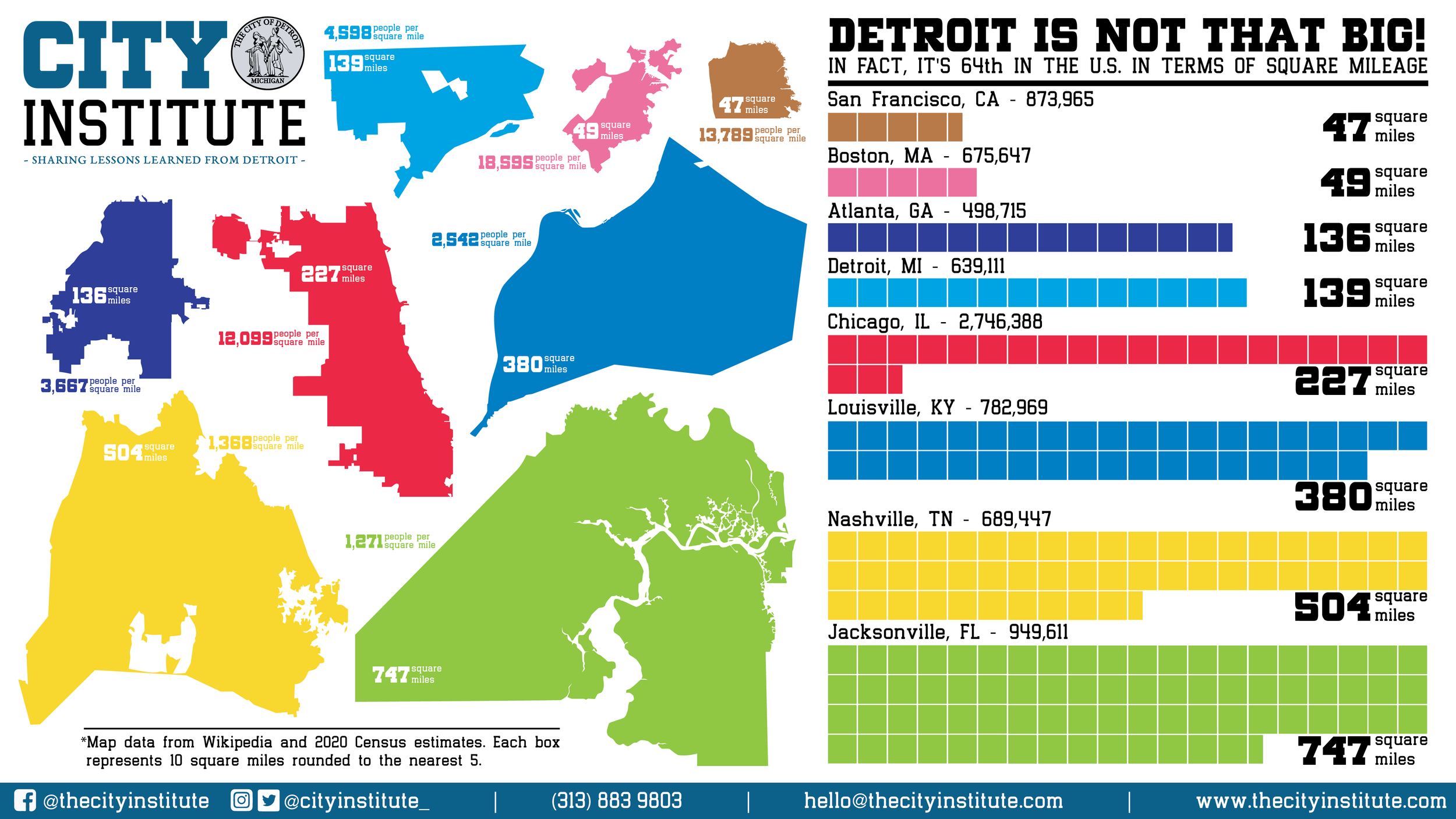
When people ask about the size of a city, their first thought is often its land area. The City of Detroit itself covers approximately 138.7 square miles, making it one of the largest cities in the United States by land area. This significant expanse means that Detroit possesses a vast urban landscape, encompassing diverse neighborhoods, sprawling industrial zones, and extensive green spaces.
Understanding the Urban Sprawl
This considerable landmass is a testament to Detroit’s historical growth. In its heyday, the city experienced rapid industrial expansion and population booms, leading to outward development. This has resulted in a city that, while containing dense urban cores, also features areas with lower population densities and larger lots compared to some older, more compact East Coast cities.
The sheer scale of Detroit’s land area influences everything from its infrastructure to its transportation needs. Navigating the city, whether by car or public transit, requires an understanding of its expansive nature. For travelers, this means that visiting multiple attractions across different parts of the city can involve significant travel time. This size also contributes to the distinct character of its various neighborhoods, each with its own unique feel and identity. From the historic charm of the Boston-Edison Historic District to the vibrant cultural scene of Midtown, Detroit’s large area allows for a rich tapestry of urban experiences.
Beyond the City Limits: The Metropolitan Area
While the City of Detroit’s land area is substantial, understanding its true “bigness” requires looking beyond its official boundaries to the greater Detroit metropolitan area. This region, often referred to as Metro Detroit, is a sprawling conurbation that includes Wayne, Oakland, Macomb, and Livingston counties, among others. Collectively, these counties form a vast economic and social region that dwarfs the city proper in terms of population and economic activity.
The metropolitan area is home to millions of residents, making it one of the most populous urban regions in the United States. This interconnected network of suburbs and exurbs relies on Detroit as its central hub for commerce, culture, and transportation. The daily commute for many residents involves traveling into the city for work or visiting its renowned institutions. Understanding this broader context is crucial for grasping the full scope of Detroit’s influence and its place in the national landscape. This metropolitan perspective is essential for anyone considering a long-term stay or comprehensive exploration of the region.
Detroit’s Population: A Story of Transformation
When discussing the size of a city, population is a paramount metric. Detroit’s population has undergone significant transformations throughout its history, from its peak in the mid-20th century to its more recent demographic shifts.
The Peak and the Subsequent Decline

At its zenith in the 1950s, Detroit was a booming metropolis, the fourth-largest city in the United States, with a population exceeding 1.8 million people. This era of unprecedented growth was fueled by the booming automotive industry, which attracted a diverse workforce and made Detroit a global center for manufacturing and innovation. The sheer density and vibrancy of the city during this period contributed to its reputation as “Motor City.”
However, like many industrial cities in the latter half of the 20th century, Detroit experienced a period of decline. Deindustrialization, suburbanization, and shifts in economic landscapes led to a significant population decrease. By the early 21st century, the city’s population had fallen considerably, leading some to question its future vitality.
The Resurgence and Shifting Demographics
In recent years, Detroit has been experiencing a remarkable resurgence. While the population may not have returned to its all-time highs, there has been a steady increase in recent censuses. This revival is characterized by a growing influx of young professionals, entrepreneurs, and artists drawn by the city’s affordability, its rich cultural heritage, and its burgeoning innovation scene. This demographic shift has injected new energy into the city, leading to a revitalization of its downtown and midtown areas.
The changing demographics also reflect a more diverse and dynamic population than ever before. The city is home to a vibrant array of ethnic and cultural communities, contributing to its rich culinary scene, its artistic expression, and its unique local culture. Understanding Detroit’s population story is key to appreciating its resilience and its ongoing evolution.
Economic and Cultural Scale: Detroit’s Enduring Impact
Beyond its physical dimensions and population figures, Detroit’s “bigness” can be measured by its economic power and its profound cultural influence, both historically and in the present day.
A Legacy of Innovation and Industry
Historically, Detroit’s economic might was intrinsically linked to the automotive industry. It was the birthplace of the American automobile, and companies like Ford Motor Company, General Motors, and Chrysler (now part of Stellantis) established their empires here, shaping not only the city’s economy but also the global industrial landscape. This legacy of innovation extended beyond automobiles, with significant contributions to manufacturing, engineering, and technology.
Today, while the automotive sector remains a vital part of its economy, Detroit has diversified. The city is fostering growth in areas like healthcare, advanced manufacturing, information technology, and the creative industries. The presence of major healthcare systems like Henry Ford Health and Detroit Medical Center underscores its importance as a regional medical hub. Furthermore, the ongoing redevelopment efforts and the influx of startups are creating new economic opportunities and solidifying Detroit’s position as a significant economic player.
A Cultural Powerhouse: Music, Art, and Beyond
Detroit’s cultural impact is arguably as significant as its industrial one. The city is synonymous with the birth of Motown music, a genre that revolutionized popular music and continues to resonate globally. The iconic Motown Museum celebrates this rich musical heritage, attracting visitors from all over the world. Beyond music, Detroit boasts a thriving arts scene, with institutions like the Detroit Institute of Arts housing an impressive collection of masterpieces and fostering local artistic talent.
The city’s unique blend of industrial grit and creative spirit is evident in its architecture, its culinary landscape, and its diverse community. From the stunning Art Deco buildings in the downtown core to the vibrant street art found throughout its neighborhoods, Detroit offers a compelling visual and experiential journey. Exploring the local culture, sampling its diverse food offerings, and experiencing its unique attractions provide a tangible sense of its scale and vibrancy. This cultural dynamism makes Detroit a compelling destination for travel and tourism, offering experiences that are both deeply rooted in history and forward-looking.
In conclusion, the question “How big is the city of Detroit?” opens the door to a multidimensional understanding of a city that is much more than its land area or population statistics. It is a city defined by its vastness, its resilience, its industrial legacy, and its enduring cultural significance. Whether you’re exploring its extensive neighborhoods, engaging with its dynamic economy, or immersing yourself in its rich cultural tapestry, Detroit offers a scale of experience that is both impressive and profoundly engaging.
LifeOutOfTheBox is a participant in the Amazon Services LLC Associates Program, an affiliate advertising program designed to provide a means for sites to earn advertising fees by advertising and linking to Amazon.com. Amazon, the Amazon logo, AmazonSupply, and the AmazonSupply logo are trademarks of Amazon.com, Inc. or its affiliates. As an Amazon Associate we earn affiliate commissions from qualifying purchases.