
In the vibrant tapestry of California, a state renowned for its sprawling landscapes, diverse cultures, and ceaseless innovation, lies a unique opportunity for individuals seeking a flexible and impactful career path: becoming a Notary Public. Far from a mere administrative role, a Notary Public in California is a vital cog in the machinery of daily life, facilitating secure transactions, authenticating documents, and providing an essential service that underpins everything from property sales to international travel. For those with a passion for helping others, an eye for detail, and perhaps a desire for a lifestyle that offers both stability and mobility, a notary commission in the Golden State can open doors to surprising avenues, particularly within the bustling travel, tourism, and accommodation sectors that define so much of California’s allure.
Imagine a role where your expertise is sought after by international travelers needing visa documents notarized before embarking on a global adventure, or by business professionals at luxury hotels in Los Angeles finalizing multi-million dollar deals. Picture yourself assisting families purchasing their dream vacation home in Palm Springs or authenticating powers of attorney for individuals preparing for long-term stays abroad. This is the dynamic world of a California Notary Public, a profession that aligns seamlessly with a lifestyle valuing flexibility, community engagement, and the chance to contribute to the economic and social fabric of one of the most exciting states in the United States. This guide will walk you through the comprehensive steps to achieve this esteemed certification, highlighting how this path can integrate beautifully with an adventurous spirit and a penchant for travel-related opportunities.
Embracing a Notary Lifestyle in the Golden State
Becoming a Notary Public in California isn’t just about obtaining a license; it’s about unlocking a potential new lifestyle. The inherent flexibility of the role allows individuals to tailor their work schedule, whether seeking supplemental income, a part-time engagement, or a full-time entrepreneurial venture. This adaptability is particularly appealing in a state where diverse experiences, from exploring the natural wonders of Yosemite National Park to savoring the culinary delights of Napa Valley, are often intertwined with personal and professional aspirations.
The mobile notary, for instance, embodies this lifestyle. Rather than being confined to a traditional office, a mobile notary travels to clients, often meeting them in locations convenient for their needs, be it a bustling corporate office in San Francisco, a quiet cafe in San Diego, or even a residence in a tranquil beach town along the Pacific Ocean. This mobility not only enhances client convenience but also transforms the notary’s daily routine into a dynamic journey, allowing for exploration and interaction with a broad spectrum of people and places across California’s vast geographical expanse.
The Allure of Flexibility and Local Expertise
One of the most compelling aspects of a Notary Public commission in California is the unparalleled flexibility it offers. For individuals who crave autonomy and control over their work-life balance, this role is a perfect fit. You can set your own hours, choose your clients, and even specialize in niche areas that resonate with your interests. This freedom is a cornerstone of a truly enriching lifestyle, allowing you to seamlessly integrate work with personal travel plans, family commitments, or the pursuit of other passions.
Moreover, being a Notary Public demands a certain level of local expertise and cultural understanding. In a state as diverse as California, serving communities from Silicon Valley’s tech hubs to the agricultural heartlands requires an appreciation for varied needs and contexts. A notary often becomes a trusted local resource, not just for notarizations but for general guidance, especially for newcomers or visitors. This deep engagement with local communities, combined with the ability to traverse different regions, makes the notary role uniquely fulfilling and deeply embedded in the “tourism” aspect of interacting with local culture and people.
Notarial Services Across California’s Diverse Landscapes
California’s diverse economy and population create an inexhaustible demand for notarial services. From the entertainment industry in Hollywood needing contractual agreements notarized, to the thriving real estate markets in Orange County requiring authenticated deeds, the opportunities are boundless. This variety ensures that a notary’s work is rarely monotonous and often involves interactions with fascinating individuals and critical transactions.
Consider the international travel nexus. California’s major international gateways, such as Los Angeles International Airport, San Francisco International Airport, and San Diego International Airport, see millions of international travelers annually. Many of these travelers, whether tourists, business delegates, or new residents, require documents like affidavits, visa applications, or international property deeds to be notarized. A mobile notary specializing in airport or hotel services can tap into this significant market, providing crucial assistance to those embarking on or concluding their global journeys. Similarly, the myriad resorts and hotels across the state, from Beverly Hills to Lake Tahoe, frequently host guests who need immediate notarial services for personal or business matters. Establishing connections within these accommodation establishments can provide a steady stream of clientele, positioning the notary as an indispensable amenity for travelers.
Navigating the Path to Becoming a California Notary
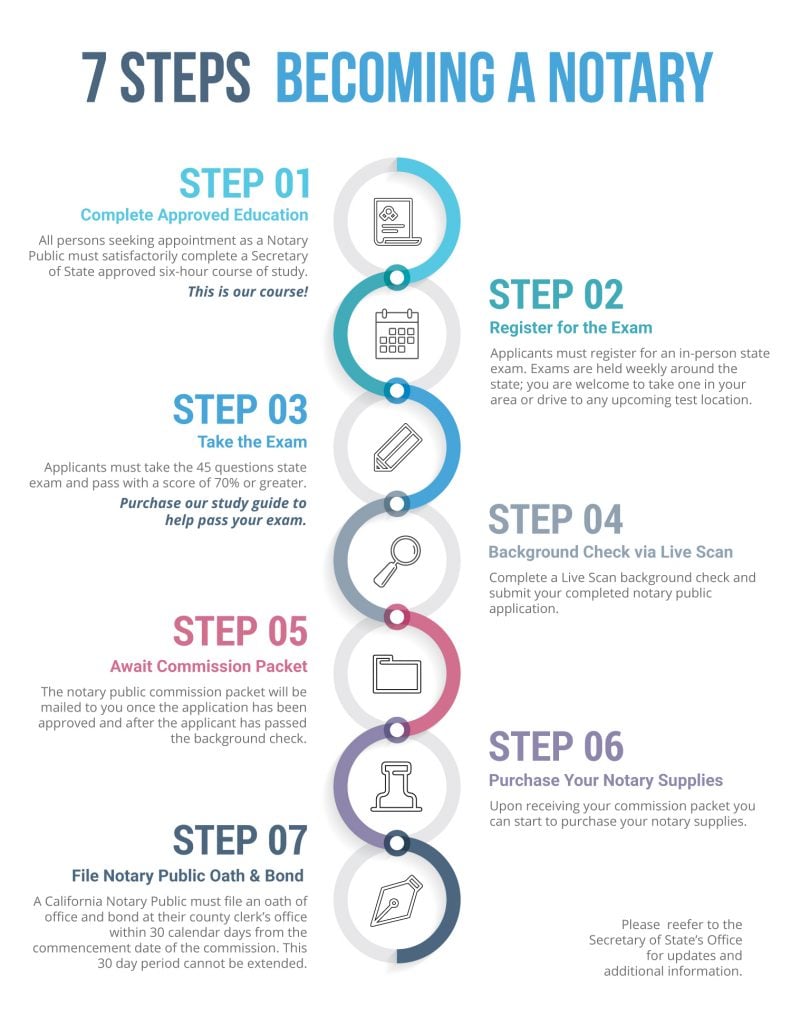
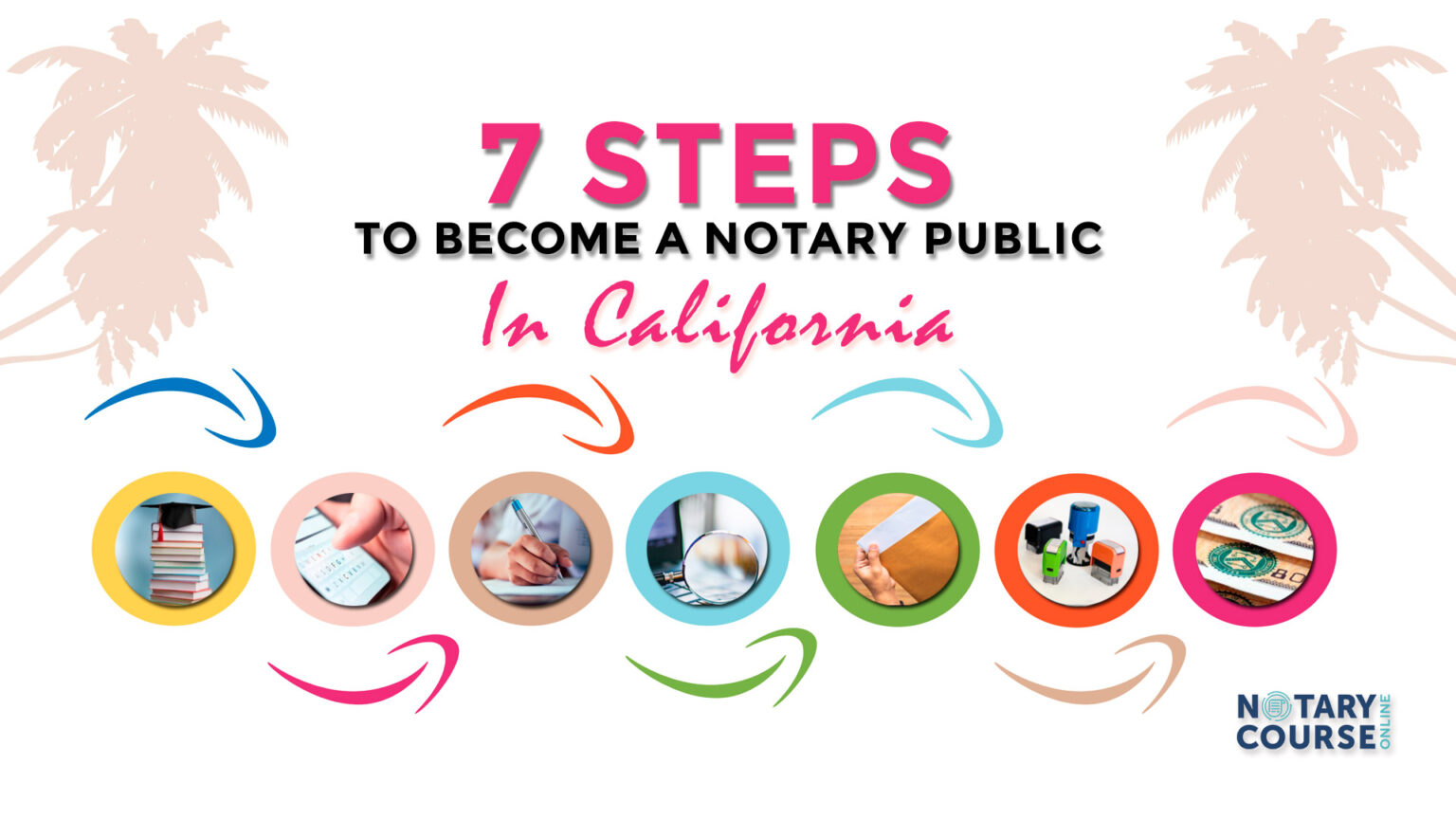
The journey to becoming a Notary Public in California is a structured process designed to ensure that all commissioned individuals are knowledgeable, trustworthy, and prepared to uphold the integrity of notarial acts. While it requires dedication and attention to detail, each step is clearly defined by the California Secretary of State, the governing authority for notaries in the state.
Core Requirements and Initial Steps
Before embarking on the application process, prospective notaries must meet specific eligibility criteria:
- Age Requirement: You must be at least 18 years of age.
- Residency: You must be a legal resident of the State of California.
- Background Check: You must not have been convicted of a felony or a disqualifying misdemeanor. A thorough background check is an integral part of the application process. This ensures the public trust in notarized documents remains paramount.
Once these basic requirements are met, the initial steps involve education and application:
- Notary Public Education Course: All first-time applicants are required to complete a state-approved six-hour course of study. This comprehensive course covers the legal responsibilities, ethical considerations, and practical procedures of being a notary. For those renewing their commission, a three-hour refresher course is mandatory. These courses are offered by various private vendors across California and online, providing flexibility for different learning styles and schedules.
- Application Submission: After completing the educational requirement, you must submit a Notary Public Application to the California Secretary of State. This application form requires personal information, details about your education, and a declaration that you meet all eligibility criteria. Accuracy and completeness are crucial here to avoid delays in processing.
Education, Examination, and Background Checks
The next phase involves demonstrating your understanding of notary law and passing a rigorous background investigation:
- Live Scan Fingerprinting: Concurrent with or prior to submitting your application, you must undergo a Live Scan fingerprinting service. This electronic fingerprinting process is used to conduct state and federal background checks through the California Department of Justice (DOJ) and the Federal Bureau of Investigation (FBI). Clearances from both agencies are essential for a notary commission. The results are sent directly to the California Secretary of State.
- Notary Public Examination: After submitting your application and completing your education, you must pass a written examination administered by the California Secretary of State or an approved vendor. The exam is multiple-choice and covers topics from the required education course, testing your knowledge of notary laws, procedures, and ethics. Preparing diligently for this exam is vital, as a passing score is necessary to proceed. Many applicants find that reviewing the Notary Public Handbook, available from the California Secretary of State website, is an invaluable study tool. Exam locations are available in various cities across California, including Sacramento, Los Angeles, and San Diego, making it accessible no matter where you reside in the state.
- Commission Packet: Upon successfully passing the exam and receiving clearance from your background checks, the California Secretary of State will mail you a commission packet. This packet contains your official Notary Public commission certificate, along with instructions for the final steps, including obtaining your official bond and filing your oath of office.
The final crucial steps involve securing your official bond and filing your oath:
- Notary Public Bond: Before you can perform any notarial acts, you must obtain a $15,000 surety bond. This bond serves as a protection for the public against any damages caused by official misconduct by the notary. It is not an insurance policy for the notary themselves but rather a safeguard for consumers. Various insurance companies and bonding agencies offer these bonds.
- Oath of Office and Bond Filing: Within 30 calendar days from the commencement date of your commission, you must file your official oath of office and your notary bond with the county clerk in the county where your principal place of business is located. For mobile notaries, this is typically the county where they primarily reside or operate. It is imperative to meet this 30-day deadline, as failure to do so will result in your commission becoming void, requiring you to restart the entire application process. Once filed, your commission officially becomes active.
- Notary Seal and Journal: With your commission active, you must obtain an official notary seal and a notary journal. The seal is used to authenticate all notarized documents, displaying your name, commission expiration date, and other required information. The journal is a critical record-keeping tool, where every notarial act must be meticulously recorded. Maintaining a detailed and accurate journal is not only a legal requirement but also an essential practice for protecting yourself and the public.
Your Notary Practice: Serving Travelers, Businesses, and Communities
With your commission in hand, you are now ready to embark on your journey as a California Notary Public. The way you structure your practice can be as diverse as California itself, offering ample opportunities to connect your services with the state’s thriving travel, tourism, and accommodation industries.
Essential Tools and Ethical Responsibilities
Beyond the commission itself, a successful notary practice relies on a few core tools and, more importantly, an unwavering commitment to ethical conduct. Your notary seal and journal are your primary instruments. Ensure your seal complies with California specifications and your journal is consistently updated for every notarial act, regardless of how minor. Investing in professional liability insurance, while not mandatory, is highly recommended to provide personal protection against potential errors or omissions.
However, the most vital aspect of your practice is your adherence to the law and ethical principles. Notaries are impartial witnesses, and maintaining impartiality is paramount. You must accurately identify signers, ensure they are acting voluntarily, and perform each notarial act without personal interest or bias. Staying informed about any updates or changes to California notary law through resources like the California Secretary of State website and professional associations is crucial for long-term success and maintaining public trust.
Tapping into the Tourism and Accommodation Sectors
This is where your notary commission truly intertwines with the “life out of the box” philosophy. California’s tourism and accommodation sectors are dynamic and ever-present, offering unique avenues for notary services.
- Hotels and Resorts: Business travelers, international tourists, and even locals on staycations often find themselves in need of a notary. Establishing relationships with hotels and resorts in major tourist hubs like San Francisco, San Diego, or even specialized areas like Napa Valley and Palm Springs can create a consistent client base. Guests might need documents for foreign property transactions, international business contracts, or even simply notarizing permission slips for minors traveling alone. A notary can become an invaluable amenity, particularly for properties that cater to international or business clientele. Consider targeting high-end establishments or conference hotels for lucrative opportunities.
- Travel Agencies and Consulates: Collaborating with travel agencies, tour operators, and foreign consulates throughout California can connect you with individuals preparing for international trips. Visa applications, declarations of invitation, power of attorney for property abroad, or documents for adoption are frequently requested items for notarization by global travelers.
- Vacation Rentals and Long-Term Stays: With the rise of short-term and long-term rental properties, particularly in popular destinations near landmarks like the Santa Monica Pier or Disneyland, there’s a growing need for notarization of rental agreements, property management documents, or leases. Assisting property owners or renters, especially those managing properties from afar or engaging in extended stays, positions you as a critical facilitator in the accommodation ecosystem.
Expanding Your Horizons: Mobile Notary and Specializations
The beauty of being a Notary Public in California is the ability to shape your career to your personal and professional aspirations. Becoming a mobile notary offers the ultimate travel-friendly lifestyle, allowing you to serve clients at their convenience, whether it’s at their home, office, or a local coffee shop. This significantly broadens your reach and appeal, especially in bustling metropolitan areas or remote communities where notary services might be less accessible.
Furthermore, specializing can carve out a lucrative niche for your practice:
- Loan Signing Agent (LSA): This is one of the most common and profitable specializations. LSAs assist borrowers through the signing of loan documents for mortgages, refinances, and other real estate transactions. Given California’s robust real estate market, this specialization offers significant earning potential and involves travel to various escrow offices, real estate agencies, or client homes.
- Apostille Agent: While notaries can’t issue Apostilles themselves, they can facilitate the process by notarizing documents that will then be sent to the California Secretary of State’s office for Apostille certification. An Apostille is a certification that authenticates the signature and seal of a Notary Public on documents for use in countries that are part of the Hague Apostille Convention. This service is invaluable for international travelers, businesses, and individuals dealing with overseas matters.
- Trust and Estate Documents: As California’s population ages and wealth management becomes more complex, there is a consistent need for notaries to assist with wills, trusts, and other estate planning documents, often requiring compassionate and discreet service.
In conclusion, becoming a Notary Public in California is an accessible and rewarding venture for those seeking a flexible, impactful, and travel-compatible career. The process, though rigorous, ensures a high standard of public service. By understanding the core requirements, diligently completing the steps, and strategically connecting your services to the vibrant travel, tourism, and accommodation landscape of the Golden State, you can forge a path that not only offers financial independence but also a truly “life out of the box” experience. This profession is more than just stamping documents; it’s about being an essential facilitator, a trusted guide, and an integral part of the dynamic Californian way of life.
LifeOutOfTheBox is a participant in the Amazon Services LLC Associates Program, an affiliate advertising program designed to provide a means for sites to earn advertising fees by advertising and linking to Amazon.com. Amazon, the Amazon logo, AmazonSupply, and the AmazonSupply logo are trademarks of Amazon.com, Inc. or its affiliates. As an Amazon Associate we earn affiliate commissions from qualifying purchases.