
Navigating the complexities of a suspended driver’s license can be one of life’s most disruptive challenges, especially in a sprawling state like Florida, where public transportation options may be limited and personal mobility is often essential for daily living. A driver’s license suspension can dramatically impede your ability to commute to work, attend school, fulfill family obligations, or access crucial medical appointments. Fortunately, Florida law provides a pathway for individuals to regain limited driving privileges through a “hardship license,” often referred to as a “restricted license” or “business purpose only” license. This article aims to demystify the process, offering a professional, insightful, and engaging guide to understanding and securing a hardship license in the Sunshine State. Understanding the nuances of this system is not just about legal compliance; it’s about reclaiming a vital aspect of your independence and lifestyle.
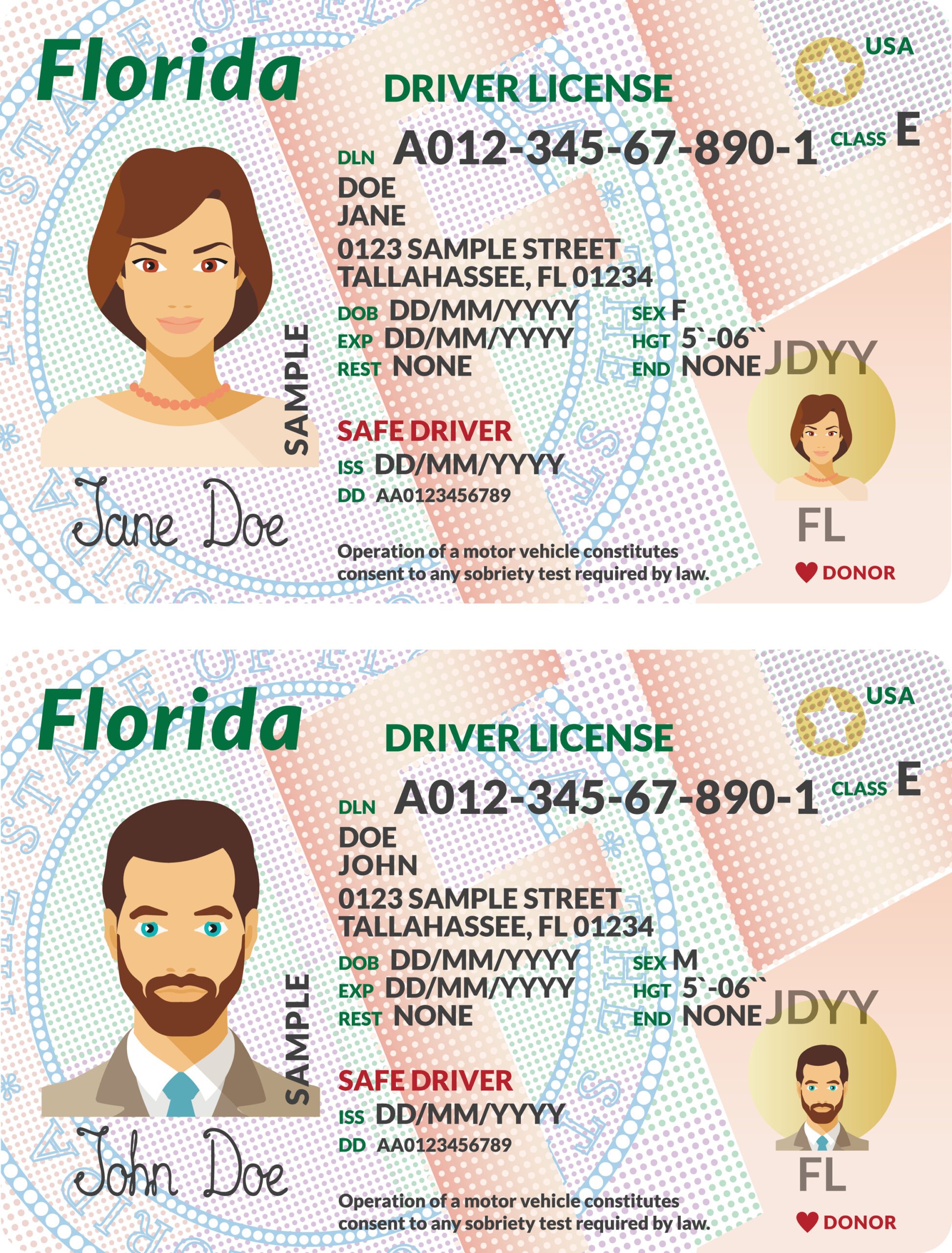
Understanding Florida’s Hardship License System
A hardship license is not a reinstatement of full driving privileges but rather a temporary, restricted privilege granted to individuals whose regular driving privileges have been suspended or revoked. Its primary purpose is to allow individuals to drive for essential activities, preventing undue hardship on their employment, education, or health. The criteria for obtaining one are strict, and the process is managed by the Florida Department of Highway Safety and Motor Vehicles (FLHSMV).
What is a Hardship License?
Simply put, a hardship license allows you to drive under specific conditions while your regular license is suspended. It’s a recognition by the state that while you have committed an offense warranting suspension, an absolute prohibition on driving could lead to severe consequences, impacting your livelihood and well-being. This license is a privilege, not a right, and its issuance is contingent upon meeting stringent eligibility requirements and demonstrating a genuine need. It serves as a bridge, enabling individuals to manage their essential daily responsibilities while working towards full license reinstatement.
Who is Eligible for a Hardship License?
Eligibility for a hardship license in Florida is determined on a case-by-case basis and heavily depends on the reason for your original license suspension. Common scenarios include suspensions related to DUI (Driving Under the Influence), accumulation of too many points on your driving record, failure to pay traffic fines, or certain administrative suspensions. However, there are instances where a hardship license may not be granted, such as certain serious offenses or if you have a history of repeated violations. Generally, you must prove that your inability to drive creates a significant hardship for your employment, education, or medical needs. A crucial first step often involves completing specific requirements, such as DUI school or traffic courses, before even applying. The FLHSMV will assess your individual circumstances, driving record, and compliance with prior requirements to make a determination.
Distinguishing Between Business Purpose Only and Employment Purpose Only
Florida primarily issues two types of hardship licenses, each with distinct restrictions:
- Business Purpose Only (BPO): This is the more common type and provides broader driving privileges. It allows you to drive for any purpose necessary to maintain your livelihood, including driving to and from work, attending school, going to church, visiting the doctor, and taking children to school. It also covers necessary shopping for groceries or household items. The definition of “business purpose” is relatively broad, encompassing activities essential to one’s day-to-day existence and responsibilities.
- Employment Purpose Only (EPO): This license is much more restrictive. It permits driving strictly for work-related activities. This includes driving to and from your place of employment and any driving required as part of your job duties. It does not cover personal errands, school, medical appointments, or other non-work-related travel. An EPO license is typically granted in situations where the FLHSMV deems a BPO too broad for the specific suspension or individual’s history.
Understanding which type of restricted license you are applying for and its specific limitations is paramount to avoiding further legal complications. Violating the terms of a hardship license can lead to severe penalties, including re-suspension and charges for Driving While License Suspended (DWLS), which carries increasingly harsh consequences.
The Application Process: Step-by-Step Guide
Obtaining a hardship license in Florida involves a multi-step administrative process that requires careful attention to detail and timely action. The journey typically begins with addressing the underlying reasons for your license suspension and culminates in an administrative review hearing.
Initial Steps: Completing DUI School or Required Courses
For many suspensions, particularly those related to DUI, the first and most critical step is to complete mandatory courses. If your license was suspended due to a DUI, you must enroll in and complete DUI school as required by the state. The specific program level will depend on the nature of your DUI offense. Similarly, for point-based suspensions, you might be required to complete specific traffic safety courses or advanced driver improvement courses. Proof of enrollment and completion is often a prerequisite for even requesting a hardship hearing. Delaying these requirements will inevitably delay your ability to apply for any restricted driving privileges. It’s advisable to contact the FLHSMV or a qualified traffic attorney to confirm all prerequisites for your specific suspension scenario.
Requesting a Formal or Informal Review Hearing
Once you have completed any mandatory courses or satisfied other initial requirements, the next step is to request an administrative review hearing with the Bureau of Administrative Reviews (BAR) section of the FLHSMV. There are two types of hearings:
- Informal Review Hearing: This is a less formal process, typically used for administrative suspensions not involving DUI. You will submit written documentation to the BAR outlining your need for a hardship license. An examiner will review your case based on the submitted paperwork.
- Formal Review Hearing: This is a more formal proceeding, almost always required for DUI-related suspensions. You will appear in person before a hearing officer from the Administrative Hearings Section of the FLHSMV. During this hearing, you will present evidence and testimony to demonstrate your eligibility and hardship. This hearing is your opportunity to convince the hearing officer that you meet the criteria for a hardship license.
The type of hearing required will depend on the specific reason for your suspension. It is crucial to request your hearing within the specified timeframe after your suspension begins, often within 10-30 days, to avoid waiving certain rights or delaying the process significantly.
Preparing for Your Hearing: Documentation and Evidence
Thorough preparation is key to a successful hardship license application. Whether it’s an informal or formal review, you will need to gather compelling documentation and evidence to support your claim of hardship and your eligibility. This typically includes:
- Proof of enrollment/completion of required courses: Certificates from DUI school, advanced driver improvement courses, etc.
- Proof of employment: Letters from employers, pay stubs, business licenses (if self-employed), demonstrating the necessity of driving for your work.
- Proof of education: Enrollment verification from schools, class schedules, showing the need to drive for educational purposes.
- Medical documentation: Doctor’s notes, appointment schedules, outlining the need for transportation to medical treatments for yourself or a family member.
- Financial hardship evidence: Bank statements, bills, or other documents demonstrating how the lack of a license creates severe financial strain.
- Personal statement: A written statement explaining your situation, the reasons for your suspension, steps you have taken to address the issues, and why a hardship license is essential for your life.
- Identification: Valid photo identification.
Organizing these documents neatly and presenting a clear, coherent case will significantly improve your chances of approval. For formal hearings, practice articulating your situation clearly and concisely, being prepared to answer questions from the hearing officer.
Eligibility Criteria and Common Scenarios
The path to a hardship license is heavily influenced by the specific circumstances of your license suspension. Different types of suspensions come with unique requirements and waiting periods.
DUI-Related Suspensions
DUI suspensions are among the most common reasons for seeking a hardship license in Florida. For a first-time DUI offense, you typically face a minimum 6-month license suspension. To be eligible for a hardship license, you generally must:
- Enroll in or complete DUI school: This is a non-negotiable prerequisite.
- Serve an initial “hard suspension” period: This waiting period, usually 30 days for a first DUI with no prior refusals, means no driving whatsoever. After this period, you can apply for a hardship license.
- Request a Formal Review Hearing: This is mandatory for all DUI-related suspensions.
- Demonstrate a critical need: Prove that the inability to drive causes severe hardship.
- Potentially install an Ignition Interlock Device (IID): Depending on the specifics of the DUI and your driving history, the FLHSMV may require an IID to be installed in your vehicle(s) for a specified period as a condition of your hardship license.
Subsequent DUI offenses or convictions involving serious injury or death will have much longer hard suspension periods and more stringent requirements, often making a hardship license unavailable for extended durations.
Point-Based Suspensions and Other Violations
Florida’s point system assigns points for various traffic violations. Accumulating too many points within a certain timeframe leads to license suspension:
- 12 points in 12 months = 30-day suspension
- 18 points in 18 months = 3-month suspension
- 24 points in 36 months = 1-year suspension
For point-based suspensions, you are generally eligible to apply for a hardship license immediately. However, you will likely be required to complete an Advanced Driver Improvement (ADI) course. The application process for point suspensions typically involves an Informal Review Hearing, though a Formal Review might be requested in complex cases. Other suspensions, such as those for failure to pay traffic fines, child support, or certain administrative reasons, often have their own specific paths and requirements for hardship license eligibility, which must be addressed directly with the FLHSMV.
The Role of the Ignition Interlock Device (IID)
For many DUI-related hardship licenses, and increasingly for certain repeat offenders, the installation of an Ignition Interlock Device (IID) is a mandatory condition. An IID is a breathalyzer connected to your car’s ignition system. You must blow into it before starting your vehicle, and if alcohol is detected above a pre-set limit, the car will not start. Random retests are also required while driving. The cost of installing and maintaining an IID is borne by the driver. This device serves as a crucial safeguard, ensuring that individuals with a history of alcohol-related driving offenses operate their vehicles soberly, thereby protecting public safety while allowing for limited driving privileges.
Maintaining Your Hardship License and Avoiding Pitfalls
Receiving a hardship license is a significant step, but it comes with substantial responsibilities. It is a probationary privilege, and strict adherence to its terms is paramount to avoid further legal trouble and potentially losing your driving privileges entirely.
Strict Adherence to Restrictions
A hardship license comes with specific restrictions on when, where, and why you can drive. For a “Business Purpose Only” license, you can drive to and from work, school, medical appointments, and for necessary household errands. For an “Employment Purpose Only” license, driving is limited strictly to work-related activities. It is your responsibility to know and strictly follow these restrictions. Even a minor deviation, such as driving to a friend’s house or for recreational purposes not explicitly covered, can be considered a violation. Always carry proof of your destination (e.g., work schedule, appointment card) if stopped by law enforcement.
Consequences of Violating Hardship License Terms
The penalties for violating the terms of a hardship license are severe. Driving outside the permitted restrictions can lead to:
- Immediate re-suspension: Your hardship license can be revoked, and your full license suspension reinstated, often for a longer period.
- Criminal charges: You can be charged with Driving While License Suspended (DWLS), which is a criminal offense in Florida. A first offense is typically a misdemeanor, but subsequent offenses or DWLS with knowledge can be charged as felonies, carrying potential jail time, hefty fines, and an even longer license suspension period.
- Extended IID requirements: If an Ignition Interlock Device was a condition, any violations related to its use (e.g., attempting to start the car with alcohol, failing a retest) could lead to an extension of the required IID period or revocation of your hardship license.
The key message is simple: respect the privilege. The state grants a hardship license to help you manage essential life functions, not to resume unrestricted driving.
Full Reinstatement of Driving Privileges
A hardship license is a temporary solution. The ultimate goal is to achieve full reinstatement of your unrestricted driving privileges. This usually occurs after:
- The full term of your original suspension has expired.
- You have completed all court-ordered requirements (e.g., fines, probation, community service).
- You have completed all FLHSMV requirements (e.g., DUI school, ADI, IID period).
- You have paid all reinstatement fees and any outstanding fines.
It is crucial to keep track of these dates and requirements. The FLHSMV website provides tools to check your license status and any outstanding obligations. Do not assume your license is automatically reinstated; always confirm its active, unrestricted status before driving without your hardship limitations.
Seeking Professional Guidance
The process of obtaining a hardship license can be complex, involving legal statutes, administrative procedures, and specific documentation. While this guide provides a comprehensive overview, individual situations can vary significantly.
When to Consult a Traffic Attorney
For many individuals facing license suspension, particularly those involving DUI, multiple offenses, or complex legal issues, consulting an experienced Florida traffic attorney is highly recommended. An attorney can:
- Evaluate your eligibility: Determine if you qualify for a hardship license and which type.
- Navigate the application process: Ensure all forms are correctly filled out and submitted on time.
- Represent you at hearings: Present your case effectively to the hearing officer, potentially improving your chances of approval.
- Advise on requirements: Clarify all mandatory courses, fees, and waiting periods specific to your situation.
- Address underlying legal issues: Potentially challenge the original suspension or mitigate its long-term impact.
While an attorney’s services come with a cost, the investment can save you significant time, stress, and potential future legal complications, especially if your livelihood depends on your ability to drive.
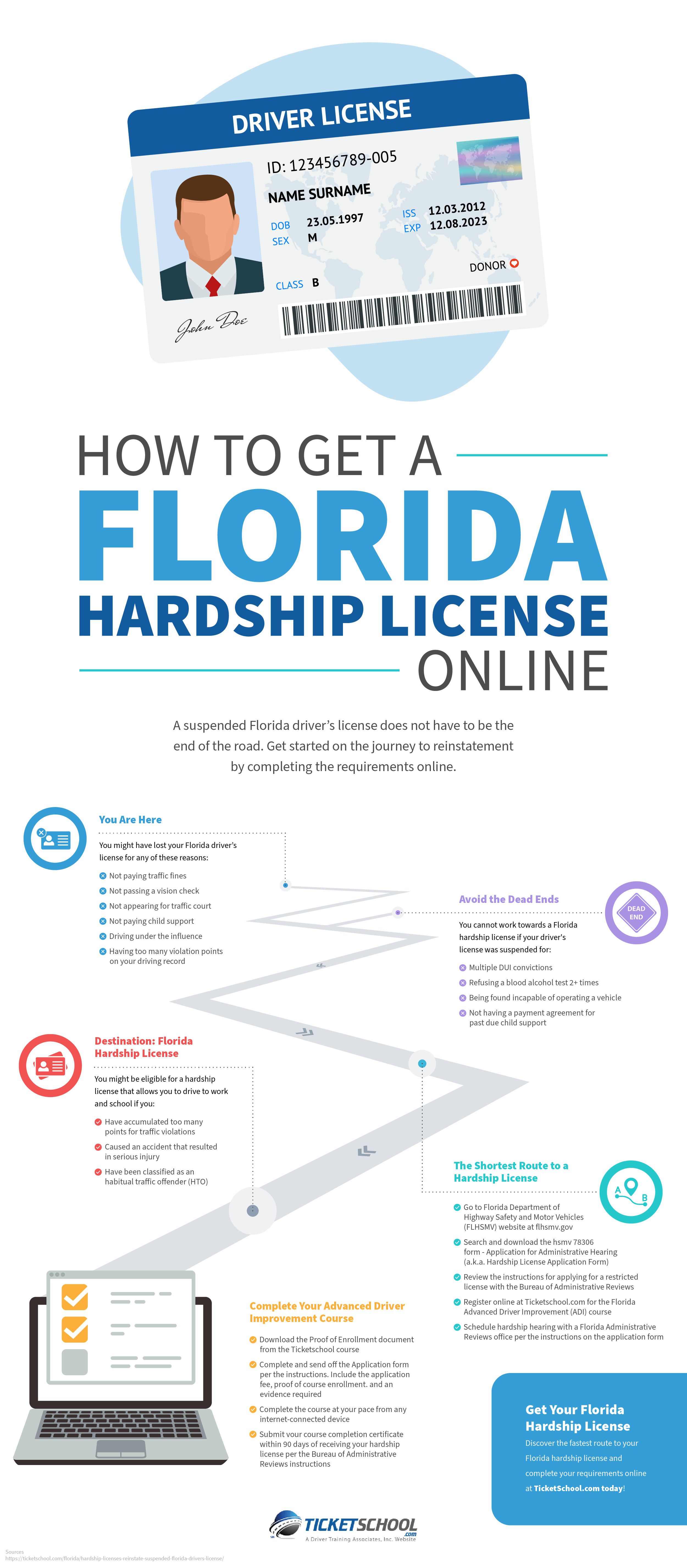
Utilizing Resources from the FLHSMV
The Florida Department of Highway Safety and Motor Vehicles (FLHSMV) is your primary resource for official information regarding license suspensions and hardship licenses. Their website offers:
- Online license status checks: Allows you to view your current license status, any suspensions, and reinstatement requirements.
- Forms and publications: Access to necessary application forms and informational brochures.
- Contact information: Details for the Bureau of Administrative Reviews and local Driver License Offices.
- Frequently Asked Questions (FAQs): Answers to common questions about suspensions and reinstatements.
Leveraging these official resources will ensure you have the most accurate and up-to-date information directly from the source.
Obtaining a hardship license in Florida is a structured process designed to offer limited driving privileges to those facing genuine hardship. By understanding the eligibility criteria, meticulously following the application steps, and strictly adhering to the license restrictions, you can navigate this challenging period and responsibly work towards full reinstatement of your driving privileges, maintaining your independence and mobility within the bounds of the law.
LifeOutOfTheBox is a participant in the Amazon Services LLC Associates Program, an affiliate advertising program designed to provide a means for sites to earn advertising fees by advertising and linking to Amazon.com. Amazon, the Amazon logo, AmazonSupply, and the AmazonSupply logo are trademarks of Amazon.com, Inc. or its affiliates. As an Amazon Associate we earn affiliate commissions from qualifying purchases.