
Navigating the landscape of financial assistance can be a crucial component of maintaining a stable and fulfilling lifestyle, especially in a dynamic state like Florida. For many residents, understanding how to access the Supplemental Nutrition Assistance Program (SNAP), commonly known as food stamps, is a vital step toward ensuring food security. This program plays a significant role in the overall well-being of individuals and families, allowing them to allocate resources more effectively and enjoy a balanced existence in the Sunshine State. This comprehensive guide will detail the eligibility requirements, application process, and essential considerations for qualifying for food stamps in Florida, helping you to empower your financial lifestyle.
Understanding Florida’s Food Assistance Program: A Pillar of Household Stability
The SNAP program in Florida is federally funded but administered at the state level by the Florida Department of Children and Families (DCF). Its primary objective is to provide eligible low-income individuals and families with financial assistance to purchase nutritious food. Far from being merely a handout, SNAP is an investment in public health and economic stability, allowing households to meet their basic dietary needs, thereby reducing food insecurity and its associated health and social costs. For many, this support is foundational to maintaining a healthy and productive lifestyle, freeing up other limited funds for housing, transportation, or educational pursuits.
Benefits are provided on an Electronic Benefit Transfer (EBT) card, which functions much like a debit card and can be used at most grocery stores and farmers’ markets. The amount of assistance an eligible household receives depends on various factors, including income, household size, and certain expenses. Understanding SNAP is the first step towards leveraging this resource to enhance your personal or family’s financial wellness and overall lifestyle in Florida.
Key Eligibility Criteria for Food Assistance in the Sunshine State
Qualifying for SNAP in Florida involves meeting several specific criteria related to income, assets, and household composition. These requirements are designed to ensure that assistance reaches those most in need.
Income Limits
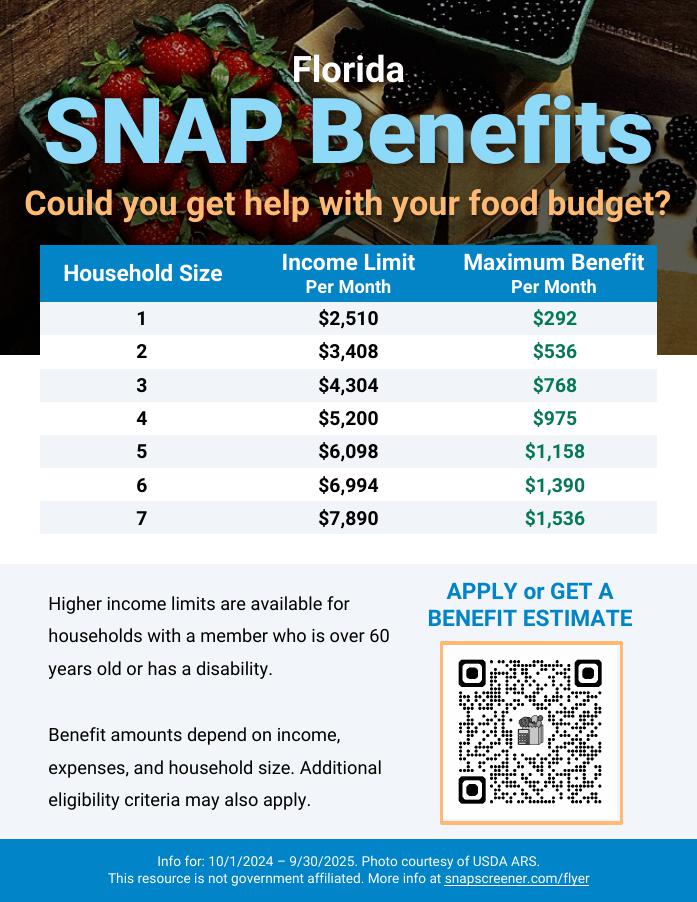
Income is perhaps the most significant factor in determining eligibility. Florida generally follows federal guidelines, which means that a household’s gross monthly income (before deductions) and net monthly income (after allowed deductions) must fall below certain thresholds. These thresholds are typically tied to the federal poverty level and vary based on the number of people in the household.
- Gross Income Limit: For most households, the gross monthly income must be at or below 130% of the federal poverty level. For example, in a household of one, this might be around $1,396 per month, while a household of four could be around $2,871. These figures are subject to change annually.
- Net Income Limit: After allowed deductions (like a standard deduction, earned income deduction, child care costs, medical expenses for elderly/disabled, and excess shelter costs), the net monthly income must be at or below 100% of the federal poverty level.
- Exceptions: Households with an elderly (age 60 or older) or disabled member may be subject only to the net income limit, not the gross income limit.
It’s crucial to gather all income documentation, including pay stubs, Social Security benefit letters, unemployment compensation statements, and any other sources of household income, to accurately report during the application process.
Asset Limits
While income is paramount, Florida also considers certain assets.
- General Households: Most households must have countable assets (money in bank accounts, cash, stocks, bonds) of $2,750 or less.
- Households with Elderly or Disabled Members: If at least one household member is 60 years old or older, or disabled, the asset limit is $4,250.
- Exempt Assets: Many assets are not counted, including your home and lot, household furnishings, personal belongings, and most retirement or education accounts. Vehicles are also largely exempt, especially one per adult, or if they are used for work, transportation of a disabled person, or to carry heating fuel or water.
Understanding which assets count and which do not is key to an accurate application.
Household Composition and Residency
A “household” for SNAP purposes includes all individuals who live together and customarily purchase and prepare meals together. This is important because the income and assets of all members are typically counted, and benefits are issued collectively. All applicants must be residents of Florida and United States of America citizens or qualified non-citizens. Most able-bodied adults without dependents (ABAWDs) are subject to specific work requirements. They must be working or participating in a work program for at least 20 hours a week, or they may only receive SNAP benefits for a limited period (generally 3 months in a 36-month period) unless exemptions apply.
The Application Journey: Steps to Secure Your Benefits
Applying for food stamps in Florida is a structured process that requires attention to detail and timely submission of information.
Where and How to Apply

The most common and convenient way to apply is online through the MyFloridaMyFamily portal. This platform allows you to submit your application electronically, upload necessary documents, and track your application status.
Alternatively, you can:
- Apply In-Person: Visit your local DCF service center. You can find locations on the DCF website.
- Apply by Mail or Fax: Print an application from the DCF website, complete it, and mail or fax it to your local office.
Required Documentation
Regardless of the application method, you will need to provide various documents to verify your eligibility. This typically includes:
- Proof of Identity: Driver’s license, state ID card, birth certificate.
- Proof of Residency: Utility bill, mail with your address, lease agreement.
- Proof of Income: Pay stubs, employer statements, benefit award letters for all household members.
- Proof of Assets: Bank statements, stock certificates (if applicable).
- Social Security Numbers: For all household members applying for benefits.
- Proof of Expenses: Rent/mortgage statements, utility bills, child care receipts, medical bills for elderly/disabled members.
Having these documents ready will significantly expedite your application process.
The Interview and Verification Process
After submitting your application, you will typically be scheduled for an interview with a DCF caseworker. This interview can be conducted over the phone or in person. During the interview, the caseworker will review your application, ask clarifying questions, and verify the information you’ve provided. They may also request additional documentation. It’s essential to be honest and thorough during this stage.
Following the interview, DCF will verify your information with third-party sources. A decision on your eligibility is usually made within 30 days of the application date. If approved, you will receive an EBT card loaded with your benefits.
Beyond the Application: Maintaining Eligibility and Accessing Additional Resources
Receiving SNAP benefits is an ongoing process that requires active participation to maintain eligibility.
Reporting Changes
You are obligated to report any significant changes in your household’s circumstances to DCF within 10 days of the change. This includes changes in income, household size, assets, or residency. Failure to report changes can result in overpayments, which you may have to repay, or even penalties. Regular communication ensures your benefits accurately reflect your current needs.
Recertification
SNAP benefits are not indefinite. You will need to recertify your eligibility periodically, typically every 6 to 12 months. DCF will send you a notice when it’s time to recertify. This process is similar to the initial application, requiring you to update your information and attend another interview. Prompt recertification ensures uninterrupted access to your benefits.
Related Programs and Resources
Beyond SNAP, Florida offers other programs that can support your lifestyle and financial well-being. These include:
- Medicaid: Health care coverage for low-income individuals and families.
- Temporary Cash Assistance (TCA): Provides financial help to families with children.
- Child Care Subsidy Program: Assists with the cost of child care.
- Food Banks and Pantries: Local community organizations often provide emergency food assistance, supplementing SNAP benefits. Many of these organizations can be found through resources like Feeding Florida or local county services.
Exploring these additional resources can further strengthen your household’s stability and improve your overall quality of life.
Embracing a Sustainable Lifestyle: Managing Finances in Florida
Qualifying for food stamps in Florida is more than just securing assistance; it’s about making informed choices that contribute to a sustainable and resilient lifestyle. By understanding and utilizing programs like SNAP, individuals and families can better manage their budgets, ensure consistent access to nutritious food, and mitigate financial stress. This foundational support allows for greater focus on personal growth, community engagement, and enjoying the unique aspects of living in Florida.
Strategic financial planning, even when relying on assistance, involves budgeting, smart grocery shopping to maximize EBT dollars, and seeking out educational and employment opportunities that can lead to increased self-sufficiency. Empowering yourself with knowledge about available resources is a critical step in building a robust financial future and enjoying all that Florida has to offer, from vibrant communities to natural beauty, without the constant worry of basic needs. Take the initiative to apply if you believe you qualify, and leverage these programs as a stepping stone towards a more stable and fulfilling life.
LifeOutOfTheBox is a participant in the Amazon Services LLC Associates Program, an affiliate advertising program designed to provide a means for sites to earn advertising fees by advertising and linking to Amazon.com. Amazon, the Amazon logo, AmazonSupply, and the AmazonSupply logo are trademarks of Amazon.com, Inc. or its affiliates. As an Amazon Associate we earn affiliate commissions from qualifying purchases.