
The San Andreas Fault, a name that echoes with both geological intrigue and a touch of dramatic mystique, is undoubtedly one of the most famous seismic features on Earth. Stretching approximately 800 miles (1,300 kilometers) through the Golden State, it is the primary boundary between two of the Earth’s largest tectonic plates: the Pacific Plate and the North American Plate. For anyone traveling to California, understanding this immense natural phenomenon isn’t just about geology; it’s about appreciating the very foundations of the landscape, the thrill of exploration, and the unique lifestyle shaped by this dynamic environment. But beyond its legendary length, a fundamental question often arises for curious travelers and science enthusiasts alike: just how deep does the San Andreas Fault actually go?
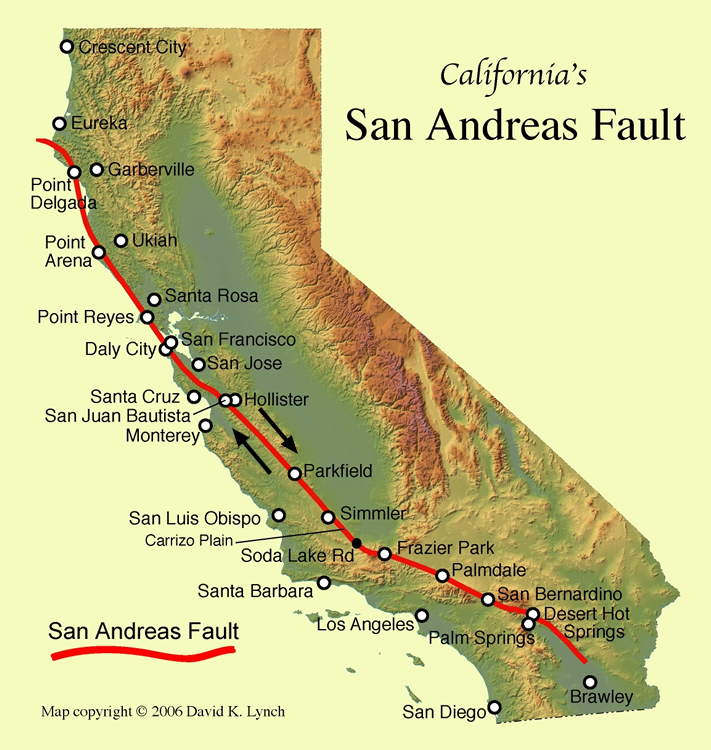
The answer is complex, as fault depth isn’t a single, easily measured number, but rather a dynamic zone influenced by immense pressures, temperatures, and the specific geological characteristics of the crust. This article will delve into the scientific understanding of the San Andreas Fault’s depth, explore how this geological wonder impacts California’s diverse regions, and provide insights for travelers keen to experience the Golden State’s natural landmarks responsibly and safely.
Unearthing the San Andreas Fault: A Geological Marvel
To truly grasp the depth of the San Andreas Fault, one must first understand the titanic forces at play. Our planet’s outer shell is not a solid, unbroken sphere but a mosaic of massive tectonic plates constantly grinding against, pulling apart, or colliding with each other. California finds itself in a particularly active zone, sitting astride the notoriously active transform boundary where the Pacific Plate is slowly but inexorably sliding northwest past the North American Plate. This lateral motion is the engine driving the San Andreas Fault.
Unlike subduction zones where one plate dives beneath another, or rift zones where plates pull apart, a transform fault like the San Andreas Fault primarily accommodates horizontal shear stress. This specific type of motion is crucial for understanding its depth characteristics.
Understanding Plate Tectonics and California’s Unique Position
California’s geological identity is intrinsically linked to its position at this major plate boundary. The Pacific Plate, which carries parts of California, including Los Angeles and the Baja California Peninsula, is moving northwest at an average rate of about 1.5 to 2 inches (3.8 to 5 centimeters) per year relative to the North American Plate. This might seem slow, but over geological timescales, it translates into significant displacement. Imagine Los Angeles eventually becoming a suburb of San Francisco in several million years!
The San Andreas Fault isn’t a single, continuous crack but rather a complex fault system comprising multiple segments and parallel faults. These segments behave differently; some “creep” slowly, releasing stress continuously, while others remain “locked,” building up immense stress that is eventually released in sudden, powerful earthquakes. This varied behavior further complicates the idea of a uniform depth.
The Elusive Depth: What Science Tells Us
When scientists talk about the depth of a fault, they’re generally referring to the seismogenic zone – the part of the fault where earthquakes can nucleate and rupture. Below this depth, the rock becomes hotter and more ductile, meaning it deforms plastically rather than fracturing in brittle earthquakes.
For the San Andreas Fault, seismic imaging, studies of earthquake hypocenters (the point within the Earth where an earthquake rupture initiates), and heat flow measurements provide clues. Generally, the seismogenic zone of the San Andreas Fault is estimated to extend from the surface down to depths ranging from approximately 10 to 15 miles (16 to 24 kilometers). Below this, the rocks are believed to transition into a ductile, flowing zone that accommodates plate motion more gradually, without generating significant earthquakes.
However, this depth can vary along its immense length. In some regions, especially where the crust is thinner or hotter, the brittle-ductile transition might occur at shallower depths. In other, colder, and more rigid sections, it could extend slightly deeper. For instance, studies of major earthquakes like the 1906 San Francisco earthquake suggest rupture depths reaching around 10 miles (16 kilometers). The southern segments, particularly those near the Salton Sea and through the Coachella Valley, are areas of intense research due to their complex structure and potential for future large ruptures. The depth is not a fixed boundary but a dynamic zone where the Earth’s crust changes its behavior under immense stress and temperature.
Exploring the Fault Line: California’s Iconic Landmark
For travelers and adventure seekers, the San Andreas Fault isn’t just an abstract geological concept; it’s a tangible, visible feature that offers unique opportunities for exploration and understanding. Its presence has sculpted California’s landscape, creating valleys, mountain ranges, and distinct geological formations that are fascinating to witness firsthand. Many of California’s most stunning natural attractions owe their existence, in part, to the activity of this fault system.
From desert plains to coastal cliffs, the fault leaves an indelible mark, making it a bucket-list destination for those interested in natural history and rugged beauty. Experiencing the San Andreas Fault up close offers a profound connection to the Earth’s powerful, ongoing processes and a deeper appreciation for California’s dynamic environment.
Witnessing the Fault Up Close: Travel Destinations and Attractions
Numerous locations across California allow visitors to see the traces of the San Andreas Fault with their own eyes. These sites range from easily accessible tourist spots to more remote wilderness areas, catering to various levels of adventure.
One of the most dramatic and visually striking places to observe the fault is the Carrizo Plain National Monument in central California. Here, the fault appears as a prominent, linear scar across the landscape, best viewed from an elevated perspective like Wallace Creek. At Wallace Creek, you can clearly see how the creek bed has been offset over thousands of years by the lateral movement of the fault, providing a stark visual lesson in plate tectonics. The super bloom of wildflowers that occasionally blankets the plain adds an extraordinary beauty to this geological site.
Further south, the Palm Springs area and the Coachella Valley offer guided jeep tours into areas where the fault creates dramatic canyons and oases. The Indio Hills are particularly known for their unique slot canyons and natural palm oases, fed by water trapped along the fault line. These tours often provide fascinating insights into the region’s geology, ecology, and history, making them popular for tourists staying in the luxury resorts of Palm Springs.
In Northern California, the Point Reyes National Seashore is another prime location. The famous Earthquake Trail here demonstrates the ground displacement during the 1906 San Francisco earthquake. Visitors can stand on one side of a fence, with the Pacific Plate beneath them, and then step to the other side, placing themselves on the North American Plate. It’s a compelling, interactive way to understand the fault’s movement. For those based in San Francisco, a drive north to Point Reyes makes for an excellent day trip, combining stunning coastal scenery with geological education.

The Cultural and Historical Significance
Beyond its scientific importance, the San Andreas Fault holds deep cultural and historical significance for California. The threat of earthquakes has shaped everything from building codes and urban planning to local folklore and the resilient spirit of Californians. The 1906 San Francisco earthquake, in particular, remains a pivotal moment in the city’s history, leading to massive reconstruction efforts and a renewed understanding of seismic hazards.
This constant geological activity is intertwined with the state’s identity. It represents both a potential danger and a source of dynamic energy that has shaped the dramatic landscapes many come to admire. The fault inspires a unique brand of California lifestyle – one of preparedness, innovation in engineering, and a profound appreciation for the natural world’s raw power. From the vineyards of Napa Valley to the sprawling urban centers, the fault is an unseen force, always there, reminding residents and visitors of the vibrant geology beneath their feet.
Preparing for California Adventures: Safety and Sustainable Tourism
Traveling to California and exploring areas near the San Andreas Fault requires a blend of awe and awareness. While large, destructive earthquakes are infrequent, seismic activity is a constant reality. For tourists, understanding basic seismic safety and supporting sustainable tourism practices ensures a responsible and enjoyable visit to this extraordinary region. It’s about embracing the adventure while respecting the powerful forces of nature.
Many tour operators and local communities near the fault actively promote geological awareness and educate visitors on safe exploration practices. Engaging with these resources not only enhances the travel experience but also contributes to the preservation of these unique natural landmarks.
Seismic Safety for Travelers
It’s prudent for any visitor to California to be aware of basic earthquake safety. While the chances of being caught in a major earthquake are statistically low, knowing what to do can provide peace of mind. The general rule is “Drop, Cover, and Hold On.”
- Drop to the ground.
- Cover your head and neck with your arms, and take shelter under a sturdy desk or table if possible.
- Hold On to your shelter until the shaking stops.
Familiarize yourself with emergency exits in your accommodation and public buildings. Many California hotels, resorts, and public spaces are built to rigorous seismic standards, offering a high level of safety. Local authorities, like the California Office of Emergency Services (CalOES), provide comprehensive guidelines and resources for residents and visitors alike, often available in multiple languages. Being prepared is simply part of the California experience, much like understanding surf conditions at the beach or wildfire warnings in the mountains.
Finding Accommodation Near Geological Wonders
For those specifically looking to explore the San Andreas Fault, there are various accommodation options that cater to every taste and budget. In southern California, Palm Springs offers a plethora of luxury resorts, boutique hotels, and vacation rentals, providing an excellent base for exploring the Coachella Valley segments of the fault. For a more rustic experience near the Carrizo Plain, camping or staying in nearby rural motels are options.
In northern California, charming inns and hotels can be found in coastal towns near Point Reyes, such as Point Reyes Station or Olemo. Major cities like San Francisco and Los Angeles naturally offer an endless array of hotels, from budget-friendly options to opulent suites, allowing visitors to combine fault exploration with city adventures. When booking, consider reading reviews that mention earthquake preparedness or modern construction standards if this is a concern, though most newer buildings in California are designed with seismic resilience in mind. Choosing eco-friendly accommodations also aligns with the broader goal of sustainable tourism, preserving the natural beauty of California’s geological wonders for future generations.
The San Andreas Fault and the California Lifestyle
The deep, dynamic presence of the San Andreas Fault isn’t merely a geological fact; it’s an integral part of the California lifestyle. It has fostered a unique blend of scientific curiosity, architectural innovation, and a resilient, forward-looking mindset among its residents. This subterranean ballet of tectonic plates underpins the state’s vibrant character, influencing everything from its economic powerhouses to its outdoor recreational pursuits.
From the tech giants of Silicon Valley who leverage advanced seismological research, to the adventurous spirit of hikers exploring rift valleys, the fault embodies California’s ability to adapt, innovate, and thrive amidst nature’s grandeur and challenges.
Beyond the Tremors: Innovation and Resilience
The constant seismic activity has spurred remarkable innovation in engineering and urban planning across California. The state is a global leader in seismic engineering, developing advanced building codes, earthquake early warning systems, and infrastructure designed to withstand significant tremors. This focus on resilience is a defining characteristic of the California lifestyle, allowing its bustling cities and charming towns to not just survive, but flourish.
Beyond the practical, the fault also inspires a philosophical resilience. Living on active geological ground fosters a deep appreciation for the moment and a recognition of nature’s formidable power. This awareness contributes to a distinctive sense of community and preparedness that is palpable when engaging with locals. It’s a land where people live with, rather than against, the Earth’s rhythms.

Experiencing California’s Diverse Landscapes
The San Andreas Fault plays a crucial role in creating the incredibly diverse landscapes that make California such a popular travel destination. From the rugged peaks of the Sierra Nevada (influenced by broader tectonic forces, but part of the same dynamic system) to the stark beauty of the Mojave Desert, the geology is alive and vibrant. Travelers can move from high-alpine environments to desert floors, from pristine coastlines to vast agricultural valleys, all within a few hours’ drive.
Exploring areas adjacent to or shaped by the San Andreas Fault allows visitors to connect with the state’s natural beauty on a profound level. Whether hiking through the unique ecosystems of Joshua Tree National Park (near fault zones), experiencing the otherworldly scenery of Anza-Borrego Desert State Park, or simply admiring the views from iconic structures like the Golden Gate Bridge (a testament to human engineering in a seismically active zone), the geological story of California is always unfolding. Understanding the depth and character of the San Andreas Fault enriches these experiences, transforming a scenic drive or a challenging hike into a journey through millions of years of Earth’s dynamic history. It’s a compelling reason to visit, to witness, and to feel the pulse of our living planet.