
Florida, the Sunshine State, a land of vibrant coastlines, burgeoning metropolises, and a rich tapestry of history, beckons travelers from across the globe. From the thrilling theme parks of Orlando to the historic charm of St. Augustine, the state offers a diverse array of attractions and experiences. When planning a visit, understanding the various hotel options, from luxurious resorts to cozy apartments, is key to a memorable trip. Exploring local culture, indulging in delicious food, and discovering unique activities are integral parts of any tourism experience. For those seeking accommodation, numerous booking platforms and review sites can help compare long-term stay options, while landmarks like the Everglades National Park and the stunning architecture of cities like Miami add a layer of historical and natural wonder. Whether you’re drawn to luxury travel, budget travel, family adventures, or efficient business stays, Florida caters to every lifestyle. But how did this alluring peninsula, so integral to the American identity today, become part of the United States? The story is a fascinating saga of diplomacy, conflict, and shrewd negotiation, stretching back centuries and involving powerful European nations.
The Colonial Crucible: Spain’s Longhold on Florida
Before it was a state, Florida was a vast territory claimed by Spain. Juan Ponce de León, in 1513, was the first documented European to set foot on Florida soil, naming it La Florida in honor of the Easter season, Pascua Florida, and its abundant wildflowers. For over three centuries, Spain held a tenuous but persistent grip on this strategically important region. The primary motivations for Spain were not solely exploration and colonization in the modern sense, but rather a combination of seeking wealth, establishing strategic outposts, and spreading Catholicism. The establishment of St. Augustine in 1565 marked the first permanent European settlement in what is now the United States, a testament to Spain‘s enduring presence and ambition.
Despite its early claim, Spanish attempts to fully colonize Florida were met with significant challenges. The climate was harsh, native American populations were often resistant or decimated by disease, and the colony itself was largely underfunded and poorly defended. Florida became a buffer zone, a frontier territory that Spain struggled to fully control or exploit for its own economic benefit. However, its geographical position was crucial. Florida provided a stepping stone for further Spanish exploration and settlement in the Americas, and it also served as a potential threat to rival European powers seeking to establish their own colonies in North America.
The presence of Florida also played a significant role in the intricate geopolitical landscape of colonial North America. British colonies to the north and the French colonies to the west viewed Spanish Florida with a mixture of suspicion and opportunity. The British, in particular, saw Florida as a barrier to their own westward expansion and a potential base for Spanish incursions into their territories. This rivalry, fueled by competing colonial ambitions and economic interests, would eventually lead to shifts in control over the peninsula. The constant threat of conflict and the ever-changing allegiances between European powers meant that Florida was often a pawn in larger games of international power. The Spanish maintained their claim through treaties and occasional military action, but their effective control was often limited to scattered settlements and missions.
The Shifting Sands of Empire: British Interlude and Spanish Return
The eighteenth century proved to be a pivotal period for Florida. The Seven Years’ War, known as the French and Indian War in America, dramatically reshaped the colonial map. In 1763, following the British victory, Spain ceded Florida to Great Britain in exchange for Havana, Cuba, which the British had captured. This marked the first time Florida came under British rule, a period that lasted for two decades.
Under British administration, Florida underwent significant changes. The British divided the territory into East and West Florida, each with its own governor and administrative structure. They encouraged settlement by offering land grants and promoting trade. New towns were established, and efforts were made to develop the land for agriculture. The British also sought to strengthen their control over the native American tribes, often through alliances and trade. However, British rule was characterized by internal divisions and a struggle to fully integrate the territory into their colonial empire. Many of the inhabitants remained Spanish or French in their loyalties, and the vastness of the territory made effective governance challenging.
The American Revolutionary War had a profound impact on the fate of Florida. East Florida and West Florida remained loyal to the British Crown during the revolution, serving as a base for British military operations against the American colonies. However, as the war drew to a close and American independence became increasingly likely, Spain saw an opportunity to reclaim its lost territory. The Treaty of Paris in 1783, which officially ended the American Revolutionary War, saw Great Britain cede both East Florida and West Florida back to Spain. This marked the second Spanish period in Florida’s history, a period that would last for another thirty-five years.
During this second Spanish era, Florida experienced a new wave of immigration, including many Americans seeking new opportunities. Spain attempted to strengthen its control and encourage settlement, but the territory remained sparsely populated and economically underdeveloped compared to the burgeoning United States to the north. The Spanish administration struggled with internal conflicts and maintaining order, particularly with the growing presence of American settlers who often disregarded Spanish laws and customs. The strategic importance of Florida to the United States, particularly its harbors and proximity to vital trade routes, became increasingly evident. The Americans viewed a Spanish Florida as a potential threat and a barrier to their own territorial ambitions.
The Road to American Annexation: Diplomacy and the Adams-Onís Treaty
The early nineteenth century saw mounting pressure from the United States for Florida to become part of the growing nation. The Americans were concerned about Florida being used as a base for Native American raids into American territory, particularly by the Seminole tribe, and as a haven for escaped slaves. Furthermore, the strategic importance of Florida’s ports and its role in controlling access to the Gulf of Mexico were undeniable. The United States had long coveted the territory, recognizing its immense potential for expansion and economic development.
In 1818, General Andrew Jackson, without explicit authorization from the U.S. government, launched a military campaign into Florida, known as the First Seminole War. This aggressive action, while controversial, highlighted the United States‘ determination to resolve the border issues and assert its influence in the region. Jackson’s campaign, which led to the capture of Spanish forts and the execution of two British subjects, forced Spain to confront the reality of its weakening grip on Florida and the assertive stance of the United States. The events of 1818 acted as a catalyst, pushing Spain towards a diplomatic resolution.
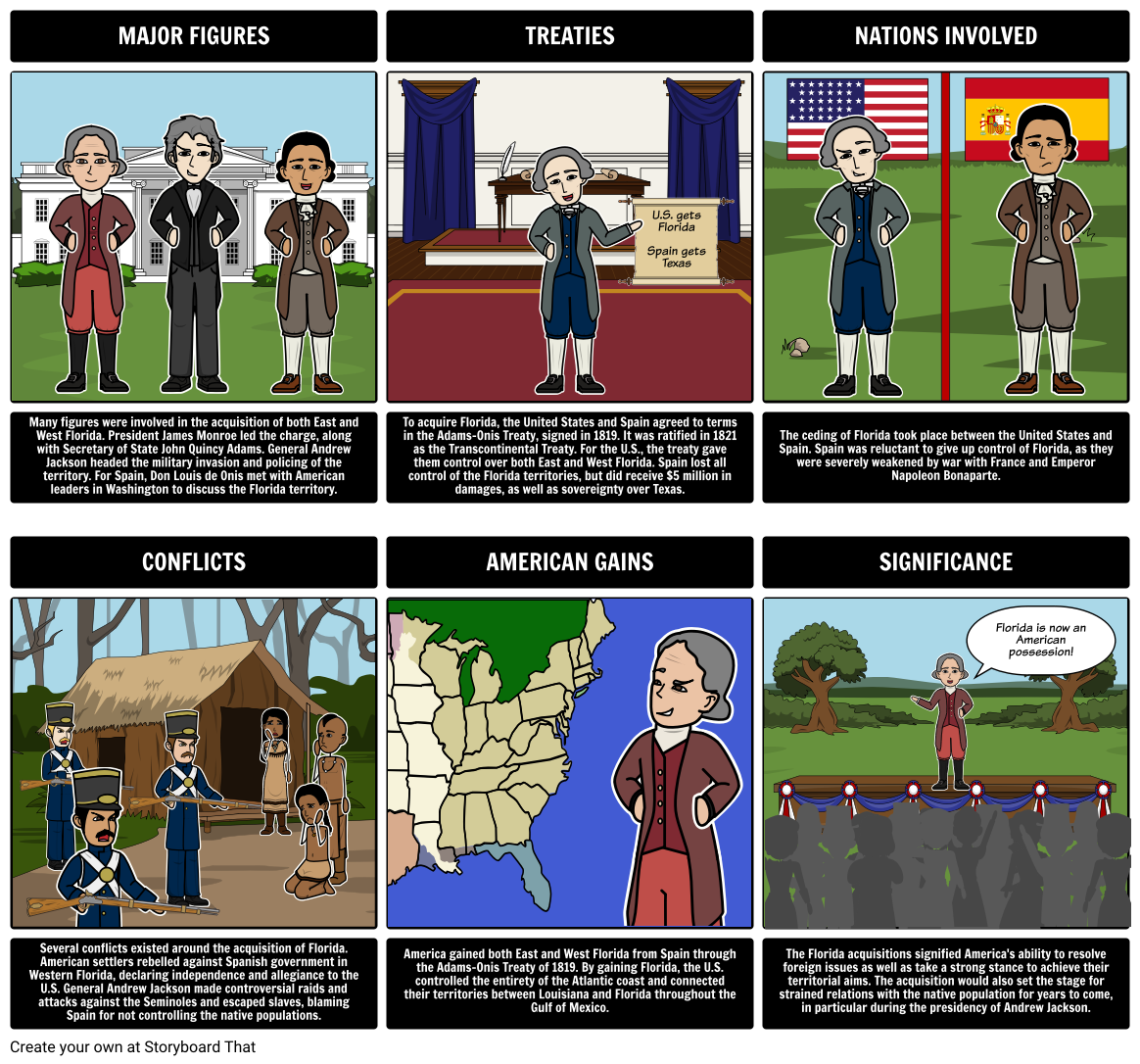
Recognizing the increasing difficulties in holding onto Florida and the growing threat posed by its powerful northern neighbor, Spain entered into negotiations with the United States. These negotiations were spearheaded by U.S. Secretary of State John Quincy Adams and the Spanish Minister to the United States, Luis de Onís y González-Vara. The ensuing discussions were complex, involving not only the territorial claims but also issues related to American citizens’ claims against Spain and the delineation of the western boundary of the Louisiana Purchase.
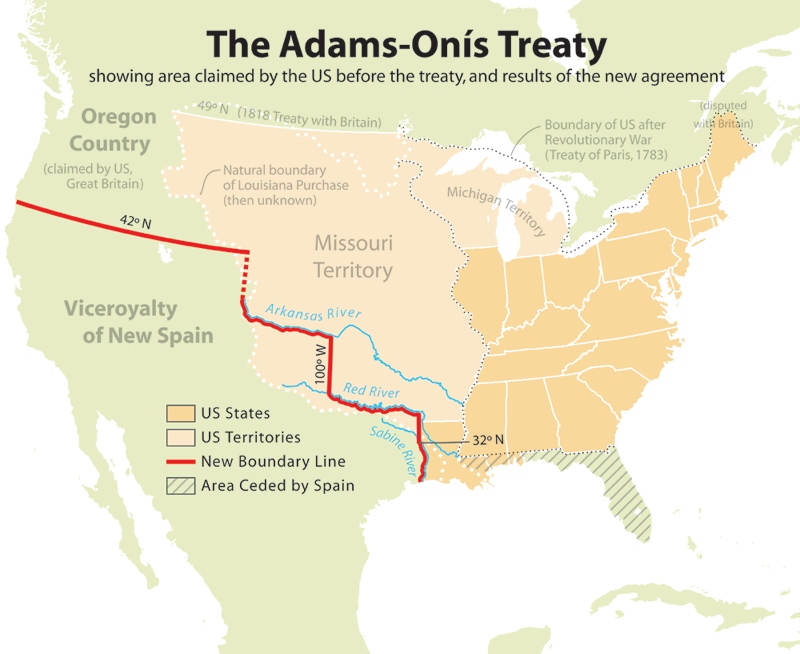
The culmination of these diplomatic efforts was the Adams-Onís Treaty, signed on February 22, 1819, and ratified by Spain in October 1820 and by the U.S. Senate in February 1821. Under the terms of the treaty, Spain ceded all of East Florida and West Florida to the United States. In return, the United States agreed to pay $5 million to Spanish citizens who had claims against the Spanish government and to relinquish its own claims to territory in Texas. Crucially, the treaty also defined the western boundary of the Louisiana Purchase, granting the United States vast territories stretching to the Pacific Ocean. This remarkable diplomatic achievement, often referred to as Florida’s Purchase Treaty, effectively transferred sovereignty of the peninsula to the United States, paving the way for its eventual statehood. The Adams-Onís Treaty was a testament to American diplomatic prowess and the strategic foresight of John Quincy Adams, securing a vital piece of territory with minimal direct conflict.
From Territory to Statehood: Florida’s American Journey
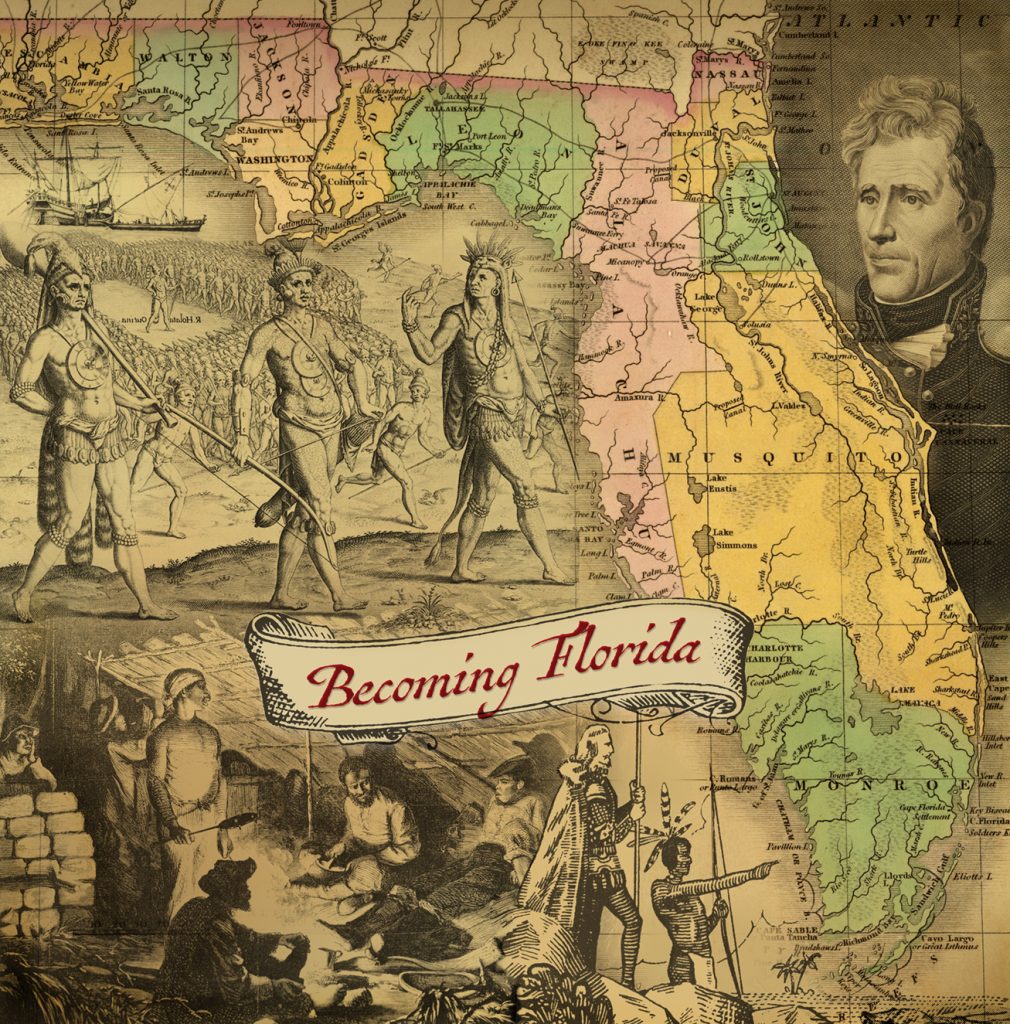
Following the ratification of the Adams-Onís Treaty, Florida officially became a territory of the United States on March 3, 1821, with Andrew Jackson appointed as its first military governor. The process of integrating Florida into the American union was not without its challenges. The territory was vast, sparsely populated, and inhabited by diverse groups, including Native Americans, Spanish descendants, and new American settlers. Establishing a functional government, developing infrastructure, and defining land ownership were immediate priorities.
The territorial period was marked by significant growth and change. American settlers poured into Florida, attracted by the prospect of fertile land and economic opportunities. This influx led to increased conflict with the Seminole and other Native American tribes, who were increasingly displaced from their ancestral lands. The Second Seminole War (1835–1842) and the subsequent Third Seminole War (1855–1858) were brutal and costly conflicts that ultimately resulted in the forced removal of most Seminole from Florida.
Despite these struggles, Florida’s population continued to grow, and its economy began to develop. Agriculture, particularly sugar cane and cotton cultivation, became increasingly important. The development of transportation networks, including roads and canals, facilitated trade and settlement. As the population expanded and the political landscape evolved, the desire for statehood grew stronger.
On March 3, 1845, Florida was admitted to the Union as the 27th state. This marked the culmination of decades of diplomatic maneuvering, territorial acquisition, and internal development. The admission of Florida was a significant moment, completing America‘s territorial expansion across the southeastern part of the continent. The Sunshine State began its journey as an integral part of the United States, a journey that would see it transform into a global destination for tourism, a hub for innovation, and a vibrant mosaic of cultures. From its early days as a contested colonial outpost to its current status as a major American state, Florida‘s acquisition is a compelling chapter in the American story, illustrating the complex forces that shaped the nation’s borders and identity. Today, visitors can explore the historical sites that tell this story, from the ancient streets of St. Augustine to the legislative halls of Tallahassee, understanding that every corner of this beautiful peninsula holds echoes of its fascinating past.
LifeOutOfTheBox is a participant in the Amazon Services LLC Associates Program, an affiliate advertising program designed to provide a means for sites to earn advertising fees by advertising and linking to Amazon.com. Amazon, the Amazon logo, AmazonSupply, and the AmazonSupply logo are trademarks of Amazon.com, Inc. or its affiliates. As an Amazon Associate we earn affiliate commissions from qualifying purchases.