
California, the Golden State, conjures images of sun-drenched beaches, towering redwoods, innovative tech hubs, and a vibrant tapestry of cultures. Today, it stands as a global economic powerhouse and a premier destination for travelers seeking diverse experiences – from the iconic Hollywood Hills to the serene beauty of Yosemite National Park. Yet, its journey to becoming an integral part of the United States is a dramatic saga steeped in exploration, ambition, conflict, and the inexorable march of history. Understanding how America acquired California is to peel back layers of empires, cultural clashes, and pivotal moments that shaped the North American continent. This narrative isn’t just a dry historical account; it’s a vibrant story that continues to resonate in the state’s unique identity, offering a profound backdrop for any visitor eager to delve deeper than the surface attractions.
Early California: A Tapestry of Cultures and Empires
Before the arrival of European powers, California was a land of immense natural wealth and staggering biodiversity, home to hundreds of distinct indigenous groups. These Native American peoples had developed complex societies, intricate trade networks, and sustainable living practices adapted to California’s varied landscapes, from the coastal regions to the vast interior valleys. Their legacy, though often overshadowed by subsequent colonial histories, remains a vital part of the state’s cultural heritage and an important area for historical tourism and understanding today.
From Indigenous Lands to Spanish Missions
The first European encounter with California came in 1542 when Portuguese explorer Juan Rodríguez Cabrillo, sailing under the Spanish flag, landed in what is now San Diego Bay. Despite this early discovery, Spain showed limited interest in colonizing the remote region for over two centuries, largely due to its perceived lack of gold and its isolation from existing Mexican settlements. However, by the late 18th century, Spanish fears of Russian expansion down the Pacific coast spurred a concerted effort to establish a presence.
This era marked the beginning of California’s Spanish colonial period, spearheaded by Father Junípero Serra and military commander Gaspar de Portolà. Between 1769 and 1823, a chain of 21 missions was established along the coast, stretching from San Diego to Sonoma. These missions, beautiful examples of Spanish colonial architecture, served as centers for religious conversion, agricultural production, and strategic outposts. Today, many of these missions, such as Mission San Juan Capistrano or Mission Dolores in San Francisco, are popular landmarks, offering visitors a poignant glimpse into this foundational chapter of California’s history, with their tranquil courtyards and historic chapels standing as enduring testaments to the past. Alongside the missions, presidios (military forts) and pueblos (civilian towns) like Los Angeles and San Jose began to dot the landscape, laying the groundwork for future urban centers.
Mexican Rule and the Seeds of Change
In 1821, after a decade-long struggle, Mexico won its independence from Spain, and Alta California (Upper California) became a remote northern province of the new Mexican Republic. The new government initiated the secularization of the missions, transferring their vast lands and assets from the control of the Franciscan friars to private ownership, primarily through large land grants to prominent Mexican citizens. This policy led to the rise of the ranchos, sprawling estates dedicated to cattle ranching, which became the economic and social backbone of Mexican California.
During this period, a new class of Californios – Californian residents of Spanish or Mexican descent – flourished, developing a distinct culture characterized by horsemanship, hospitality, and a relatively relaxed pace of life. However, Mexico City’s distant control often led to political instability and internal friction within California. It was also during this era that a trickle of American traders, whalers, and settlers began to arrive, drawn by tales of fertile lands and abundant resources. These early American arrivals, often integrating into Californio society through marriage and commerce, would unknowingly set the stage for profound changes yet to come.
Manifest Destiny and Mounting Tensions
The 19th century in the United States was defined by an insatiable drive for westward expansion, fueled by the concept of Manifest Destiny. This belief held that America was divinely ordained to expand its dominion and spread democracy across the North American continent, from the Atlantic to the Pacific. California, with its vast potential and strategic location, became a prime target in this grand vision.
The Allure of the Pacific Frontier
For American expansionists, the acquisition of California offered several compelling advantages. Access to the Pacific Ocean meant improved trade routes to Asia and the establishment of vital naval bases. Harbors like San Francisco Bay, described by early explorers as one of the finest natural harbors in the world, were coveted for their strategic military and commercial potential. Whaling fleets already frequented Californian waters, and merchants saw opportunities for lucrative commerce.
Furthermore, the romanticized image of a wild, untamed frontier appealed to the American spirit of adventure and opportunity. As wagon trains increasingly traversed the continent, the fertile valleys of California became a beacon for those seeking new lives, land, and prosperity. The idea that this rich land was under the “inefficient” rule of Mexico only served to strengthen the argument for its annexation in the eyes of many Americans.
American Settlers and the California Question
By the 1840s, the trickle of American settlers into California had grown into a steady stream. These newcomers, often farmers and adventurers, settled primarily in the Sacramento Valley, where they established communities and ranches. Notable figures like John Sutter, who built a fort near the confluence of the American and Sacramento rivers (now known as Sutter’s Fort), represented the growing American presence.
The influx of American settlers, many of whom held little loyalty to the Mexican government, naturally led to increasing tensions with the Californios. Cultural differences, land disputes, and a desire for self-governance brewed discontent among the American population. At the same time, the United States government, under President James K. Polk, was actively pursuing diplomatic and even coercive means to acquire California from Mexico. The stage was set for conflict, with figures like explorer and military officer John C. Frémont playing an increasingly provocative role in the region, operating with questionable authority but undeniable intent.

The Bear Flag Revolt and the Mexican-American War
The simmering tensions erupted into open conflict in 1846, initiating a period of dramatic change for California. This crucial year saw both a localized uprising by American settlers and the onset of a full-scale war between the United States and Mexico, irrevocably altering the state’s destiny.
A Fledgling Republic in Sonoma
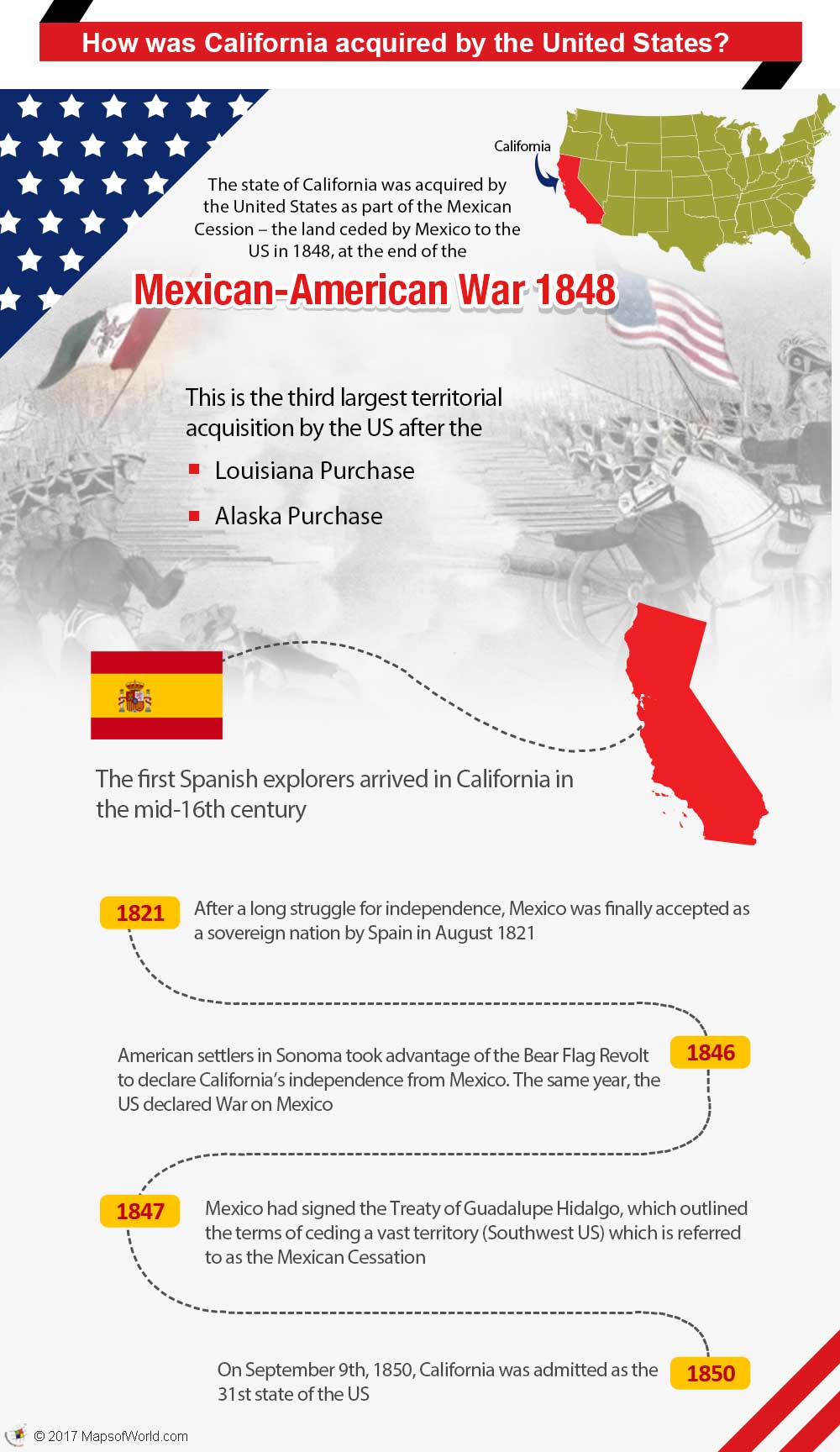
In June 1846, even before news of the official outbreak of the Mexican-American War reached California, a group of American settlers, fearful of Mexican authority and encouraged by the presence of John C. Frémont’s surveying party, took matters into their own hands. On June 14, they captured the Mexican commandant of Northern California, Mariano Guadalupe Vallejo, at his home in Sonoma. The rebels then declared the California Republic and unfurled a makeshift flag featuring a grizzly bear, a star, and the words “California Republic.” This event, known as the Bear Flag Revolt, was largely led by figures like William B. Ide and Ezekiel Merritt.
The “Bear Flaggers” intended to establish an independent state, but their republic was short-lived. Just weeks later, on July 7, 1846, Commodore John D. Sloat of the U.S. Navy landed in Monterey and raised the American flag, claiming California for the United States after learning of the formal declaration of war. The Bear Flag Revolt quickly merged into the larger conflict, with Frémont assuming command of the California Battalion, composed largely of former Bear Flaggers, which then aided in the American conquest. Today, Sonoma Plaza, where the flag was first raised, is a charming town square surrounded by historic buildings, including the last of the California missions, offering a delightful travel destination for those interested in this pivotal moment.
Conflict on Two Fronts: Land and Sea
The Mexican-American War, which officially began in May 1846 over the disputed territory of Texas, quickly spread to California. The United States sought to seize the territory as a key strategic objective. The naval aspect of the campaign was swift, with Commodore Sloat’s forces occupying key coastal towns like Monterey, San Francisco, and later San Diego with relative ease.
On land, the fighting was more protracted. Commodore Robert F. Stockton replaced Sloat and, along with John C. Frémont’s forces, marched to secure Los Angeles. However, a Californio uprising, led by figures like José María Flores and Andrés Pico, briefly reclaimed the city. This led to several skirmishes, most notably the Battle of San Pasqual in December 1846, where Brigadier General Stephen W. Kearny’s Army of the West suffered heavy casualties against Californio lancers.
Despite early setbacks and fierce resistance, the superior numbers and resources of the American forces eventually prevailed. By January 1847, after the battles of Rio San Gabriel and La Mesa, Californio resistance crumbled. The Treaty of Cahuenga, signed on January 13, 1847, formally ended hostilities in California, placing the territory firmly under American control, anticipating the broader peace treaty that would soon reshape the continent.
The Treaty of Guadalupe Hidalgo and the Birth of a State
The conquest of California was a crucial component of the larger Mexican-American War, and its fate, along with vast other territories, was decided not on the battlefields of the west but in the diplomatic chambers following the fall of Mexico City.
A New Map for North America
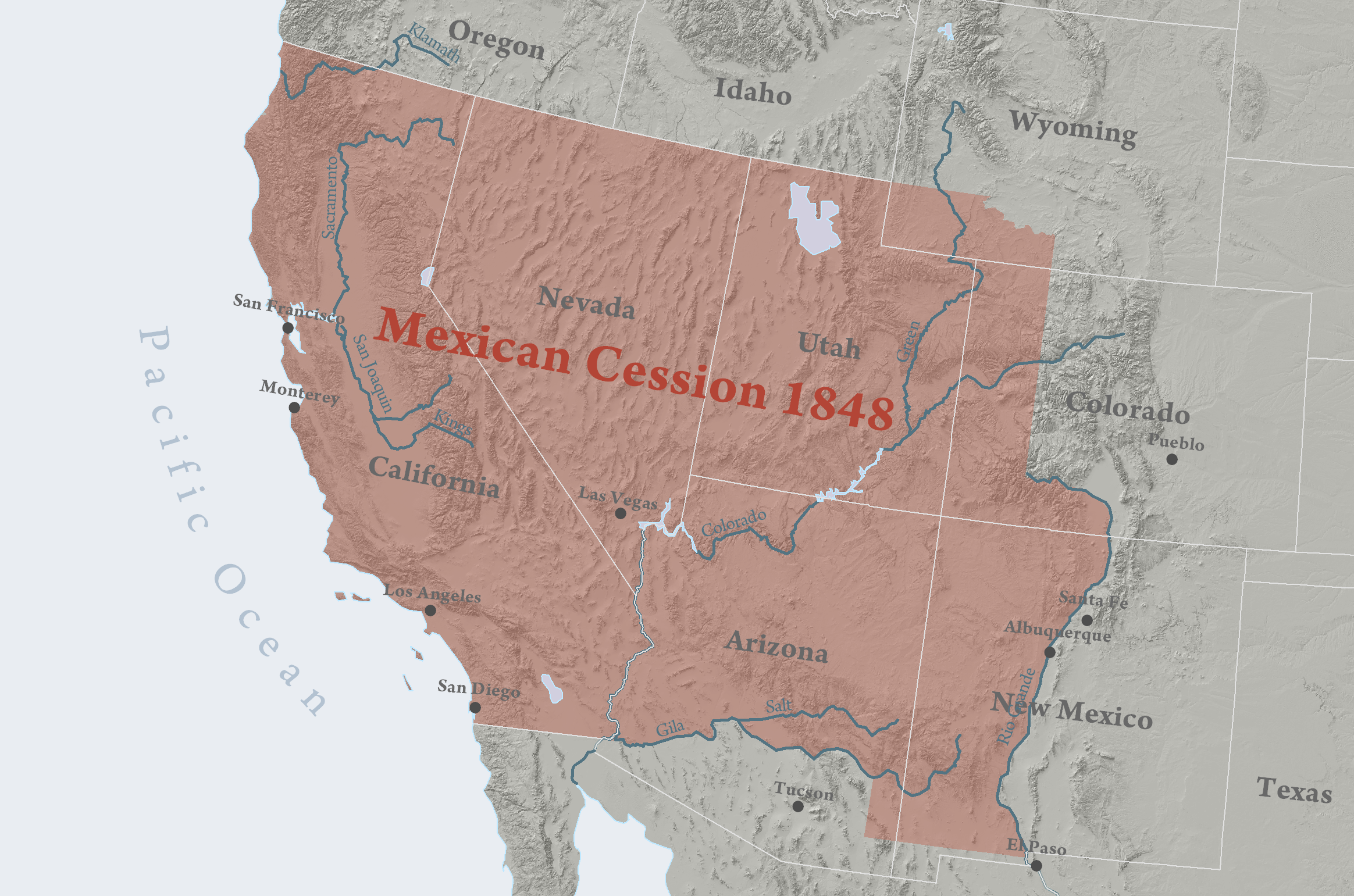
The war officially concluded with the signing of the Treaty of Guadalupe Hidalgo on February 2, 1848. This momentous agreement redefined the map of North America in a profound way. Under its terms, Mexico ceded approximately 525,000 square miles of territory to the United States in exchange for $15 million and the assumption of Mexican debts owed to American citizens. This massive land transfer, known as the Mexican Cession, included not only California but also all of present-day Nevada, Utah, Arizona, New Mexico, and parts of Colorado and Wyoming.
For the thousands of Californios who suddenly found themselves living under a new flag, the treaty promised protection of their property rights and the right to become U.S. citizens. However, in practice, many faced discrimination and struggled to retain their lands in the face of burgeoning American settlement. This aspect of the treaty’s legacy is an important part of understanding California’s complex social history, often explored in museums and historical sites that delve into the experiences of the state’s diverse populations.
Gold, Statehood, and a Golden Legacy
Remarkably, just nine days before the Treaty of Guadalupe Hidalgo was signed, an event occurred that would accelerate California’s transformation beyond anything previously imagined: the discovery of gold. On January 24, 1848, James W. Marshall found flakes of gold at Sutter’s Mill near Coloma. Word of the discovery, initially met with skepticism, soon ignited the legendary California Gold Rush.
Hundreds of thousands of “Forty-Niners” from across the United States and around the world flocked to California in search of fortune. This unprecedented influx of people led to explosive population growth, the rapid establishment of towns (many of which became ghost towns just as quickly), and a boom in trade and commerce. The Gold Rush transformed California from a remote outpost into a bustling, dynamic frontier.
The rapid population increase and the need for organized governance spurred California’s swift admission into the Union. Despite not having gone through the typical territorial phase, California was admitted as the 31st state on September 9, 1850, as part of the Compromise of 1850. This rapid trajectory from Mexican province to American state in just two years is virtually unparalleled in U.S. history.
The legacy of this dramatic acquisition continues to shape modern California. Its historical landmarks, from the Spanish missions to the Gold Rush towns of the Sierra Nevada, tell a compelling story for any traveler. The vibrant cultural fusion, the pioneering spirit, and the relentless pursuit of new opportunities are all deeply rooted in this complex past. California stands as a testament to the ambitions of nations, the resilience of diverse peoples, and the profound impact of gold on the course of human events, offering an enriching travel experience that goes far beyond its stunning landscapes and contemporary attractions.
LifeOutOfTheBox is a participant in the Amazon Services LLC Associates Program, an affiliate advertising program designed to provide a means for sites to earn advertising fees by advertising and linking to Amazon.com. Amazon, the Amazon logo, AmazonSupply, and the AmazonSupply logo are trademarks of Amazon.com, Inc. or its affiliates. As an Amazon Associate we earn affiliate commissions from qualifying purchases.