
The majestic landscapes of Colorado, from the towering peaks of the Rocky Mountains to its sprawling plateaus, are instantly recognizable. But beyond its stunning natural beauty, the state carries a unique identity encapsulated in its official nickname: “The Centennial State.” This moniker is not merely a catchy phrase; it’s a profound historical marker, connecting Colorado’s birth to a pivotal moment in United States history. Understanding how Colorado earned this name requires a journey back to the very foundation of its statehood and a look at the historical forces that shaped this remarkable landmark.
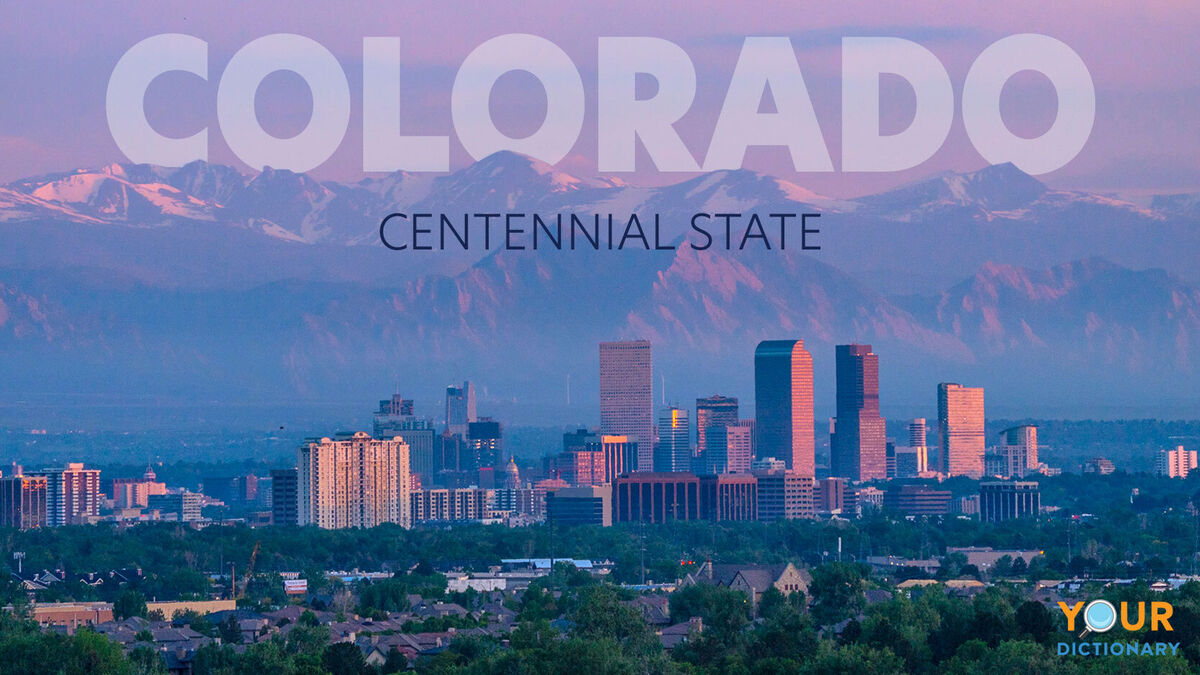
The Centennial State: A Snapshot of Colorado’s Birth
The journey to statehood for Colorado was marked by ambition, resource discovery, and the relentless expansion of the American frontier. Unlike many states whose nicknames reflect intrinsic geographical features or industries, “The Centennial State” points directly to a specific historical event, making it a powerful testament to its place in the nation’s timeline.
From Territory to Statehood: A Timeline
Before it became the beloved Centennial State, the land now known as Colorado existed as part of various territories. Much of the eastern plains was part of the Kansas Territory, while the western mountainous regions fell under the domain of the Utah Territory and New Mexico Territory. The discovery of gold in 1858 near Denver’s present-day location sparked a massive influx of prospectors and settlers, an event known as the Pikes Peak Gold Rush. This sudden population boom created an urgent need for more organized governance and representation.
In response to this rapid growth and the demand for self-rule, the Colorado Territory was officially organized on February 28, 1861, by an act of Congress signed by President James Buchanan. This territorial designation established formal boundaries and a provisional government, setting the stage for eventual statehood. However, the path was not smooth. The American Civil War and subsequent Reconstruction era delayed the process significantly. Political wrangling, debates over economic viability, and the issue of slavery (or its prohibition) all played roles in the extended wait.
The Significance of 1876
It was 1876, a century after the signing of the Declaration of Independence, that Colorado finally achieved its dream of statehood. On August 1, 1876, President Ulysses S. Grant signed the proclamation admitting Colorado into the Union as the 38th state. The timing was impeccable, coinciding precisely with the centennial anniversary of the United States’ birth as an independent nation. This momentous coincidence immediately bestowed upon the new state its memorable and historically resonant nickname: “The Centennial State.”
The nickname wasn’t an arbitrary choice but a direct reflection of this historical alignment. It served as a powerful symbol of national unity and progress a century after the nation’s founding, particularly as the country was still healing from the wounds of the Civil War. For Colorado, it marked its official entry onto the national stage, forever linking its identity to a pivotal moment in American history.
“Colorado”: More Than Just a Name
While “The Centennial State” speaks to when Colorado joined the Union, the name “Colorado” itself has an equally rich and descriptive origin, tying directly to the state’s most defining geographical features.
Spanish Roots and Geographic Wonders
The name “Colorado” is Spanish in origin, meaning “colored red” or “red-colored.” This descriptive term was first applied by early Spanish explorers to the Colorado River (Rio Colorado), which flows through a significant portion of the region. The river’s reddish-brown sediment, particularly during periods of high flow, vividly stained its waters, giving it its distinctive hue.
These early explorers, traversing vast, uncharted territories, often named natural landmarks based on their most prominent visual characteristics. The “Colorado River” was a fitting name for a waterway whose waters were visibly rich with the reddish soil of the canyons and plateaus it carved through. As the territory began to take shape, and eventually the state, the name of this dominant geographical feature—the “Colorado River”—was adopted for the entire region. This choice underscored the profound impact of the river on the landscape and its historical significance as a pathway and life source for indigenous peoples and later for European settlers.
The Red River Connection
The choice of “Colorado” as the state name is deeply rooted in the land itself. The state’s geography is defined by a striking contrast of soaring mountains and arid plains, all shaped by geological forces and the flow of water. The reddish tints of its soil, particularly in the western slope regions, the deep red sandstone formations visible across the state, and of course, the Colorado River itself, all justify the Spanish description.
Beyond the river, many areas within Colorado feature prominent red rock formations, such as those found near Red Rocks Amphitheatre or in parts of the Colorado National Monument. These geological landmarks, vibrant in hue, echo the very essence of the state’s name, cementing its connection to the literal “red-colored” earth. The name, therefore, serves as a permanent reminder of the natural beauty and geological wonders that define the state, making it a natural landmark in itself.

Exploring Colorado’s Enduring Spirit
The nicknames “The Centennial State” and the very name “Colorado” do more than just provide historical context; they embody the spirit and enduring character of the state. They tell a story of natural grandeur, pioneering spirit, and a deep connection to the nation’s heritage.
Beyond the Nickname: What Defines Colorado Today?
Today, Colorado continues to thrive, celebrated for its unique blend of outdoor adventure, vibrant urban centers, and a progressive mindset. Its landmarks are not just historical markers but living, breathing testaments to its identity. From the world-renowned ski resorts of Aspen and Vail to the historical mining towns like Leadville and Telluride, the state offers a rich tapestry of experiences.
The pioneering spirit that led to its statehood in 1876 is still palpable. Coloradoans embrace innovation, outdoor living, and a strong sense of community. This heritage is evident in the preservation of its historical sites and the development of sustainable practices that protect its natural beauty for future generations. The Centennial spirit isn’t just about a date; it’s about the resilience and forward-looking attitude that define the state.
Rocky Mountain National Park and Natural Heritage
Perhaps the most iconic natural landmark in Colorado is Rocky Mountain National Park. Established in 1915, it protects a spectacular section of the Rocky Mountains, featuring diverse ecosystems ranging from montane forests to alpine tundra. Its rugged peaks, pristine lakes, and abundant wildlife draw millions of visitors annually. This park, along with numerous other national forests, wilderness areas, and state parks, epitomizes the “red-colored” beauty and natural grandeur suggested by Colorado’s Spanish name. The protection of these areas ensures that the state’s natural heritage, the very source of its name, remains a defining feature.
Other significant natural landmarks include Great Sand Dunes National Park and Preserve, a surreal landscape of towering dunes against the backdrop of the Sangre de Cristo Mountains, and Mesa Verde National Park, a UNESCO World Heritage Site preserving the ancestral Pueblo cliff dwellings. These sites not only showcase the state’s geological and ecological diversity but also its deep historical roots, stretching back thousands of years.
Denver and Urban Landmarks
Beyond its natural wonders, Colorado boasts vibrant urban centers with their own significant landmarks. Denver, the state capital and largest city, serves as a hub of culture, commerce, and history. Its architecture ranges from historic Victorian buildings in LoDo (Lower Downtown) to modern skyscrapers. Notable landmarks include the Colorado State Capitol Building, with its distinctive gold dome, offering panoramic views of the Rocky Mountains, and the Denver Art Museum, celebrated for its unique architecture and extensive collections.
Other cities like Colorado Springs, home to the Garden of the Gods and the United States Air Force Academy, and Boulder, known for its scenic Flatirons and progressive atmosphere, contribute to Colorado’s diverse landscape of man-made and natural landmarks. These urban centers, while modern, often intertwine with the state’s natural beauty and historical narrative, embodying the Centennial spirit in their growth and development.
The Nickname’s Lasting Legacy
“The Centennial State” is more than just a historical footnote; it’s an active component of Colorado’s identity, influencing its civic pride, branding, and even its daily life.
Colorado’s Identity in Popular Culture
The nickname is deeply embedded in the public consciousness, both within and outside the state. It’s found on license plates, government seals, and local businesses. It inspires the names of institutions, events, and even sports teams, such as the Colorado Centennial Cyclists. This constant reinforcement ensures that the historical significance of 1876 is never forgotten, serving as a perpetual reminder of the state’s unique entry into the Union. The nickname contributes to a strong sense of place and historical awareness among its residents.
Furthermore, the imagery associated with Colorado—its red rocks, blue skies, and majestic mountains—ties directly back to the Spanish origin of its primary name. This visual identity is widely used in tourism campaigns, literature, and media, effectively branding the state as a destination of breathtaking natural landmarks and rich historical narratives.

Celebrating the Centennial Spirit
Ultimately, “How did Colorado get its nickname?” is a question that reveals layers of history, geography, and cultural identity. The answer lies in the confluence of a significant national anniversary and the descriptive power of the Spanish language. As “The Centennial State,” Colorado stands as a testament to American expansion and the enduring allure of its wild frontiers. Its name, “red-colored,” perfectly encapsulates the vibrant geology that defines its land.
These nicknames are not mere labels; they are narratives woven into the very fabric of Colorado, shaping its landmarks and influencing its perception. They invite contemplation of its past, celebration of its present, and anticipation of its future, ensuring that the spirit of 1876 and the beauty of its “red-colored” landscapes continue to inspire for centuries to come. The state itself is a landmark, a living embodiment of its historical journey and natural splendor, forever “The Centennial State.”
LifeOutOfTheBox is a participant in the Amazon Services LLC Associates Program, an affiliate advertising program designed to provide a means for sites to earn advertising fees by advertising and linking to Amazon.com. Amazon, the Amazon logo, AmazonSupply, and the AmazonSupply logo are trademarks of Amazon.com, Inc. or its affiliates. As an Amazon Associate we earn affiliate commissions from qualifying purchases.